
What Is the Difference Between a Wheel Loader and a Forklift?
1. Introduction
Wheel loaders and forklifts are both widely used material-handling machines, but they are designed for very different working conditions and applications. At first glance, they may appear similar because both can lift, move, and transport materials. However, their structures, attachments, hydraulic systems, lifting mechanisms, operating environments, and performance characteristics are significantly different.
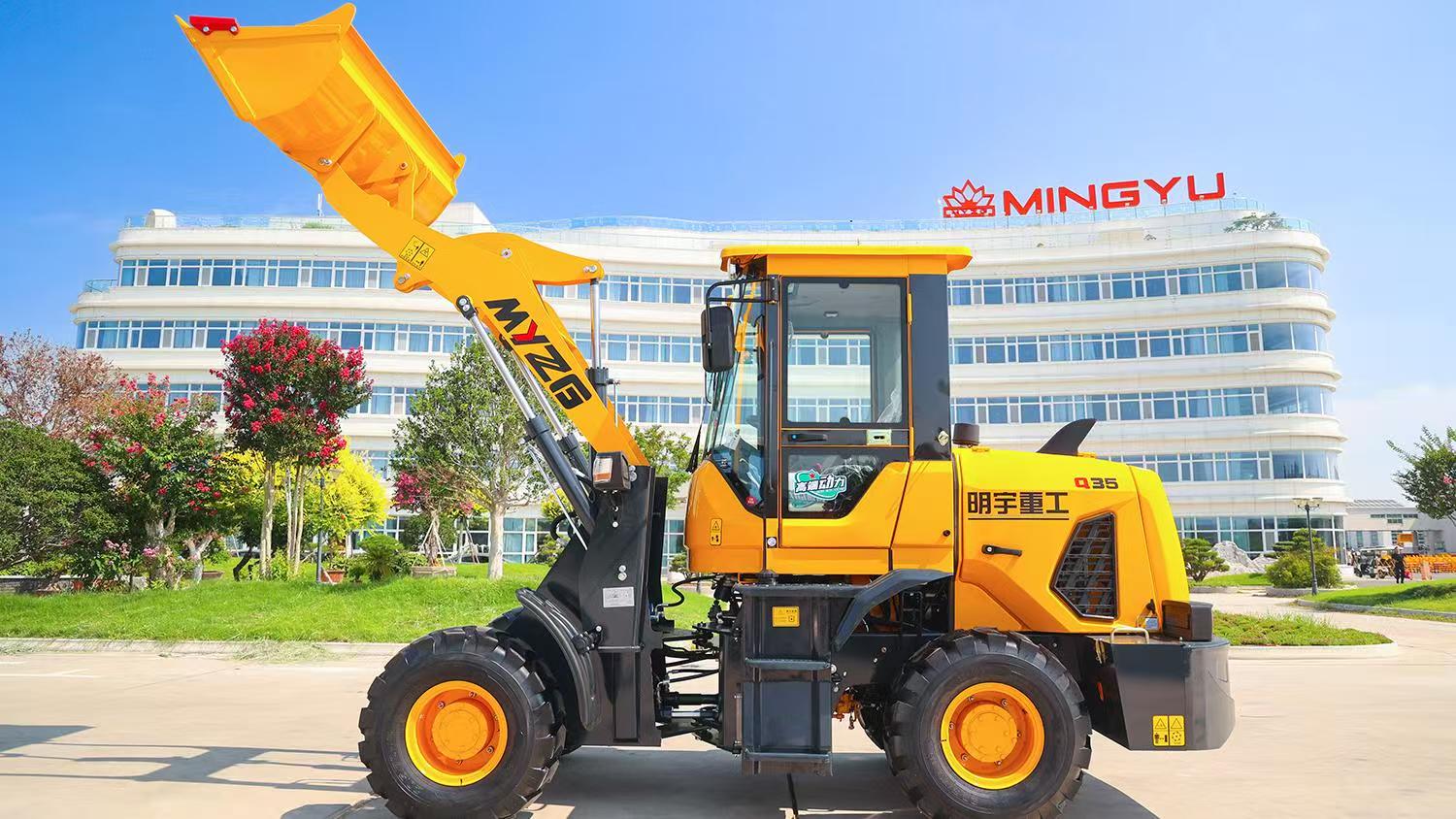
A wheel loader is primarily designed for moving and loading loose materials such as soil, sand, gravel, rocks, grain, and other bulk materials. Its powerful engine, articulated steering, large bucket, high ground clearance, and strong breakout force make it particularly suitable for construction sites, quarries, farms, recycling facilities, and other outdoor environments.
A forklift, on the other hand, is specifically designed to lift, transport, and stack loads using forks or specialized attachments. Forklifts are commonly used for pallets, cartons, machinery, steel products, containers, and other unitized loads. They are especially important in warehouses, factories, logistics centers, ports, and industrial yards.
Understanding the difference between a wheel loader and a forklift is important when selecting equipment. Choosing a machine based only on lifting capacity can lead to poor productivity, increased operating costs, or even unsafe working conditions. This article compares wheel loaders and forklifts in terms of design, lifting capacity, working environment, maneuverability, attachments, power, applications, operating costs, and safety to help buyers select the right machine for their specific requirements.
2. What Is a Wheel Loader?
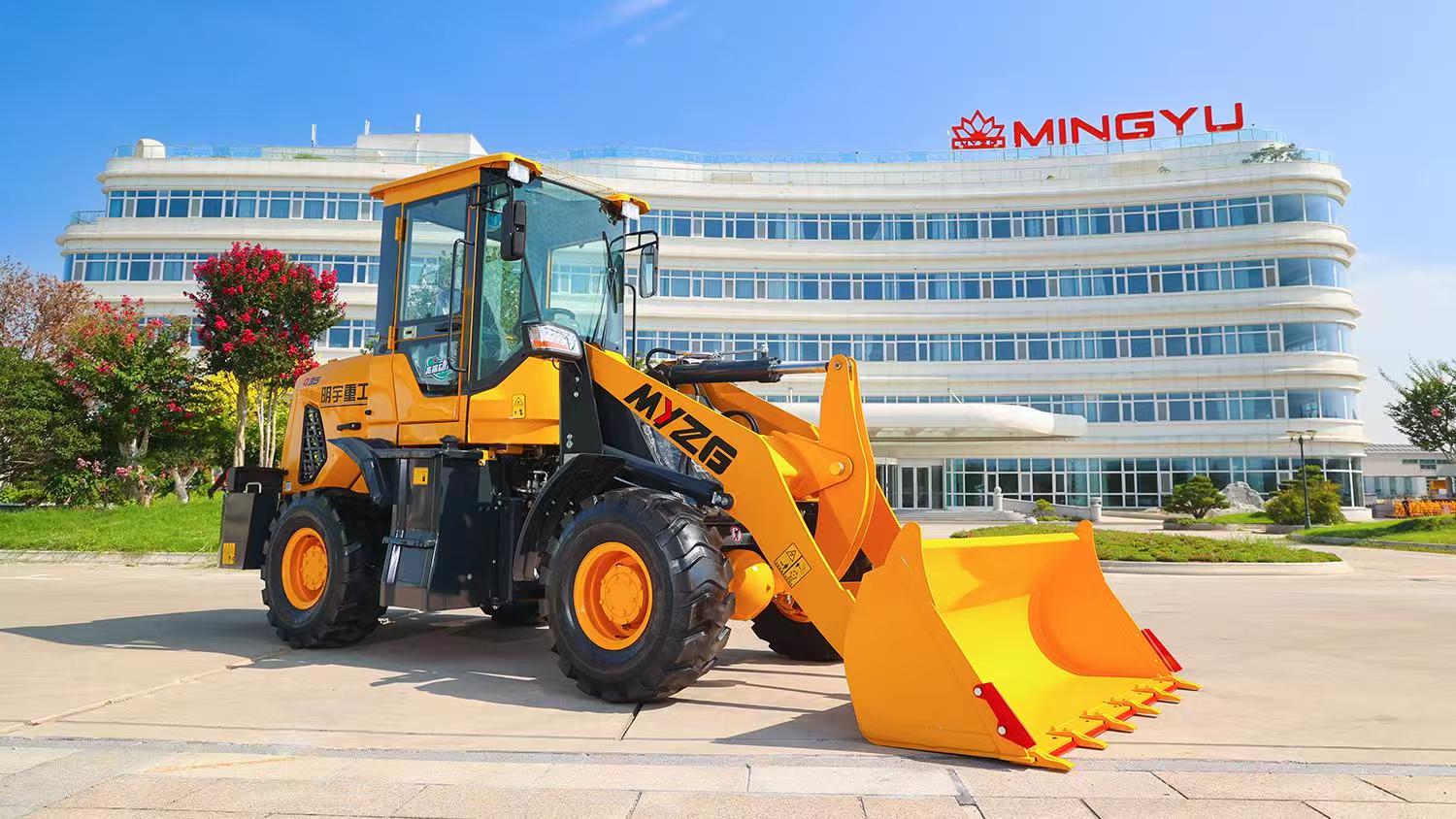
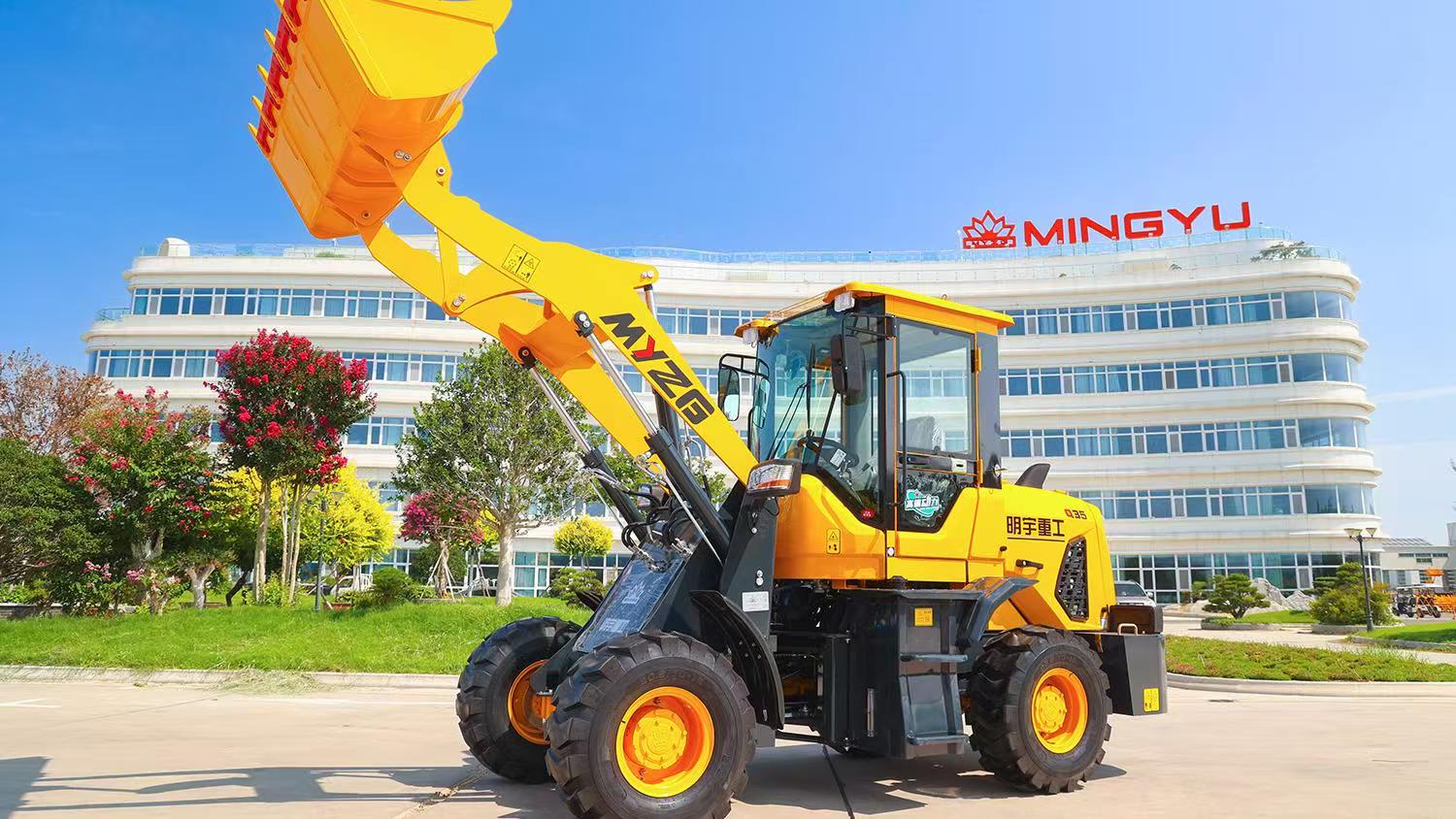
A wheel loader is a heavy-duty construction machine equipped with a front-mounted hydraulic lifting arm and bucket. The bucket is used to scoop, carry, lift, and discharge loose materials. Wheel loaders are available in many sizes, from compact models for small construction and agricultural applications to large machines designed for mining and quarry operations.
The main components of a wheel loader include the engine, transmission, axles, hydraulic system, articulated frame, lifting arms, and bucket. The hydraulic system provides the force required to raise and tilt the bucket. The articulated frame allows the machine to turn efficiently while maintaining good stability.
One of the most important characteristics of a wheel loader is its breakout force. This allows the bucket to penetrate piles of material and scoop heavy loads. Wheel loaders also generally have relatively large tires and high ground clearance, making them suitable for uneven outdoor surfaces.
Typical wheel loader applications include loading trucks, moving aggregates, handling soil and sand, clearing construction sites, transporting agricultural materials, handling waste, and operating with different attachments.
3. What Is a Forklift?
A forklift is an industrial vehicle designed primarily to lift and transport loads using two or more forks mounted on a vertical mast. Unlike a wheel loader, which normally handles bulk material with a bucket, a forklift handles individual loads such as pallets, boxes, machinery, steel products, and packaged goods.
The major components of a forklift include the mast, forks, hydraulic lifting system, counterweight, drive axle, steering axle, chassis, and operator compartment. The counterweight is particularly important because it balances the load being lifted in front of the machine.
Forklifts are available in many configurations. Common types include diesel forklifts, LPG forklifts, electric forklifts, lithium-ion forklifts, rough-terrain forklifts, and heavy-duty forklifts.
Standard forklifts are commonly used inside warehouses and factories, while diesel and rough-terrain forklifts are often used in outdoor yards, construction sites, ports, and other demanding environments.
4. Key Difference in Lifting and Loading Methods
The biggest difference between the two machines is how they handle materials.
A wheel loader normally uses a bucket. The operator drives toward a pile, fills the bucket, raises the lifting arm, and then dumps the material into a truck, hopper, or other location. This makes the wheel loader highly efficient for loose materials.
A forklift uses forks to lift a load from underneath. The forks can enter a pallet or lifting point, raise the load vertically, and transport it to another location. The load can then be positioned accurately on a rack, truck, or production line.
Therefore, a wheel loader is generally better for bulk materials, while a forklift is generally better for palletized and unitized materials.
5. Difference in Load Capacity and Stability
The load capacities of wheel loaders and forklifts should not be compared simply by looking at the numbers.
A forklift's rated capacity depends heavily on the load center, mast height, attachment, and configuration. For example, a forklift rated at 3,000 kg does not necessarily retain a 3,000 kg capacity at every lifting height and load position.
Wheel loaders are usually described using operating load, bucket capacity, tipping load, or rated load depending on the manufacturer and application. Their performance is also affected by material density, bucket size, hydraulic pressure, and operating conditions.
Forklifts rely heavily on counterweight and load-center management for stability. Wheel loaders rely on their chassis, wheelbase, articulation, machine weight, and hydraulic system. Consequently, the two types of machines use different approaches to stability and load handling.
6. Difference in Lifting Height and Reach
Forklifts are specifically designed for vertical lifting. Their mast allows loads to be raised to considerable heights, making them suitable for warehouse racking and high-level stacking.
Wheel loaders can also lift materials to a significant height, particularly high-lift models. However, their primary purpose is loading and dumping rather than precision stacking.
For example, a forklift may place a pallet accurately onto a warehouse rack, while a wheel loader may raise a bucket high enough to discharge material into a truck.
Therefore, when the main requirement is high-level stacking and precise positioning, a forklift is generally more appropriate. When the requirement is high-volume loading and dumping, a wheel loader is usually the better choice.
7. Difference in Maneuverability
Forklifts are generally designed for precise maneuvering. Many counterbalance forklifts use rear-wheel steering, allowing them to turn within relatively tight spaces. This is especially useful in warehouses and factories.
Wheel loaders normally use articulated steering. The machine bends at the center, allowing the front and rear sections to change direction relative to each other. This design provides good maneuverability while maintaining the machine's ability to work effectively on construction sites.
However, a standard wheel loader is generally larger and less suitable for narrow warehouse aisles. A forklift is designed specifically for moving through industrial spaces and positioning loads accurately.
8. Difference in Terrain and Working Environment
Working environment is another major difference.
Standard forklifts are commonly used on relatively flat and firm surfaces. Warehouse floors, concrete yards, factory floors, and paved loading areas are ideal environments.
Wheel loaders are designed for much tougher outdoor conditions. They can operate on gravel, soil, sand, mud, construction sites, and other uneven surfaces. Their high ground clearance, large tires, powerful drivetrain, and robust chassis allow them to handle demanding terrain.
Rough-terrain forklifts provide a middle ground. They combine forklift lifting capability with stronger off-road performance and are commonly used on construction sites and outdoor material yards.
9. Difference in Attachments and Versatility
Both machines can use different attachments, but their attachment systems are designed around different purposes.
Wheel loader attachments can include standard buckets, pallet forks, grapples, bale grabs, sweepers, snow blades, silage buckets, and other specialized tools. This allows a wheel loader to perform multiple tasks beyond conventional bucket loading.
Forklifts can also use attachments such as side shifters, fork positioners, drum clamps, bale clamps, rotators, paper roll clamps, and other specialized devices.
The key difference is that wheel loader attachments generally expand the machine's ability to move and process materials, while forklift attachments generally improve its ability to lift, position, and transport specific loads.
10. Difference in Power and Performance
Wheel loaders generally emphasize high engine power, hydraulic output, traction, and breakout force. These characteristics allow them to push into material piles and quickly load large quantities of material.
Forklifts place greater emphasis on lifting performance, load stability, travel control, and precise handling. Although heavy-duty forklifts can have powerful engines, their power is primarily used to lift and transport specific loads rather than dig into material piles.
Power source also varies. Wheel loaders are traditionally powered by diesel engines, although electric wheel loaders are becoming increasingly available. Forklifts can be powered by diesel, LPG, gasoline in some markets, lead-acid batteries, or lithium-ion batteries.
11. Difference in Operator Visibility and Control
The operator's view is also different because the machines perform different tasks.
In a wheel loader, the operator needs to monitor the bucket, material pile, loading area, and surroundings. The cab is positioned high enough to provide a good view of the working area.
In a forklift, the mast and load can affect forward visibility. The operator must pay particular attention to the load, forks, mast, pedestrians, and surrounding equipment.
Both machines require trained operators who understand machine stability, load limits, operating procedures, and workplace safety requirements.
12. Wheel Loader vs. Forklift: Application Comparison
Different industries naturally favor different machines.
In construction, wheel loaders are commonly used to load aggregate, soil, sand, and construction waste. Forklifts may be used to move building materials, pallets, pipes, or packaged products.
In warehouses, forklifts are normally the preferred choice because they can move pallets efficiently and stack them at different heights.
In agriculture, wheel loaders are useful for handling soil, grain, manure, silage, and other bulk materials, while forklifts can move palletized fertilizer, feed, equipment, and packaged agricultural products.
In ports and outdoor industrial yards, heavy-duty or rough-terrain forklifts may be used for containers, steel products, and heavy individual loads, while wheel loaders can handle bulk cargo and loose materials.
The best machine therefore depends more on the type of load and working environment than simply on the required lifting capacity.
13. Can a Wheel Loader Replace a Forklift?
A wheel loader equipped with pallet forks can perform some tasks normally associated with forklifts. For example, it may be able to pick up pallets or move packaged materials around a construction site.
However, this does not mean it can completely replace a forklift.
A wheel loader is generally larger, has different visibility characteristics, and is not optimized for precise pallet positioning. It may also have difficulty operating in narrow spaces.
If a business frequently needs to move pallets, place goods into racks, or load and unload packaged products with precision, a dedicated forklift is normally a better solution.
14. Can a Forklift Replace a Wheel Loader?
A standard forklift cannot normally replace a wheel loader for bulk-material operations.
Forklifts are not designed to dig into piles of soil, gravel, or sand with a bucket. Their chassis, hydraulic system, tires, and attachments are optimized for lifting rather than excavation and high-volume bulk loading.
A rough-terrain forklift may handle some outdoor construction applications, but it still has different capabilities from a wheel loader.
For loading trucks with aggregates, moving large quantities of loose material, or working continuously in material piles, a wheel loader remains the more appropriate machine.
15. Cost, Maintenance, and Operating Considerations
Purchase price should not be the only consideration when comparing the two machines.
A wheel loader may have a higher initial investment because of its larger engine, heavy-duty chassis, hydraulic system, and construction-oriented components. However, it can provide high productivity when handling large quantities of bulk material.
Forklifts are often more economical for repetitive pallet handling. Electric forklifts can also reduce local emissions and may have lower energy and routine maintenance costs compared with conventional internal-combustion models, depending on operating conditions.
Maintenance requirements differ as well. Wheel loaders require attention to the engine, transmission, axles, hydraulic system, tires, bucket, and articulation system. Forklifts require maintenance of the mast, chains, forks, hydraulics, tires, drivetrain, battery or engine, and safety systems.
The most economical machine is therefore the one that matches the application rather than simply the machine with the lowest purchase price.
16. How to Choose Between a Wheel Loader and a Forklift
Before choosing a machine, buyers should evaluate several key factors.
First, identify the material. Loose materials generally favor wheel loaders, while pallets and packaged goods favor forklifts.
Second, determine the required capacity. Consider both the weight of the load and how the load is positioned.
Third, determine the lifting height and reach. High stacking and precise placement generally favor forklifts.
Fourth, evaluate the terrain. Rough and uneven outdoor conditions generally favor wheel loaders or rough-terrain forklifts.
Fifth, consider the working space. Narrow warehouses require machines with excellent maneuverability and compact dimensions.
Sixth, select the appropriate attachment. The attachment should match the material and task.
Finally, consider operating costs, energy source, maintenance, operator requirements, and total cost of ownership.
17. Wheel Loader vs. Forklift Comparison Table
|
Feature |
Wheel Loader |
Forklift |
|
Primary purpose |
Bulk material loading and transport |
Lifting and transporting unit loads |
|
Main attachment |
Bucket |
Forks |
|
Typical materials |
Soil, sand, gravel, rocks |
Pallets, boxes, machinery, steel |
|
Main strength |
Breakout force and loading productivity |
Precise lifting and positioning |
|
Lifting method |
Hydraulic lift arms and bucket |
Hydraulic mast and forks |
|
Terrain |
Excellent outdoor/rough terrain capability |
Best on firm surfaces; rough-terrain models available |
|
Maneuverability |
Good articulated steering |
Excellent for industrial spaces |
|
High stacking |
Limited compared with forklifts |
Excellent |
|
Bulk material handling |
Excellent |
Limited |
|
Warehouse operations |
Generally unsuitable |
Excellent |
|
Construction sites |
Excellent |
Depends on forklift type |
|
Common power source |
Mainly diesel; electric options available |
Diesel, LPG, electric, lithium-ion |
18. Conclusion
The fundamental difference between a wheel loader and a forklift is their intended purpose. A wheel loader is primarily a heavy-duty bulk material handling machine, designed to scoop, transport, lift, and discharge loose materials. A forklift is primarily a load lifting and positioning machine, designed to handle pallets, packaged products, machinery, and other individual loads.
Wheel loaders are particularly effective in construction, agriculture, quarrying, waste handling, and other outdoor applications where high productivity, traction, and breakout force are important. Forklifts are better suited to warehouses, factories, logistics centers, industrial yards, and applications requiring accurate lifting and stacking.
Neither machine is universally better. The right choice depends on the type and weight of the material, required lifting height, working environment, terrain, maneuverability requirements, attachments, energy source, and operating costs. By matching the machine to the actual application, businesses can improve productivity, reduce unnecessary operating expenses, and maintain safer and more efficient material-handling operatio
Post time:Aug.25.2026
