
What Is the Difference Between a Scissor Lift and a Boom Lift?
1. Introduction
Aerial work platforms are widely used in construction, building maintenance, electrical installation, warehouse operations, landscaping, and industrial maintenance. When workers need to safely reach elevated areas, choosing the right lifting equipment is essential. Two of the most common types are scissor lifts and boom lifts. Although both are designed to provide elevated access, their structures, movement capabilities, working ranges, and ideal applications are quite different.
A scissor lift mainly moves a platform vertically. Its lifting mechanism uses crossed support arms that extend upward, allowing the platform to rise and provide a relatively large and stable working area. A boom lift, on the other hand, uses a telescopic or articulated boom to move a work platform not only upward but also outward. This gives boom lifts a major advantage when workers need to reach over obstacles or access areas that are not directly above the machine.
Understanding these differences can help contractors and equipment buyers select the right aerial work platform for a particular project. In this article, we will compare scissor lifts and boom lifts in terms of working height, horizontal reach, platform design, maneuverability, terrain, load capacity, applications, safety, maintenance, and operating costs.
2. What Is a Scissor Lift?
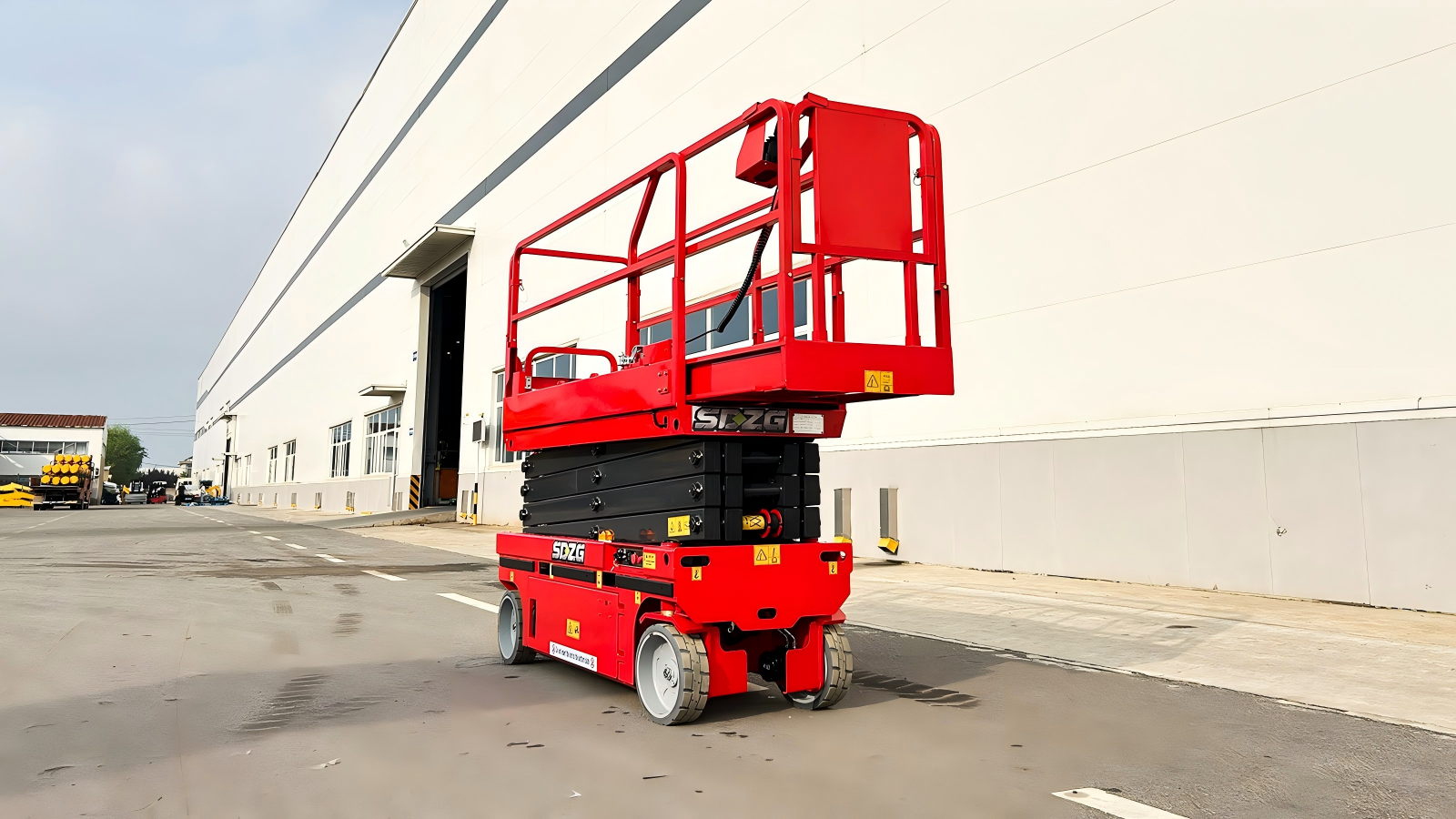
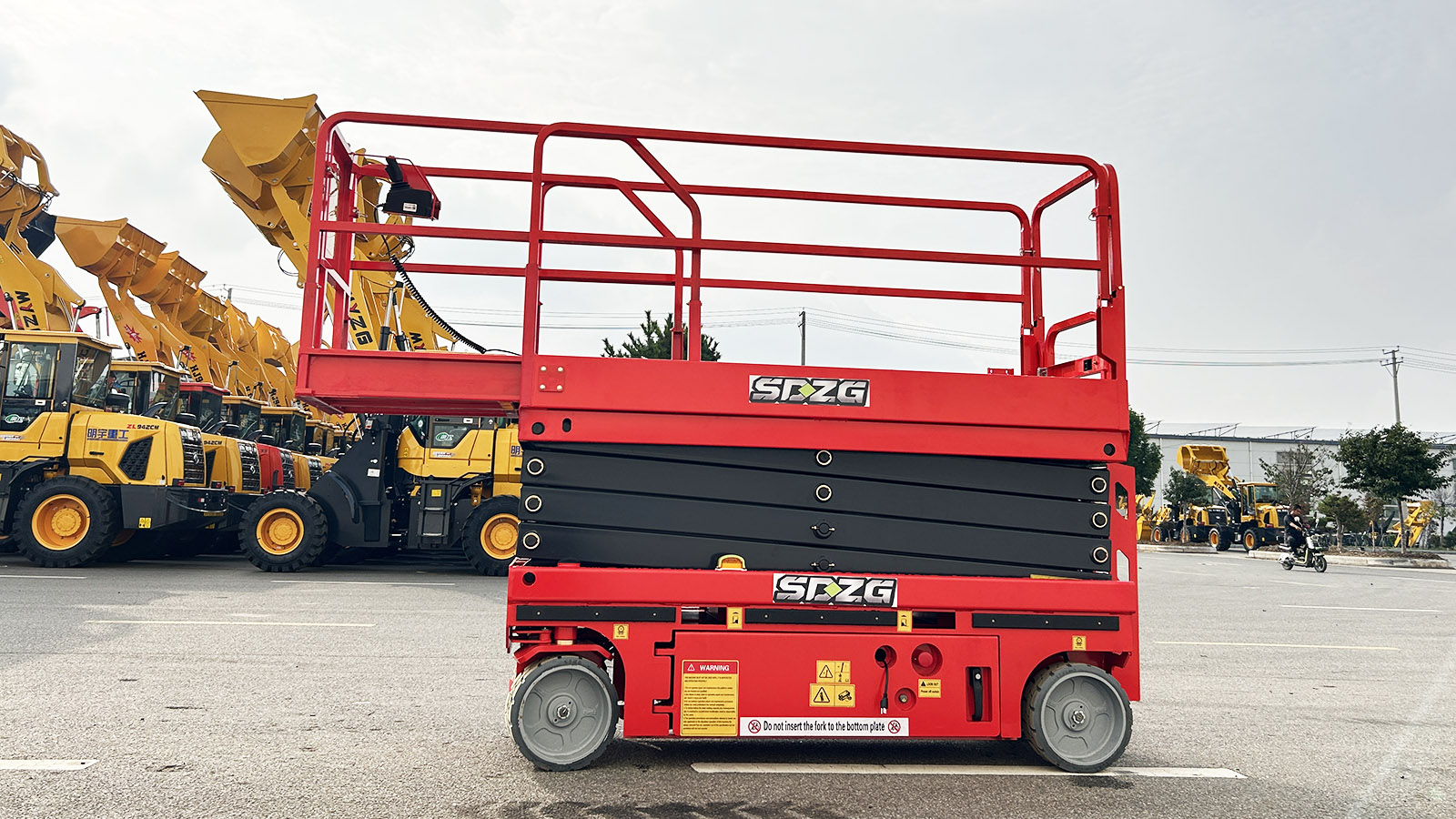
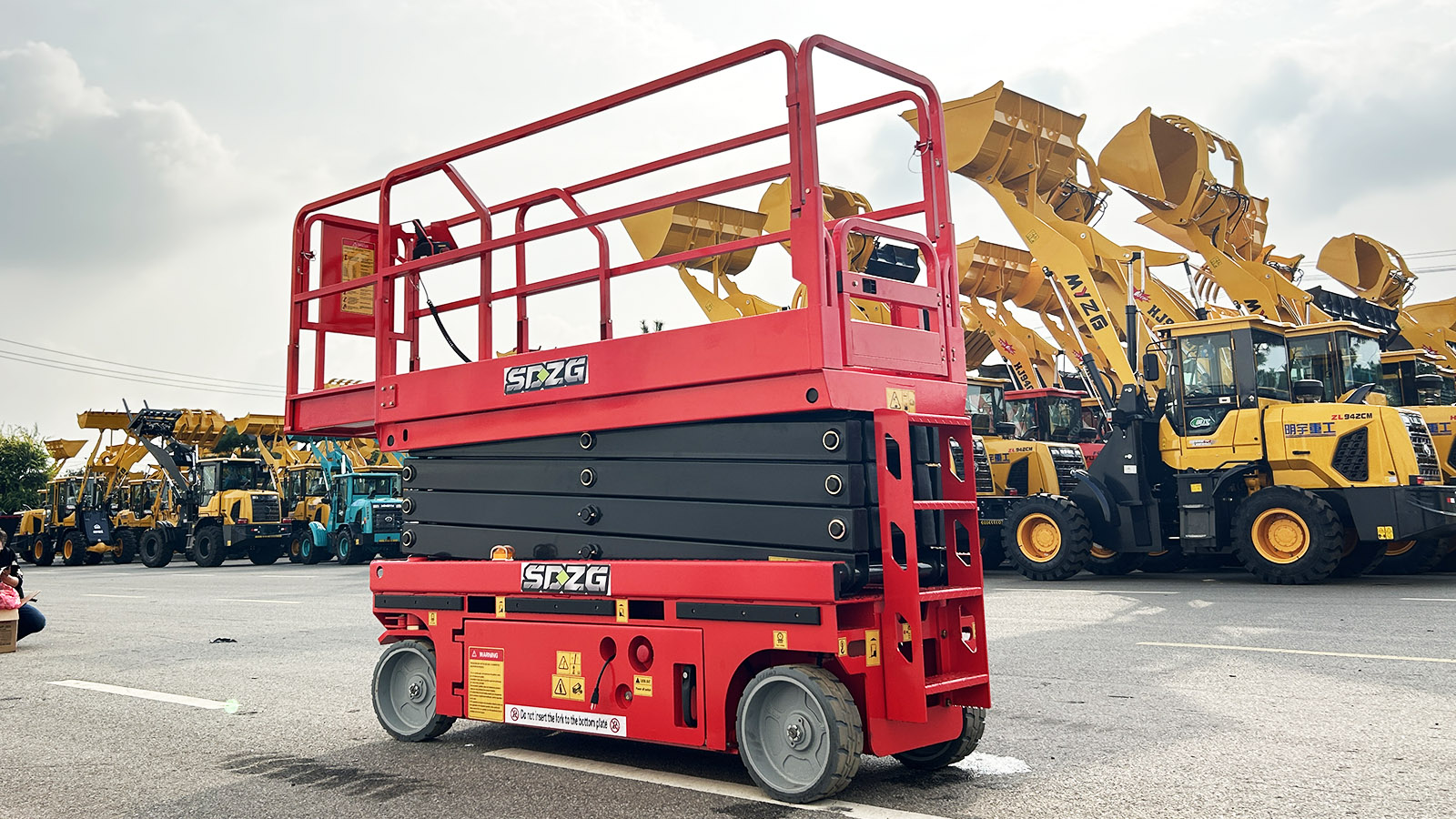
A scissor lift is an aerial work platform designed primarily for vertical lifting. The platform is mounted on a set of linked support arms that fold and extend in a scissor-like movement.
When the lifting system is activated, the arms extend and raise the platform. When lowered, the arms fold together and the platform returns toward the base of the machine.
One of the biggest advantages of a scissor lift is its relatively large platform. Several workers can often stand on the platform together with tools and materials, provided that the total load remains within the manufacturer's rated capacity.
Scissor lifts are available in different configurations. Electric models are commonly used indoors because they produce little direct exhaust and generally operate with lower noise. Larger rough-terrain models can be used on outdoor construction sites and may feature four-wheel drive, larger tires, and other systems designed for uneven surfaces.
Because scissor lifts mainly provide vertical access, they are particularly suitable when the work area is directly above the machine.
3. What Is a Boom Lift?
A boom lift is an aerial work platform equipped with a boom that carries a work basket or platform. Unlike a scissor lift, the boom can generally move the work platform upward and horizontally.
There are two common types of boom lifts: articulating boom lifts and telescopic boom lifts.
An articulating boom lift has several hinged sections. These sections allow the platform to move around obstacles, making this type particularly useful when direct access from below is blocked by buildings, structures, or other objects.
A telescopic boom lift, also known as a straight boom lift, uses an extending boom to provide long horizontal and vertical reach. It is often used when workers need to reach a high point or a distant working position.
The basket on a boom lift is generally smaller than the platform of a scissor lift, but its ability to move in multiple directions gives the boom lift greater flexibility when accessing difficult locations.
4. Key Difference: Vertical Lift vs. Horizontal Reach
The fundamental difference between these two machines is how they position workers at height.
A scissor lift primarily moves straight upward and downward. If the required working area is directly above the machine, a scissor lift can be an efficient solution.
A boom lift provides both vertical lift and horizontal outreach. This means the machine can position the basket away from its base, allowing workers to access locations that are not directly above the machine.
For example, imagine workers need to maintain the exterior of a building. If the machine can be positioned directly underneath the working area, a scissor lift may be suitable. However, if there is an obstacle, landscaping, a wall, or another structure preventing the machine from being positioned directly below the work area, a boom lift may be more appropriate.
Therefore, the need for horizontal reach is often one of the most important factors when choosing between the two.
5. Height and Working Reach
Both scissor lifts and boom lifts can provide substantial working height, but maximum height is only one part of the equation.
A scissor lift's platform rises vertically from its base. Therefore, the machine's position relative to the target working area is important.
A boom lift, however, can combine vertical height with horizontal outreach. Its specifications may include working height, platform height, and maximum horizontal reach. These measurements help determine where the basket can actually be positioned.
For example, a machine with a high maximum working height may still be unsuitable if the work location is several meters away from the machine's base.
When comparing aerial work platforms, buyers should therefore ask:
How high does the work need to be?
How far away is the working area?
Is there an obstacle between the machine and the work location?
Can the machine be positioned directly beneath the work area?
Is additional horizontal outreach necessary?
These questions are often more useful than simply comparing maximum platform heights.
6. Platform and Basket Design
Scissor lifts generally have a larger rectangular platform. This provides more working space and allows operators to carry tools and materials within the rated load limit.
This makes scissor lifts especially convenient for jobs that require workers to move around on the platform or use several tools simultaneously.
Boom lifts usually have a smaller enclosed work basket. The smaller basket helps keep the machine's working envelope manageable while allowing the boom to reach difficult locations.
The choice between the two depends partly on the nature of the work. If workers need a larger working area directly above the machine, a scissor lift can be advantageous. If the main challenge is reaching a specific location around an obstacle, the boom lift's basket and boom configuration may be more suitable.
In both cases, operators must respect the manufacturer's platform or basket capacity and never exceed the rated load.
7. Maneuverability and Positioning
Scissor lifts and boom lifts also differ in how they are positioned.
Scissor lifts generally have a straightforward operating concept. The machine is driven to the desired location, positioned underneath the work area, and then the platform is raised.
This makes them particularly efficient for repetitive vertical work.
Boom lifts provide more sophisticated positioning capabilities. Depending on the model, the boom can rotate, extend, retract, and articulate. This allows the basket to move around obstacles and reach areas that are difficult to access from directly below.
Articulating boom lifts are especially useful when the working area is located behind or above an obstacle. Telescopic boom lifts are more suitable when long, direct horizontal reach is required.
Therefore, the boom lift generally provides greater positioning flexibility, while the scissor lift offers a simpler solution for straightforward vertical access.
8. Terrain and Surface Requirements
The working surface is another important consideration.
Electric scissor lifts are commonly designed for smooth, level indoor surfaces such as warehouse floors, shopping centers, factories, and commercial buildings.
Rough-terrain scissor lifts are designed for outdoor construction applications. Depending on the model, they may feature four-wheel drive, larger tires, increased ground clearance, and other features for working on uneven terrain.
Boom lifts are also available in configurations designed for outdoor and rough-terrain applications. Some models can operate on uneven construction sites and may include outriggers or leveling systems.
Before operating either machine, the operator must assess ground conditions. Soft soil, slopes, holes, unstable surfaces, and other hazards can affect machine stability.
The correct equipment must always be selected according to the actual site conditions and manufacturer's operating limits.
9. Load Capacity and Productivity
Load capacity is another important difference to consider.
Scissor lifts generally provide a relatively large platform, which can be useful when multiple workers need to work together with tools and materials.
Boom lifts typically have a smaller basket, and their lifting capacity can also be affected by boom position and outreach. As the boom extends outward, the machine's working conditions change, so the operator must follow the rated load requirements specified by the manufacturer.
Productivity depends on more than lifting capacity. A scissor lift may be more productive for installing ceiling systems across a large indoor area because workers have a larger platform and can move around within the work area.
A boom lift may be more productive when the job requires workers to reach multiple positions around a building without repeatedly repositioning the base machine.
Thus, the most productive machine is the one that matches the movement pattern of the job.
10. Common Applications of Scissor Lifts
Scissor lifts are particularly useful for jobs that require vertical access over a relatively broad working area.
Common applications include:
Warehouse maintenance
Ceiling installation
Lighting installation
Electrical work
HVAC installation
Indoor building maintenance
Construction finishing
Painting
Facility maintenance
Outdoor construction with rough-terrain models
For example, when workers need to install lighting or ventilation systems along a large ceiling, a scissor lift can provide a spacious platform and convenient vertical access.
The machine can also be useful for construction finishing work where workers need to remain at a particular height for an extended period.
11. Common Applications of Boom Lifts
Boom lifts are ideal for jobs where workers need both height and horizontal outreach.
Common applications include:
Building construction
Exterior building maintenance
Facade work
Tree maintenance
Utility work
Bridge maintenance
Infrastructure projects
Industrial maintenance
Work around obstacles
High-level installation work
For example, when maintaining the exterior of a building, the machine may need to remain several meters away from the wall while positioning the basket close to the working area.
An articulating boom lift can also move around obstacles, while a telescopic boom lift can provide substantial straight-line reach.
12. Electric Scissor Lift vs. Engine-Powered Boom Lift
Power source is another consideration when selecting aerial equipment.
Electric scissor lifts are particularly attractive for indoor environments where low noise and the absence of direct exhaust emissions are important. They are commonly used in warehouses, factories, shopping centers, and other enclosed spaces.
Engine-powered boom lifts are often used for outdoor applications where greater mobility and rough-terrain capability are required. Diesel-powered machines can be suitable for demanding outdoor construction environments.
However, electric boom lifts are also available, and diesel scissor lifts are available for certain outdoor applications. Therefore, the choice should not be based simply on machine type.
Instead, consider:
Indoor or outdoor operation
Required operating time
Surface conditions
Noise requirements
Charging or refueling availability
Required lifting performance
Local environmental requirements
13. Safety Considerations
Safety is essential when operating any aerial work platform. Both scissor lifts and boom lifts require properly trained operators and careful pre-operation inspections.
Operators should check the machine before use and ensure that critical components and safety systems are functioning correctly. The working surface should also be evaluated before the machine is positioned.
Other important considerations include:
Do not exceed the rated platform or basket capacity.
Use the required fall-protection equipment according to the machine and applicable regulations.
Keep workers within the designated working area.
Maintain appropriate clearance from electrical hazards and other obstacles.
Consider wind and weather conditions.
Do not operate beyond the manufacturer's specified slope or terrain limits.
Follow the manufacturer's operating manual and applicable local safety regulations.
Boom lifts require particular attention to their working envelope because the extended boom can significantly change the machine's position and stability characteristics.
Safe operation should always take priority over reaching a particular height or completing a task quickly.
14. Operating Costs and Maintenance
Operating costs depend on the machine type, power source, working environment, utilization rate, and maintenance requirements.
Electric scissor lifts can offer advantages for indoor operations because of their relatively quiet operation and electric powertrain. Battery charging and battery maintenance are important considerations.
Engine-powered machines require fuel and regular engine-related maintenance. Hydraulic systems, tires, batteries, brakes, steering components, and other systems also require regular inspection and servicing.
Boom lifts can have more complex mechanical and hydraulic systems because of their articulated or telescopic boom structures. Proper maintenance is therefore particularly important.
Routine maintenance may include:
Checking hydraulic oil
Inspecting hydraulic hoses
Checking batteries or engine systems
Inspecting tires
Lubricating moving components
Checking safety devices
Inspecting the boom or scissor mechanism
Checking platform or basket components
A proper preventive maintenance program can help reduce unexpected downtime and extend equipment service life.
15. Scissor Lift vs. Boom Lift: Side-by-Side Comparison
|
Feature |
Scissor Lift |
Boom Lift |
|
Main movement |
Vertical |
Vertical + horizontal |
|
Horizontal reach |
Limited |
Excellent |
|
Platform/basket |
Generally larger platform |
Generally smaller basket |
|
Working around obstacles |
Limited |
Excellent |
|
Typical indoor use |
Very suitable |
Depends on model |
|
Outdoor use |
Available with rough-terrain models |
Very suitable for many models |
|
Maneuverability |
Good |
Excellent positioning flexibility |
|
Typical applications |
Ceiling, lighting, maintenance |
Facade, utilities, high-reach work |
|
Best advantage |
Large elevated working area |
Flexible reach and positioning |
|
Main limitation |
Requires positioning below work area |
More complex and often higher cost |
This comparison shows that neither machine is universally better. Each is designed for different working conditions.
16. How to Choose the Right Lift for Your Project
The first step is to determine the required working height. Make sure to distinguish between platform height and working height when comparing specifications.
Next, determine whether horizontal outreach is necessary. If workers can position the machine directly below the work area, a scissor lift may be sufficient. If they need to reach over obstacles or work away from the machine's base, a boom lift may be more suitable.
The working environment should also be considered. For indoor work on smooth floors, an electric scissor lift may be an efficient choice. For outdoor construction on uneven ground, a rough-terrain scissor lift or boom lift may be more appropriate.
Load requirements are also important. Calculate the combined weight of workers, tools, and materials and compare it with the machine's rated capacity.
Finally, consider transportation, maintenance, energy source, rental or purchase costs, and after-sales support.
The best machine is not necessarily the one with the highest specifications. It is the one that provides the required access safely and efficiently.
17. Conclusion
The main difference between a scissor lift and a boom lift is how they provide access at height.
A scissor lift primarily provides vertical lifting, making it an excellent choice for work that takes place directly above the machine. Its large platform can provide considerable working space for operators, tools, and materials within the rated capacity.
A boom lift provides both vertical lifting and horizontal outreach. Its telescopic or articulated boom allows the work basket to reach locations that may be inaccessible to a vertically lifting platform. This makes boom lifts particularly useful for exterior building work, infrastructure maintenance, utility applications, and projects involving obstacles.
When choosing between the two, consider working height, horizontal reach, platform capacity, terrain, indoor or outdoor conditions, maneuverability, power source, safety requirements, and total operating costs.
In simple terms, choose a scissor lift when you mainly need to move straight up, and choose a boom lift when you need to move up and out. The right choice will depend on the specific requirements of the project and the working environment.
Post time:Aug.31.2026
