
What Are the Differences Between Diesel, LPG and Electric Forklifts?
1. Introduction
Forklifts are essential material-handling machines used in warehouses, factories, distribution centers, construction sites, ports, agricultural facilities, and logistics operations. Although forklifts perform similar basic tasks, such as lifting, transporting, and stacking materials, they can use very different power systems. The three most common options are diesel forklifts, LPG forklifts, and electric forklifts. Each type has its own advantages and limitations, and the best choice depends on the working environment, operating hours, load requirements, energy costs, maintenance capabilities, and environmental requirements.
Diesel forklifts are generally known for strong performance, high torque, and excellent suitability for demanding outdoor applications. LPG forklifts offer a balance between performance and operational flexibility and are commonly used in applications where forklifts move between indoor and outdoor areas. Electric forklifts are increasingly popular because of their low noise, zero tailpipe emissions during operation, and relatively low routine maintenance requirements. Advances in lithium-ion battery technology have also made modern electric forklifts more practical for longer working shifts.
Choosing between diesel, LPG, and electric power should not be based only on the initial purchase price. The total cost of ownership includes energy consumption, maintenance, battery or fuel-system costs, downtime, operator requirements, and expected service life. The operating environment is equally important. For example, an electric forklift may be an excellent choice for a clean indoor warehouse but may not be the most appropriate option for extremely demanding outdoor operations unless it has been specifically designed for those conditions.
This article compares diesel, LPG, and electric forklifts in terms of performance, operating costs, maintenance, emissions, charging or refueling, safety, operator comfort, and applications. Understanding these differences can help businesses select the forklift that provides the best combination of productivity, reliability, and long-term operating efficiency.
2. Understanding Diesel Forklifts
Diesel forklifts use an internal combustion diesel engine to generate power. The engine drives the transmission and hydraulic system, allowing the forklift to lift and transport heavy loads. Diesel forklifts are available in a wide range of capacities, from relatively small models to heavy-duty machines designed to handle very large industrial loads.
One of the biggest advantages of diesel forklifts is their strong performance. Diesel engines typically provide high torque, making them suitable for heavy loads, rough terrain, ramps, and demanding outdoor operations. They are commonly used in construction materials, steel, timber, ports, factories, agricultural operations, and other environments where high productivity is required.
Diesel forklifts can also be refueled quickly. Unlike battery-powered forklifts, they do not need to stop for several hours to recharge. This makes them particularly useful for multi-shift operations where continuous availability is important.
However, diesel forklifts also have disadvantages. They produce exhaust emissions and are generally noisier than electric forklifts. They also require regular engine maintenance, including engine oil, oil filters, fuel filters, air filters, and other components. Indoor use may require adequate ventilation or may be restricted depending on local regulations and workplace conditions.
3. Understanding LPG Forklifts
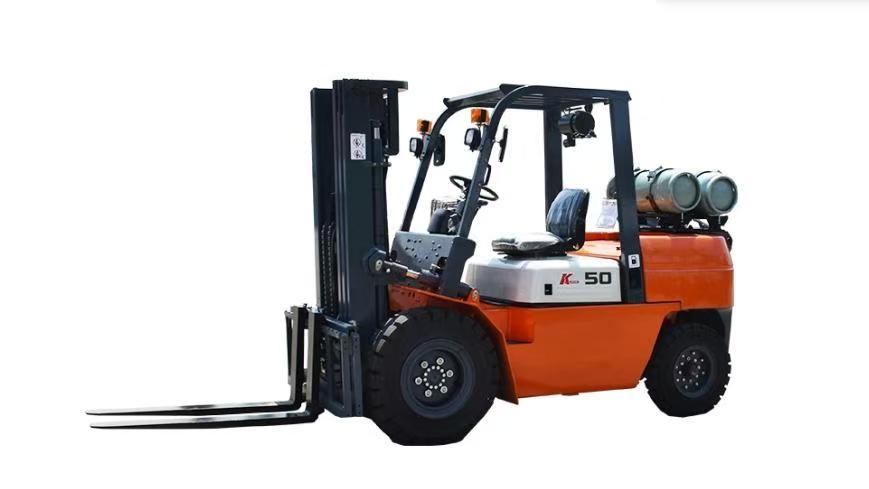
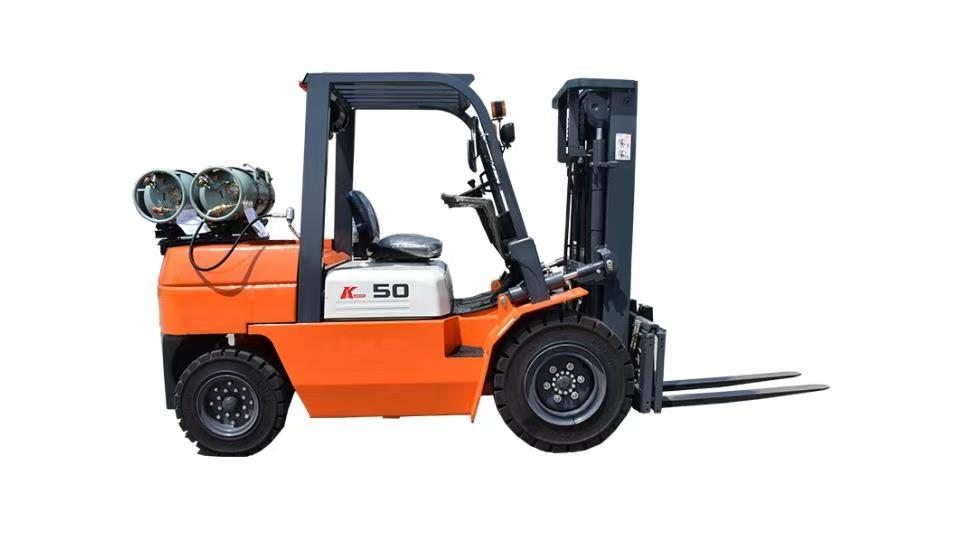
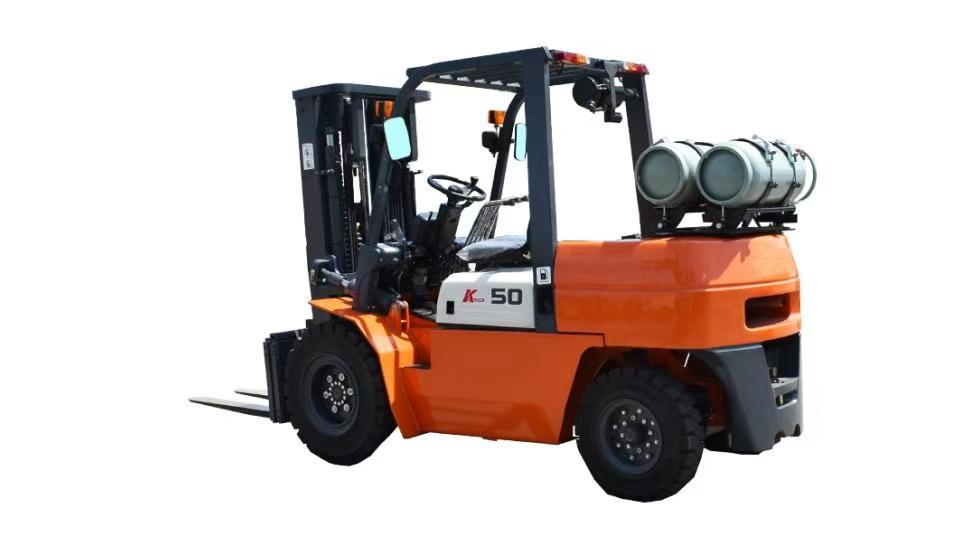
LPG forklifts are powered by liquefied petroleum gas, usually using an internal combustion engine adapted for LPG fuel. They are widely used in warehouses, manufacturing facilities, distribution centers, and applications requiring both indoor and outdoor operation.
One of the main advantages of LPG forklifts is their operational flexibility. They generally produce fewer exhaust pollutants than traditional diesel forklifts and can be suitable for certain indoor applications when adequate ventilation and local requirements are satisfied.
Another advantage is quick refueling. An LPG cylinder can generally be replaced relatively quickly, allowing the forklift to return to work without a long charging period. This can be useful for operations running multiple shifts.
LPG forklifts also provide good lifting and travel performance. They can handle a wide range of loads and are often selected when a company needs more power and flexibility than a typical electric forklift but does not want to rely entirely on diesel equipment.
However, LPG forklifts require proper fuel storage and cylinder handling. Operators and maintenance personnel must follow appropriate safety procedures when replacing or connecting LPG cylinders. LPG engines also require routine maintenance, including engine and fuel-system inspections.
4. Understanding Electric Forklifts
Electric forklifts use rechargeable batteries and electric motors instead of internal combustion engines. Traditional electric forklifts commonly use lead-acid batteries, while many newer models use lithium-ion batteries.
The main advantage of electric forklifts is that they produce no tailpipe exhaust emissions during operation. This makes them particularly attractive for indoor warehouses, food and beverage facilities, pharmaceutical operations, manufacturing plants, and other environments where air quality is important.
Electric forklifts are also significantly quieter than internal combustion forklifts. Lower noise can improve the working environment and make communication easier in busy warehouses.
Maintenance requirements can also be lower because electric forklifts do not have conventional combustion engines requiring engine oil and many engine-related components. However, the battery remains an important component that requires appropriate charging, inspection, and management.
Lead-acid batteries are generally less expensive initially but require regular maintenance and longer charging periods. Lithium-ion batteries typically offer faster charging, higher energy efficiency, and reduced routine battery maintenance, although the initial equipment cost may be higher.
5. Performance Comparison
Performance is one of the most important factors when selecting a forklift. Diesel forklifts generally provide excellent performance in heavy-duty applications. Their high torque and robust engine systems make them suitable for heavy loads, rough surfaces, slopes, and outdoor environments.
LPG forklifts also provide strong performance and can handle many demanding applications. They offer a good compromise between power and flexibility, particularly when the same forklift needs to operate indoors and outdoors.
Electric forklifts have traditionally been associated with lighter-duty indoor applications, but modern electric models have become increasingly capable. Advanced electric forklifts with lithium-ion batteries can provide strong acceleration, precise control, and excellent hydraulic performance.
The actual performance of a forklift depends on more than its power source. Load capacity, rated load center, mast configuration, hydraulic system, tires, transmission, battery capacity, and operating conditions all affect performance.
6. Fuel and Energy Costs
Energy cost is an important part of forklift operating expenses. Diesel forklifts require diesel fuel, LPG forklifts require LPG, and electric forklifts require electricity for battery charging.
The actual energy cost depends on local fuel and electricity prices, forklift efficiency, operating hours, load conditions, and maintenance condition. Therefore, simply comparing the price of diesel, LPG, and electricity per unit does not provide a complete picture.
Electric forklifts can have an advantage in energy efficiency because electric motors can convert electrical energy into mechanical power efficiently. Lithium-ion technology can further improve energy utilization and allow opportunity charging during breaks.
Diesel and LPG forklifts, on the other hand, can operate continuously as long as fuel is available. This can be particularly valuable for operations where downtime for charging is difficult to accommodate.
Businesses should calculate energy costs based on actual daily operating hours and expected annual usage rather than relying only on fuel prices.
7. Purchase Price and Total Cost of Ownership
The initial purchase price is an important consideration, but it should not be the only factor. A forklift with a lower purchase price may have higher fuel or maintenance costs over its lifetime.
Diesel forklifts may have competitive purchase prices, particularly for heavy-duty applications, but operating costs can increase because of fuel consumption and engine maintenance.
LPG forklifts may provide a balanced total cost depending on local LPG prices and operating conditions. Their ability to refuel quickly can also reduce downtime.
Electric forklifts can have a higher initial purchase price, particularly when equipped with advanced lithium-ion batteries. However, lower energy consumption and reduced routine maintenance may help offset the initial investment over time.
The total cost of ownership should include purchase price, energy costs, maintenance, tires, battery costs, downtime, and expected service life.
8. Maintenance Requirements
Maintenance requirements differ significantly between the three forklift types.
Diesel forklifts require regular engine maintenance. Typical service items include engine oil, oil filters, fuel filters, air filters, cooling systems, belts, and other engine components. Transmission, hydraulic, brake, and axle maintenance are also necessary.
LPG forklifts have many similar mechanical maintenance requirements because they also use internal combustion engines. In addition, the LPG fuel system, hoses, regulators, cylinders, and connections need to be inspected regularly.
Electric forklifts generally have fewer engine-related maintenance requirements because they do not have a conventional combustion engine. However, technicians still need to inspect the electric motor, controller, battery, charging system, hydraulic system, brakes, tires, steering components, and other mechanical systems.
Regardless of power type, preventive maintenance is essential for safety and reliability.
9. Emissions and Environmental Considerations
Emissions are an increasingly important consideration when purchasing material-handling equipment.
Diesel forklifts produce exhaust gases during operation, including pollutants that can be particularly important in enclosed spaces. For indoor applications, businesses must consider ventilation and applicable workplace regulations.
LPG forklifts generally produce fewer certain pollutants than diesel forklifts, but they still have an internal combustion engine and produce exhaust emissions. Indoor operation therefore requires appropriate ventilation and compliance with applicable regulations.
Electric forklifts produce no tailpipe exhaust emissions during operation. This makes them particularly attractive for indoor applications and workplaces where maintaining good air quality is important.
However, the environmental impact of an electric forklift also depends on how the electricity used to charge its battery is generated. Battery production and eventual recycling should also be considered when evaluating the overall environmental impact.
10. Indoor vs. Outdoor Applications
The working environment is one of the most important factors when selecting a forklift.
Electric forklifts are particularly well suited to warehouses, distribution centers, factories, cold storage facilities, and other indoor applications. Their low noise and lack of tailpipe emissions can create a more comfortable working environment.
LPG forklifts are flexible and can be suitable for both indoor and outdoor applications when local requirements allow. They are often used in manufacturing and logistics operations where forklifts regularly move between buildings and yards.
Diesel forklifts are particularly suitable for outdoor environments, construction sites, ports, timber yards, agricultural facilities, and heavy industrial applications. They can perform well on uneven surfaces and under demanding workloads.
For mixed indoor/outdoor applications, businesses should carefully consider ventilation, surface conditions, operating hours, and load requirements before choosing the power type.
11. Fueling and Charging Requirements
Diesel forklifts require access to diesel fuel. Refueling is relatively quick, which makes diesel suitable for continuous multi-shift operation.
LPG forklifts require LPG cylinders or an appropriate LPG refueling system. Cylinder replacement can be completed relatively quickly, but operators need proper training and procedures for handling LPG containers.
Electric forklifts require charging infrastructure. Lead-acid batteries generally require longer charging periods and may need battery-changing equipment when multiple shifts are involved.
Lithium-ion batteries offer greater flexibility because they can often support opportunity charging during scheduled breaks. However, the charging system must be properly matched to the battery and forklift.
Before purchasing an electric fleet, companies should evaluate available electrical capacity, charging locations, charging schedules, and the number of forklifts operating simultaneously.
12. Operator Comfort and Working Environment
Operator comfort can directly influence productivity and safety.
Diesel forklifts generally produce more engine noise and vibration. Exhaust emissions may also affect the working environment when the machine operates indoors without sufficient ventilation.
LPG forklifts generally provide a cleaner operating environment than diesel forklifts in many applications, although they still produce engine noise and exhaust emissions.
Electric forklifts are usually the quietest of the three options. Their smooth acceleration and reduced vibration can provide a comfortable operating environment, particularly during long warehouse shifts.
Other factors, including seat design, visibility, steering system, mast configuration, controls, suspension, and overall ergonomic design, are also important when evaluating operator comfort.
13. Choosing the Right Forklift for Different Applications
For heavy outdoor construction work, steel handling, timber yards, ports, and other demanding applications, diesel forklifts are often a strong choice because of their performance and continuous operating capability.
For manufacturing facilities, logistics operations, and applications that require a combination of indoor and outdoor work, LPG forklifts can provide a practical balance of performance and flexibility.
For warehouses, distribution centers, food processing facilities, and indoor manufacturing operations, electric forklifts are often an attractive option because of their low noise and lack of tailpipe emissions.
Lithium-ion electric forklifts are particularly interesting for businesses with multiple shifts because opportunity charging can reduce the need for long battery replacement or charging periods.
The best choice should always be based on the actual operating conditions rather than simply following general industry preferences.
14. Safety Considerations
Safety requirements vary according to the forklift power source.
Diesel forklifts require appropriate fuel handling, exhaust management, and regular inspection of the engine and fuel system. Indoor use should meet applicable ventilation and workplace requirements.
LPG forklifts require special attention to cylinder handling and fuel connections. LPG cylinders should be stored and replaced according to appropriate safety procedures, and the fuel system should be inspected regularly.
Electric forklifts require proper battery charging procedures. Charging areas should be appropriately designed, and batteries, cables, connectors, and chargers should be inspected regularly.
For all forklift types, operators should receive proper training. Daily pre-operation inspections should include tires, forks, mast, hydraulic system, brakes, steering, warning devices, and other critical components.
15. Diesel vs. LPG vs. Electric Forklift Comparison
|
Factor |
Diesel Forklift |
LPG Forklift |
Electric Forklift |
|
Power source |
Diesel fuel |
LPG |
Rechargeable battery |
|
Performance |
Excellent for heavy-duty work |
Very good |
Very good on suitable models |
|
Indoor suitability |
Limited by emissions/ventilation |
Suitable in permitted environments |
Excellent |
|
Outdoor suitability |
Excellent |
Very good |
Depends on model and conditions |
|
Noise |
Higher |
Higher |
Low |
|
Tailpipe emissions |
Yes |
Yes |
No |
|
Refueling/charging |
Fast refueling |
Fast cylinder replacement/refueling |
Requires charging |
|
Routine maintenance |
Higher |
Moderate to high |
Generally lower |
|
Multi-shift operation |
Excellent |
Excellent |
Excellent with proper charging strategy |
|
Typical applications |
Construction, ports, heavy industry |
Manufacturing, logistics, mixed operations |
Warehouses, factories, distribution |
16. Pros and Cons of Each Forklift Type
Diesel Forklifts
Advantages:
Strong torque and performance
Excellent for heavy-duty applications
Suitable for outdoor operations
Fast refueling
Good for continuous multi-shift work
Suitable for demanding environments
Disadvantages:
Exhaust emissions
Higher noise and vibration
Higher engine maintenance requirements
Less suitable for enclosed indoor environments
LPG Forklifts
Advantages:
Good balance of performance and flexibility
Fast refueling
Suitable for many indoor/outdoor applications
Lower emissions than traditional diesel in certain respects
Suitable for multi-shift operations
Disadvantages:
Still produces exhaust emissions
Requires LPG cylinder management
Fuel-system maintenance is necessary
Indoor use depends on ventilation and applicable requirements
Advantages:
No tailpipe emissions during operation
Low noise
Low routine maintenance requirements
Excellent indoor performance
Efficient electric drive systems
Lithium-ion models can support opportunity charging
Disadvantages:
Requires charging infrastructure
Charging planning is necessary
Battery replacement can be expensive
Outdoor performance depends on model, battery, weather, and operating conditions
Initial purchase price may be higher for advanced models
17. How to Select the Best Forklift
The first step is to determine the required load capacity and load center. A forklift must be capable of safely handling the actual loads used in the operation.
Next, consider the required lifting height, mast configuration, aisle width, floor conditions, ramps, operating temperature, and indoor or outdoor environment.
Daily operating hours and the number of shifts are also important. A forklift operating only a few hours per day may have different economic requirements from one operating continuously across multiple shifts.
Energy costs should be calculated based on local diesel, LPG, and electricity prices. Businesses should also consider maintenance costs, battery costs, charging infrastructure, and expected downtime.
Environmental requirements should also be considered. If the forklift operates inside an enclosed warehouse, electric power may offer significant advantages. If the machine operates outdoors with heavy loads and rough surfaces, diesel may be more appropriate.
Finally, calculate the total cost of ownership rather than focusing only on the initial purchase price. The most economical forklift is not necessarily the one with the lowest purchase price; it is the one that provides the best combination of productivity, reliability, operating cost, and service life.
18. Conclusion
Diesel, LPG, and electric forklifts each have their own strengths and are suitable for different operating conditions. Diesel forklifts are particularly strong in heavy-duty outdoor applications where high torque, durability, and fast refueling are important. LPG forklifts provide a flexible balance between performance and fuel convenience and can be suitable for many indoor and outdoor operations when permitted by workplace requirements.
Electric forklifts are increasingly popular for indoor applications because they produce no tailpipe emissions during operation, operate quietly, and generally require less routine maintenance. Modern lithium-ion technology has also improved charging flexibility and made electric forklifts increasingly practical for demanding warehouse operations.
There is no single forklift power source that is best for every business. The right decision should consider load capacity, operating environment, daily working hours, number of shifts, energy costs, maintenance requirements, charging or refueling infrastructure, safety, and total cost of ownership. By evaluating these factors carefully, businesses can select a forklift that delivers reliable performance, improved productivity, and better long-term operating value.
Post time:Aug.12.2026
