
What Makes a Skid Steer Loader So Versatile?
1. Introduction
A skid steer loader is one of the most flexible machines used in modern construction, agriculture, landscaping, road maintenance, and industrial applications. Although its compact size may make it look less powerful than larger construction equipment, a skid steer can perform a surprisingly wide range of tasks. Its versatility comes from a combination of compact dimensions, excellent maneuverability, powerful hydraulics, and the ability to use many different attachments.
Unlike conventional steering systems, a skid steer changes direction by varying the speed and direction of the wheels or tracks on each side. This allows the machine to turn within a very small area, making it particularly useful on crowded construction sites and in confined working environments. More importantly, a quick-coupler system allows operators to replace a standard bucket with pallet forks, hydraulic breakers, augers, grapples, sweepers, trenchers, brush cutters, and many other attachments.
This means that a single skid steer loader can potentially handle loading, digging, grading, lifting, drilling, demolition, landscaping, material handling, and snow removal. In this article, we will examine the major features that make skid steer loaders so versatile and explain how businesses can select the right machine for different applications.
2. What Is a Skid Steer Loader?
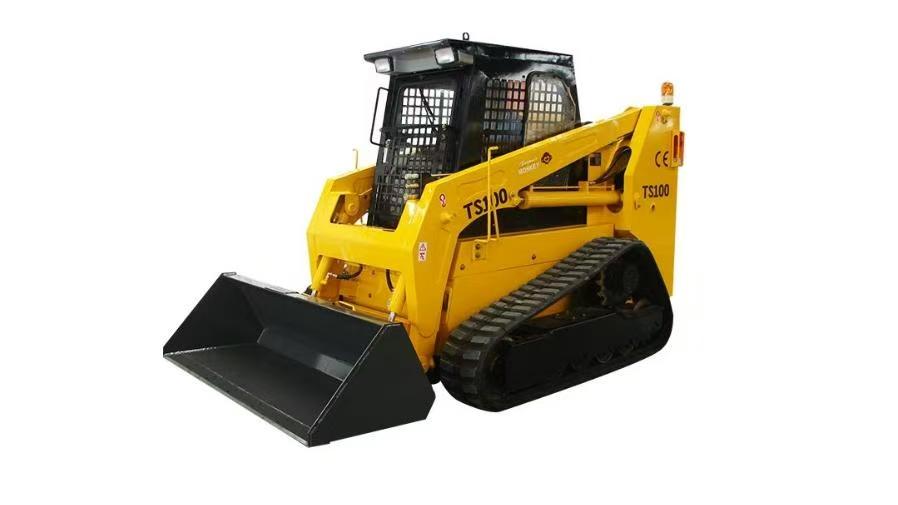
A skid steer loader is a compact, self-propelled loader with a rigid frame and independently controlled wheels or tracks on the left and right sides. Instead of turning the front wheels like a conventional vehicle, the operator controls the speed and direction of each side.
For example, if the left side moves forward while the right side moves backward, the machine can rotate almost around its own center. This steering principle gives the skid steer its distinctive maneuverability.
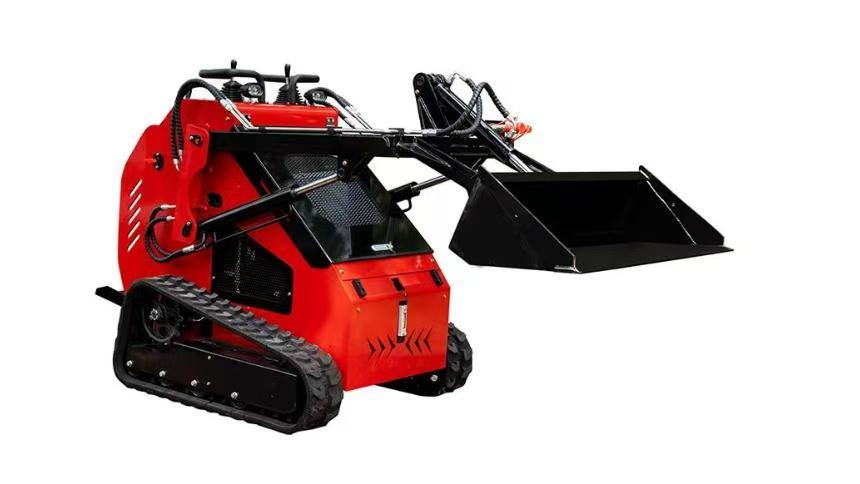
A typical skid steer consists of an engine, hydraulic system, loader arms, operator cab, wheels or tracks, counterweight, and attachment mounting system. The engine supplies power to the hydraulic and travel systems, while the hydraulic system provides the force required for lifting the loader arms and operating hydraulic attachments.
The machine's compact structure makes it suitable for locations where larger wheel loaders or excavators may have difficulty working.
3. Compact Size and Exceptional Maneuverability
One of the biggest advantages of a skid steer loader is its ability to work in relatively small spaces. Construction projects often involve narrow access roads, buildings, walls, fences, landscaping areas, and other obstacles. A large machine may have sufficient power but lack the space needed to maneuver efficiently.
A skid steer can turn within a very small footprint, allowing the operator to reposition the machine quickly. This is particularly useful when loading materials repeatedly, grading a small site, or working inside partially completed buildings.
Its compact dimensions also make transportation easier compared with many larger construction machines. Depending on the model and local transport requirements, a skid steer can often be transported between different job sites with relatively little logistical difficulty.
This combination of compact size and maneuverability is one of the fundamental reasons why skid steers are popular with contractors.
4. The Attachment System: The Key to Versatility
The attachment system is arguably the most important feature behind a skid steer loader's versatility. The basic machine provides power and movement, but attachments determine what the machine can actually accomplish.
A quick coupler allows the operator to change attachments without spending excessive time removing and installing equipment. A contractor can start the morning with a bucket for moving material, switch to pallet forks for handling loads, and then install an auger or breaker for another task.
Common skid steer attachments include:
General-purpose buckets
Pallet forks
Grapples
Hydraulic breakers
Augers
Trenchers
Brush cutters
Sweepers
Snow blowers
Post drivers
Grading attachments
Landscape rakes
This attachment compatibility effectively turns the skid steer into a multi-purpose carrier. Instead of purchasing a separate machine for every task, a business can use one power unit with different attachments.
5. Powerful Hydraulic Performance
Hydraulics are another major reason skid steer loaders can perform such a wide variety of jobs. The hydraulic system powers the loader arms and can also provide hydraulic flow to attachments.
Different attachments require different hydraulic performance. A simple bucket does not require the same hydraulic capacity as a hydraulic breaker or brush cutter. Therefore, skid steers are often available with different auxiliary hydraulic configurations.
Standard-flow hydraulics are suitable for many common attachments, while high-flow systems can provide additional hydraulic power for demanding equipment.
When selecting a skid steer, buyers should therefore look beyond engine horsepower. Auxiliary hydraulic flow, hydraulic pressure, and attachment compatibility can have a major impact on what the machine can accomplish.
6. Lifting, Loading, and Material Handling
The original and most familiar role of a skid steer is loading and material handling. With a standard bucket, it can move soil, sand, gravel, mulch, construction debris, and other bulk materials.
It can also be used for stockpiling materials, cleaning construction sites, and loading smaller quantities of material into trucks or containers.
By replacing the bucket with pallet forks, the same machine can handle palletized materials. This makes skid steers useful in construction, agriculture, landscaping, and industrial environments.
However, operators should always pay attention to rated operating capacity and attachment weight. The lifting capacity of a skid steer depends on its model, configuration, attachment, load position, and operating conditions.
7. Digging, Excavation, and Ground Preparation
A skid steer is also capable of performing many ground-preparation tasks. A bucket can be used for shallow excavation, backfilling, leveling, and moving loose material.
With a trencher attachment, the machine can create narrow trenches for cables, irrigation systems, and other applications. An auger can be installed for drilling holes for posts, signs, landscaping projects, or foundations where appropriate.
Hydraulic breakers extend the machine's capabilities into light demolition and surface-breaking work. They can be used for breaking concrete and other hard materials when the attachment and machine are properly matched.
This ability to switch between excavation, drilling, breaking, and loading attachments makes a skid steer particularly valuable for contractors handling multiple types of work.
8. Landscaping and Agricultural Applications
Skid steer loaders are widely used outside traditional construction. Landscaping companies can use them for moving soil, mulch, rocks, and other materials, while specialized attachments can assist with grading, brush removal, and site preparation.
Agricultural users can employ skid steers for handling feed, manure, bedding, and other materials. Grapples can help with handling branches and other loose materials, while augers and post drivers can support fencing projects.
In areas with significant snowfall, skid steers can also be equipped with snow blades, snow blowers, or sweepers.
The important point is that the machine itself does not need to change dramatically between these applications. Instead, the attachment changes according to the job.
9. Wheeled Skid Steer vs. Compact Track Loader
Skid steer loaders are commonly available in wheeled configurations, while compact track loaders use rubber tracks. Both offer excellent maneuverability, but their working characteristics are different.
Wheeled skid steers are particularly suitable for firm surfaces such as concrete, asphalt, and prepared construction sites. They generally offer good travel efficiency and can be convenient for applications involving frequent movement over hard surfaces.
Compact track loaders distribute their weight over a larger contact area. This can provide advantages on soft, muddy, or uneven ground and may reduce ground pressure compared with a wheeled machine.
The choice depends on the working environment. Contractors working primarily on hard surfaces may prefer wheels, while those frequently working on soft terrain may benefit from tracks.
10. Operator-Friendly Design and Productivity
Versatility is not only about mechanical capability. The operator also needs to be able to use the machine efficiently.
Modern skid steer loaders can feature ergonomic operator stations, joystick controls, improved visibility, suspension seats, and easy-to-use attachment controls. These features can reduce unnecessary operator movement and make frequent attachment changes more practical.
Quick attachment changes are particularly important for contractors who perform several tasks during the same workday. The less time spent changing equipment, the more time the machine can spend performing productive work.
Safety is also important. Operators should be properly trained and follow the manufacturer's operating instructions, especially when using unfamiliar attachments.
11. Skid Steer Loaders in Different Industries
The versatility of skid steers explains their presence across many industries.
Construction: loading, grading, excavation, demolition, material handling, and site cleanup.
Road maintenance: sweeping, surface preparation, snow removal, and material handling.
Agriculture: feeding, cleaning, material handling, fencing, and land maintenance.
Landscaping: grading, soil movement, brush removal, planting preparation, and general property maintenance.
Forestry: handling branches, vegetation management, and material movement with suitable attachments.
Municipal services: street cleaning, snow removal, maintenance, and landscaping.
Industrial applications: material handling, cleaning, facility maintenance, and specialized attachment work.
This broad application range allows businesses to use one machine across multiple departments or projects.
12. Factors That Determine Skid Steer Versatility
Not every skid steer has the same capabilities. Several specifications determine how versatile a particular model will be.
Engine power: More power can support demanding applications, although horsepower should always be considered together with the hydraulic system.
Rated operating capacity: This determines how much load the machine is designed to handle under specified conditions.
Auxiliary hydraulic flow: Higher flow can expand compatibility with hydraulic attachments.
Lift-arm design: Different lift configurations provide different reach and lift characteristics.
Attachment compatibility: A machine that accepts a broad range of attachments can perform more tasks.
Machine dimensions: Compact dimensions are important for restricted working areas.
Operating weight: Weight affects transportation, stability, and ground impact.
Wheel or track configuration: The choice affects performance on different surfaces.
Therefore, versatility should not be judged by engine power alone. It is the combination of these characteristics that determines the machine's practical capabilities.
13. How to Choose the Right Skid Steer Loader
The best skid steer is not necessarily the largest or most powerful model. Buyers should first identify the jobs the machine will perform.
Start by listing the main applications and attachments. If the machine will primarily move materials, a bucket and pallet forks may be sufficient. If it will operate hydraulic breakers, brush cutters, or other demanding attachments, hydraulic specifications become much more important.
The working environment should also be considered. Measure narrow entrances, working areas, and transportation routes if space is limited.
Buyers should compare rated capacity, hydraulic flow, lift height, operating weight, dimensions, engine specifications, attachment compatibility, maintenance requirements, and after-sales support.
It is also wise to consider future applications. A machine selected only for today's work may become limiting if the business later needs additional attachments.
14. Skid Steer Loader vs. Other Compact Equipment
A skid steer occupies an interesting position among compact construction machines.
Compared with a small wheel loader, a skid steer is often more maneuverable and can use a wider variety of specialized attachments. A wheel loader, however, may be preferable for applications requiring greater travel efficiency or larger bucket capacities.
Compared with a mini excavator, a skid steer offers greater attachment versatility for surface-level work, while the mini excavator generally has an advantage in dedicated digging and trenching operations.
Compared with a backhoe loader, a skid steer is smaller and highly maneuverable but does not provide the same integrated digging arm and road-travel capabilities.
A compact track loader provides similar attachment versatility while offering different traction and ground-pressure characteristics.
Therefore, the right choice depends on the primary job rather than simply comparing machine size.
15. Maintenance and Long-Term Versatility
A versatile machine is only valuable if it remains reliable. Regular maintenance is essential for maintaining skid steer performance.
Operators should follow the manufacturer's maintenance schedule and regularly inspect engine oil, filters, hydraulic oil, cooling systems, tires or tracks, hydraulic hoses, attachment connections, and other important components.
Attachments should also be inspected regularly. Damaged hydraulic hoses, worn cutting edges, loose connections, or other problems can reduce productivity and create safety risks.
Preventive maintenance can help identify problems before they become major failures. For businesses that rely heavily on a skid steer, keeping the machine properly maintained can help reduce unexpected downtime and extend its useful service life.
16. Conclusion
So, what makes a skid steer loader so versatile?
The answer is not one single feature. Its versatility comes from the combination of compact dimensions, exceptional maneuverability, powerful hydraulics, flexible attachment compatibility, lifting capability, and operator-friendly design.
A skid steer can move materials with a bucket, handle pallets with forks, drill holes with an auger, break concrete with a hydraulic breaker, clear vegetation with a brush cutter, and perform many other jobs with the appropriate attachment.
For contractors, farmers, landscapers, municipalities, and industrial users, this flexibility can make the skid steer an extremely useful investment. When choosing a machine, the most important approach is to match its capacity, hydraulic system, dimensions, and attachment compatibility with both current and future work requirements.
Ultimately, the skid steer loader's greatest advantage is simple: one compact machine can perform many different jobs by changing the tool at the front.
Post time:Aug.31.2026
