
What Are the Best Tires for Rough Terrain Forklifts on Rocky or Uneven Ground?
1. Introduction
Rough terrain forklifts are specifically designed to operate in challenging environments where standard forklifts cannot perform effectively. Construction sites, quarries, farms, mining areas, and industrial yards often contain rocky, muddy, uneven, or unstable surfaces that place extreme demands on forklift performance. In these harsh conditions, tires play a critical role in ensuring safety, stability, traction, and productivity.
Choosing the correct tires for a rough terrain forklift is not simply a maintenance decision — it directly affects machine efficiency, load handling capability, operator comfort, and operating costs. The wrong tires can lead to poor traction, excessive wear, punctures, reduced stability, and even dangerous accidents on uneven ground. On the other hand, high-quality tires designed for rough terrain can significantly improve machine performance while reducing downtime and maintenance expenses.
Different applications require different tire characteristics. Forklifts operating in rocky quarries need highly durable, cut-resistant tires, while machines working in muddy or sandy conditions require deep tread patterns for maximum traction and flotation. Tire design, tread pattern, rubber compound, sidewall strength, and load capacity all influence how well a forklift performs under demanding conditions.
Modern tire manufacturers continue to develop advanced tire technologies for rough terrain equipment. Innovations such as foam-filled tires, radial construction, self-cleaning tread designs, and puncture-resistant compounds are helping improve durability and efficiency in difficult environments.
This article explores the best tire options for rough terrain forklifts operating on rocky or uneven ground, compares different tire types and tread patterns, explains the most important features to consider, and provides practical recommendations for maximizing performance and tire lifespan.
2. Why Tires Matter for Rough Terrain Forklifts
Tires are one of the most important components of a rough terrain forklift because they directly affect machine stability, traction, and safety. Unlike standard warehouse forklifts that operate on smooth concrete floors, rough terrain forklifts must handle unpredictable outdoor conditions.
Proper tires provide the traction needed to move safely across loose gravel, mud, rocks, and steep slopes. They also absorb shocks and vibrations caused by uneven ground, improving operator comfort and reducing stress on the machine.
The wrong tire choice can result in excessive slipping, poor steering control, unstable lifting, and increased risk of tipping. In heavy-duty applications, tire failure can also lead to costly downtime and repair expenses.
High-quality rough terrain tires improve productivity by maintaining stable contact with the ground, reducing wheel spin, and allowing forklifts to move loads efficiently even in difficult conditions.
3. Common Ground Conditions for Rough Terrain Forklifts
3.1 Rocky Construction Sites
Construction sites often contain sharp rocks, broken concrete, and uneven surfaces. These conditions increase the risk of punctures, sidewall cuts, and excessive tire wear.
Tires used in rocky environments need reinforced sidewalls and durable rubber compounds to withstand impacts and abrasions.
3.2 Muddy and Wet Terrain
Mud and wet soil reduce traction and increase the likelihood of wheel slippage. In these environments, deep lug tread patterns are essential for maintaining grip.
Self-cleaning tread designs help prevent mud buildup that can reduce tire performance.
3.3 Sandy or Loose Soil
Soft ground conditions require tires with good flotation to prevent the forklift from sinking.
Wide tires with aggressive tread patterns distribute machine weight more evenly and improve mobility.
3.4 Gravel and Quarry Operations
Quarry environments are extremely demanding because of constant exposure to sharp stones and abrasive materials.
Tires for quarry operations must offer excellent cut resistance and high load-carrying capacity.
3.5 Agricultural and Farm Environments
Agricultural applications often involve soft soil, wet fields, and uneven farm roads.
Tires designed for farm use should provide strong traction while minimizing ground damage.
4. Main Types of Tires for Rough Terrain Forklifts
4.1 Pneumatic Tires
Pneumatic tires are air-filled and similar in design to heavy-duty truck tires. They provide excellent shock absorption and traction on rough terrain.
These tires are highly effective on uneven surfaces because they conform to the ground and improve stability.
However, pneumatic tires are more vulnerable to punctures in rocky environments.
4.2 Solid Tires
Solid tires are made entirely of rubber and cannot be punctured. They are extremely durable and require less maintenance than pneumatic tires.
Although solid tires perform well in industrial environments, they provide less shock absorption and may reduce operator comfort on rough ground.
4.3 Foam-Filled Tires
Foam-filled tires combine the advantages of pneumatic and solid tires. They maintain the shape and comfort of air-filled tires while eliminating the risk of flats.
These tires are commonly used in mining, demolition, and quarry operations where punctures are frequent.
4.4 Bias Ply vs. Radial Tires
Bias ply tires have stronger sidewalls and are generally more resistant to impacts.
Radial tires provide better heat dissipation, smoother ride quality, and improved fuel efficiency.
The best choice depends on the specific terrain and operating conditions.
5. Best Tire Tread Patterns for Rocky or Uneven Ground
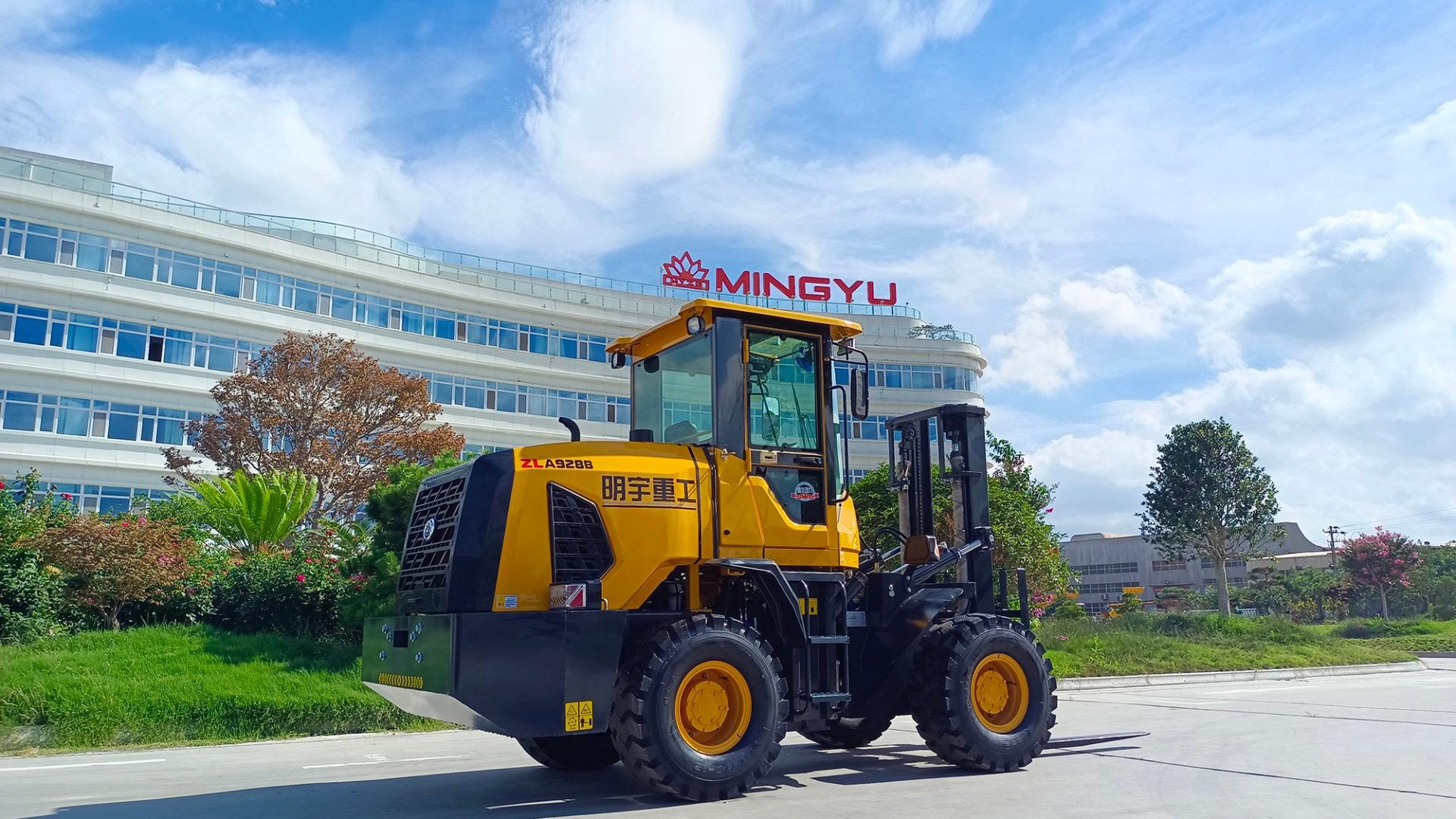
5.1 Deep Lug Tread
Deep lug tread patterns provide excellent traction in mud, loose soil, and uneven terrain.
Large tread blocks improve grip and climbing ability.
5.2 Block Tread Design
Block tread tires offer superior stability on rocky surfaces and distribute weight evenly.
They are highly resistant to wear and damage.
5.3 Self-Cleaning Tread Patterns
Self-cleaning tread designs prevent mud and debris from becoming trapped between tread blocks.
This helps maintain traction in wet conditions.
5.4 Hybrid Tread Patterns
Hybrid designs combine the advantages of aggressive traction and smooth ride comfort.
These tires are ideal for mixed operating environments.
6. Key Features to Look for in Rough Terrain Forklift Tires
6.1 Cut and Puncture Resistance
Rough terrain tires should include reinforced rubber compounds and strong sidewalls to resist sharp rocks and debris.
6.2 Load Capacity
Tires must match the forklift’s lifting capacity to ensure safe operation under heavy loads.
Overloading can cause overheating and premature tire failure.
6.3 Sidewall Strength
Strong sidewalls help protect tires from impact damage on rocky terrain.
6.4 Heat Resistance
Continuous heavy-duty operation generates heat that can shorten tire lifespan.
Heat-resistant compounds improve durability during long working hours.
6.5 Traction and Grip
Strong traction is essential for operating safely on slopes, mud, and unstable ground.
7. Best Tire Materials and Rubber Compounds
Modern rough terrain forklift tires use advanced rubber compounds to improve durability and wear resistance.
Natural rubber offers flexibility and shock absorption, while synthetic compounds improve cut resistance and heat tolerance.
Industrial-grade compounds are specifically designed for heavy-duty applications involving sharp rocks and abrasive surfaces.
Some premium tire manufacturers also use long-life technologies that extend tread lifespan and reduce operating costs.
8. Comparing Pneumatic and Solid Tires for Rough Terrain
8.1 Advantages of Pneumatic Tires
Pneumatic tires provide superior comfort, traction, and shock absorption.
They are ideal for highly uneven surfaces and off-road applications.
8.2 Advantages of Solid Tires
Solid tires eliminate puncture risks and require minimal maintenance.
They are highly durable in environments with sharp debris.
8.3 Which Option Is Better for Rocky Terrain?
For extremely rocky terrain, foam-filled or heavy-duty pneumatic tires are often the best choice because they balance durability and ride comfort.
Solid tires may work well in industrial yards but are less effective on highly uneven surfaces.
9. Top Tire Brands for Rough Terrain Forklifts
9.1 Michelin
Michelin is known for advanced radial tire technology, excellent durability, and strong traction performance.
9.2 Bridgestone
Bridgestone manufactures heavy-duty industrial tires designed for demanding environments.
9.3 Trelleborg
Trelleborg specializes in agricultural and construction tires with excellent flotation and traction.
9.4 Camso
Camso produces highly durable rough terrain tires widely used in construction and mining industries.
9.5 Other Reliable Brands
Other respected brands include Galaxy, BKT, Advance, and Magna.
These manufacturers offer a wide range of rough terrain forklift tire solutions.
10. Tire Maintenance Tips for Rough Terrain Operations
10.1 Proper Tire Pressure Management
Correct tire pressure improves traction, stability, and tire lifespan.
Underinflated or overinflated tires wear unevenly and reduce performance.
10.2 Regular Tire Inspection
Frequent inspections help identify cuts, cracks, and abnormal wear before serious damage occurs.
10.3 Tire Rotation Practices
Rotating tires evenly distributes wear and extends service life.
10.4 Cleaning and Storage
Removing mud, rocks, and debris helps prevent premature deterioration.
Proper storage also protects unused tires from environmental damage.
10.5 Avoiding Overloading
Excessive loads place unnecessary stress on tires and increase the risk of failure.
11. Common Tire Problems on Rocky or Uneven Ground
Rough terrain forklift tires often experience sidewall damage, punctures, uneven tread wear, and heat buildup.
Sharp rocks can cut tire surfaces, while improper inflation may accelerate wear.
Loss of traction is another common problem in muddy or loose terrain conditions.
Regular maintenance and correct tire selection help minimize these issues.
12. How Tire Choice Affects Forklift Productivity
The right tires improve forklift efficiency by increasing traction and reducing wheel spin.
Better traction allows faster loading cycles and safer operation.
Durable tires also reduce downtime caused by punctures and replacements.
Improved ride comfort helps reduce operator fatigue during long working hours.
Overall, selecting high-quality rough terrain tires lowers long-term operating costs while increasing productivity.
13. Future Trends in Rough Terrain Forklift Tire Technology
Tire technology continues to evolve rapidly.
Smart tire pressure monitoring systems are becoming more common and help operators maintain optimal performance.
Manufacturers are also developing advanced puncture-resistant materials and environmentally friendly production methods.
Airless tire technology may become increasingly popular in the future because it eliminates flat tires completely.
As rough terrain equipment becomes more advanced, tire technology will continue improving safety, efficiency, and durability.
14. Conclusion
Selecting the best tires for rough terrain forklifts operating on rocky or uneven ground is essential for safety, performance, and cost efficiency.
The ideal tire depends on the specific working environment, machine size, and operating conditions. Pneumatic, foam-filled, and solid tires each offer unique advantages depending on the application.
Factors such as tread design, puncture resistance, sidewall strength, and load capacity all play important roles in tire performance.
By choosing the correct tires, maintaining them properly, and using high-quality tire technology, operators can significantly improve forklift productivity, reduce downtime, and extend tire lifespan in demanding environments.
Post time:May.26.2026
