
What Attachments Can Be Used on a Backhoe Loader?
1. Introduction
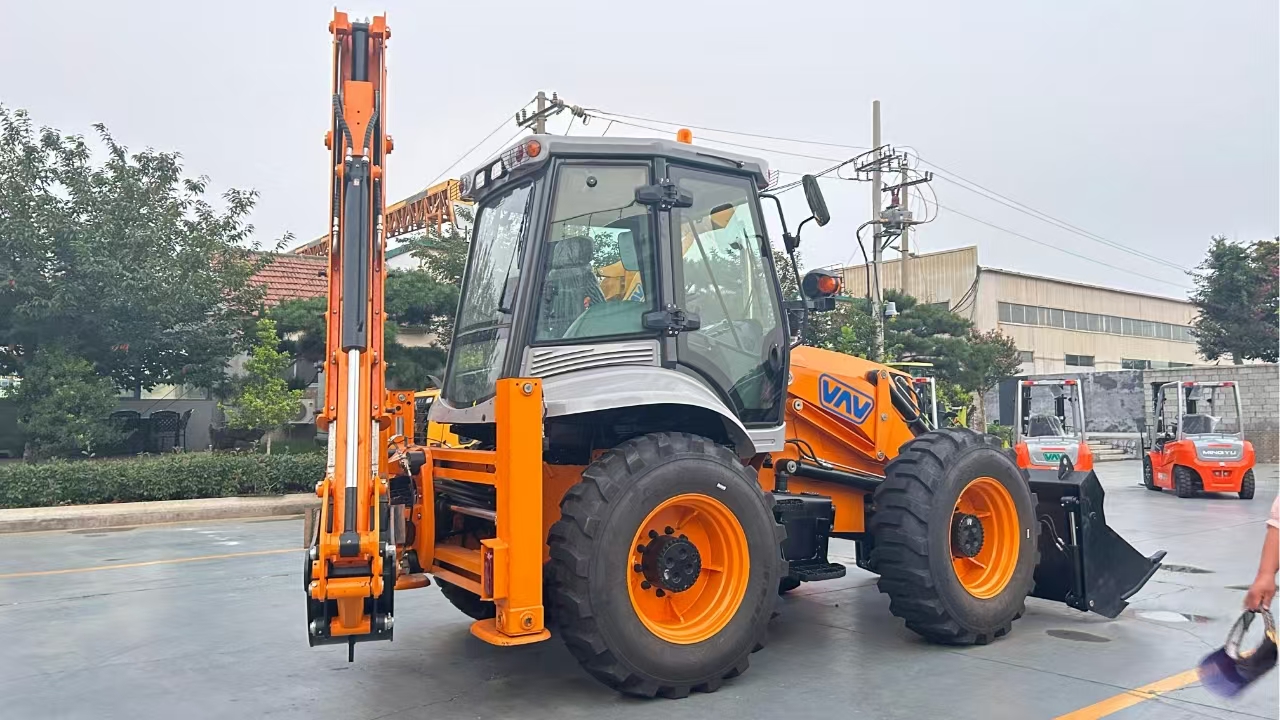
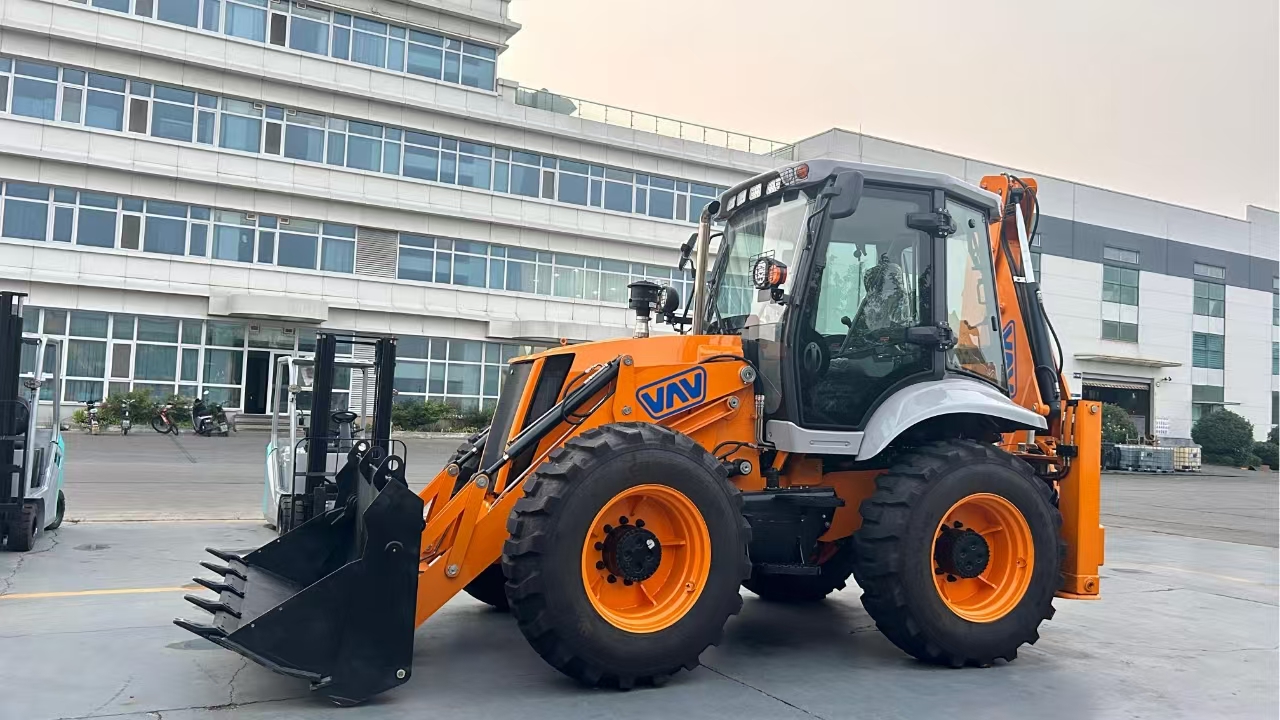
A backhoe loader is one of the most versatile machines used in construction, agriculture, landscaping, road maintenance, and utility work. A standard backhoe loader combines a front loader bucket with a rear excavator arm, allowing one machine to handle several basic tasks without requiring separate loaders and excavators. However, its versatility can be increased significantly by using different attachments.
The right attachment can transform a backhoe loader from a basic digging and loading machine into a multipurpose tool for breaking concrete, drilling holes, moving pallets, clearing vegetation, removing snow, grading land, and handling various materials. This flexibility is particularly valuable for contractors and equipment owners who need to complete different jobs with a limited fleet.
Backhoe loader attachments can generally be divided into several categories, including excavation attachments, hydraulic tools, material-handling attachments, landscaping tools, road-maintenance equipment, and specialized implements. Some attachments are mounted on the rear boom, while others are designed for the front loader arm.
Before selecting an attachment, operators should consider the machine's hydraulic flow, hydraulic pressure, lifting capacity, attachment weight, mounting system, and intended application. Using an attachment that is too heavy or requires more hydraulic power than the machine can provide can reduce performance and may create safety risks.
2. Standard Backhoe Loader Attachments
The standard digging bucket is the most common rear attachment for a backhoe loader. It is designed for digging trenches, foundations, drainage channels, and general excavation work. Different bucket widths allow operators to match the attachment to the required trench or excavation size.
A general-purpose front loader bucket is normally used for loading and moving soil, sand, gravel, construction debris, and other loose materials. Larger buckets can improve productivity when handling lightweight materials, while smaller buckets may be preferable when working with dense materials or in confined spaces.
Some machines can also use specialized buckets such as heavy-duty buckets, narrow trenching buckets, rock buckets, and ditch-cleaning buckets. Selecting the correct bucket can improve digging efficiency while reducing unnecessary wear on the machine.
3. Excavation Attachments
Different excavation jobs require different bucket designs. A narrow trenching bucket is useful for installing water pipes, electrical cables, drainage systems, and other underground utilities. Its narrow profile allows operators to create precise trenches while minimizing the amount of material that needs to be removed.
Heavy-duty digging buckets are designed for more demanding excavation applications. They may feature reinforced structures and stronger teeth for working in harder soils and abrasive conditions.
Rock buckets are suitable for applications involving rocky or compacted ground. Ditch-cleaning buckets, meanwhile, are wider and often have a smooth cutting edge, making them useful for cleaning drainage channels and shaping slopes.
Tilting buckets provide additional flexibility because the bucket can be angled hydraulically. This makes them particularly useful for grading slopes, cleaning ditches, and performing precise landscaping work.
4. Hydraulic Breaker
A hydraulic breaker, sometimes called a hydraulic hammer, is one of the most useful attachments for demolition and hard-material applications. It uses hydraulic power from the backhoe loader to deliver repeated impacts against concrete, asphalt, masonry, or rock.
Contractors can use a breaker for removing concrete foundations, breaking old pavement, preparing demolition sites, and opening trenches through hard surfaces. This can eliminate the need for a separate demolition machine on smaller projects.
When choosing a hydraulic breaker, hydraulic flow and operating pressure are especially important. The breaker must be matched to the auxiliary hydraulic system of the backhoe loader. An attachment that requires excessive hydraulic flow may not operate correctly, while insufficient flow can reduce working efficiency.
5. Auger Attachment
A hydraulic auger allows a backhoe loader to drill holes in the ground. It is commonly used for fence posts, signposts, trees, poles, landscaping projects, and some foundation applications.
Augers are available with different diameters and drilling configurations. The correct size depends on the required hole diameter and soil conditions.
Compared with manually digging individual holes, an auger can significantly increase productivity when many holes need to be drilled. Before operation, the operator should check the soil conditions and ensure that underground utilities are properly identified.
6. Grapples and Material-Handling Attachments
Grapple attachments are useful when materials cannot be handled efficiently with a conventional bucket. A hydraulic grapple can securely hold branches, logs, scrap materials, rocks, and other irregular objects.
Log grapples are particularly useful in forestry and land-clearing applications. They allow the operator to pick up and organize logs without manually positioning each piece.
Pallet forks are another useful attachment for the front loader. They can move pallets, construction materials, bags, pipes, and other packaged goods. However, operators must pay close attention to the rated lifting capacity and load center because lifting performance changes depending on how far the load is positioned from the machine.
7. Grading and Landscaping Attachments
Backhoe loaders are frequently used for landscaping and site preparation, where precision is often more important than digging depth. Grading buckets and other leveling attachments allow operators to spread and smooth soil across a work area.
A wide ditch-cleaning or grading bucket can be particularly effective for shaping slopes and maintaining drainage channels. Landscape rakes can help remove stones, roots, and debris while preparing soil for planting.
For contractors working on residential projects, landscaping sites, and small construction projects, these attachments can allow one backhoe loader to perform several stages of site preparation.
8. Snow and Road-Maintenance Attachments
Backhoe loaders can also be equipped with attachments for winter and road-maintenance work. Snow blades and snow plows can clear snow from roads, parking lots, construction sites, and industrial yards.
A snow blower may be useful when snow needs to be thrown away from the working area rather than simply pushed to the side. Sweeper attachments can remove dirt, sand, leaves, and light debris from paved surfaces.
Other specialized attachments, such as material or salt spreaders, can further expand the machine's role in municipal and property maintenance. This allows equipment owners to use their backhoe loaders throughout the year rather than limiting them to excavation and loading work.
9. Brush-Cutting and Vegetation Attachments
Vegetation management is another important application for backhoe loader attachments. Hydraulic brush cutters can clear grass, weeds, bushes, and light vegetation from roadsides, construction sites, and undeveloped land.
Flail mowers are another option for vegetation management. They are designed to cut and process vegetation efficiently and can be useful for maintaining roadside areas and overgrown land.
The correct attachment should be selected according to vegetation density, working width, hydraulic requirements, and the size of the backhoe loader. Operators should also consider the working environment and maintain a safe distance from people and property because vegetation-cutting tools can throw debris.
10. Specialized Backhoe Loader Attachments
In addition to common buckets and hydraulic tools, many specialized attachments are available for specific industries.
A hydraulic thumb can be mounted alongside the rear bucket to help grip logs, rocks, demolition debris, and other irregular objects. A ripper attachment can loosen compacted soil and other difficult ground conditions before excavation.
A compaction wheel can be used for trench compaction, particularly in utility and pipeline work. A concrete mixing bucket can combine mixing and placement functions on suitable construction sites.
A quick coupler is also an important attachment-related option. It allows operators to change compatible implements more quickly, reducing machine downtime when several different attachments are required during the same project.
11. Front-End Loader Attachments
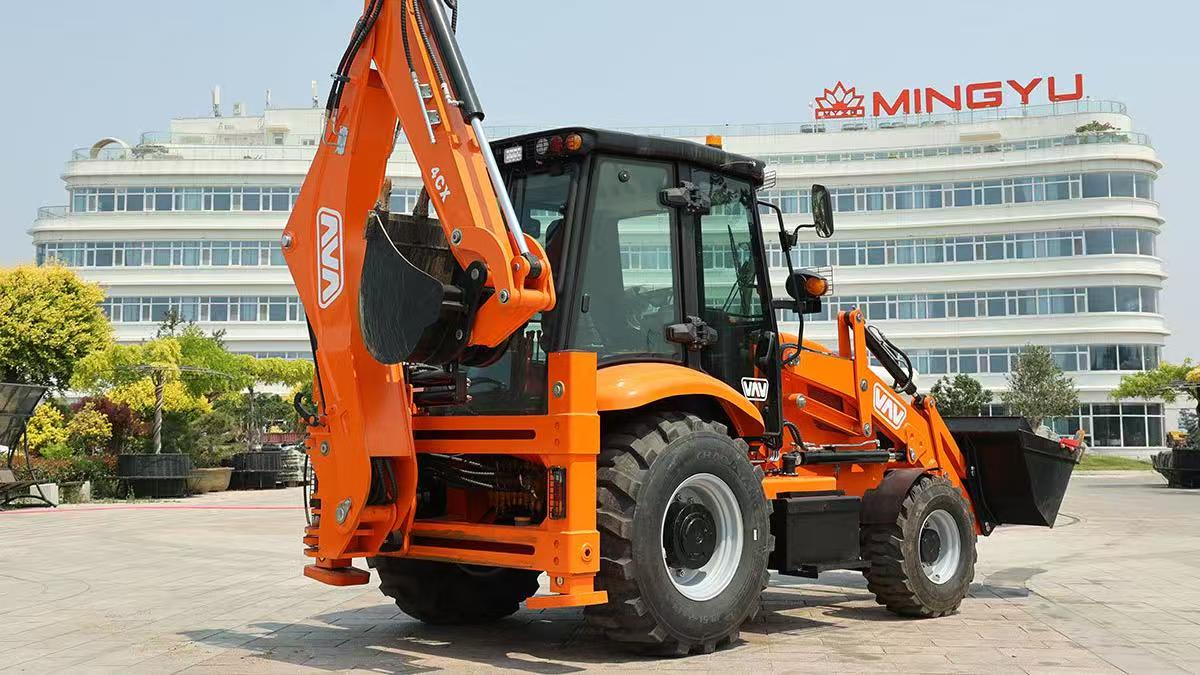
The front loader section of a backhoe loader can accommodate several useful attachments beyond the standard bucket.
A 4-in-1 bucket is particularly versatile because it can perform several functions, including loading, grabbing, grading, and leveling. Pallet forks are better suited to packaged materials, while grapple buckets can handle branches, demolition waste, and other irregular loads.
Light-material buckets can provide greater volume when handling low-density materials such as mulch or certain agricultural products.
The choice between different front attachments depends on the material, required capacity, working conditions, and the machine's rated operating capacity.
12. How to Choose the Right Attachment
The most important factor when choosing a backhoe loader attachment is the application. A contractor digging narrow utility trenches needs a different bucket from a company clearing rocks or moving construction debris.
Hydraulic requirements are also critical. Hydraulic breakers, augers, brush cutters, and other powered attachments require a compatible auxiliary hydraulic circuit. Operators should compare the attachment's required flow and pressure with the backhoe loader's available specifications.
Attachment weight must also be considered. A heavy attachment can reduce the machine's effective lifting capacity and may affect stability.
Other factors include attachment dimensions, mounting method, quick-coupler compatibility, working width, material type, and frequency of use. Choosing an attachment based on actual working conditions rather than simply selecting the largest available option usually produces better overall performance.
13. Attachment Compatibility and Hydraulic Requirements
Not every attachment is compatible with every backhoe loader. Mechanical dimensions must match, including mounting points, pins, coupler dimensions, and attachment weight.
Hydraulic attachments require additional attention. The machine's auxiliary hydraulic circuit must provide suitable hydraulic flow and pressure. The hydraulic hoses and connectors must also be compatible.
For attachments such as breakers, augers, and brush cutters, manufacturers normally provide recommended hydraulic specifications. These figures should be compared with the backhoe loader's technical data before purchasing or installing the attachment.
A quick coupler can make attachment changes faster, but the coupler and attachments must be designed to work together correctly. Proper locking and inspection are essential before operating the machine.
14. Safety When Using Attachments
Safety procedures should always be followed when changing or operating attachments. Before installation, the operator should inspect the attachment, pins, locking mechanisms, hydraulic hoses, and connection points.
The machine should never be operated beyond its rated capacity. This is particularly important when using forks, grapples, lifting attachments, or other tools that handle suspended or elevated loads.
Hydraulic pressure can remain in the system even when the engine is stopped, so appropriate procedures should be followed when connecting or disconnecting hydraulic equipment.
Operators should also understand the specific operating characteristics of each attachment. A breaker, auger, mower, and bucket behave differently and require different operating techniques.
15. Maintenance of Backhoe Loader Attachments
Proper attachment maintenance can extend service life and reduce unexpected downtime. Buckets should be inspected regularly for worn teeth, cutting edges, cracks, pins, and bushings.
Hydraulic attachments require additional checks of hoses, fittings, cylinders, and hydraulic connections. Leaks should be addressed promptly.
Moving components should be lubricated according to the manufacturer's recommendations. Attachments should also be cleaned after use, particularly when they have been exposed to mud, corrosive materials, or abrasive substances.
When an attachment is not being used, it should be stored in a suitable location where it will not be damaged by weather, impact, or improper handling.
16. Conclusion
A backhoe loader can perform far more than basic digging and loading when equipped with the right attachments. Standard buckets, trenching buckets, hydraulic breakers, augers, grapples, pallet forks, grading tools, snow equipment, brush cutters, and specialized implements can significantly expand its applications.
The best attachment depends on the specific job, material, hydraulic system, machine capacity, and working environment. For contractors and equipment owners, investing in several compatible attachments can increase machine utilization and reduce the need for additional specialized equipment.
Before purchasing an attachment, always confirm its dimensions, weight, hydraulic flow requirements, hydraulic pressure requirements, mounting system, and compatibility with the specific backhoe loader model. With the correct combination of attachments, a backhoe loader can become a highly flexible machine for construction, agriculture, landscaping, utilities, road maintenance, and many other applications.
Post time:Sep.10.2026
