
How Much Does a New or Used Backhoe Loader Cost in 2026?
1. Backhoe loaders continue to be among the most practical and cost-effective pieces of construction equipment available in 2026. Combining a powerful front loader with a versatile rear excavator, these machines perform multiple tasks without requiring separate equipment. Whether you are digging trenches, loading gravel, clearing construction sites, landscaping, or performing municipal maintenance, a backhoe loader offers exceptional flexibility while reducing equipment investment and operating costs.
As infrastructure development, agricultural modernization, and urban construction projects continue to grow worldwide, demand for backhoe loaders remains strong. Contractors, rental companies, farmers, and government agencies are all seeking reliable machines that deliver excellent performance while keeping ownership costs under control. At the same time, buyers face an increasingly diverse market, with premium brands offering advanced technology and Chinese manufacturers providing competitive alternatives at attractive prices.
Understanding the cost of purchasing a backhoe loader involves more than simply comparing sticker prices. Engine power, operating weight, digging depth, hydraulic performance, attachments, emissions compliance, and overall machine condition all influence the final investment. Buyers must also consider transportation, maintenance, financing, fuel consumption, depreciation, and resale value before making a purchasing decision.
This guide provides a comprehensive overview of new and used backhoe loader prices in 2026. You'll learn what affects pricing, how to compare different brands, the advantages of buying new versus used equipment, hidden ownership costs, inspection tips, and practical strategies for securing the best value for your investment.
2. Average Price of a New Backhoe Loader in 2026
Purchasing a brand-new backhoe loader offers the advantages of factory warranty, improved fuel efficiency, modern operator comfort, and the latest safety technologies. Although new equipment requires a larger upfront investment, many buyers find that lower maintenance costs and increased productivity justify the higher purchase price over the machine's lifetime.
Entry-Level Compact Backhoe Loaders
Compact backhoe loaders are designed for light construction, landscaping, agriculture, utility maintenance, and municipal work. These machines typically feature engines ranging from 45 to 75 horsepower and operating weights between 5 and 7 tons.
Typical features include:
Four-wheel drive options
Standard loader bucket
Compact dimensions for confined spaces
Excellent maneuverability
Lower fuel consumption
Average price range in 2026:
Basic configuration: US$35,000–55,000
Well-equipped models: US$50,000–65,000
These machines are ideal for small contractors and property owners who require versatility without investing in larger construction equipment.
Mid-Size Backhoe Loaders
Mid-size machines represent the most popular segment of the global market. They balance digging power, lifting capacity, and operating costs, making them suitable for a wide variety of construction projects.
Typical specifications include:
75–100 HP diesel engine
Operating weight of 7–9 tons
Digging depth around 4.3–5.8 meters
Loader bucket capacity of approximately 1.0–1.3 cubic meters
Comfortable enclosed cab with air conditioning
Advanced hydraulic controls
Average purchase price in 2026:
Standard models: US$65,000–90,000
Premium configurations: US$90,000–110,000
These machines are widely used by construction companies, utility contractors, and rental fleets because they deliver excellent productivity across diverse applications.
Heavy-Duty Premium Backhoe Loaders
Large backhoe loaders are built for demanding excavation, road construction, mining support, and heavy infrastructure projects. They offer greater breakout force, larger bucket capacities, and improved hydraulic performance.
Common features include:
Engines exceeding 100 HP
Extendable dipper options
Pilot hydraulic controls
High-flow hydraulic systems
Ride control
Automatic transmission
Enhanced operator comfort
Advanced telematics
Average pricing:
Standard heavy-duty models: US$110,000–140,000
Fully equipped premium models: US$140,000–170,000+
Although these machines command higher prices, they provide superior productivity and lower operating costs per cubic meter of material moved.
Price Comparison by Machine Category
|
Machine Type |
Typical Price (USD) |
|
Compact Backhoe Loader |
$35,000–65,000 |
|
Mid-Size Backhoe Loader |
$65,000–110,000 |
|
Heavy-Duty Backhoe Loader |
$110,000–170,000+ |
In addition to machine size, pricing is influenced by brand reputation, engine manufacturer, emissions standards, optional attachments, transmission type, and electronic control systems. Buyers comparing quotations should ensure that they evaluate machines with similar specifications rather than focusing solely on purchase price.
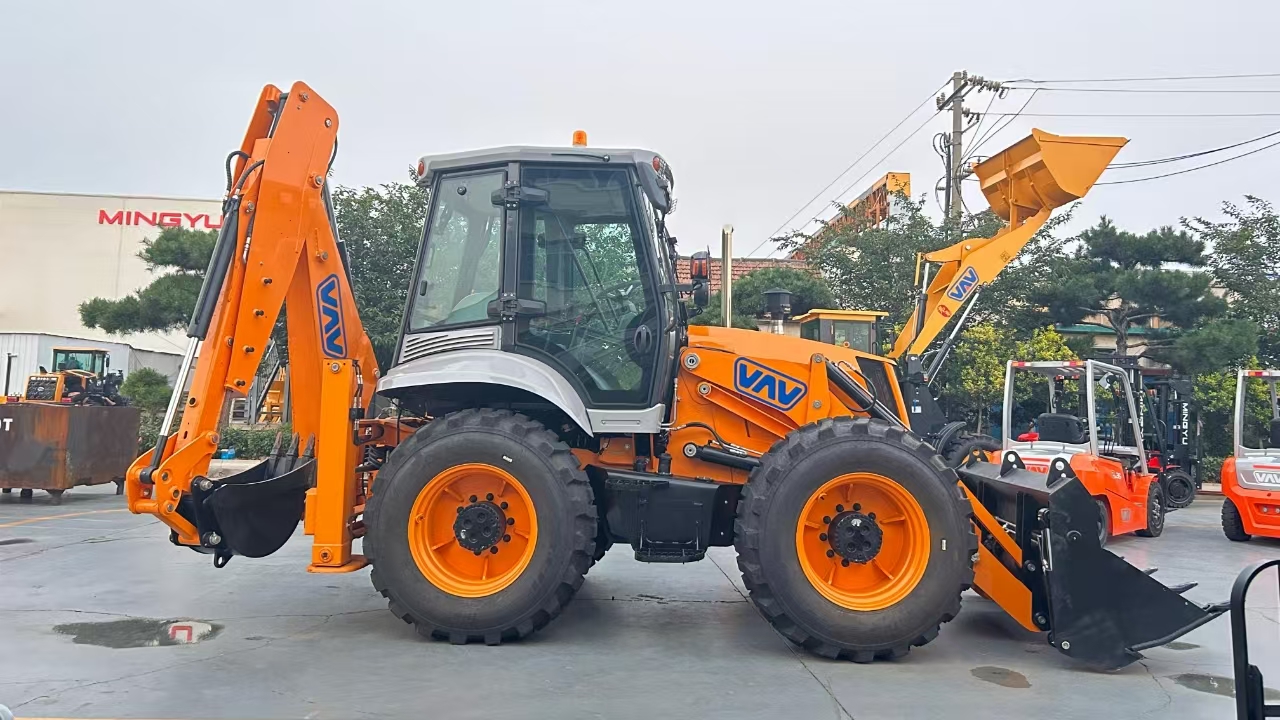
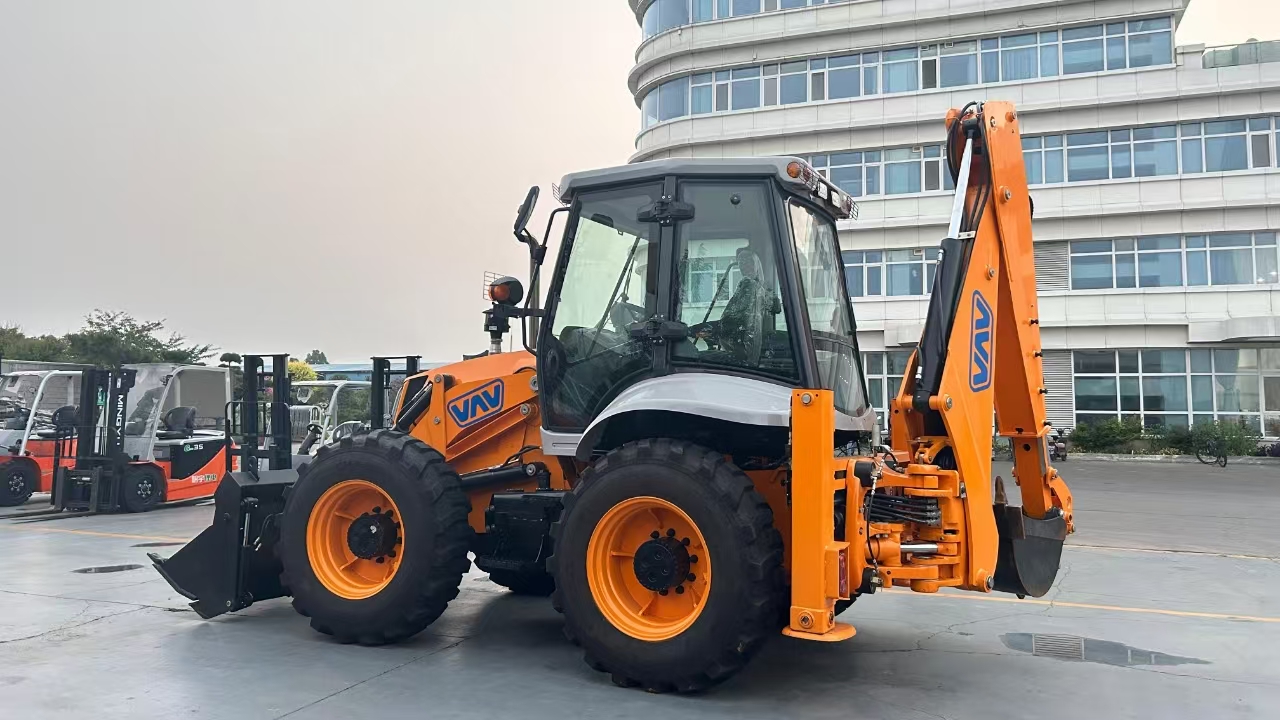
Many Chinese manufacturers now offer competitively priced backhoe loaders equipped with reliable diesel engines, four-wheel drive, enclosed cabs, and modern hydraulic systems. For international buyers seeking lower acquisition costs while maintaining solid performance, these machines have become increasingly attractive alternatives to premium European, American, and Japanese brands.
3. Average Price of a Used Backhoe Loader in 2026
For many contractors, farmers, and rental businesses, purchasing a used backhoe loader is an effective way to reduce initial investment while still obtaining a capable and productive machine. In 2026, the used equipment market remains active due to increasing demand for affordable construction machinery and the availability of well-maintained machines from fleet renewals. However, prices vary significantly depending on age, operating hours, maintenance history, brand reputation, and overall condition.
Unlike new equipment, used backhoe loaders do not have fixed pricing. Two machines of the same model can differ in value by tens of thousands of dollars if one has been properly serviced while the other has experienced heavy wear or poor maintenance. Buyers should therefore evaluate total machine condition rather than focusing only on purchase price.
Machines Less Than Five Years Old
Backhoe loaders that are less than five years old usually offer the best balance between price and remaining service life. Many of these machines come from construction companies upgrading their fleets or rental businesses replacing equipment on a regular schedule.
Typical characteristics include:
Modern emissions-compliant engines
Updated hydraulic systems
Comfortable operator cabs
Relatively low operating hours
Complete maintenance records
Minimal structural wear
Average market price:
US$45,000–90,000
Premium brands such as Caterpillar, JCB, CASE, and John Deere generally remain at the higher end of this range because of their strong resale values and global parts availability.
Machines Between Five and Ten Years Old
This age category represents the largest portion of the used market. Many machines still have years of productive service remaining if they have received regular maintenance.
Typical features include:
Moderate operating hours
Normal cosmetic wear
Some replacement of hydraulic hoses and seals
Good engine reliability
Lower purchase price than newer equipment
Average market price:
US$30,000–60,000
For many small contractors, this age range provides the best value because depreciation has already occurred while productivity remains high.
Machines More Than Ten Years Old
Older backhoe loaders can still perform well for light-duty applications, agriculture, and occasional construction work. However, buyers should expect increased maintenance requirements.
Possible concerns include:
Hydraulic cylinder leakage
Engine wear
Transmission repairs
Rust and structural fatigue
Worn pins and bushings
Electrical issues
Reduced fuel efficiency
Average market price:
US$12,000–35,000
While these machines may appear inexpensive, repair costs can quickly exceed the initial savings if major components require replacement.
Typical Resale Values by Machine Condition
Machine condition is often more important than age alone.
|
Condition |
Typical Market Value |
|
Excellent |
70–85% of original purchase price |
|
Very Good |
60–70% |
|
Good |
45–60% |
|
Fair |
30–45% |
|
Poor |
Below 30% |
Machines with complete service records, original paint, low operating hours, and documented maintenance consistently command higher resale prices.
Depreciation Trends in 2026
Most backhoe loaders lose value most rapidly during the first three to five years of ownership. After that, depreciation slows considerably, allowing buyers of quality used equipment to obtain excellent value.
General depreciation pattern:
Year 1: 10–20%
Years 2–5: 30–40% total
Years 6–10: Approximately 50–60% total
After 10 years: Value depends mainly on condition and maintenance rather than age
Well-known brands usually retain value better because replacement parts, dealer support, and resale demand remain strong worldwide.
4. What Factors Affect Backhoe Loader Prices?
Backhoe loader prices vary considerably because every machine is configured differently. Understanding these pricing factors helps buyers compare quotations accurately and choose equipment that offers the best long-term value.
Brand Reputation
The manufacturer has one of the greatest influences on pricing.
Premium international brands generally include:
Caterpillar
JCB
CASE
John Deere
New Holland
Kubota
These manufacturers offer advanced technology, extensive dealer networks, and excellent resale value, but they also command higher purchase prices.
Chinese manufacturers have become increasingly competitive by offering reliable machines with modern hydraulic systems and attractive pricing. Many international buyers now consider Chinese backhoe loaders because they provide good performance while significantly reducing initial investment.
Engine Power
Higher horsepower increases productivity but also raises purchase cost.
Typical categories include:
45–60 HP for compact work
70–90 HP for general construction
90–110 HP for heavy-duty applications
Over 110 HP for demanding excavation projects
More powerful engines improve digging force, lifting capacity, and travel performance but consume more fuel.
Operating Weight
Heavier machines generally provide:
Greater stability
Higher breakout force
Larger lifting capacity
Improved digging performance
However, they also cost more to purchase, transport, and maintain.
Digging Depth
Machines with deeper excavation capability require stronger booms, larger hydraulic cylinders, and reinforced structures.
Typical digging depths include:
3.5–4.0 m for compact models
4.2–5.0 m for standard models
More than 5.5 m with extendable dipper options
Greater digging depth usually increases machine price.
Loader Bucket Capacity
Larger buckets improve material handling efficiency but require stronger lift arms and hydraulic systems.
Common bucket capacities include:
0.8 m³
1.0 m³
1.2 m³
1.4 m³ or larger
Higher-capacity loaders generally cost more but reduce loading cycle times.
Hydraulic Performance
Hydraulic systems determine digging speed, lifting power, and attachment compatibility.
Premium hydraulic features include:
Load-sensing hydraulics
High-flow auxiliary circuits
Pilot-operated controls
Electro-hydraulic joysticks
Faster cycle times
Advanced hydraulics improve productivity while increasing equipment cost.
Two-Wheel Drive vs. Four-Wheel Drive
Four-wheel-drive models remain the preferred choice for most contractors because they provide:
Better traction
Improved climbing ability
Enhanced stability
Superior performance on muddy or uneven terrain
Although 4WD machines typically cost several thousand dollars more than 2WD versions, the productivity benefits often justify the investment.
Extendable Dipper (Extendahoe)
An extendable dipper significantly increases digging reach without requiring a larger machine.
Advantages include:
Deeper trenching
Longer reach
Reduced machine repositioning
Higher productivity
This option increases purchase price but is highly valued by utility and pipeline contractors.
Cab Configuration
Operator comfort directly affects productivity.
Premium cab options include:
Air conditioning
Heating
Suspension seat
Rear-view camera
Touchscreen display
Bluetooth connectivity
Noise insulation
LED work lights
Well-equipped cabs improve operator efficiency during long working hours and enhance resale value.
Optional Attachments
Attachments greatly expand machine versatility but also add to the total investment.
Popular attachments include:
Hydraulic breaker
Auger
Grapple
Pallet forks
Trenching bucket
Cleaning bucket
Snow blade
Compactor plate
Although optional attachments increase initial costs, they often eliminate the need for additional specialized equipment, resulting in lower overall operating expenses.
Modern buyers increasingly evaluate the total cost of ownership rather than the purchase price alone. A machine with higher initial cost but superior fuel efficiency, longer service intervals, greater reliability, and stronger resale value often proves to be the more economical investment over its lifetime.
5. New vs. Used Backhoe Loaders: Which Offers Better Value?
One of the most important decisions buyers face in 2026 is whether to invest in a brand-new backhoe loader or purchase a used machine. The right choice depends on budget, expected annual operating hours, project requirements, financing options, and long-term business goals. While new equipment offers the latest technology and manufacturer support, used machines can provide substantial savings if carefully selected and properly maintained.
Advantages of Buying a New Backhoe Loader
A new backhoe loader delivers maximum reliability and the latest engineering improvements. For contractors who depend on equipment every day, minimizing downtime can be more valuable than reducing the initial purchase price.
Key advantages include:
Full manufacturer warranty
Brand-new engine, transmission, and hydraulic components
Latest fuel-efficient engine technology
Compliance with current emissions regulations
Lower maintenance costs during the first several years
Improved operator comfort and safety features
Longer expected service life
Higher productivity with modern hydraulic systems
Easier financing through manufacturers or dealers
New machines are especially suitable for companies with heavy workloads, rental fleets, and contractors working on projects where equipment reliability is critical.
Advantages of Buying a Used Backhoe Loader
Used equipment remains popular because it significantly reduces capital investment while still providing dependable performance.
Major benefits include:
Lower purchase price
Reduced depreciation
Faster return on investment
Lower insurance costs
Immediate availability
Proven reliability if maintenance records are available
Greater selection across different brands and models
For smaller businesses or seasonal operations, a well-maintained used machine often provides excellent value without the financial commitment of purchasing new equipment.
Potential Risks of Buying Used Equipment
Despite the lower purchase price, buying used equipment carries certain risks that should not be overlooked.
Possible issues include:
Unknown maintenance history
High operating hours
Hidden structural damage
Hydraulic leaks
Engine wear
Transmission problems
Electrical faults
Limited or no warranty
Difficulty sourcing replacement parts for older models
A professional inspection before purchase can help identify these problems and prevent costly repairs later.
Cost Comparison
|
Factor |
New Backhoe Loader |
Used Backhoe Loader |
|
Purchase Price |
High |
Lower |
|
Warranty |
Full factory warranty |
Usually limited or none |
|
Maintenance |
Minimal initially |
May increase with age |
|
Fuel Efficiency |
Highest |
Depends on condition |
|
Downtime Risk |
Low |
Moderate |
|
Depreciation |
Faster during first years |
Much slower |
|
Financing |
Easier |
May vary by lender |
|
Resale Value |
Higher if maintained |
Depends on age and condition |
When comparing new and used machines, buyers should evaluate the total cost of ownership (TCO) rather than focusing solely on the purchase price. Factors such as fuel consumption, maintenance expenses, resale value, and productivity often have a greater impact on long-term profitability.
6. Hidden Costs Beyond the Purchase Price
The purchase price is only one part of the total investment required to own a backhoe loader. Many first-time buyers underestimate the ongoing expenses associated with transportation, maintenance, insurance, and operation. Understanding these hidden costs allows businesses to prepare more accurate budgets and avoid unexpected financial surprises.
Transportation and Shipping
Moving a backhoe loader from the manufacturer or dealer to the job site can represent a significant expense, particularly for international buyers.
Transportation costs depend on:
Machine size and weight
Shipping distance
Container or Ro-Ro transport
Inland trucking
Port handling charges
Customs clearance
International buyers should also include freight, insurance, and destination handling fees in their total purchasing budget.
Import Duties and Taxes
When importing a backhoe loader, additional costs may include:
Import duties
Value-added tax (VAT)
Goods and Services Tax (GST)
Customs processing fees
Port storage charges
Documentation fees
These expenses vary widely depending on the destination country and applicable trade agreements.
Insurance
Equipment insurance protects against theft, fire, accidents, and natural disasters. Premiums depend on factors such as machine value, usage, operating environment, and local regulations.
Although insurance increases annual operating costs, it can prevent substantial financial losses in the event of unexpected damage.
Registration and Licensing
In some regions, construction equipment used on public roads must be registered or licensed. Additional costs may include:
Registration fees
License plates
Road permits
Periodic inspections
Requirements differ by country and local jurisdiction.
Routine Maintenance
Preventive maintenance is essential for maximizing equipment lifespan and minimizing downtime.
Typical maintenance tasks include:
Engine oil and filter changes
Hydraulic oil replacement
Fuel filter replacement
Air filter cleaning
Greasing pins and bushings
Coolant replacement
Belt inspection
Battery maintenance
Regular servicing is far less expensive than repairing major mechanical failures.
Fuel Consumption
Fuel is one of the largest operating expenses throughout the machine's life.
Fuel usage depends on:
Engine size
Operator experience
Load conditions
Hydraulic workload
Terrain
Idle time
Choosing a fuel-efficient machine can significantly reduce annual operating costs.
Operator Training
Even experienced operators benefit from training on new machine controls and safety procedures.
Proper training helps:
Reduce fuel consumption
Minimize equipment damage
Improve productivity
Increase workplace safety
Extend machine lifespan
Training costs are often recovered through improved operational efficiency.
Replacement Parts
Wear parts eventually require replacement.
Common replacement items include:
Hydraulic hoses
Bucket teeth
Cutting edges
Filters
Seals
Pins
Bushings
Tires
Batteries
Belts
Selecting a manufacturer with strong global parts availability can reduce repair delays and maintenance costs.
Tires
Backhoe loader tires experience continuous wear under demanding conditions.
Replacement frequency depends on:
Surface conditions
Load weight
Tire quality
Operating hours
Driving habits
Premium tires cost more initially but often provide longer service life and better traction.
Attachments
Many buyers purchase additional attachments after acquiring the machine.
Post time:Jul.15.2026
