
What is the Maximum Lifting Height of a Pallet Stacker: A Complete Guide
1. Introduction
Pallet stackers are essential tools in warehouses, retail storage, and logistics operations. They allow workers to lift and move pallets efficiently, saving time and reducing physical strain. One of the most important specifications when choosing a pallet stacker is its maximum lifting height. Knowing this allows you to select the right equipment for your storage racks, ensure safety, and optimize space.
This guide will explore everything you need to know about the maximum lifting height of a pallet stacker. We’ll cover types of stackers, how to measure lifting height, safety considerations, and tips for operators to maximize efficiency without compromising safety.
2. What is a Pallet Stacker?
2.1 Definition and Function
A pallet stacker is a lifting device designed to raise, lower, and transport palletized goods over short distances. Unlike forklifts, which are larger and more powerful, pallet stackers are typically smaller, more maneuverable, and suitable for indoor operations. They are widely used in warehouses, retail stores, and manufacturing facilities to help store goods efficiently and reduce manual lifting.
Stackers can be:
Manual – powered entirely by human force
Semi-electric – lifting powered electrically, but movement manual
Fully electric – lifting and driving both powered
2.2 Key Components
To understand lifting height, you should be familiar with the stacker’s key parts:
Mast: The vertical frame that allows the forks to lift to higher levels.
Forks: The horizontal arms that carry the pallet.
Hydraulic system: Powers the lifting mechanism in electric or semi-electric stackers.
Wheels and chassis: Ensure stability and mobility while supporting the load.
3. Understanding Maximum Lifting Height
3.1 Definition
The maximum lifting height of a pallet stacker is the highest vertical distance the forks can reach from the ground while maintaining stability. This measurement is critical for planning storage layouts and ensuring that the stacker can reach your racks safely.
3.2 Importance in Warehouse Operations
Optimized Storage: Ensures that goods are stacked efficiently, using vertical space.
Safety: Prevents tipping or accidents caused by exceeding the stacker’s designed height.
Equipment Compatibility: Guarantees the stacker can operate within the dimensions of racks and shelving units.
3.3 Factors Affecting Maximum Lifting Height
Several factors can impact the maximum lifting height:
Type of stacker: Manual stackers generally lift lower than electric models.
Mast design: Single or double mast systems can affect height and stability.
Fork length: Longer forks may limit lifting height slightly due to clearance.
Load weight: Heavier loads may reduce safe lifting height.
Floor condition: Uneven or sloped floors can affect lifting capacity.
4. Types of Pallet Stackers and Their Typical Lifting Heights
4.1 Manual Pallet Stackers
Manual stackers are ideal for light-duty indoor use. Typical lifting heights range from 1.5 meters to 3 meters. They are cost-effective but require physical effort and are slower to operate compared to electric models.
Pros:
Affordable
Simple maintenance
Lightweight
Cons:
Limited height
Requires physical effort
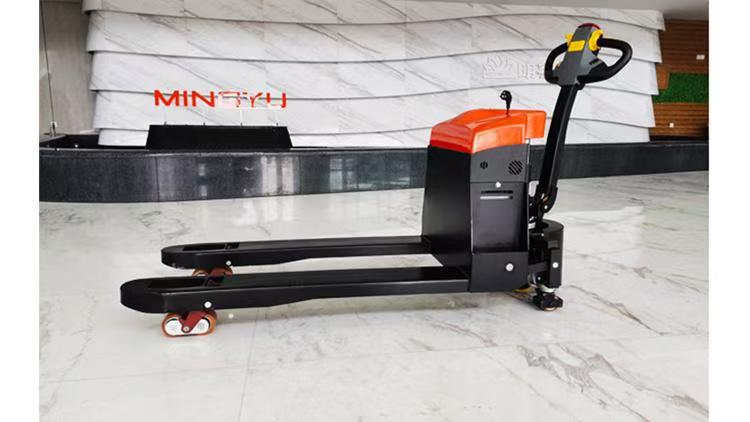
4.2 Electric Pallet Stackers
Electric stackers use battery power for lifting and sometimes for movement. They can reach heights between 3 to 5.5 meters, depending on the model. These stackers improve efficiency and reduce operator fatigue.
Pros:
Faster operation
Can lift higher loads
Minimal physical effort
Cons:
Higher initial cost
Requires battery maintenance
4.3 Semi-Electric Pallet Stackers
Semi-electric stackers lift electrically but require manual pushing for movement. They are a good compromise between manual and fully electric models, offering medium lifting heights of 2 to 4 meters.
4.4 High-Lift Pallet Stackers
High-lift models are designed for multi-tier racking systems in modern warehouses. They can reach up to 6 meters or more, but stability becomes a key concern. Operators must follow safety guidelines and avoid overloading to prevent accidents.
5. How to Measure Maximum Lifting Height
Understanding how to determine a stacker’s maximum height is crucial:
Consult Manufacturer Specifications: Check the product datasheet for maximum lifting height ratings.
Measure From Floor to Forks: Use a tape measure to determine the vertical distance from the floor to the top of the fully raised forks.
Account for Load and Safety Margins: Heavier loads may reduce effective lifting height slightly, so always follow manufacturer guidelines.
Consider Rack Clearance: Ensure the stacker can reach the top shelf without hitting beams or obstructions.
6. Safety Considerations
6.1 Stability and Load Balance
High lifting heights increase the risk of tipping. Operators should:
Keep the load centered
Avoid lifting over the rated weight limit
Tilt the mast slightly backward for added stability
6.2 Operating Guidelines
Lift slowly and gradually
Avoid raising loads on uneven surfaces
Maintain a safe distance from walls, racks, and other equipment
6.3 Maintenance Tips
Inspect the mast regularly for wear or damage
Check hydraulic systems for leaks
Ensure forks are intact and properly aligned
Lubricate moving parts as recommended by the manufacturer
7. Factors to Consider When Choosing a Stacker Based on Lifting Height
Warehouse ceiling height: Ensure there is enough clearance to lift safely.
Rack height and design: Match stacker height with your storage system.
Type of goods: Some items require careful handling at high elevations.
Frequency of lifting: High-volume operations may benefit from faster electric stackers.
8. Advantages of Knowing Your Maximum Lifting Height
Prevents accidents caused by exceeding limits
Optimizes vertical storage space
Reduces wear and tear on the equipment
Helps plan efficient warehouse layouts
9. Common Myths and Misconceptions
“All stackers lift to the same height” – In reality, heights vary by type and model.
“Heavier loads can always reach full height” – Exceeding weight reduces safe lifting height.
“Manual stackers cannot be used for tall racks” – Some manual models can reach moderate heights safely.
10. Tips for Operators
Gradually raise loads instead of sudden lifts
Always check the load’s balance and center of gravity
Avoid turning with lifted loads
Keep hands and feet clear of moving parts
Follow manufacturer guidelines for maximum height and weight
11. Conclusion
The maximum lifting height of a pallet stacker is a critical specification for safe and efficient warehouse operation. By understanding stacker types, measuring lifting height correctly, and following safety guidelines, operators can maximize storage space and reduce the risk of accidents.
When choosing a stacker, always consider your warehouse layout, rack design, and load types. Knowledge of lifting height ensures your equipment operates safely and efficiently, while also protecting workers and goods.
Post time:Apr.07.2026
