
What Are the Main Types of Forklifts and Their Uses?
1. Introduction
Forklifts are among the most widely used pieces of material-handling equipment in modern industry. From warehouses and distribution centers to construction sites, factories, ports, farms, and logistics yards, forklifts help businesses move, lift, stack, and transport heavy or bulky materials efficiently. Although many forklifts may look similar at first glance, they are designed for very different working conditions. Choosing the right type can have a major impact on productivity, safety, operating costs, and overall material-handling efficiency.
There is no single forklift that is ideal for every application. A compact electric forklift may be an excellent choice for an indoor warehouse with smooth floors and strict emission requirements, while a diesel forklift may be better suited to demanding outdoor operations. A reach truck can efficiently handle pallets in high warehouse racks, whereas a rough terrain forklift is designed to work on uneven construction sites. Telehandlers, side loaders, order pickers, and heavy-duty forklifts are also developed for specific material-handling challenges.
The main differences between forklift types include their power source, lifting capacity, mast design, dimensions, steering system, tires, lifting height, and intended operating environment. Attachments can further expand the capabilities of many forklifts, allowing them to handle drums, bales, paper rolls, long materials, containers, and other specialized loads.
This article introduces the main types of forklifts and explains where each type is commonly used. Understanding these categories can help buyers, warehouse managers, contractors, and equipment operators determine which forklift is most suitable for their specific requirements.
2. Counterbalance Forklifts
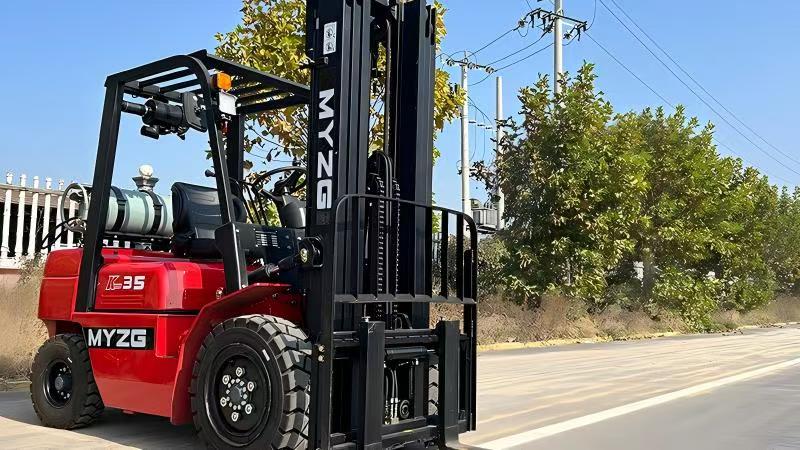
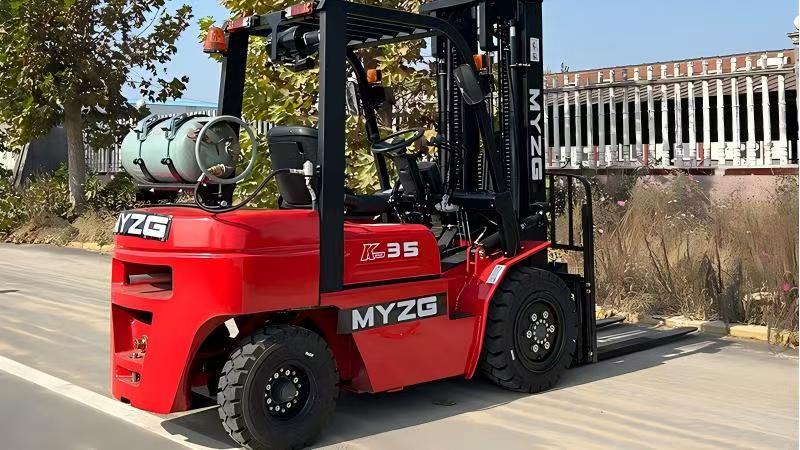
Counterbalance forklifts are probably the most recognizable type of forklift. They use a counterweight at the rear of the machine to balance the load being lifted by the forks at the front. Because they do not require support legs extending in front of the machine, counterbalance forklifts can approach pallets directly and are suitable for a wide range of material-handling tasks.
Counterbalance forklifts are available with different power systems, including diesel, LPG, gasoline, and electric configurations. Capacity can range from compact models designed for light warehouse work to heavy-duty machines capable of handling several tons.
These forklifts are commonly used for loading and unloading trucks, moving pallets around factories, transporting materials in warehouses, and handling goods in outdoor yards. Their versatility makes them a popular choice for businesses that need one machine for multiple everyday tasks.
When selecting a counterbalance forklift, businesses should consider load capacity, load center, lifting height, aisle width, tire type, and operating environment.
3. Electric Forklifts
Electric forklifts are increasingly popular, particularly in warehouses and indoor industrial facilities. They use rechargeable batteries instead of internal-combustion engines, with modern models increasingly adopting lithium-ion battery technology.
One of their biggest advantages is the lack of tailpipe emissions during operation. This makes electric forklifts particularly suitable for enclosed environments where air quality is important. They also produce relatively low noise and can provide a comfortable working environment for operators.
Traditional lead-acid batteries remain common, while lithium-ion batteries offer advantages such as faster charging, opportunity charging, and reduced routine battery maintenance. Electric forklifts are often used in food processing, pharmaceuticals, retail distribution, manufacturing, and general warehousing.
However, electric forklifts require appropriate charging infrastructure and battery management. Businesses operating forklifts for multiple shifts should carefully evaluate charging time, battery capacity, shift requirements, and available charging facilities.
Diesel forklifts are widely used for heavy-duty outdoor applications. Their strong power output, robust construction, and ability to operate for long periods make them suitable for demanding working environments.
Typical applications include construction sites, industrial yards, ports, steel plants, timber yards, and outdoor logistics operations. Diesel forklifts are particularly useful when loads are heavy or the working environment is too demanding for smaller warehouse-oriented equipment.
Another advantage is quick refueling, which can be useful for operations that require extended working hours. However, diesel engines produce exhaust emissions and noise, so their suitability for enclosed areas depends on local regulations and workplace conditions.
For modern export markets, engine emission standards are also an important consideration. Buyers should confirm that the forklift and engine meet the emissions requirements applicable in their country.
5. LPG and Dual-Fuel Forklifts
LPG forklifts use liquefied petroleum gas as their primary fuel. They are commonly found in applications where businesses need a balance between indoor flexibility and outdoor performance.
Compared with diesel forklifts, LPG models can offer cleaner operation in suitable conditions, while retaining the ability to refuel quickly. This makes them popular in warehouses with appropriate ventilation, manufacturing plants, logistics facilities, and loading areas.
Dual-fuel forklifts can be configured to operate using more than one fuel source, depending on the machine design. This can provide additional flexibility for businesses with changing operating requirements.
When using LPG equipment, proper cylinder handling, ventilation, fuel storage, and workplace safety procedures are essential. The operating environment should always be evaluated before choosing an LPG forklift.
6. Reach Trucks
Reach trucks are designed primarily for high-density warehouse operations. Unlike conventional counterbalance forklifts, reach trucks are specifically engineered to work efficiently in relatively narrow aisles and reach into storage racks.
Their mast and fork system allows operators to place pallets at significant heights while maintaining good maneuverability. This makes reach trucks particularly valuable in distribution centers where maximizing vertical storage space is important.
Reach trucks are generally used indoors on smooth, level floors. They are not normally intended for rough outdoor terrain.
For warehouses with high racks and limited floor space, a reach truck can often provide better space utilization than a conventional counterbalance forklift.
7. Pallet Stackers and Walkie Stackers
Pallet stackers are compact material-handling machines designed to lift pallets to moderate heights. They can be manually operated, semi-electric, or fully electric depending on the model.
Walkie stackers are especially useful in smaller warehouses, retail stores, workshops, and distribution areas where operators need to move and stack pallets without requiring a full-size counterbalance forklift.
Their compact dimensions allow them to operate in relatively restricted areas. They are also generally easier to operate and maintain than larger forklifts.
However, stackers are normally intended for lighter-duty applications. Businesses handling heavy loads, operating outdoors, or requiring high travel speeds may need a conventional forklift instead.
8. Hand Pallet Trucks
Hand pallet trucks are among the simplest types of material-handling equipment. They use forks positioned under a pallet and a hydraulic or mechanical lifting mechanism to raise the pallet slightly above the floor.
Their primary purpose is horizontal movement rather than high-level lifting. They are commonly used to move pallets over short distances in warehouses, supermarkets, loading areas, and workshops.
Electric pallet trucks provide additional assistance for travel and lifting, making them suitable for businesses that handle larger quantities of goods.
Although pallet trucks are inexpensive and easy to use, they cannot replace forklifts when goods must be lifted to significant heights or loaded onto elevated racks.
9. Rough Terrain Forklifts
Rough terrain forklifts are designed for outdoor environments where standard warehouse forklifts may struggle. They typically feature large pneumatic or specialized tires, increased ground clearance, rugged frames, and strong traction.
Construction sites are one of their most common applications. They can also be used in agriculture, landscaping, timber yards, building-material storage areas, and other locations with uneven or unpaved surfaces.
The key advantage of a rough terrain forklift is its ability to operate where smooth-floor warehouse forklifts are unsuitable. Some models can also handle substantial loads while traveling across challenging terrain.
When selecting one, buyers should consider ground conditions, maximum load, lifting height, tire configuration, turning radius, and site accessibility.
10. Telescopic Forklifts / Telehandlers
Telehandlers combine features of forklifts and telescopic lifting machines. Instead of using a conventional vertical mast, they have a telescopic boom that extends forward and upward.
A telehandler can be equipped with forks for pallet handling, but many models can also use buckets, work platforms, clamps, and other attachments.
They are widely used in construction and agriculture. For example, a construction contractor may use a telehandler to lift pallets of building materials to elevated positions, while agricultural operators may use attachments for handling feed, hay, or bulk materials.
The main advantages are lifting height, forward reach, and attachment versatility. However, operators must pay close attention to the load chart because lifting capacity can change significantly depending on boom extension and load position.
11. Side Loader Forklifts
Side loader forklifts are designed to handle long loads that can be difficult to transport with conventional forklifts.
Instead of carrying the load directly in front of the machine, side loaders can position the forks to the side. This allows long materials such as steel sections, pipes, timber, and aluminum profiles to be transported more efficiently.
They are particularly useful in facilities where long loads must move through relatively narrow aisles. By keeping the load aligned with the machine, side loaders can reduce the space required for transportation.
Industries handling long metal products, lumber, pipes, and construction materials are common users of side loader forklifts.
12. Order Pickers
Order pickers are designed for warehouses where operators need to select individual items from storage locations rather than simply move complete pallets.
The operator platform can rise with the forks or picking area, allowing workers to access goods stored at different levels.
Order pickers are particularly useful in e-commerce fulfillment centers, distribution warehouses, spare-parts facilities, and retail logistics operations.
Their design focuses on picking efficiency rather than heavy-load transportation. Because operators may work at elevated positions, appropriate safety systems, training, and workplace procedures are particularly important.
13. Narrow-Aisle and Very Narrow-Aisle Forklifts
As warehouse space becomes more expensive, many businesses try to increase storage density by reducing aisle widths and using taller racks.
Narrow-aisle and very-narrow-aisle forklifts are designed specifically for these conditions. Their compact dimensions and specialized steering systems allow them to operate in areas where standard forklifts may not have enough room.
These machines can significantly increase warehouse storage capacity when the facility is properly designed for them. However, they require suitable racking, floor conditions, aisle dimensions, and operator training.
Businesses should evaluate the entire warehouse layout rather than choosing a narrow-aisle forklift based only on its lifting height.
14. Heavy-Duty and Container Forklifts
Heavy-duty forklifts are designed for applications where standard forklifts do not have sufficient capacity or durability.
They are used in industries such as steel manufacturing, ports, heavy machinery, foundries, logistics, and container handling. Depending on their configuration, they may handle very heavy industrial loads or specialized containers.
These forklifts generally use reinforced frames, powerful engines, heavy-duty axles, and specialized tires. Some are designed specifically for container handling and other high-capacity applications.
Because these machines work with extremely heavy loads, correct load-center calculations, attachment selection, operator training, and maintenance are particularly important.
15. Specialized Forklifts and Attachments
A forklift's versatility can be greatly increased by using the correct attachment. Common attachments include side shifters, fork positioners, rotating forks, drum clamps, bale clamps, paper-roll clamps, carton clamps, and buckets.
For example, a paper-roll clamp allows a forklift to handle paper rolls without conventional forks, while a bale clamp can be useful in agricultural applications.
Attachments can improve productivity, but they also affect the forklift's capacity and stability. Adding an attachment can change the effective load center and reduce the amount of weight the forklift can safely lift.
Therefore, operators should always check the forklift's capacity information and the attachment manufacturer's specifications before using specialized equipment.
16. How to Choose the Right Forklift
Choosing a forklift should begin with the actual application rather than simply comparing purchase prices.
The first factor is load capacity. Businesses need to know the maximum weight they will handle and the dimensions of the loads.
The second is lifting height. If pallets must be placed on high warehouse racks, a machine with sufficient mast height and residual capacity is necessary.
The third is operating environment. Indoor warehouses may favor electric forklifts, while construction sites and outdoor yards may require diesel or rough terrain models.
Other important factors include aisle width, floor conditions, working hours, fuel or battery availability, required travel distance, attachment requirements, operator comfort, maintenance support, and local emission regulations.
Total cost of ownership should also be considered. A cheaper machine may not necessarily be the most economical option if it has higher fuel consumption, maintenance costs, or downtime.
17. Forklift Comparison by Application
Different working environments naturally favor different forklift types.
Warehouses: Electric counterbalance forklifts, reach trucks, pallet stackers, and order pickers are commonly suitable.
Construction sites: Rough terrain forklifts and telehandlers are often more appropriate because of uneven ground and demanding lifting requirements.
Ports and heavy industry: Heavy-duty diesel forklifts and specialized container-handling equipment can provide the necessary capacity.
Retail and small warehouses: Pallet trucks and compact stackers can be practical for short-distance pallet movement.
Long-load handling: Side loaders are particularly useful for steel, timber, pipes, and other long materials.
High-density warehouses: Reach trucks and narrow-aisle forklifts can help maximize storage capacity.
Low-emission environments: Electric forklifts are increasingly attractive where indoor emissions and noise must be minimized.
18. Forklift Safety and Operating Considerations
Regardless of forklift type, safe operation is essential. Operators should understand the machine's rated capacity, load center, lifting height, and stability characteristics.
A forklift's capacity is not simply determined by its maximum rated weight. As the load center moves farther away from the front axle, the effective load on the machine changes. Lifting the load higher can also affect stability.
Operators should drive at appropriate speeds, keep loads stable, avoid unnecessary sudden turns, and follow site-specific traffic rules.
Regular inspections and maintenance are equally important. Tires, forks, hydraulic systems, brakes, steering systems, mast components, batteries, and safety devices should be checked according to the manufacturer's recommendations.
Proper operator training and authorization should also be part of any professional forklift program.
19. Future Trends in Forklift Technology
The forklift industry is changing rapidly as businesses seek greater efficiency, lower operating costs, and reduced environmental impact.
Lithium-ion battery technology is becoming increasingly important in electric forklifts because of its charging flexibility and suitability for intensive operations. Electric models are also expanding into applications that were traditionally dominated by internal-combustion forklifts.
Automation is another major trend. Automated guided vehicles and increasingly intelligent forklifts can help transport materials with less manual intervention in suitable warehouse environments.
Telematics and fleet-management systems can provide information about machine usage, operating hours, maintenance requirements, and fleet performance.
At the same time, stricter emissions regulations in many markets are encouraging manufacturers and buyers to consider cleaner power systems and more efficient engines.
20. Conclusion
Forklifts come in many different forms because material-handling requirements vary significantly from one workplace to another. Counterbalance forklifts provide general-purpose versatility, electric forklifts are well suited to many indoor applications, diesel forklifts offer strong performance for demanding work, and LPG forklifts provide another flexible power option.
Reach trucks and narrow-aisle forklifts focus on warehouse efficiency, while pallet stackers and pallet trucks provide compact solutions for lighter material handling. Rough terrain forklifts and telehandlers are designed for construction and outdoor applications, while side loaders and heavy-duty forklifts address specialized industrial requirements.
The best forklift is therefore not necessarily the largest, most powerful, or least expensive machine. It is the machine that matches the load, lifting height, working environment, aisle space, operating hours, power source, attachments, and safety requirements of the job.
By understanding the main forklift types and their applications, businesses can make better purchasing decisions, improve material-handling efficiency, and select equipment that delivers reliable performance over the long term.
Post time:Sep.01.2026
