
What Is a Wheel Loader Used for in Construction?
1. Introduction
Wheel loaders are among the most versatile machines found on modern construction sites. With a powerful engine, hydraulic lifting system, articulated frame, large tires, and front-mounted bucket, a wheel loader can quickly scoop, lift, transport, and load a wide range of materials. From moving soil and gravel to loading dump trucks and clearing construction debris, wheel loaders perform many of the repetitive material-handling tasks required on a construction project.
Unlike excavators, which are primarily designed for digging, wheel loaders are particularly effective at moving loose materials over relatively short distances. Their wheeled design allows them to travel quickly between different areas of a job site without requiring a trailer for every short movement. This combination of mobility, lifting capability, and bucket capacity makes wheel loaders valuable for both small construction projects and large infrastructure developments.
Modern wheel loaders are available in many sizes and configurations. Compact wheel loaders can work in restricted spaces and urban construction areas, while medium and large wheel loaders are designed for high-volume material handling, quarrying, road construction, and major infrastructure projects. Different buckets and attachments can further expand their capabilities.
In construction, the right wheel loader can improve loading efficiency, reduce material-handling time, and help other machines work more productively. However, choosing the appropriate machine requires consideration of factors such as bucket capacity, operating weight, engine power, lifting height, hydraulic performance, ground conditions, and the type of materials being handled.
2. What Is a Wheel Loader?
A wheel loader is a self-propelled construction machine equipped with a front-mounted lifting arm and bucket. Its primary function is to scoop loose materials from the ground, raise them, and transport them to another location or load them into a truck or hopper.
The main components of a wheel loader include the engine, hydraulic system, articulated chassis, axles, tires, loader arms, bucket, operator cab, and transmission. The hydraulic system provides the force required to raise and tilt the bucket, while the articulated frame allows the machine to turn effectively.
During a typical loading cycle, the operator drives the bucket into a pile of material, fills the bucket, reverses away from the pile, raises the loader arms, travels to the destination, and tips the bucket to discharge the material. The speed and efficiency of these cycles have a major influence on overall productivity.
Wheel loaders are generally divided into compact, medium-sized, and large models. The appropriate size depends on the required load capacity, bucket volume, working environment, and transportation requirements.
3. Loading and Moving Construction Materials
One of the most important uses of a wheel loader is loading and transporting loose construction materials. Common materials include sand, gravel, soil, crushed stone, aggregates, construction waste, and other bulk materials.
Wheel loaders can collect materials from stockpiles and load them directly into dump trucks. Their large buckets allow operators to move substantial quantities with each cycle, while their relatively high travel speed allows them to move efficiently around the work site.
For example, during a road construction project, a wheel loader may collect aggregate from a stockpile and load it into trucks. On a building site, it may move sand or gravel between different work areas.
Because loading is often a repetitive operation, factors such as bucket size, cycle time, engine power, and operator skill can have a significant effect on productivity.
4. Earthmoving and Site Preparation
Wheel loaders are frequently used during the early stages of construction for site preparation. They can move loose soil, remove unwanted materials, clear areas, and prepare working surfaces.
Before construction begins, a site may contain soil, vegetation, rocks, construction debris, or other materials that need to be relocated. A wheel loader can quickly gather and transport many of these materials.
Wheel loaders can also help create temporary access routes and move soil around the site. While they are not a direct replacement for excavators or bulldozers, they can provide valuable support during earthmoving operations.
Their mobility is particularly useful when materials need to be moved repeatedly between different areas rather than excavated from deep below ground.
5. Loading Aggregates and Construction Materials
Aggregate handling is another major application for wheel loaders. Sand, gravel, crushed rock, and other aggregates are used extensively in concrete production, road construction, foundations, and drainage projects.
Wheel loaders can collect aggregates from stockpiles and load them into dump trucks, hoppers, crushers, or screening machines. In aggregate yards and construction-material facilities, they may spend much of their working time moving materials between stockpiles and processing equipment.
Bucket selection is important for these applications. A bucket designed for dense materials needs sufficient strength and capacity, while a larger light-material bucket may be more suitable for lower-density materials.
Efficient stockpile management can also reduce unnecessary travel and improve the overall productivity of the loader.
6. Backfilling and Trenching Support
Wheel loaders can also support backfilling operations. After underground pipes, foundations, drainage systems, or other structures have been installed, excavated soil or other suitable materials may need to be returned to the work area.
A wheel loader can transport soil and aggregate to the trench or excavation and place the material where it is needed.
In many projects, the excavator performs the digging while the wheel loader handles material movement. This division of work allows each machine to focus on its strongest function.
However, wheel loaders are generally most effective when handling loose materials rather than performing deep or highly precise excavation.
7. Road Construction and Maintenance
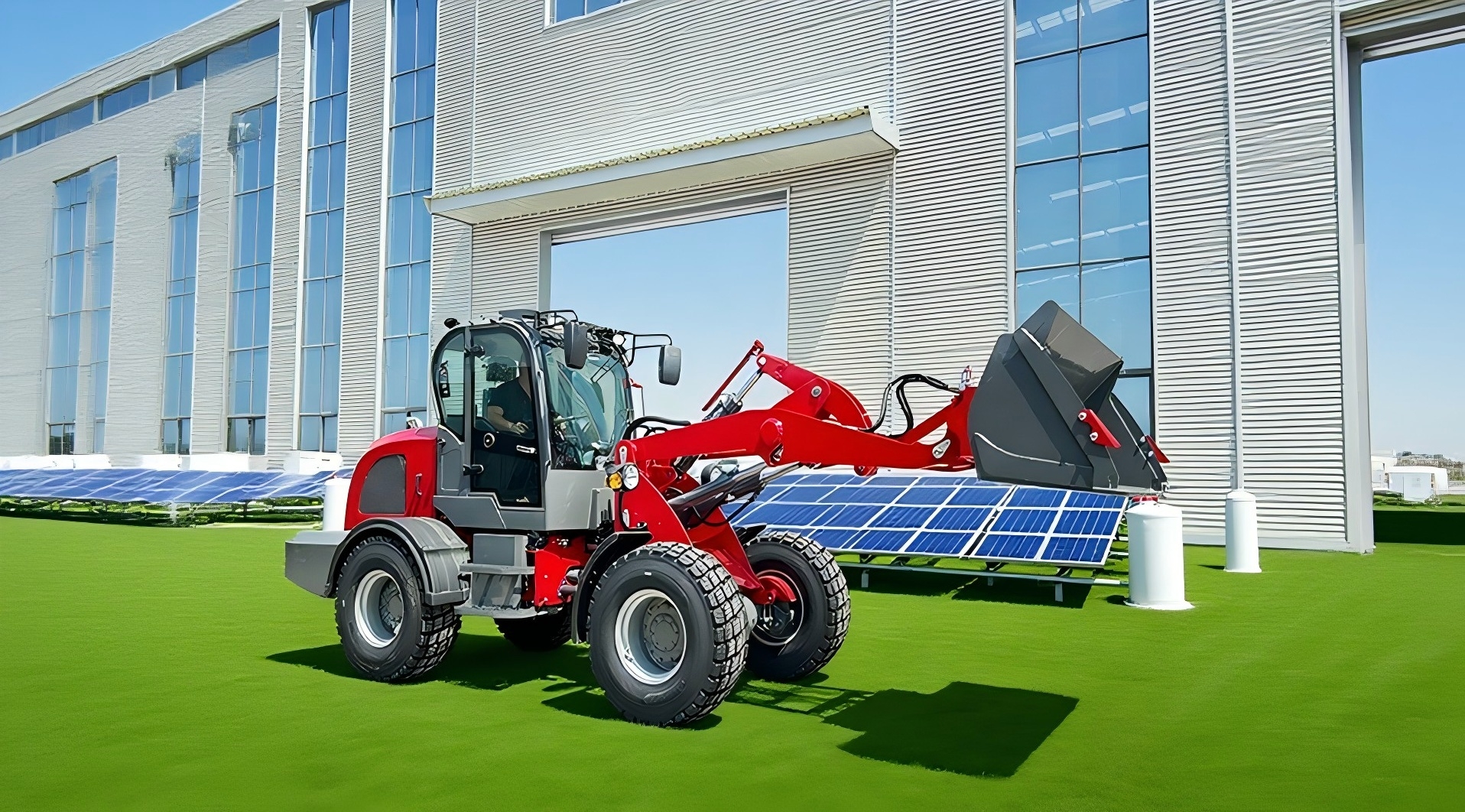
Wheel loaders play an important role in road construction. They can move aggregates, road base materials, sand, gravel, and other materials required for road building.
During road projects, a loader may collect aggregate from a stockpile and load trucks that transport the material to the construction area. It can also move materials around the site and help clean up after certain operations.
Wheel loaders are also useful for road maintenance. They can clear loose material, remove debris, move replacement aggregate, and assist with roadside maintenance.
Their mobility makes them particularly useful for projects covering large areas, including highways, municipal roads, rural roads, and infrastructure developments.
8. Snow Removal and Site Clearing
Although wheel loaders are primarily construction machines, their strong lifting systems and large tires make them useful for snow removal and general site clearing.
With a suitable bucket or snow attachment, a wheel loader can remove snow from construction entrances, roads, parking areas, and large outdoor workspaces.
They can also collect construction debris, loose waste, rocks, and other unwanted materials. High ground clearance and good traction allow appropriately configured wheel loaders to work effectively in challenging outdoor conditions.
The attachment should be selected according to the material being moved. A standard bucket may be suitable for certain clearing tasks, while a specialized snow blade or snow bucket may improve efficiency when handling large amounts of snow.
9. Demolition and Debris Handling
Wheel loaders can support demolition projects by moving and loading construction debris. After structures are demolished, large quantities of concrete, bricks, soil, and other waste materials may need to be collected and transported.
A wheel loader can gather loose debris and load it into dump trucks or feed it into recycling and crushing equipment.
Specialized attachments such as grapples can further improve the machine's ability to handle irregular materials. However, demolition environments can contain hazards that require careful planning and appropriate machine protection.
Wheel loaders should be operated at a safe distance from unstable structures and should be selected according to the specific requirements of the demolition site.
10. Handling Different Attachments
One of the biggest advantages of a wheel loader is its ability to work with different attachments.
The standard bucket is the most common attachment and is suitable for materials such as soil, gravel, sand, and aggregates. However, other attachments can expand the machine's capabilities.
Common options include:
Standard buckets
High-capacity buckets
Light-material buckets
Fork attachments
Grapples
Snow blades
Sweepers
Material-handling attachments
Fork attachments allow a wheel loader to move palletized materials, while grapples can be useful for logs, debris, and irregular loads. Sweepers can help clean roads and construction areas.
When changing attachments, operators must consider the attachment's weight, load center, hydraulic requirements, and effect on the machine's rated capacity.
11. Wheel Loader vs. Excavator
Wheel loaders and excavators often work together, but they are designed for different primary functions.
An excavator is primarily designed for digging, trenching, breaking, and precise excavation. Its boom, arm, and bucket provide excellent digging depth and reach.
A wheel loader, on the other hand, is particularly effective at scooping loose material, loading trucks, moving stockpiles, and transporting materials around the site.
For example, an excavator can dig soil from a trench while a wheel loader transports the excavated soil to a dump truck. Using both machines together can improve the efficiency of the entire operation.
The choice between them should therefore be based on the task rather than simply comparing machine size or engine power.
12. Wheel Loader vs. Skid Steer Loader
Wheel loaders and skid steer loaders can both handle buckets and attachments, but their designs are quite different.
A skid steer loader is generally more compact and highly maneuverable. Its small dimensions and zero-radius-style turning capability make it suitable for restricted workspaces.
Wheel loaders are generally larger and provide higher travel speeds, greater bucket capacities, and stronger performance for transporting larger volumes of material over longer distances.
For large construction sites and high-volume material handling, a wheel loader is often more efficient. For confined urban construction areas, landscaping projects, and tasks requiring frequent attachment changes, a skid steer loader may be more suitable.
13. Choosing the Right Wheel Loader for Construction
Selecting the correct wheel loader requires evaluating the specific working conditions.
Operating weight affects machine stability, transportation requirements, and ground pressure.
Rated operating capacity indicates how much material the machine can safely handle under specified conditions.
Bucket capacity determines how much material can be moved in each cycle. A larger bucket is not always better because the bucket must match the material density and machine capacity.
Engine power influences digging performance, travel performance, and overall productivity.
Hydraulic performance affects loader-arm movement, bucket response, and attachment operation.
Dump height and reach are especially important when loading different types of trucks or feeding processing equipment.
Tire selection should match the working surface and operating conditions.
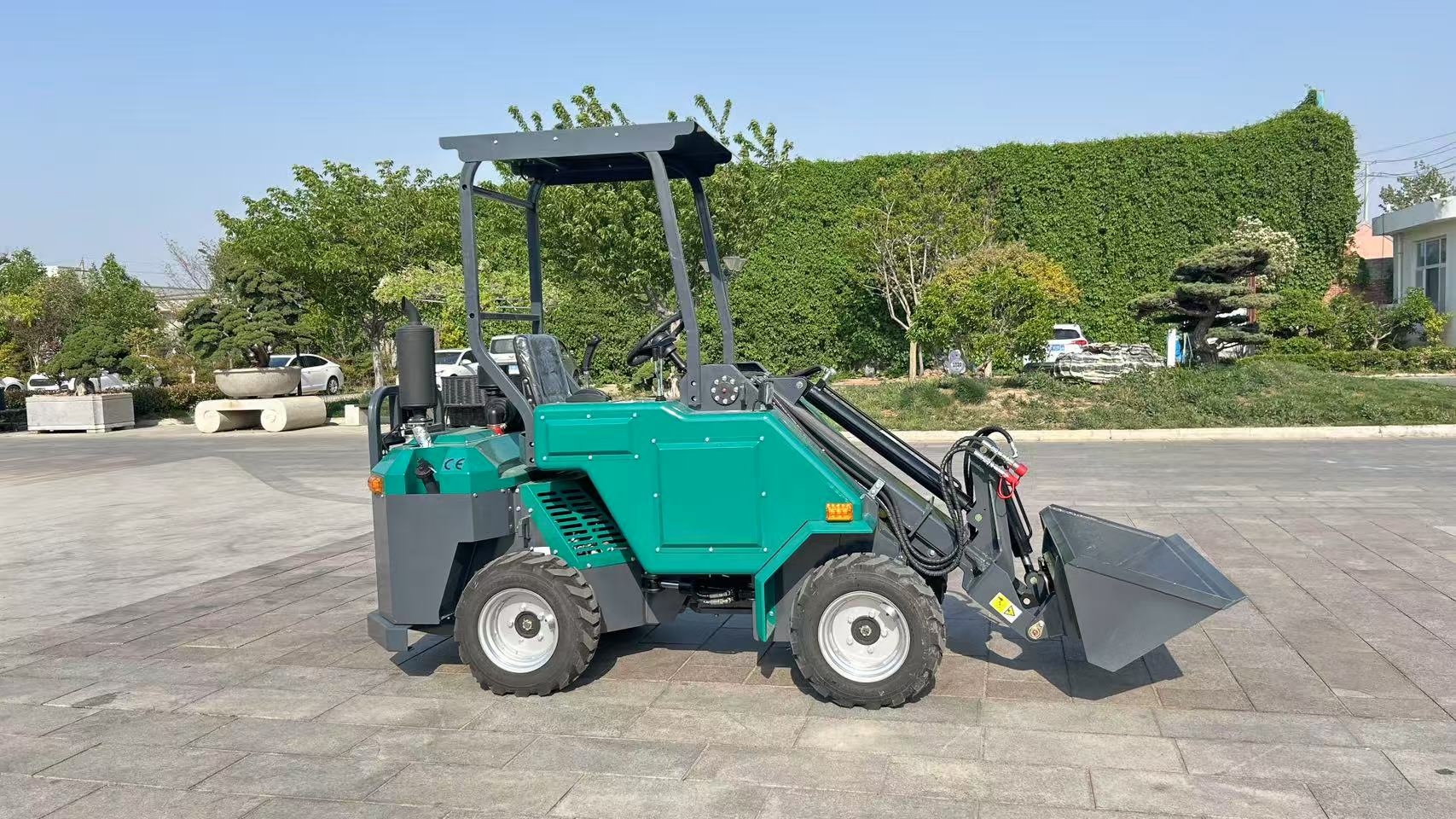
For smaller sites, a compact wheel loader may offer better maneuverability. For high-volume applications, a larger wheel loader may provide better productivity.
14. Key Performance Factors
Several specifications directly influence a wheel loader's performance.
Bucket capacity is important because it determines the amount of material moved per cycle. However, actual productivity also depends on material density, loading efficiency, travel distance, and dumping time.
Breakout force is another important specification. It represents the force available when the bucket penetrates and breaks into a pile of material.
Hydraulic cycle time affects how quickly the machine can raise, tilt, and lower the bucket. Faster cycles can improve productivity when loading operations are repetitive.
Travel speed is important when the loader needs to move materials between different areas. Tire type and traction also influence performance on different surfaces.
Lift height and dump clearance determine whether the machine can effectively load the intended truck or hopper.
Fuel efficiency is another important consideration because fuel consumption can represent a significant portion of operating costs.
15. Wheel Loader Safety on Construction Sites
Safety should always be a priority when operating a wheel loader. Operators need appropriate training and should understand the machine's capacity, stability characteristics, controls, and operating limitations.
Before operation, the machine should be inspected. Tires, brakes, steering, hydraulic components, bucket, loader arms, lights, safety equipment, and other critical components should be checked according to the manufacturer's recommendations.
Operators should avoid carrying loads that exceed the machine's rated capacity. Loads should be kept stable, and unnecessary travel with a raised bucket should be avoided.
Working on slopes also requires additional care. Ground conditions, machine orientation, load position, and visibility can all affect stability.
Clear communication between machine operators and other workers is also important, particularly on busy construction sites.
16. Maintenance and Operating Costs
Regular maintenance helps keep wheel loaders productive and reduces unexpected downtime.
Daily inspections may include checking engine oil, hydraulic oil, coolant, tires, lights, brakes, attachments, and visible hydraulic leaks. Maintenance intervals should follow the manufacturer's recommendations.
The bucket and cutting edge may experience significant wear when handling abrasive materials. Tires can also wear quickly in applications involving rocks, concrete, or rough surfaces.
Fuel consumption should be monitored because operating costs depend not only on the purchase price but also on fuel, maintenance, tires, spare parts, and downtime.
Preventive maintenance can help identify problems before they lead to expensive repairs or extended periods of machine downtime.
17. Modern Wheel Loaders and New Technologies
Modern wheel loaders are becoming more efficient and technologically advanced. Electronic engine management systems can help optimize engine performance, while advanced hydraulic systems can improve efficiency and responsiveness.
Load-sensing hydraulic systems can adjust hydraulic output according to demand, potentially reducing unnecessary energy consumption.
Many modern machines also incorporate automatic transmissions and operator-assistance technologies. These features can make operation easier and help improve consistency.
Telematics systems are becoming increasingly common as well. Fleet managers can use telematics to monitor machine operating hours, fuel consumption, maintenance requirements, location, and utilization.
Electric and hybrid wheel loaders are also emerging as manufacturers respond to demand for lower-emission construction equipment. In suitable applications, electric machines can reduce noise and eliminate direct exhaust emissions during operation.
18. Typical Construction Projects Using Wheel Loaders
Wheel loaders can be found across many types of construction projects.
In residential construction, compact or medium-sized wheel loaders can move soil, gravel, sand, and construction materials.
In commercial construction, larger machines may be used to prepare sites, load trucks, move aggregates, and clean work areas.
In highway construction, wheel loaders are frequently used for aggregate handling, road-base materials, loading trucks, and site maintenance.
In bridge and infrastructure projects, they can support general material handling and site preparation.
In quarry and aggregate operations, large wheel loaders can continuously load and transport large volumes of material.
In landscaping and site development, compact wheel loaders can handle soil, mulch, gravel, and other materials while maintaining good maneuverability.
In demolition and recycling, appropriately configured machines can move debris and feed processing equipment.
19. How to Maximize Wheel Loader Productivity
Getting the best productivity from a wheel loader requires more than choosing a machine with a large engine and bucket.
First, the bucket should be matched to the material. Oversized buckets can reduce efficiency if the machine cannot fill them properly or safely handle the resulting load.
Second, unnecessary travel should be minimized. The loading area, dump location, and stockpile should be arranged to reduce cycle distances whenever possible.
Third, the wheel loader should be matched with the capacity of the dump truck. If the loader is too large or too small for the truck, loading cycles may become inefficient.
Operator training is also important. Smooth acceleration, correct bucket positioning, efficient loading techniques, and appropriate travel speeds can all influence fuel consumption and productivity.
Finally, regular maintenance should not be neglected. A well-maintained machine can operate more reliably and reduce the risk of unexpected downtime.
20. Conclusion
Wheel loaders are highly versatile machines that perform a wide range of tasks in construction. Their most common applications include loading and transporting loose materials, stockpile management, site preparation, backfilling, road construction, debris handling, snow removal, and supporting other construction equipment.
Their combination of mobility, lifting capability, hydraulic power, and bucket capacity makes them particularly effective for repetitive material-handling operations. Different sizes and attachments allow wheel loaders to work in environments ranging from small urban construction sites to large infrastructure projects, quarries, and aggregate yards.
However, selecting the right wheel loader requires more than simply looking at engine power or bucket size. Businesses should consider operating weight, rated capacity, bucket capacity, lifting height, hydraulic performance, tire type, fuel efficiency, working conditions, attachments, and total operating costs.
When properly selected, configured, and maintained, a wheel loader can significantly improve construction-site productivity. It can also work effectively alongside excavators, dump trucks, skid steer loaders, and other equipment, creating a more efficient material-handling system for the entire project.
Post time:Sep.01.2026
