
Manual vs. Electric Pallet Stacker: Which One Should I Buy?
1. Introduction
Pallet stackers are widely used in warehouses, distribution centers, workshops, retail stores, factories, and other material-handling environments. They provide a practical way to lift pallets from the floor and place them onto storage racks or other elevated positions. Compared with a traditional forklift, a pallet stacker is usually more compact, easier to maneuver in narrow spaces, and more affordable for operations that do not require the full capabilities of a forklift.
When choosing a pallet stacker, one of the first decisions is whether to buy a manual pallet stacker or an electric pallet stacker. Although both machines perform the same basic function—lifting and handling palletized goods—their operating methods, productivity, purchase costs, maintenance requirements, and suitable applications are quite different.
A manual pallet stacker relies primarily on hydraulic lifting and manual movement. It has a relatively simple structure and does not require a battery or charging system. An electric pallet stacker uses an electric motor to provide powered lifting, and many models also have electric travel. This significantly reduces the physical effort required from the operator and can improve productivity during frequent pallet-handling operations.
There is no single answer to which type is better. A small workshop that moves only a few pallets each day may find a manual stacker to be the most economical solution. A busy warehouse that handles pallets continuously may benefit much more from an electric model. Therefore, buyers should consider not only the purchase price but also workload, operating frequency, lifting height, travel distance, battery requirements, maintenance, and long-term operating costs.
This article compares manual and electric pallet stackers in detail and explains which type may be the better choice for different working conditions.
2. What Is a Manual Pallet Stacker?
A manual pallet stacker is a basic material-handling machine designed to lift and move pallets without an electric drive system. Depending on the design, hydraulic pressure can be generated through a manual pump or another mechanical mechanism, while the operator manually pushes or pulls the machine.
The main components normally include the mast, forks, hydraulic system, steering handle, load wheels, steering wheels, and lifting mechanism. The simple design means there are fewer electrical components compared with an electric pallet stacker.
One of the biggest advantages of a manual pallet stacker is its relatively low purchase price. It can be suitable for small businesses that only occasionally need to place pallets at low or medium heights.
Manual stackers also do not require battery charging. This makes them convenient for operations where the machine is used infrequently or where there is no dedicated charging area.
However, manual operation requires more physical effort. When the operator needs to move heavy pallets over longer distances or perform many lifting cycles during a shift, fatigue can become an important consideration. As workload increases, the productivity advantage of an electric stacker becomes more significant.
3. What Is an Electric Pallet Stacker?
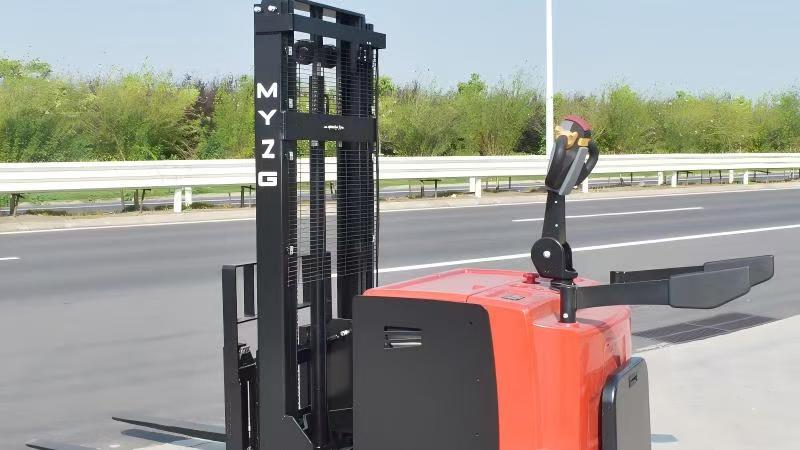
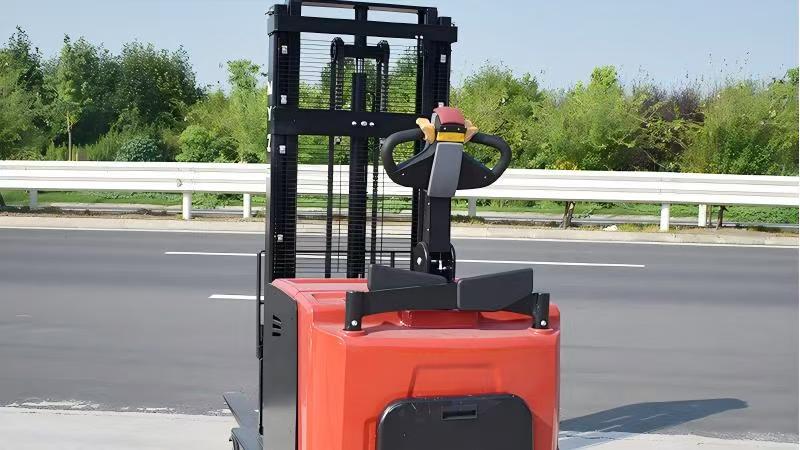
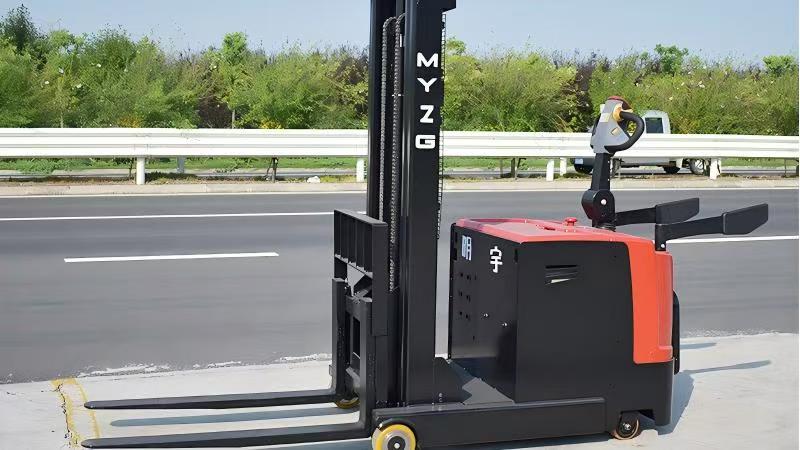
An electric pallet stacker uses an electric motor and battery system to perform lifting operations, and many models also provide powered travel. Instead of manually pushing the machine and pumping the hydraulic system, the operator uses controls on the handle to lift and move the load.
Electric pallet stackers are available in different configurations. Some compact models use electric lifting but require manual pushing, while fully powered walkie stackers provide both electric lifting and electric travel.
Battery technology is another important consideration. Traditional electric stackers may use lead-acid batteries, while newer models increasingly use lithium-ion batteries. Lithium-ion systems can offer convenient charging and lower routine battery-maintenance requirements, depending on the specific design.
Electric stackers are particularly useful when pallets must be moved frequently. They reduce the physical effort required from operators and can make repetitive warehouse work more efficient.
Their disadvantages include a higher initial purchase price and the need to manage battery charging. Buyers must also consider battery capacity, charging time, operating duration, and battery replacement costs.
4. Manual vs. Electric Pallet Stacker: Key Differences
4.1 Lifting Performance
Both manual and electric stackers can lift pallets, but the lifting mechanism is operated differently.
With a manual stacker, the operator activates the hydraulic system manually. This is relatively straightforward, but repeated lifting cycles require physical effort.
An electric stacker uses an electric motor to power the lifting system. The operator can raise or lower the forks using electrical controls, making repetitive lifting considerably easier.
For occasional pallet handling, the difference may not be very important. However, in a warehouse where dozens or hundreds of lifting operations are performed every day, powered lifting can significantly improve convenience and productivity.
4.2 Travel and Maneuverability
Manual stackers are generally pushed or pulled by the operator. This works well for short distances and relatively smooth floors.
Electric stackers with powered travel use an electric drive motor. The operator controls forward and reverse movement from the handle, reducing the effort required to transport pallets.
For operations involving long travel distances, frequent movement, or heavier loads, powered travel can provide a major practical advantage.
Both types can be compact and suitable for narrow aisles, but buyers should always check the actual turning radius and overall dimensions of the machine rather than assuming all stackers have the same maneuverability.
4.3 Operator Effort
This is one of the clearest differences between the two types.
A manual stacker requires the operator to provide physical force for movement and hydraulic lifting. This can be perfectly acceptable for occasional use but becomes more demanding as operating hours increase.
An electric stacker reduces much of this physical workload. The operator primarily controls the machine rather than manually moving the entire load.
For businesses concerned with operator ergonomics and repetitive material handling, an electric stacker can therefore provide a significant advantage.
4.4 Productivity
Productivity depends on the specific model and working environment, but electric stackers generally have an advantage when pallet handling is frequent.
A manual stacker may be sufficient when only a few pallets need to be moved each day. In contrast, an electric stacker is better suited to repeated lifting and transportation cycles.
The productivity difference becomes particularly noticeable when the operator needs to travel longer distances or handle pallets throughout an entire work shift.
4.5 Operating Environment
Manual stackers can be attractive for small warehouses, workshops, retail stores, and other environments with relatively low material-handling requirements.
Electric stackers are generally better suited to warehouses, factories, distribution centers, and logistics operations where pallets are moved frequently.
Floor conditions are also important. Both types work best on reasonably smooth and level surfaces. Rough or uneven floors can affect stability, maneuverability, and machine performance.
5. Cost Comparison
Initial purchase price is one of the biggest advantages of a manual pallet stacker.
Because a manual machine has fewer electrical and electronic components, its structure is relatively simple. There is no traction battery, drive motor, or battery charger on a basic manual model.
Electric pallet stackers generally cost more because they include an electric motor, battery, control system, charger, and other electrical components.
However, comparing only the purchase price can lead to the wrong conclusion.
For example, suppose a warehouse uses a stacker for several hours every day. A manual machine may have a lower purchase price, but the operator must provide more physical effort and may require more time to complete the same workload. An electric machine may cost more initially but provide greater productivity and easier operation.
Maintenance should also be considered. Manual stackers have fewer electrical components, while electric stackers require appropriate battery and electrical-system maintenance.
The best approach is to calculate the total cost of ownership, including purchase price, maintenance, energy or charging costs, battery replacement, productivity, and expected service life.
6. Load Capacity and Lifting Height
Before choosing either type, buyers should determine the required load capacity.
The rated capacity must be sufficient for the heaviest pallet that will normally be handled. Buyers should also consider the load center because the actual lifting capacity can be affected by load distribution and the position of the load.
Lifting height is another important factor. A machine designed only for low-level stacking may not be suitable for a warehouse that needs to place pallets onto high storage racks.
Common specifications that should be compared include:
Rated load capacity
Maximum lifting height
Load center
Fork length
Fork width
Overall machine height
Overall width
Turning radius
Mast configuration
Do not choose a stacker based only on its maximum rated capacity. The machine must also fit the available aisles, doors, racks, and working areas.
7. Battery and Charging Considerations for Electric Stackers
Battery selection is particularly important when purchasing an electric pallet stacker.
Lead-acid batteries are a traditional option. They can provide reliable performance but generally require appropriate charging procedures and routine maintenance.
Lithium-ion batteries have become increasingly popular because of their convenient charging characteristics and relatively low routine maintenance requirements. Depending on the battery system, lithium-ion stackers may also support opportunity charging during breaks or other periods when the machine is not being used.
Buyers should consider:
Battery voltage
Battery capacity
Operating time
Charging time
Charger type
Battery life
Charging environment
Replacement battery cost
For occasional use, battery capacity may be less critical. For intensive warehouse operations, the battery must be matched to the expected daily workload.
8. Safety and Ease of Operation
Safety is important regardless of whether the stacker is manual or electric.
Operators should receive appropriate training and understand the manufacturer's operating instructions, rated capacity, load limits, braking system, and workplace procedures.
Electric stackers can reduce physical effort, but powered equipment still requires careful operation. The operator must control travel speed appropriately, maintain visibility, and avoid carrying loads that exceed the machine's rated capacity.
Important safety features can include:
Emergency stop
Electromagnetic or mechanical braking
Safety switches
Warning signals
Protective guards
Controlled lowering
Anti-roll-back functions on suitable models
Appropriate mast and load-handling design
The specific safety equipment varies by manufacturer and model, so buyers should check the actual specification before purchasing.
9. Which Pallet Stacker Is Better for Different Applications?
9.1 Small Warehouse
For a small warehouse with limited pallet movements, a manual stacker may provide excellent value. If pallets only need to be lifted occasionally and travel distances are short, there may be little reason to invest in a fully electric machine.
However, if the warehouse is growing or pallet handling is becoming more frequent, an electric model may be a better long-term investment.
9.2 High-Volume Warehouse
A high-volume warehouse generally benefits from an electric pallet stacker.
Frequent lifting and transportation can make manual operation physically demanding. Powered travel and lifting can help improve workflow and reduce unnecessary physical effort.
For intensive applications, battery capacity and charging arrangements should be carefully evaluated.
9.3 Retail Store or Small Workshop
Manual stackers can be particularly practical in small stores and workshops where space is limited and pallet movement is occasional.
If pallets are moved several times a day, an electric stacker may provide greater convenience.
9.4 Cold Storage or Special Environments
Cold environments require additional consideration because low temperatures can affect battery performance.
If an electric stacker will be used in cold storage, buyers should confirm that the battery and electrical system are suitable for the intended operating conditions.
Other special environments may also require specific machine configurations or safety features.
9.5 Loading and Unloading Areas
For short-distance pallet handling near loading areas, either type can work depending on the workload.
If pallets must be moved repeatedly between trucks, storage areas, and production zones, an electric stacker can reduce operator effort and improve efficiency.
10. Advantages and Disadvantages at a Glance
Manual Pallet Stacker Advantages
Lower initial purchase cost
Simple construction
Easy routine maintenance
No battery charging
Suitable for occasional use
Compact and practical
Lower dependence on electrical systems
Manual Pallet Stacker Disadvantages
Requires greater physical effort
Lower productivity for intensive operations
Less convenient for long-distance pallet movement
Not ideal for very frequent handling
Electric Pallet Stacker Advantages
Powered lifting
Reduced operator effort
Faster and easier pallet movement
Suitable for repetitive operations
Better for longer travel distances
Higher productivity potential
Convenient for warehouse operations
Electric Pallet Stacker Disadvantages
Higher initial purchase price
Requires battery charging
Battery replacement may be necessary over the machine's service life
More electrical components require maintenance
Charging infrastructure may be needed
11. How to Calculate Your Return on Investment
The easiest way to determine whether an electric stacker is worth the additional investment is to compare the total operating requirements.
Start by estimating:
How many pallets are moved each day?
How many hours is the stacker used?
How far does each pallet need to travel?
How frequently are pallets lifted?
How much operator effort is required?
What maintenance costs are expected?
How much does the electric model cost compared with the manual model?
For example, a small workshop moving five pallets per day may not gain enough productivity from an electric stacker to justify the higher purchase price.
A warehouse moving dozens or hundreds of pallets every day is a different situation. The reduction in physical effort and improvement in workflow can make the additional investment much more valuable.
Therefore, the right question is not simply “Which machine is cheaper?” but “Which machine provides the best value for my actual workload?”
12. Manual vs. Electric: Which One Should I Buy?
A manual pallet stacker is generally a good choice when:
Your budget is limited.
Pallets are handled occasionally.
Travel distances are short.
The workload is relatively light.
You do not need maximum productivity.
You want a simple machine with minimal maintenance requirements.
An electric pallet stacker is generally a better choice when:
Pallets are moved frequently.
The machine is used for several hours per day.
Travel distances are relatively long.
Operators need to perform repetitive lifting.
Higher productivity is important.
Reducing physical effort is a priority.
The business expects material-handling volumes to increase.
In simple terms, manual stackers focus on simplicity and low initial cost, while electric stackers focus on efficiency, convenience, and productivity.
13. Buying Checklist
Before placing an order, buyers should compare more than just the price.
Capacity
Make sure the rated capacity is suitable for the heaviest pallet.
Lifting Height
Confirm that the maximum lift height matches the required rack or stacking height.
Fork Dimensions
Check fork length, width, thickness, and adjustable spacing where applicable.
Machine Dimensions
Measure doors, aisles, container entrances, and other restricted areas.
Turning Radius
A small turning radius is especially important for narrow warehouse aisles.
Battery
For electric models, check battery type, voltage, capacity, charging time, and expected operating duration.
Travel Speed
Powered travel speed should be appropriate for the working environment.
Mast Configuration
Different mast designs provide different lifting heights and overall machine heights.
Wheels
Check wheel material and size according to the floor conditions.
Safety Equipment
Confirm braking, emergency stop, warning systems, and other relevant safety features.
Warranty and Spare Parts
A reliable warranty and accessible spare parts can reduce long-term ownership risks.
After-Sales Support
For electric models especially, technical support can be important when dealing with battery, controller, motor, or electrical-system issues.
14. Conclusion
The choice between a manual and electric pallet stacker ultimately depends on the workload, operating environment, budget, and productivity requirements.
A manual pallet stacker is a practical and economical solution for occasional pallet handling, short-distance movement, small warehouses, workshops, and businesses looking for a simple machine with a low initial investment.
An electric pallet stacker is more suitable for frequent pallet handling, longer travel distances, repetitive operations, and warehouses where productivity and operator convenience are important. Although the initial purchase price is higher, its productivity and reduced physical effort can provide better long-term value in demanding applications.
Before buying, evaluate your load capacity, lifting height, daily workload, travel distance, battery requirements, warehouse space, maintenance needs, and total cost of ownership.
The best pallet stacker is not necessarily the cheapest machine or the most powerful one. It is the machine that matches your actual working conditions and provides the right balance of cost, productivity, reliability, and ease of operation.
Post time:Sep.02.2026
