
The maximum lift capacity of a rough terrain forklift, more accurately referred to as a telescopic handler or telehandler, is not a single, universal figure but a complex variable defined by a sophisticated interplay of machine configuration, load positioning, and operational conditions. At its core, the maximum rated capacity is the greatest weight the machine is designed to lift under specific, ideal parameters, typically with the load centered, the telehandler on firm, level ground, and the boom (or telescopic arm) in a specific position, often at its minimum reach and sometimes at a lowered height. For the vast majority of standard telehandlers used in construction, agriculture, and heavy industry, these maximum capacities commonly range from 5,500 to 12,000 pounds (2.5 to 5.4 metric tonnes). However, it is crucial to understand that this headline number represents a peak capacity under highly constrained circumstances. High-capacity specialized models can extend this range dramatically, with some heavy-duty machines boasting lift capacities of 18,000, 24,000, or even over 36,000 pounds (16.3 tonnes). The very design of a rough terrain forklift—with its extendable boom, large pneumatic tires, and robust four-wheel-drive chassis—sets it apart from warehouse forklifts. Its primary purpose is to place loads at height and reach, not just lift them vertically, which fundamentally changes how capacity is calculated and utilized. The moment the operator begins to extend the boom or lift it to a higher angle, the machine's practical lifting capacity decreases from its maximum rating due to the physics of leverage and stability.
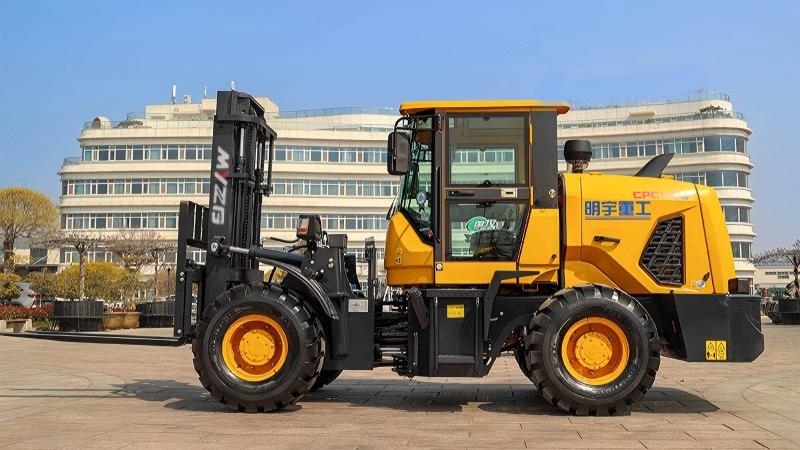
The definitive source for understanding a specific telehandler's capabilities is its load chart, a legally mandated and engineering-critical document unique to each machine model and configuration. This chart, typically displayed inside the operator's cab and in the operator's manual, is a complex matrix that dictates the safe lift capacity based on two primary variables: boom angle and boom extension (reach). For example, a telehandler rated at 10,000 pounds at full retraction and a low boom angle may only be capable of safely lifting 2,000 pounds when the boom is fully extended horizontally. The load chart visually or numerically illustrates this inverse relationship: as reach increases, capacity decreases. Similarly, lifting to greater heights at the same reach also affects capacity. Furthermore, the chart accounts for different attachment configurations. The use of forks, a bucket, a jib, or a winch attachment changes the load's center of gravity and the machine's leverage, necessitating dedicated load charts for each. Operating without consulting the correct load chart is extremely hazardous and a direct violation of safety standards like those enforced by OSHA. Other critical factors that influence real-world capacity include the machine's load center, which is the horizontal distance from the fork face (or attachment pivot point) to the load's center of gravity. Manufacturers rate capacity based on a standard load center (e.g., 24 inches). If a load is longer, irregularly shaped, or improperly positioned, shifting its center of gravity forward, the actual safe lifting weight plummets. Tire type and pressure, outrigger use (if equipped), ground conditions, and even slight slopes dramatically impact stability and, therefore, effective capacity.
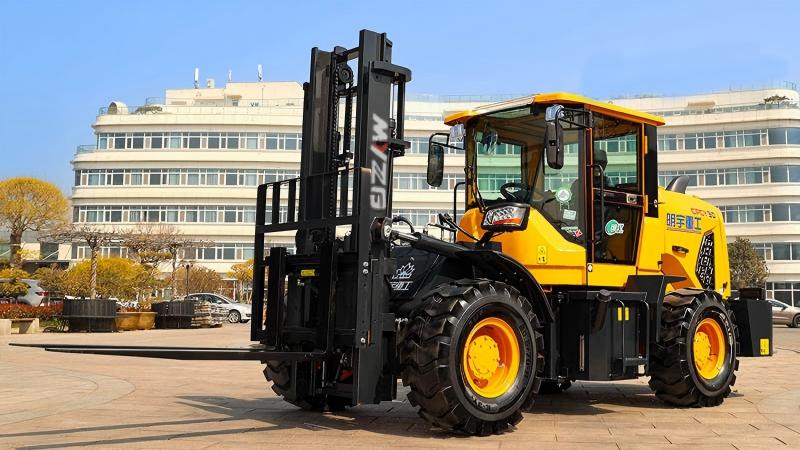
Beyond the load chart, a host of dynamic and environmental factors impose practical limits that are often more restrictive than the load chart itself. Ground conditions are paramount for rough terrain operation. The machine's maximum capacity is predicated on operating on firm, stable, and level ground. Soft, muddy, or uneven surfaces can cause instability, tire sinking, or chassis twisting, drastically reducing safe lifting limits. Operators must perform a thorough site assessment before commencing work. Slope operation introduces severe risks; lifting a load on an incline, even a slight one, shifts the combined center of gravity and can lead to tip-overs. Most load charts assume operation on a level plane. Machine setup is equally critical. Properly setting any manually deployed outriggers or ensuring the machine's automatic leveling system is engaged is essential for achieving the charted capacities. The operator's skill and technique play a huge role; smooth, controlled movements are necessary to avoid dynamic loads from swinging or bouncing, which create dangerous momentum forces. Environmental factors like high winds exert lateral pressure on a lifted load, especially a large palletized or sheet material, acting as a sail and generating tremendous leverage that can overturn the machine. In practice, seasoned operators and safety managers always incorporate a significant safety margin below the load chart's stated limits to account for these unpredictable variables, ensuring a buffer for human error and changing site conditions.
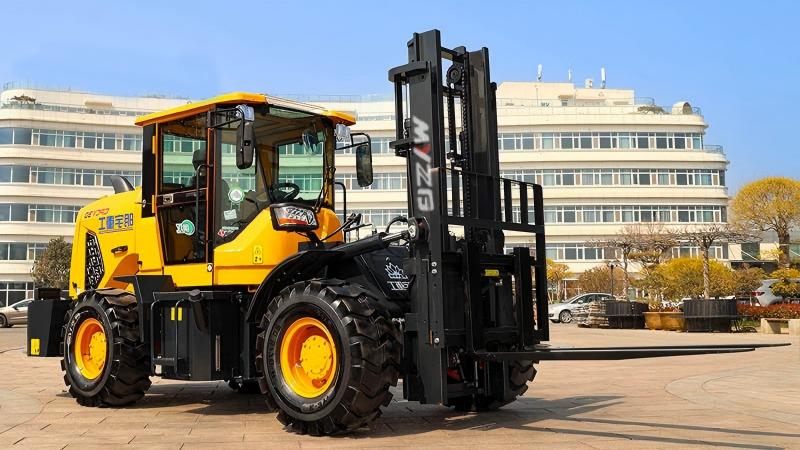
In conclusion, asking for the maximum lift capacity of a rough terrain forklift is the starting point, not the complete answer. While the industry provides common ranges—with 6,000 to 10,000 lbs being a typical sweet spot for general construction—the true answer for any specific lift is found by meticulously consulting the machine's load chart, accurately assessing the load's weight and center of gravity, and critically evaluating the job site environment and conditions. Safety is not defined by the maximum number stamped on the machine but by the lowest safe capacity derived from this comprehensive analysis. For purchasers and project planners, selecting a telehandler involves matching not just the peak capacity but also the required reach and height specifications for the anticipated tasks. Ultimately, the telehandler's immense versatility and power come with the responsibility of understanding its nuanced limitations. Adherence to the load chart, combined with rigorous operator training and a proactive safety culture, ensures that these indispensable machines deliver both formidable performance and, most importantly, safe operation on every job site.
Post time:Jan.12.2026
