
The skid steer loader stands as one of the most recognizable and versatile pieces of compact equipment on the planet. At its core, it is a rigid-frame, engine-powered machine with lift arms that can attach to a wide array of tools, famous for its zero-radius turning capability achieved by skidding or differentially driving its wheels or tracks. But to define it merely by its mechanics is to miss its true essence. Fundamentally, a skid steer loader is used for transforming labor-intensive, multi-machine tasks into one-operator, one-machine solutions. Its primary function is material handling—lifting, carrying, and placing bulk materials like dirt, gravel, sand, pallets, and debris. However, its defining genius lies in its Quick Attachment System (often a universal "skid steer mount"), which allows an operator to switch from a standard bucket to a grapple, auger, trencher, or breaker in minutes. This transforms the machine from a simple loader into a multi-tool powerhouse. Its compact size and immense power-to-weight ratio enable it to operate in confined spaces—inside buildings, between structures, or on dense urban job sites—where larger equipment cannot venture. From its origins in agricultural manure handling in the 1950s, the skid steer has evolved into the universal "utility infielder" of industries ranging from construction and demolition to landscaping, agriculture, and even snow removal, valued for its agility, power, and unparalleled adaptability to countless specialized tasks.
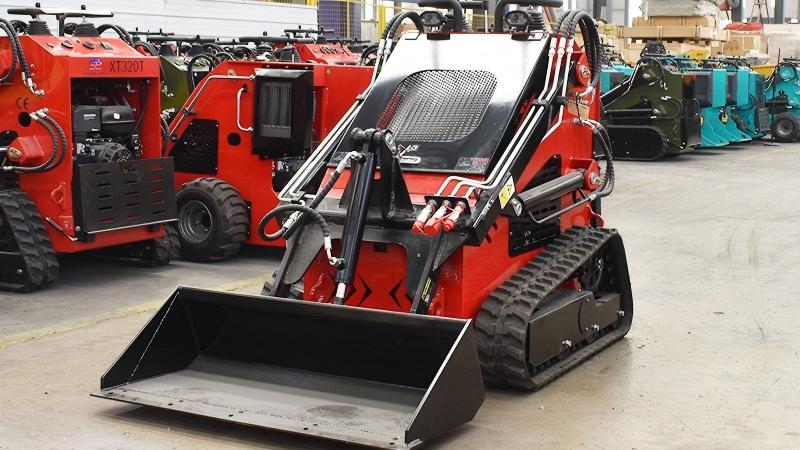
In the realm of construction and demolition, the skid steer loader is an indispensable workhorse. It serves as the primary material handling tool on small to medium-sized sites, moving building supplies like bricks, blocks, lumber, and roofing materials with pallet forks or buckets. During site preparation, it grades and backfills with a blade or bucket, digs footings and trenches with a dedicated trencher attachment, and compacts soil with a vibratory roller. Its ability to navigate through standard doorways and inside unfinished structures makes it perfect for interior demolition—using a hydraulic breaker to tear out concrete floors or walls, a grapple to clear debris, and a bucket to haul the waste to a dumpster. For masonry and concrete work, it can be fitted with a hydraulic tilt attachment to place heavy materials precisely or a mixer to prepare mortar or concrete on-site. In landscaping and site development, the machine's role expands further. It meticulously grades terrain with a land plane or box blade, digs precise holes for trees and posts with an auger, moves and places large rocks or boulders with a grapple, and even installs hardscape materials like pavers and retaining wall blocks with specialized fine-grade blades and stone slingers. The tracked version, known as a compact track loader (CTL), provides superior flotation and traction on soft, muddy, or delicate surfaces like lawns, preventing damage and allowing work to continue in conditions that would stop wheeled equipment.
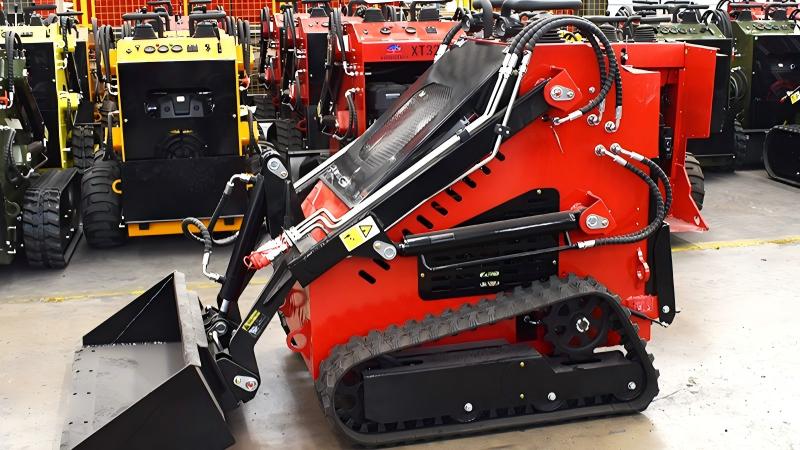
The agricultural and industrial applications of the skid steer loader reveal its true versatility beyond the construction site. On the farm, it is the ultimate chore machine. It cleans livestock pens with a bucket or manure grapple, loads and spreads feed and bedding material, moves hay bales with bale spears, and can even be used for light grading around barns and fences. In winter, it becomes a vital snow-clearing asset for farms, driveways, and commercial parking lots, armed with a snow blower, a plow, or a large bucket. Within industrial facilities and warehouses, skid steers function as compact yet powerful internal logistics vehicles. They transport heavy machinery components on factory floors, handle palletized goods, and clean up large-scale spills or debris with sweeper and scrubber attachments. The forestry industry employs them with grapple saws to process small trees and clear brush, while rental yards use them as the go-to machine for customer DIY projects, from digging post holes to moving topsoil. Furthermore, its role in disaster response and specialized cleanup—such as handling silage, composting operations, or even cleaning up after natural disasters with grapples and rakes—showcases its utility in handling messy, unpredictable tasks. The machine's durability and simple design allow it to withstand harsh environments, from the dust of a demolition site to the muck of a feedlot, making it a truly universal tool for material transformation and movement.

The operational and economic logic behind the skid steer's ubiquity is compelling. For small businesses and contractors, it represents a high-return investment: one power unit (the loader itself) coupled with an arsenal of relatively affordable attachments can replace the need for multiple single-purpose machines, saving on capital expenditure, maintenance costs, storage space, and transportation logistics. The operator remains the same, maximizing labor efficiency. The evolution from traditional wheels to rubber tracks has been a game-changer, especially for ground protection and traction. Compact Track Loaders (CTLs) exert significantly lower ground pressure than wheeled models, allowing them to work on finished lawns, wet terrain, and sensitive surfaces without leaving deep ruts or causing compaction. This has made them the preferred choice for professional landscapers and any application where preserving the ground is paramount. Looking forward, the skid steer platform continues to innovate with integrated tool carriers (ITCs) offering even greater hydraulic flow for demanding attachments, advanced operator cabins with joystick controls and touchscreen displays, and the gradual emergence of electric models promising zero emissions and reduced noise for indoor and urban work. In essence, asking "what is a skid steer used for?" is akin to asking "what can you do with a Swiss Army knife?" Its function is limited only by the available attachments and the operator's imagination, securing its place as the ultimate compact, multi-purpose tool for shaping the physical world, one versatile task at a time.
Post time:Jan.13.2026
