
Understanding the precise tipping load of a wheel loader is a fundamental aspect of heavy equipment management, crucial for ensuring on-site safety and maximizing operational efficiency. The tipping load, defined as the maximum weight a loader can lift before its rear tires lose contact with the ground, is not a static figure found merely in a manual. It represents a dynamic threshold governed by the principles of physics and mechanical stability. At its core, the calculation revolves around the concept of moments—the rotational force generated by the load about the machine’s tipping axis, typically the front axle. When the moment generated by the load exceeds the counter-moment provided by the machine’s own weight and any additional counterweights, the loader becomes unstable. This calculation is paramount for preventing catastrophic accidents, protecting both the operator and the asset, and ensuring productive workflow. It requires a deep dive into the machine's specifications, including its unladen weight, weight distribution, and the exact dimensions of its load center—the distance from the front axle to the center of gravity of the lifted load. Operators and site managers must recognize that exceeding this limit compromises stability, especially when turning or operating on uneven terrain, leading to potential rollovers. Thus, mastering this calculation is the first line of defense against operational hazards, forming the bedrock of all sophisticated load-handling strategies and risk assessments on construction, mining, and agricultural sites worldwide.
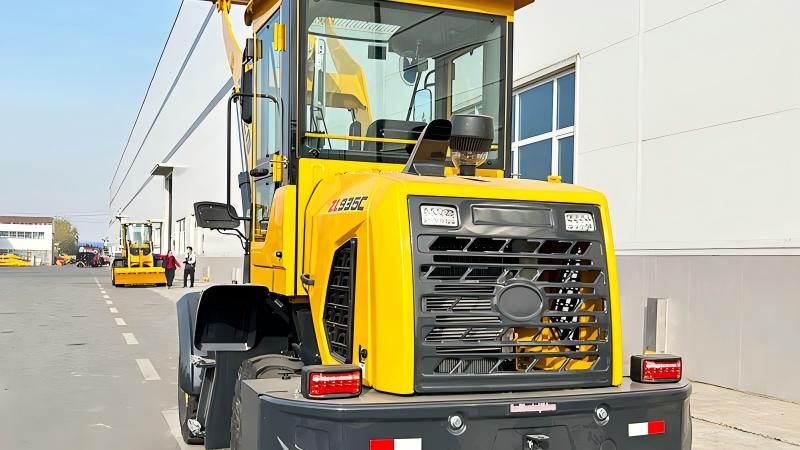
The primary methodology for calculating the theoretical static tipping load involves establishing a balance of moments around the front axle. The fundamental formula is: Tipping Load = (Machine Countermoment) / (Distance from Front Axle to Load Center). To break this down, the "Machine Countermoment" is calculated by multiplying the loader's total weight (including any attached counterweights) by the horizontal distance from the front axle to the machine's own center of gravity. This value represents the machine's inherent resistance to tipping. The denominator, the distance to the load center, is critical; it is not merely the fork or bucket length but the horizontal distance from the front axle pivot point to the center of gravity of the payload once it is lifted. Using the manufacturer’s rated load center, typically specified for a standard bucket, is essential. For instance, if a wheel loader weighs 20,000 kg with its center of gravity 1 meter behind the front axle, its countermoment is 20,000 kg*m. If the rated load center is 1.5 meters forward of the front axle, the theoretical full-height static tipping load would be 20,000 kg*m / 1.5 m = approximately 13,333 kg. This figure, often called the "rated tipping load," is provided by manufacturers under specific, ideal conditions—a level, firm surface with the machine stationary and the load carried at a standard height. However, this is merely a starting point, as real-world applications introduce variables that drastically reduce this theoretical maximum, necessitating significant safety margins.
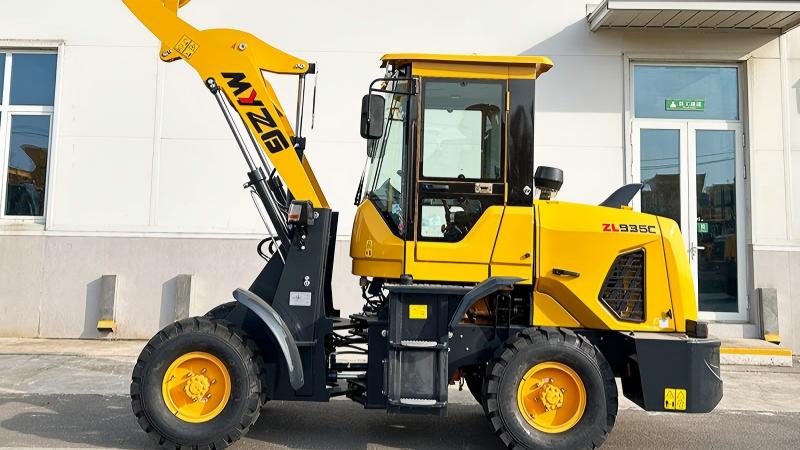
Real-world operating conditions necessitate substantial derating of the theoretical tipping load to ensure a stable safety margin. Four primary factors dynamically influence actual safe operating capacity: terrain inclination, dynamic forces, load characteristics, and attachment configuration. Operating on a slope significantly alters the stability calculus; a side slope causes uneven weight distribution on the tires, while a forward or rear slope changes the moment arms for both the machine and the load. Dynamic forces generated during travel, lifting, braking, or turning introduce inertia that can effectively increase the load moment, making a statically stable load dangerously unstable in motion. The nature of the load itself is crucial—loose materials like gravel can shift during movement, altering the load center unpredictably, while dense, rigid loads maintain a fixed center. Furthermore, using non-standard attachments (e.g., longer forks, specialized grapples) extends the load center forward, directly reducing the safe lifting capacity as per the moment formula. Industry best practices, often encapsulated in standards like ISO 14397, dictate applying a significant stability or safety factor, typically reducing the theoretical tipping load by 25% to 50% for actual lift capacity. Therefore, a machine with a 13,333 kg tipping load may have a safe working load limit of only 8,000 to 10,000 kg depending on site-specific risk assessments. This derating is not optional; it is an integral part of professional operational planning, requiring constant vigilance from the operator regarding the machine's "feel" and visual cues like rear tire deformation.
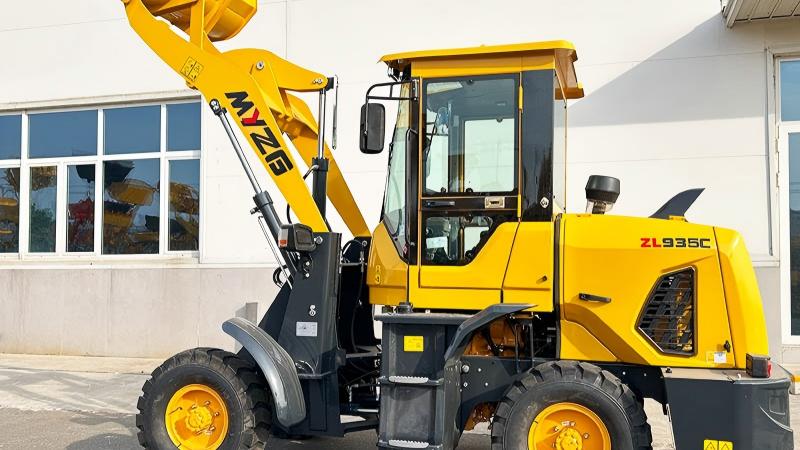
Beyond manual calculation, modern wheel loaders integrate advanced systems to actively manage stability and prevent tipping incidents. Contemporary models are often equipped with Load Moment Indicator (LMI) systems or Rated Capacity Limiters (RCL). These sophisticated electronic systems use sensors to measure parameters such as boom angle, lift cylinder pressure, and machine orientation in real-time. They compute the actual load moment and compare it to a pre-programmed stability envelope, providing audible and visual warnings to the operator if the machine approaches an unsafe condition. Some systems can even automatically restrict hydraulic functions to prevent further movement into a danger zone. However, technology supplements rather than replaces fundamental knowledge. The definitive operational reference remains the manufacturer’s load chart, a legal document that specifies safe lifting capacities for various configurations, load centers, and working radii. Ultimately, calculating and respecting the tipping load is a synthesis of engineering principle, empirical data, and situational awareness. It demands continuous education, adherence to safety protocols, and a conservative approach that prioritizes stability over expediency. By grounding operations in these principles, companies safeguard their personnel, protect valuable equipment, and ensure the long-term profitability and sustainability of their material handling activities.
Post time:Jan.14.2026
