
The selection of material handling equipment is a critical decision that directly impacts a warehouse's operational efficiency, storage density, and bottom line. Two common contenders in the realm of low-level to medium-level lifting and transporting are the straddle stacker and the counterbalance stacker. While both serve the fundamental purpose of moving palletized loads, their design philosophies and operational characteristics diverge significantly, making each suitable for distinct applications. A straddle stacker, as the name implies, features forks that descend between two front legs, which are connected by a base at the floor level. This design allows the stacker to "straddle" a pallet, with the legs providing stability and eliminating the need for a rear counterweight. In contrast, a counterbalance stacker relies on a heavy weight at the rear of the vehicle to balance the load being lifted at the front. This fundamental difference in design is the root cause of their varied performance in terms of maneuverability, space requirements, and load capacity. Understanding the core mechanics of each machine is the first step in making an informed procurement decision, as the wrong choice can lead to inefficient operations, damaged goods, and compromised workplace safety. The debate between these two types of stackers is not about which is universally superior, but rather which is the optimal tool for a specific set of operational parameters, including aisle width, storage layout, load weight, and frequency of use.
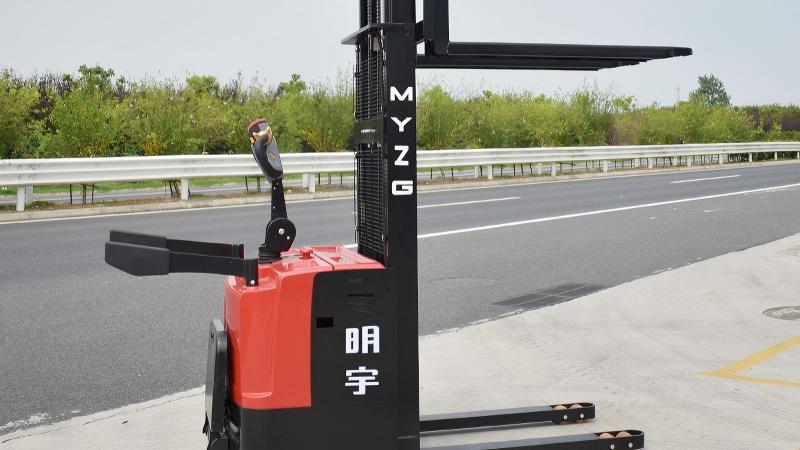
Delving into the advantages of the straddle stacker reveals its niche as a space-saving champion. The presence of the straddle legs provides inherent stability, allowing these machines to operate effectively in exceptionally narrow aisles where a counterbalance model simply could not fit or function safely. This capability directly translates into higher storage density, as warehouses can design their layouts with tighter aisle configurations, maximizing the utilization of their valuable cubic space. Furthermore, the compact design of many walk-behind straddle stackers makes them highly maneuverable and ideal for applications in congested areas or facilities with frequent cross-traffic. They are typically lighter and often more energy-efficient than their counterbalance counterparts, leading to potential cost savings on power consumption and reducing the wear and tear on warehouse floors. However, these benefits come with notable trade-offs. The straddle legs, while providing stability, also mean that the stacker must be precisely aligned over a pallet before lifting, which can add seconds to each pick or place cycle. Moreover, the legs can be an obstacle when handling damaged or non-standard pallets that may not have sufficient clearance. The most significant limitation of a standard straddle stacker is its inability to directly approach and lift a load from a standard storage rack; it requires the pallet to be free-standing or for the rack to have clear access at the base for the legs to pass through.
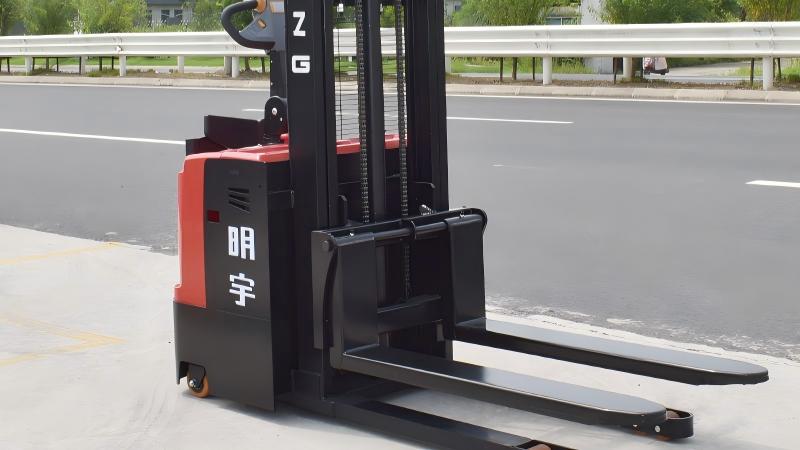
The counterbalance stacker, on the other hand, excels in its versatility and straightforward operation. Its most significant pro is the absence of protruding front legs, allowing the forks to approach a load or a storage rack directly without the need for the machine's body to straddle it. This "direct approach" capability makes it incredibly efficient for loading and unloading trucks, working from standard pallet racks, and handling loads in open areas. The design often allows for a higher lifting capacity compared to a similarly sized straddle stacker, making it suitable for heavier unit loads. The operational simplicity is another key advantage; drivers familiar with standard counterbalance forklifts can easily transition to a counterbalance stacker with minimal additional training. The cons, however, are rooted in its core design principle: the counterweight. This weight makes the machine heavier, wider, and less maneuverable in tight spaces. It requires significantly wider aisles to operate safely, as the rear end of the truck swings out during turns, which can drastically reduce a warehouse's overall storage density. The heavier weight also contributes to higher energy consumption and potentially greater floor damage over time. In environments where space is at a premium, the operational footprint of a counterbalance stacker can be a severe disadvantage, forcing a choice between maneuverability and storage capacity.
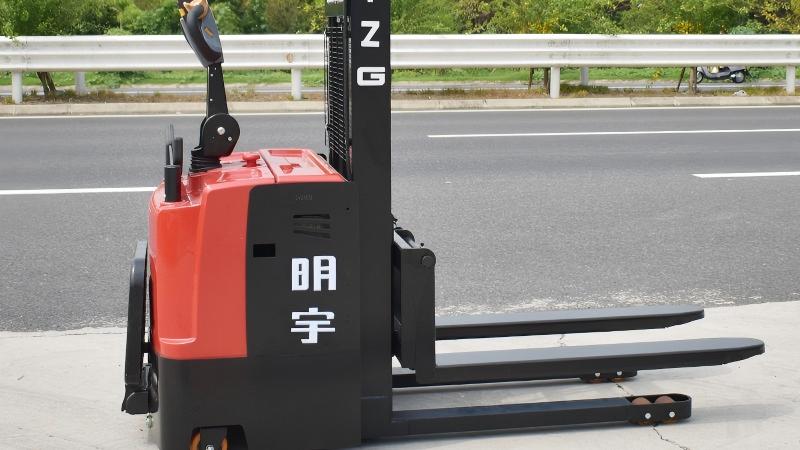
The final decision in the straddle stacker versus counterbalance stacker debate hinges on a thorough analysis of the specific operational environment and long-term logistical strategy. For warehouses and distribution centers where maximizing every square foot of storage is paramount, and where the primary activity involves moving pallets between narrow-aisle storage and staging areas, the straddle stacker is often the undisputed winner. Its ability to operate in aisles sometimes less than two meters wide can justify its investment through sheer gains in storage density. Conversely, in a more generalized industrial setting, a loading dock, or a facility with wide aisles and a diverse range of tasks including truck loading and working from standard racking, the counterbalance stacker's versatility and direct-approach capability make it the more practical and efficient choice. Factors such as initial purchase cost, maintenance complexity, and the availability of trained operators also play a crucial role. Ultimately, the most effective material handling strategy may involve a mixed fleet, deploying straddle stackers for high-density storage zones and counterbalance stackers for receiving, shipping, and bulk storage areas. By carefully weighing the pros and cons of each machine against their unique operational footprint, businesses can select the right tool to optimize workflow, enhance safety, and drive productivity.
Post time:Nov.26.2025
