
What Is the Typical Lifespan (Operating Hours) of a Diesel Forklift?
1. Introduction
Diesel forklifts remain one of the most widely used material handling machines in warehouses, construction sites, ports, manufacturing plants, and logistics centers around the world. Their powerful engines, high lifting capacity, and ability to work continuously outdoors make them an ideal choice for demanding applications. Whether you are purchasing a new forklift or managing an existing fleet, one of the most common questions is: How many operating hours can a diesel forklift last?
The answer depends on multiple factors, including the quality of the forklift, maintenance practices, operating conditions, workload, and operator behavior. While two forklifts may look identical, their service life can differ dramatically if one receives regular preventive maintenance and the other is neglected.
Generally speaking, a well-built diesel forklift can provide 10,000 to 20,000 operating hours, while premium models that receive excellent maintenance may continue operating reliably for 25,000 to 30,000 hours or more. Some forklifts used in light-duty applications can remain productive for over 15 years.
Understanding what affects forklift lifespan helps companies reduce downtime, lower maintenance costs, and maximize return on investment. In this article, we'll explore the typical operating life of diesel forklifts, the factors that influence longevity, maintenance strategies, warning signs of aging equipment, and practical tips to extend the service life of your machine.
2. What Is the Average Lifespan of a Diesel Forklift?
The lifespan of a diesel forklift is usually measured in operating hours rather than years because utilization varies significantly between businesses. A forklift working one shift per day experiences much less wear than one operating around the clock in a busy distribution center.
Below is a general guideline:
|
Operating Hours |
Condition |
|
0–5,000 hours |
Excellent condition with minimal wear |
|
5,000–10,000 hours |
Light wear, regular maintenance required |
|
10,000–15,000 hours |
Mid-life stage, some components may require replacement |
|
15,000–20,000 hours |
Heavy use, increased maintenance expected |
|
20,000–30,000+ hours |
Possible with excellent maintenance and timely repairs |
A forklift's mechanical lifespan refers to the total hours its components can physically operate before major rebuilding is required. The economic lifespan, however, is the point where repair costs become higher than the value of replacing the machine.
For many businesses, replacement decisions are based more on maintenance expenses and downtime than on engine hours alone.
Application also matters:
Light warehouse operations often achieve over 20,000 hours.
Construction sites may shorten lifespan because of dust, rough terrain, and heavy loads.
Ports and industrial yards expose forklifts to continuous heavy-duty work.
Mining and quarry environments typically produce the fastest wear.
Therefore, operating conditions are just as important as total hours.
3. Key Factors That Affect Diesel Forklift Lifespan
3.1 Maintenance Quality
Regular maintenance is the single biggest factor affecting longevity.
Preventive maintenance includes:
Engine oil replacement
Oil filter replacement
Fuel filter replacement
Air filter cleaning
Hydraulic oil inspection
Coolant replacement
Transmission service
Greasing moving joints
Skipping scheduled maintenance accelerates wear on expensive components and greatly reduces machine life.
3.2 Operating Environment
Environmental conditions directly influence wear.
Examples include:
Dust clogging air filters
Mud contaminating bearings
Salt causing corrosion
High temperatures overheating engines
Cold weather making starts difficult
Forklifts used indoors generally experience less wear than those working outdoors year-round.
3.3 Operator Habits
Even the best forklift can wear out prematurely if operated improperly.
Bad operating habits include:
Overloading
Sudden acceleration
Harsh braking
Driving over potholes at high speed
Excessive idling
Ignoring warning lights
Professional operator training significantly increases equipment lifespan.
3.4 Workload and Duty Cycle
Heavy-duty applications naturally shorten service life.
Factors include:
Number of operating hours per day
Average load weight
Lift height
Frequency of loading cycles
Travel distance
Surface condition
Machines working three shifts daily accumulate hours much faster than occasional-use forklifts.
4. Major Components and Their Expected Service Life
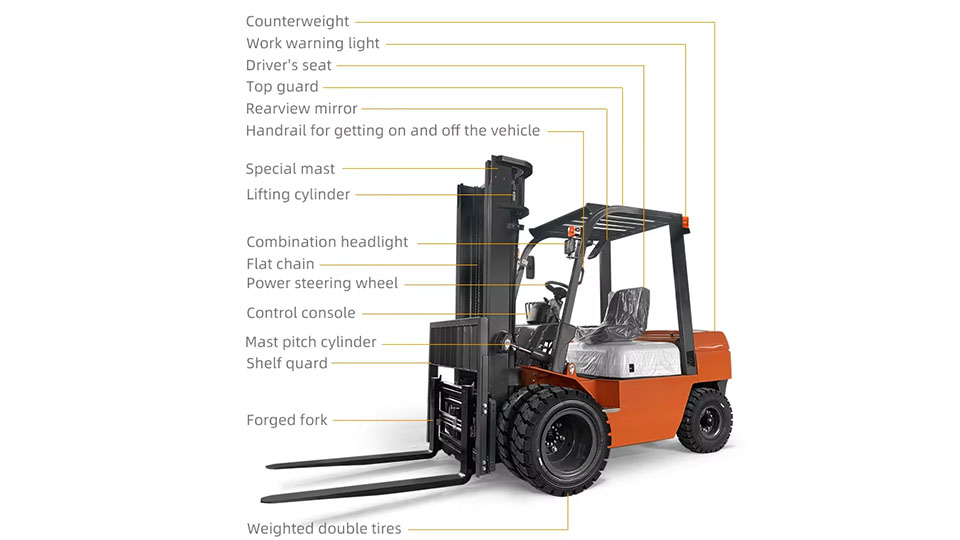
Although the forklift itself may last over 20,000 hours, different components have different replacement intervals.
Diesel Engine
The engine is designed for long-term durability.
Typical lifespan:
15,000–25,000 hours
Longer with proper oil changes
Major overhauls may include injectors, piston rings, valves, or turbochargers.
Transmission
Depending on usage:
8,000–15,000 hours
Proper fluid maintenance greatly extends transmission life.
Hydraulic Pump and Cylinders
Hydraulic systems commonly last:
8,000–15,000 hours
Seal replacement is usually required before complete component replacement.
Mast Assembly
The mast can often last the entire life of the forklift.
However, maintenance includes:
Chain inspection
Roller replacement
Lubrication
Wear adjustment
Steering System
Steering cylinders, hoses, and joints require periodic maintenance.
Expected service life:
10,000–20,000 hours
Cooling System
Components include:
Radiator
Water pump
Thermostat
Cooling fan
Proper coolant maintenance prevents overheating and engine damage.
Tires
Depending on the application:
Pneumatic tires:
2,000–5,000 hours
Solid tires:
4,000–8,000 hours
Frequent inspection helps improve safety and efficiency.
Battery and Electrical System
Although diesel forklifts use smaller batteries than electric models, they still require maintenance.
Battery lifespan:
3–5 years
Alternators, starters, and wiring should also be inspected regularly.
5. Warning Signs That a Diesel Forklift Is Near the End of Its Service Life
Recognizing warning signs early prevents costly failures.
Common indicators include:
Frequent Breakdowns
Unexpected repairs become more common as equipment ages.
Engine Problems
Signs include:
Hard starting
Blue smoke
Black smoke
White smoke
Loss of power
Hydraulic Issues
Watch for:
Slow lifting
Oil leaks
Cylinder drift
Noisy pumps
Structural Fatigue
Inspect for:
Cracked welds
Bent forks
Mast wear
Frame damage
High Fuel Consumption
Older engines often consume more fuel because of wear.
Increasing Maintenance Costs
When annual repair costs become excessively high, replacement may be more economical.
6. How to Extend the Lifespan of a Diesel Forklift
Many forklifts exceed 20,000 hours simply because they receive proper care.
Best practices include:
Follow Scheduled Maintenance
Always follow the manufacturer's maintenance intervals.
Use High-Quality Fluids
Premium engine oil and hydraulic oil reduce wear.
Replace Filters Regularly
Clean filters improve:
Fuel efficiency
Engine performance
Component protection
Perform Daily Inspections
Operators should check:
Tire condition
Oil level
Coolant level
Hydraulic leaks
Lights
Brakes
Horn
Mast chains
Daily inspections help identify small issues before they become expensive repairs.
Train Operators
Proper operator training reduces:
Accidents
Overloading
Tire damage
Hydraulic abuse
Keep the Forklift Clean
Removing dirt and debris prevents corrosion and improves cooling efficiency.
Replace Wear Parts Early
Do not wait for complete failure.
Replacing inexpensive seals, hoses, bearings, and filters early often prevents costly repairs.
Maintain Service Records
Maintenance history helps schedule preventive repairs and increases resale value.
7. Diesel Forklift Lifespan Compared with Other Forklift Types
Choosing the right forklift depends on your application.
|
Type |
Typical Operating Hours |
Maintenance |
Best Use |
|
Diesel |
10,000–20,000+ |
Moderate |
Outdoor heavy-duty work |
|
LPG |
10,000–15,000 |
Moderate |
Mixed indoor/outdoor use |
|
Lead-acid Electric |
8,000–15,000 |
Low to Moderate |
Indoor warehouses |
|
Lithium-ion Electric |
15,000–25,000 |
Low |
High-efficiency warehouse operations |
Diesel forklifts remain the preferred choice for:
Construction sites
Lumber yards
Ports
Mining operations
Outdoor logistics
Heavy lifting applications
Electric forklifts dominate clean indoor environments where emissions and noise are important considerations.
8. When Should You Replace Instead of Repair a Diesel Forklift?
Eventually, every forklift reaches the point where replacement makes better financial sense.
Consider replacing your forklift if:
Repair costs exceed 50% of its market value.
Major components such as the engine and transmission require simultaneous rebuilding.
Downtime frequently disrupts operations.
Fuel consumption has increased significantly.
Spare parts are becoming difficult to obtain.
The forklift no longer meets safety or emissions regulations.
Newer diesel forklifts also offer advantages such as improved fuel efficiency, lower emissions, enhanced operator comfort, advanced safety features, and higher productivity. For businesses with demanding operations, upgrading to a modern model can reduce long-term operating costs despite the initial investment.
9. Conclusion
A typical diesel forklift has an expected service life of 10,000 to 20,000 operating hours, with many high-quality machines exceeding 25,000 or even 30,000 hours when properly maintained. The actual lifespan depends on a combination of maintenance quality, operating environment, workload, and operator practices.
Routine inspections, timely servicing, quality lubricants, and skilled operators all play a crucial role in maximizing equipment longevity. Replacing worn components before they fail and keeping accurate maintenance records can significantly reduce unexpected downtime and extend the forklift's productive life.
Ultimately, the best way to maximize the return on your investment is to treat maintenance as a proactive strategy rather than a reactive expense. With proper care, a diesel forklift can remain a reliable, efficient, and cost-effective asset for many years of demanding material handling operations.
Post time:Aug.05.2026
