
What Is the Maximum Lifting Capacity and Reach of a Heavy-Duty Rough Terrain Forklift?
1. Introduction
Heavy-duty rough terrain forklifts play a critical role in modern construction, agriculture, mining, oil and gas, and industrial logistics operations. Unlike standard warehouse forklifts designed for smooth indoor surfaces, rough terrain forklifts are specifically engineered to operate on uneven ground, muddy worksites, rocky terrain, and demanding outdoor environments. Their ability to lift extremely heavy loads while maintaining stability on difficult terrain makes them essential equipment for many industries worldwide.
As infrastructure projects become larger and more complex, the demand for forklifts with higher lifting capacities and longer reach capabilities continues to increase. Contractors and equipment operators often need to move steel beams, concrete materials, large pipes, timber, containers, and oversized equipment across challenging jobsites. In these situations, understanding the maximum lifting capacity and reach of a rough terrain forklift is extremely important for both productivity and safety.
However, lifting capacity and reach are not simple numbers. The actual lifting performance of a forklift depends on multiple factors, including machine design, load center, boom extension, terrain conditions, tire stability, and hydraulic system performance. A forklift may safely lift a very heavy load at a low height, but its lifting capacity can decrease significantly when the boom extends forward or upward. This is especially true for telehandlers and rotating forklifts that offer extended reach capabilities.
Modern heavy-duty rough terrain forklifts are available in a wide range of sizes and configurations. Some compact models are designed for smaller farms and construction projects, while large industrial machines can lift over 25,000 kilograms and reach heights exceeding 20 meters. Technological advancements such as load monitoring systems, telematics, electronic stability control, and hybrid power systems are also transforming the industry.
This article explains the maximum lifting capacity and reach of heavy-duty rough terrain forklifts, the factors that influence their performance, the different machine types available, and how to choose the right equipment for specific jobsite requirements. It also covers important safety considerations, emerging technologies, and common purchasing mistakes buyers should avoid.
2. What Is a Heavy-Duty Rough Terrain Forklift?
2.1 Definition and Main Features
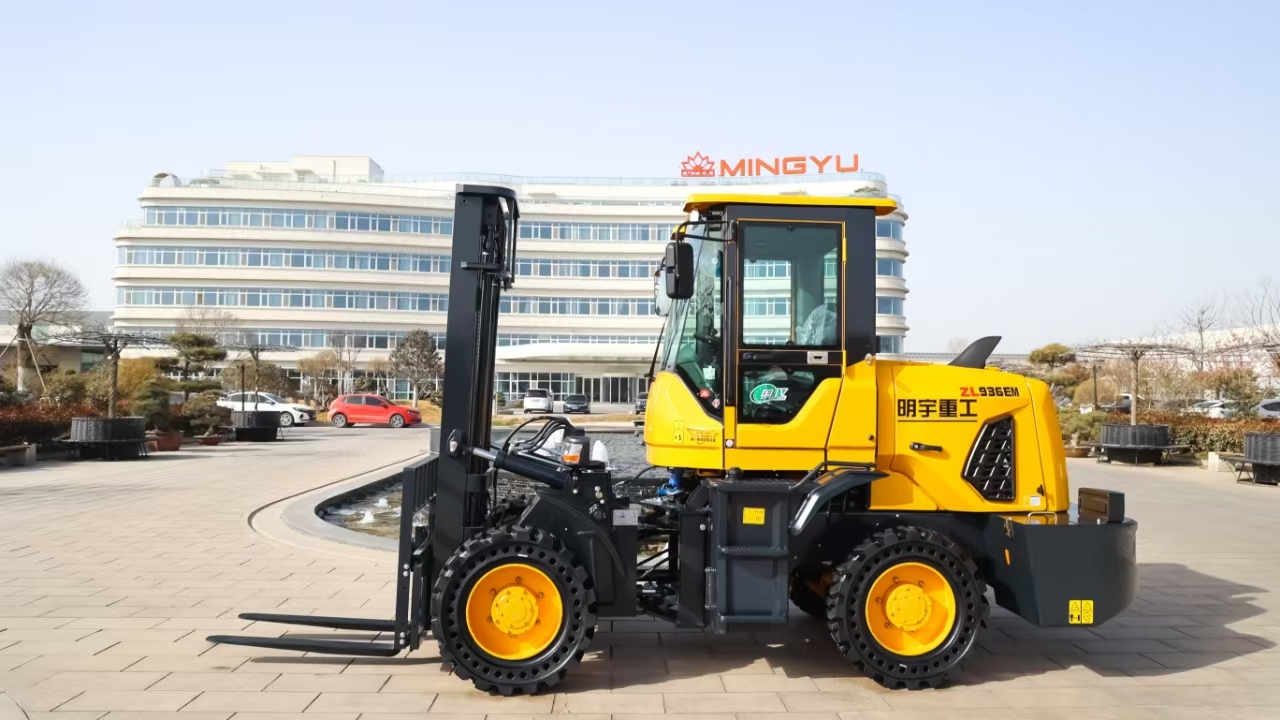
A heavy-duty rough terrain forklift is a specialized lifting machine designed for outdoor use on difficult and uneven surfaces. These forklifts are built with reinforced frames, powerful engines, and advanced suspension systems to handle challenging work environments.
Key features include:
Large pneumatic off-road tires
Four-wheel drive systems
High ground clearance
Heavy-duty mast or telescopic boom
Powerful diesel engines
Reinforced chassis construction
Advanced hydraulic lifting systems
These machines are designed to maintain traction and stability in mud, gravel, sand, and rough construction terrain.
2.2 How Rough Terrain Forklifts Differ From Standard Forklifts
|
Feature |
Rough Terrain Forklift |
Standard Forklift |
|
Terrain capability |
Off-road environments |
Smooth indoor surfaces |
|
Tire design |
Large off-road pneumatic tires |
Cushion or standard pneumatic tires |
|
Ground clearance |
High |
Low |
|
Stability system |
Enhanced for uneven terrain |
Designed for flat floors |
|
Lifting applications |
Construction and outdoor work |
Warehouses and factories |
Rough terrain forklifts are generally larger, more powerful, and more versatile than traditional warehouse forklifts.
2.3 Popular Heavy-Duty Forklift Manufacturers
Leading manufacturers include:
Manitou
JCB
Merlo
Moffett
Bobcat
Caterpillar
These brands produce machines with different lifting capacities, boom lengths, and technological features.
3. Understanding Lifting Capacity in Rough Terrain Forklifts
3.1 What Does Lifting Capacity Mean?
Lifting capacity refers to the maximum weight a forklift can safely lift under specified operating conditions. Manufacturers determine this rating based on machine stability, hydraulic performance, structural strength, and load center distance.
The load center is the distance between the load’s center of gravity and the front face of the forks. As the load center increases, lifting capacity decreases.
3.2 Typical Capacity Ranges
|
Forklift Type |
Capacity Range |
|
Compact rough terrain forklift |
2,500–5,000 kg |
|
Mid-size rough terrain forklift |
5,000–10,000 kg |
|
Heavy-duty industrial forklift |
10,000–25,000+ kg |
Some specialized port and industrial forklifts can lift even heavier loads.
3.3 Factors Affecting Maximum Capacity
Several factors influence lifting performance:
Mast height
Boom extension length
Load distribution
Tire condition
Counterweight size
Ground stability
Hydraulic pressure
Improper load positioning can significantly reduce safe lifting limits.
3.4 Capacity Reduction at Extended Reach
As the boom extends outward or upward, the machine’s center of gravity shifts forward. This reduces stability and lowers the safe lifting capacity.
Manufacturers provide load charts showing safe lifting limits at different boom angles and extensions.
4. Understanding Maximum Reach and Lift Height
4.1 Difference Between Reach and Lift Height
Lift height refers to the maximum vertical height the forklift can raise a load. Reach refers to how far forward the machine can extend the load.
Straight mast forklifts mainly provide vertical lifting, while telehandlers offer both vertical and forward reach.
4.2 Typical Reach and Height Specifications
|
Machine Type |
Lift Height |
Forward Reach |
|
Standard rough terrain forklift |
3–7 meters |
Limited |
|
Telehandler forklift |
10–20+ meters |
Extended reach |
Some rotating telehandlers exceed 30 meters of lift height.
4.3 How Telescopic Systems Increase Reach
Telehandlers use hydraulic telescopic booms to extend lifting range.
Advantages include:
Greater flexibility
Ability to place materials on upper floors
Improved jobsite productivity
Many machines also use stabilizers or outriggers for additional support.
4.4 Stability Risks at Maximum Reach
Operating at full reach increases tipping risk due to changes in the center of gravity.
Potential hazards include:
Forward tipping
Side instability
Ground collapse on soft terrain
Proper use of outriggers is essential for safe operation.
5. Types of Heavy-Duty Rough Terrain Forklifts
5.1 Straight Mast Rough Terrain Forklifts
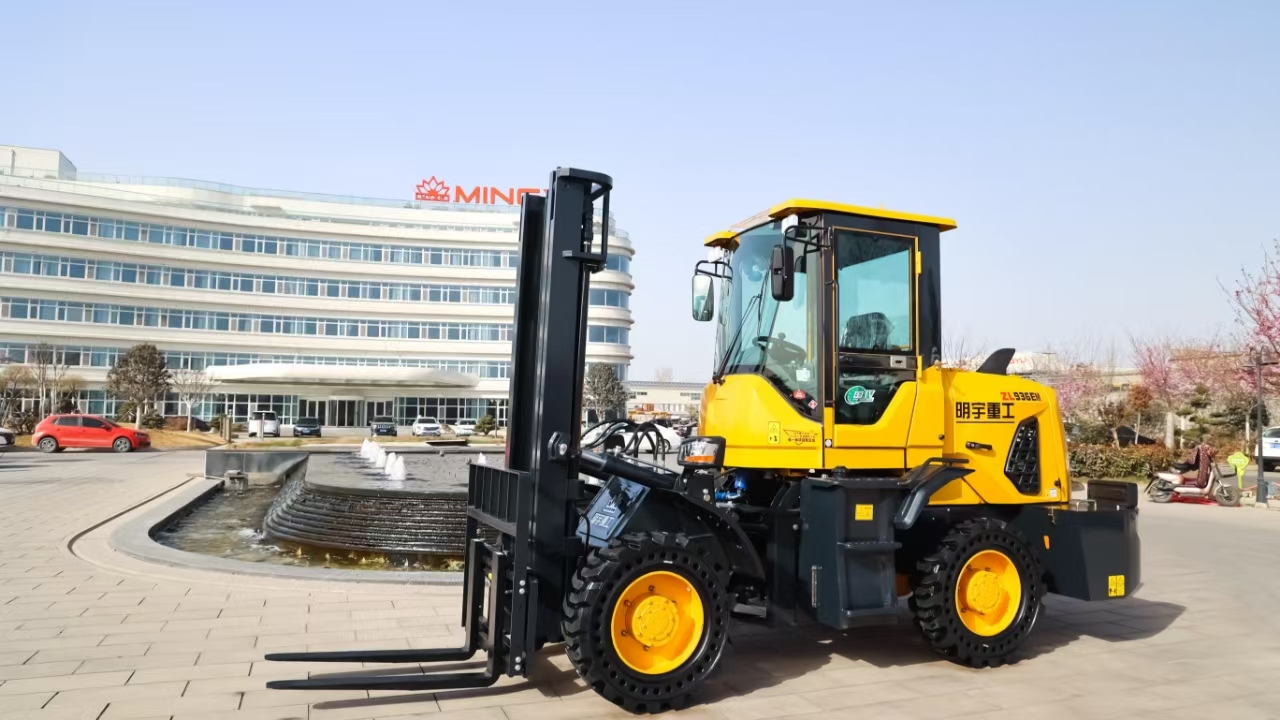
These machines use a traditional vertical mast system.
Advantages:
Simple design
Strong lifting capacity
Lower maintenance costs
Limitations:
Limited forward reach
5.2 Telescopic Handlers (Telehandlers)
Telehandlers combine forklift functionality with crane-like reach capabilities.
Applications include:
Construction
Agriculture
Warehousing
Industrial maintenance
5.3 Rotating Telehandlers
Rotating telehandlers can rotate 360 degrees.
Benefits include:
Increased versatility
Reduced machine repositioning
Crane-like operation
These machines are common on large construction projects.
5.4 Container and Port Forklifts
Industrial container handlers are designed for extremely heavy loads in shipping ports and logistics centers.
6. Industries That Require High Lifting Capacity and Reach
6.1 Construction Industry
Rough terrain forklifts are widely used for:
Steel beam handling
Concrete transport
Roofing material lifting
Multi-story construction support
6.2 Mining and Quarry Operations
Mining sites require forklifts capable of handling:
Heavy machinery components
Harsh terrain conditions
Remote work environments
6.3 Agriculture and Farming
Common agricultural applications include:
Hay bale stacking
Fertilizer handling
Feed transport
6.4 Oil, Gas, and Energy Projects
Energy projects often involve:
Pipe transportation
Equipment lifting
Remote logistics support
6.5 Port and Shipping Operations
Ports use heavy-duty forklifts for:
Container movement
Bulk cargo handling
Industrial logistics
7. Safety Considerations When Operating at Maximum Capacity
7.1 Understanding Load Charts
Operators must understand manufacturer load charts to avoid overload situations.
These charts show:
Maximum lifting weights
Safe boom angles
Reach limitations
7.2 Importance of Stable Ground Conditions
Soft or uneven terrain can reduce stability and increase accident risk.
Operators should avoid:
Muddy ground
Steep slopes
Loose gravel
7.3 Proper Operator Training
Certified operators are essential for safe forklift operation.
Training includes:
Load balancing
Terrain awareness
Emergency procedures
7.4 Use of Stabilizers and Outriggers
Outriggers improve machine balance during extended lifting operations.
Benefits include:
Improved stability
Reduced tipping risk
Safer high-reach operation
7.5 Regular Maintenance and Inspection
Routine maintenance improves safety and reliability.
Important inspection areas:
Hydraulic hoses
Tires
Mast or boom structure
Braking system
8. How to Choose the Right Heavy-Duty Rough Terrain Forklift
8.1 Determine Required Capacity and Reach
Buyers should calculate:
Maximum load weight
Required lift height
Forward reach distance
Overestimating or underestimating requirements can reduce efficiency.
8.2 Consider Terrain Conditions
Different jobsites require different tire and drive configurations.
Terrain examples include:
Mud
Sand
Rocky surfaces
Uneven slopes
8.3 Evaluate Attachment Compatibility
Common attachments include:
Forks
Buckets
Crane jibs
Winches
Versatile attachment systems improve machine productivity.
8.4 Compare Operating Costs
Consider:
Fuel consumption
Maintenance expenses
Tire replacement costs
Hydraulic repair costs
8.5 Assess Dealer Support
Reliable dealer networks are important for:
Spare parts availability
Technical support
Warranty service
9. Latest Technological Trends in Rough Terrain Forklifts
9.1 Advanced Load Monitoring Systems
Modern systems monitor:
Load weight
Boom angle
Stability conditions
Some machines automatically prevent overload situations.
9.2 Electric and Hybrid Rough Terrain Forklifts
Manufacturers are developing electric models with:
Lower emissions
Reduced noise
Improved energy efficiency
9.3 Smart Telematics Integration
Telematics systems allow fleet managers to monitor:
Machine location
Fuel usage
Service intervals
Operator behavior
9.4 Enhanced Operator Comfort and Safety
Modern cabins include:
Air suspension seats
Camera systems
Automatic leveling systems
Touchscreen controls
10. Common Mistakes Buyers Should Avoid
10.1 Choosing Based Only on Maximum Weight
Reach requirements are just as important as lifting capacity.
10.2 Ignoring Terrain Challenges
Machines unsuitable for terrain conditions may experience poor performance or accidents.
10.3 Overlooking Maintenance Costs
Heavy-duty forklifts can require expensive repairs if maintenance is neglected.
10.4 Buying Without Checking Dealer Support
Limited parts availability can cause costly downtime.
10.5 Failing to Train Operators
Poorly trained operators significantly increase accident risks.
11. Conclusion
Heavy-duty rough terrain forklifts are essential machines for industries requiring powerful lifting performance in difficult outdoor environments. Their maximum lifting capacity and reach vary greatly depending on machine type, design, boom configuration, and operating conditions.
Compact models may lift only a few thousand kilograms, while large industrial telehandlers can handle more than 25,000 kilograms and reach heights exceeding 20 meters. However, lifting performance always depends on safe operating conditions, proper load distribution, and correct machine setup.
Understanding lifting capacity, reach limitations, terrain stability, and manufacturer load charts is critical for safe and efficient operation. Buyers must carefully evaluate jobsite requirements, terrain conditions, attachment needs, and maintenance support before selecting equipment.
As technology continues advancing, modern rough terrain forklifts are becoming safer, more efficient, and more versatile. Features such as telematics, electric power systems, automatic load monitoring, and improved operator comfort are shaping the future of the industry.
For contractors, farmers, industrial operators, and logistics companies, choosing the right heavy-duty rough terrain forklift can significantly improve productivity, safety, and long-term operational efficiency.
Post time:May.25.2026
