
Skid Steer vs. Compact Track Loader (CTL): Which One to Choose?
1. Introduction
Skid steer loaders and compact track loaders (CTLs) are two of the most versatile compact machines used in construction, landscaping, agriculture, road maintenance, demolition, forestry, and material handling. At first glance, they appear very similar. Both are compact, highly maneuverable machines that can work with a wide range of attachments, and both can turn within a very small working area. However, the biggest difference is underneath the machine: a traditional skid steer uses four wheels, while a CTL uses rubber tracks.
This difference affects almost every aspect of machine performance. A skid steer generally offers higher travel speed, lower initial purchase costs, and good performance on firm surfaces such as concrete and asphalt. A CTL, on the other hand, provides lower ground pressure, better flotation, and stronger traction on muddy, sandy, soft, or uneven ground. CTLs are also particularly useful for grading and jobs where minimizing ground disturbance is important.
Choosing between the two is therefore not simply a matter of deciding which machine is more powerful. The right choice depends on the type of work, ground conditions, attachment requirements, annual operating hours, maintenance budget, and transportation needs. A contractor working primarily on paved construction sites may benefit from a skid steer, while a landscaping or earthmoving contractor working frequently on soft ground may find a CTL more suitable.
In this guide, we will compare skid steer loaders and compact track loaders in terms of design, traction, ground pressure, lifting performance, speed, operating costs, maintenance, attachments, operator comfort, and applications. By understanding the strengths and limitations of each machine, buyers can make a more informed decision and choose equipment that provides the best value over its working life.
2. What Is a Skid Steer Loader?
A skid steer loader is a compact loader equipped with four wheels and a rigid chassis. Instead of using conventional steering, the machine changes direction by controlling the speed and direction of the wheels on each side independently. When the wheels on one side move faster or in the opposite direction from the other side, the machine pivots or “skids” around its turning point.
This design gives skid steers exceptional maneuverability. They can turn within a very small area, making them particularly useful on crowded construction sites and in areas where larger machines cannot easily operate. Their compact dimensions also make them relatively easy to transport between jobsites.
Skid steer loaders are available in different sizes and operating capacities. Compact models are suitable for landscaping and light construction, while larger models can handle demanding excavation, material handling, and attachment work. Depending on the model, a skid steer can be equipped with buckets, pallet forks, augers, hydraulic breakers, trenchers, grapples, sweepers, snow blades, brush cutters, and many other attachments.
One major advantage of a skid steer is its performance on firm surfaces. Tires generally provide good travel speed and can be more economical to replace than complete track systems. For contractors who frequently work on concrete, asphalt, compacted soil, or other hard surfaces, a wheeled skid steer can be a practical and cost-effective choice.
However, skid steers also have limitations. Their tires generate higher ground pressure than tracks, so they may sink more easily in muddy or loose soil. Tire traction can also become a limiting factor when operating on steep, wet, or slippery terrain.
3. What Is a Compact Track Loader (CTL)?
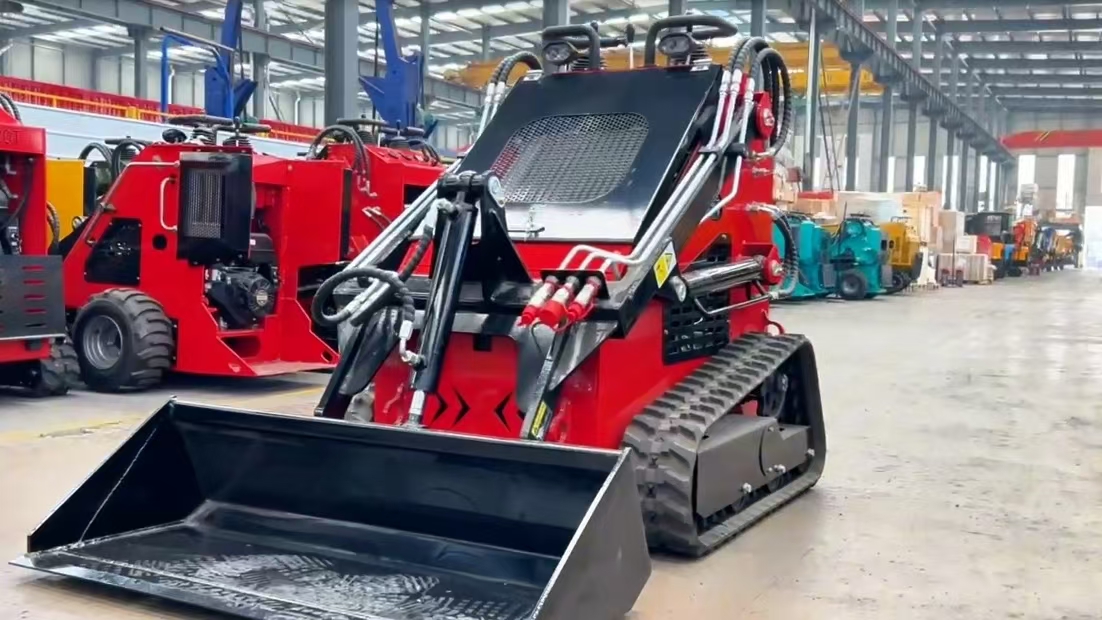
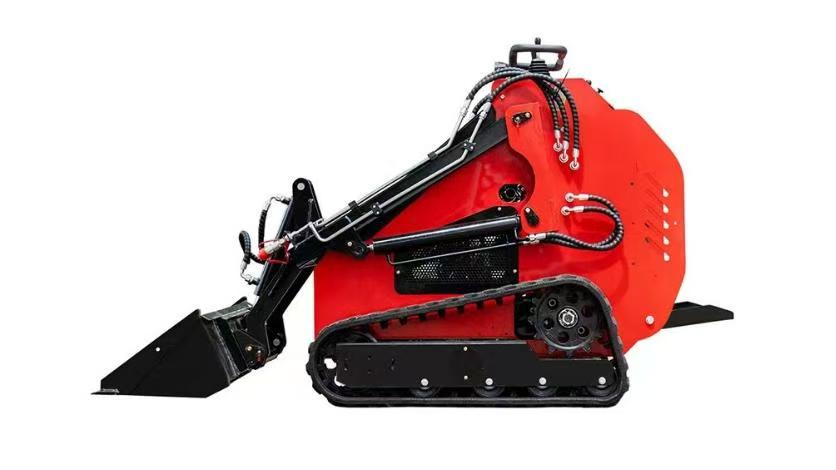
A compact track loader, commonly called a CTL, is a compact loader that uses rubber tracks instead of conventional wheels. The tracks provide a larger contact area with the ground, distributing the machine's weight over a wider surface.
One of the most important benefits of this design is lower ground pressure. A CTL can therefore operate effectively on soft soil, mud, sand, grass, and other surfaces where a wheeled skid steer may have difficulty maintaining flotation.
The track system also provides strong traction. This makes CTLs particularly useful for earthmoving, grading, land clearing, landscaping, and construction work in challenging terrain. The machine can maintain contact with the ground while pushing, digging, grading, or carrying material.
Another important advantage is grading performance. The combination of tracks, low ground pressure, and good stability allows CTLs to perform fine grading and surface preparation effectively. This is one reason why CTLs have become increasingly popular among landscaping and site-development contractors.
However, the advantages of tracks come with additional costs. CTLs normally have a higher initial purchase price than comparable wheeled skid steers, and their tracks, rollers, sprockets, and other undercarriage components require regular inspection and maintenance. Continuous operation on abrasive concrete or asphalt can also accelerate track wear.
4. Skid Steer vs. CTL: Key Differences
4.1 Wheels vs. Tracks
The most obvious difference is the undercarriage. Skid steers use four tires, while CTLs use two continuous rubber tracks.
Wheels generally offer lower rolling resistance and higher travel speeds. They also tend to be easier and less expensive to maintain. Tracks provide greater ground contact, which improves flotation and traction.
Therefore, the choice between wheels and tracks should start with the question: Where will the machine work most of the time?
4.2 Traction
CTLs generally have an advantage when working on soft or slippery surfaces because the tracks maintain a larger contact area with the ground. This can help the machine push material and climb challenging terrain.
Skid steers can provide excellent traction on firm surfaces, particularly when equipped with suitable tires. However, traction can decrease when the ground becomes muddy, wet, loose, or uneven.
4.3 Ground Pressure
Ground pressure is especially important in landscaping and sensitive work areas.
A CTL distributes its weight across a larger track footprint, resulting in lower ground pressure. This can reduce rutting and surface damage when working on lawns, soft soil, or partially finished sites.
A skid steer concentrates more of its weight through its tires, producing higher ground pressure. This can be an advantage for certain digging and pushing operations but may cause more surface disturbance.
4.4 Speed and Mobility
Skid steers generally have an advantage in travel speed. Tires are well suited to moving quickly between work areas, especially on firm surfaces.
CTLs are usually optimized more for traction and working performance than high-speed travel. If a machine needs to frequently travel across a large construction site or between nearby locations, a skid steer may be more efficient.
4.5 Lifting and Operating Performance
Both machine types are available with radial-lift and vertical-lift configurations.
Radial-lift machines are often well suited to digging and working close to the ground. Vertical-lift machines provide a higher lift path and are useful for loading trucks and placing materials at greater heights.
Rather than assuming that one undercarriage type always has greater lifting capacity, buyers should compare the rated operating capacity and lift geometry of specific models.
5. Performance on Different Terrains
5.1 Hard and Paved Surfaces
Skid steers are generally well suited to concrete, asphalt, compacted soil, and other hard surfaces. Their tires provide efficient movement and make frequent travel relatively easy.
CTLs can also operate on hard surfaces, but continuous operation on abrasive pavement can increase track wear. Operators should therefore consider the percentage of working time spent on paved surfaces before selecting a tracked machine.
5.2 Muddy and Soft Ground
This is one of the strongest use cases for a CTL. Its larger track footprint allows the machine to distribute its weight and maintain better flotation.
A skid steer can become less effective when tires lose traction or begin to sink into soft soil. Although specialized tires can improve performance, a CTL is generally the more natural choice for consistently muddy or soft jobsites.
5.3 Rocky and Uneven Terrain
Both machines can work on rough terrain, but the type of risk is different.
Skid steer tires can be vulnerable to punctures and sidewall damage from sharp rocks or debris. CTL tracks eliminate conventional tire punctures but can still be damaged by sharp objects and require attention to the undercarriage.
The correct choice depends on the severity of the terrain, the machine's track or tire configuration, and the expected operating hours.
5.4 Slopes and Hills
Traction and stability become especially important on slopes. CTLs can provide strong traction because of their continuous tracks and large contact area.
However, neither machine should be selected solely because it performs well on slopes. Operators must follow the manufacturer's operating limits, understand the terrain, and use appropriate attachments and safety procedures.
6. Operating Costs and Maintenance
6.1 Purchase Price
A comparable CTL will often cost more initially than a skid steer because of its tracked undercarriage and related components.
For buyers with a limited initial equipment budget, a skid steer can therefore be attractive. However, purchase price should not be the only consideration. Annual operating hours and jobsite conditions can significantly influence total ownership costs.
6.2 Tire vs. Track Costs
Skid steer tires are generally straightforward to replace, and different tire patterns are available for different applications.
CTL tracks can have a longer service life under suitable conditions, but replacement can be more expensive. The undercarriage also contains components such as rollers and sprockets that require inspection and eventual replacement.
The actual cost depends heavily on terrain, operating practices, track quality, tire selection, and maintenance.
6.3 Fuel Consumption
Fuel consumption depends on engine size, hydraulic requirements, attachment load, operator behavior, and working conditions.
Neither machine should automatically be considered more fuel-efficient simply because it has wheels or tracks. Buyers should compare specific models and consider the type of work they will perform.
6.4 Maintenance Requirements
Daily maintenance should include checking fluids, lubrication points, hydraulic systems, filters, tires or tracks, and safety equipment.
For CTLs, operators should pay particular attention to the undercarriage. Removing accumulated mud and debris can help prevent unnecessary wear.
For skid steers, tire pressure, tire condition, wheel components, and tread wear should be checked regularly.
7. Attachment Compatibility and Versatility
One of the biggest advantages of both skid steers and CTLs is their attachment versatility.
Common attachments include:
General-purpose buckets
Pallet forks
Augers
Hydraulic breakers
Trenchers
Grapples
Sweepers
Brush cutters
Snow blades
Snow blowers
Dozer blades
Bale grabs
Hydraulic flow is an important consideration. Some attachments require standard hydraulic flow, while demanding hydraulic tools may require high-flow systems.
CTLs can be particularly effective with grading attachments because of their traction and stability. Skid steers, meanwhile, are excellent all-round machines when the work involves frequent movement and a broad range of attachments.
Before purchasing, buyers should make a list of their planned attachments and confirm the machine's rated hydraulic flow, lifting capacity, auxiliary hydraulic specifications, and attachment interface.
8. Comfort, Visibility, and Operator Experience
Modern skid steers and CTLs can offer enclosed cabs, air conditioning, heating, suspension seats, joystick controls, cameras, and improved visibility.
Operator comfort should not be overlooked. A machine may operate for several hours every day, so cab ergonomics can directly affect productivity and operator fatigue.
CTLs can provide a smoother working experience over some uneven terrain, although ride quality depends on the specific machine and undercarriage design.
Visibility is also important, particularly when using buckets, forks, grapples, or other attachments. Buyers should evaluate the cab design, window layout, rear visibility, control system, and optional camera systems before making a purchase.
9. Skid Steer vs. CTL for Different Industries
9.1 Construction
Skid steers are excellent for material handling, demolition, loading, and general construction work, particularly on firm surfaces.
CTLs are particularly useful for earthmoving, grading, site preparation, and construction on soft or unfinished ground.
9.2 Landscaping
CTLs are often a strong choice for landscaping because their low ground pressure can reduce damage to finished lawns and soft surfaces.
Skid steers remain useful for hardscape projects, material movement, and jobs where the machine frequently travels over firm surfaces.
9.3 Agriculture
Both machines can perform farm work such as material handling, cleaning, feeding, and attachment operations.
The better choice depends on whether the machine will primarily operate inside barns and on concrete or outside on fields and soft ground.
9.4 Forestry and Land Clearing
Both machines can be equipped with grapples, brush cutters, and other specialized attachments.
CTLs can provide strong traction on uneven ground, while skid steers may be advantageous where faster movement and lower undercarriage costs are priorities.
9.5 Snow Removal
Skid steers are widely used for snow removal because tires perform well on paved parking lots, roads, and driveways.
CTLs can also be used with snow attachments, especially when traction is important, but buyers should consider track wear when operating extensively on abrasive paved surfaces.
10. Advantages and Disadvantages at a Glance
Skid Steer Advantages
Lower initial investment in many cases
Higher travel speed
Good performance on hard surfaces
Generally simpler undercarriage maintenance
Easy tire replacement
Excellent maneuverability
Large selection of attachments
Skid Steer Disadvantages
Higher ground pressure
Less flotation on soft ground
Greater risk of tire punctures
Can lose traction in deep mud
May cause more surface disturbance on sensitive ground
CTL Advantages
Lower ground pressure
Excellent flotation
Strong traction
Good performance on soft and uneven ground
Excellent grading capability
Suitable for many earthmoving applications
CTL Disadvantages
Higher initial purchase price in many cases
Higher potential undercarriage maintenance costs
Tracks can wear quickly on abrasive surfaces
Usually slower than comparable wheeled machines
More attention required for track and undercarriage maintenance
11. How to Choose: A Practical Decision Guide
Choose a skid steer if:
You mainly work on concrete, asphalt, or firm soil.
Travel speed is important.
You frequently move between work areas.
You want a lower initial investment.
You prefer relatively simple tire maintenance.
Your jobs involve general construction and material handling.
Choose a CTL if:
You frequently work in mud or soft soil.
Low ground pressure is important.
Strong traction is a priority.
You regularly perform grading and earthmoving.
You work on unfinished construction sites.
Protecting grass or reducing ground disturbance is important.
If your company works in many different environments, it may be worth comparing both machine types based on your actual annual operating hours rather than choosing based only on purchase price.
12. Total Cost of Ownership: What Should Buyers Consider?
The cheapest machine to purchase is not necessarily the cheapest machine to own.
When calculating total cost of ownership, consider:
Initial purchase price
Financing costs
Fuel consumption
Routine maintenance
Tire or track replacement
Undercarriage components
Attachment costs
Transportation
Downtime
Resale value
For example, a CTL may cost more initially, but if it allows a contractor to complete difficult grading work more efficiently and operate reliably on soft ground, the additional investment may be justified.
Conversely, purchasing a CTL for a business that spends most of its time operating on concrete may unnecessarily increase track and undercarriage costs.
The best decision is therefore based on cost per productive working hour, not simply purchase price.
13. Skid Steer vs. CTL: Comparison Table
|
Feature |
Skid Steer |
Compact Track Loader |
|
Undercarriage |
Four wheels |
Rubber tracks |
|
Initial cost |
Generally lower |
Generally higher |
|
Travel speed |
Generally higher |
Generally lower |
|
Ground pressure |
Higher |
Lower |
|
Soft-ground performance |
Good to limited |
Excellent |
|
Mud performance |
Moderate |
Excellent |
|
Hard-surface performance |
Excellent |
Good |
|
Traction |
Good |
Excellent |
|
Grading |
Very good |
Excellent |
|
Tire/track maintenance |
Simpler |
More complex |
|
Puncture risk |
Yes |
No conventional tire puncture |
|
Undercarriage cost |
Generally lower |
Generally higher |
|
Landscaping |
Very good |
Excellent |
|
Material handling |
Excellent |
Excellent |
|
Snow removal |
Excellent |
Good to excellent |
|
Attachment versatility |
Excellent |
Excellent |
14. Frequently Asked Questions
Is a CTL better than a skid steer?
Not necessarily. A CTL is generally better for soft ground, traction, and grading, while a skid steer can be better for hard surfaces, speed, and lower operating costs.
Which one is cheaper to operate?
It depends on the application. Skid steers often have lower undercarriage costs, while CTLs can deliver better productivity in difficult ground conditions.
Can a skid steer work in mud?
Yes, but performance depends on soil conditions, tire selection, machine weight, and depth of mud. For frequent operation in very soft conditions, a CTL is usually more suitable.
Can a CTL operate on concrete?
Yes. However, prolonged operation on abrasive concrete or asphalt can accelerate track wear. Operating practices and track selection are important.
Which is better for landscaping?
A CTL is often preferred when protecting lawns and working on soft ground is important. A skid steer can be an excellent choice for hardscaping and firm surfaces.
Which machine is better for construction?
Both are highly capable. The choice depends on the specific construction application and ground conditions.
Which has better lifting capacity?
There is no universal answer. Buyers should compare the rated operating capacity, tipping load, lift height, and lift configuration of individual models.
Can the same attachments be used on both?
Many attachments use a common skid steer-style attachment interface and can work with both machines. However, hydraulic flow, attachment weight, electrical connections, and machine capacity must be checked before use.
15. Conclusion
The decision between a skid steer and a compact track loader ultimately comes down to where the machine will work and what it will do most often.
A skid steer is a strong all-round solution for contractors who prioritize speed, maneuverability, lower initial cost, and frequent operation on firm surfaces. It is particularly attractive for material handling, construction, snow removal, and general-purpose attachment work.
A CTL is a better fit for demanding terrain, soft soil, muddy jobsites, landscaping, grading, and applications where traction and low ground pressure are critical. Although its purchase and undercarriage costs can be higher, its performance in challenging ground conditions can justify the additional investment.
Before buying, evaluate your typical terrain, annual operating hours, attachments, required lifting capacity, transportation requirements, maintenance resources, and total cost of ownership. The best machine is not necessarily the one with the lowest purchase price—it is the one that can perform your most common jobs efficiently and economically.
Post time:Sep.03.2026
