
How High Can an Aerial Work Platform Reach Safely?
1. Introduction
Aerial work platforms (AWPs), also known as mobile elevating work platforms (MEWPs), are widely used for construction, building maintenance, warehouse operations, electrical work, facility maintenance, landscaping, and many other applications that require workers to operate at height. These machines provide a safer and more efficient alternative to ladders and temporary scaffolding when workers need to reach elevated work areas. However, one of the most important questions when selecting an aerial work platform is: How high can it reach safely?
The answer is not simply the maximum height listed in a machine's specifications. An aerial work platform may have a working height of 10 meters, 16 meters, 20 meters, or even more than 40 meters, but its safe operating height depends on several factors. These include the machine type, platform load, horizontal outreach, ground conditions, wind speed, slope, machine configuration, and the manufacturer's operating limits.
It is also important to understand the difference between platform height and working height. Platform height normally refers to the maximum height of the platform floor, while working height generally includes the approximate reach of a person standing inside the platform. Therefore, a machine advertised with a 16-meter working height does not necessarily raise its platform to 16 meters.
Choosing an aerial work platform should therefore be based on the actual requirements of the job rather than simply choosing the machine with the greatest possible height. A properly selected machine should provide enough vertical reach, horizontal outreach, platform capacity, and stability for the working environment while remaining within its rated operating limits.
This article explains how aerial work platform height is measured, how different types of platforms compare, what factors determine safe working height, and how to select the right machine for elevated work.
2. What Is an Aerial Work Platform?
An aerial work platform is a machine designed to raise workers and their tools to an elevated working position. Depending on the design, the machine may move vertically, extend horizontally, or combine vertical lifting with horizontal outreach.
Common types include scissor lifts, vertical mast lifts, articulating boom lifts, and telescopic boom lifts.
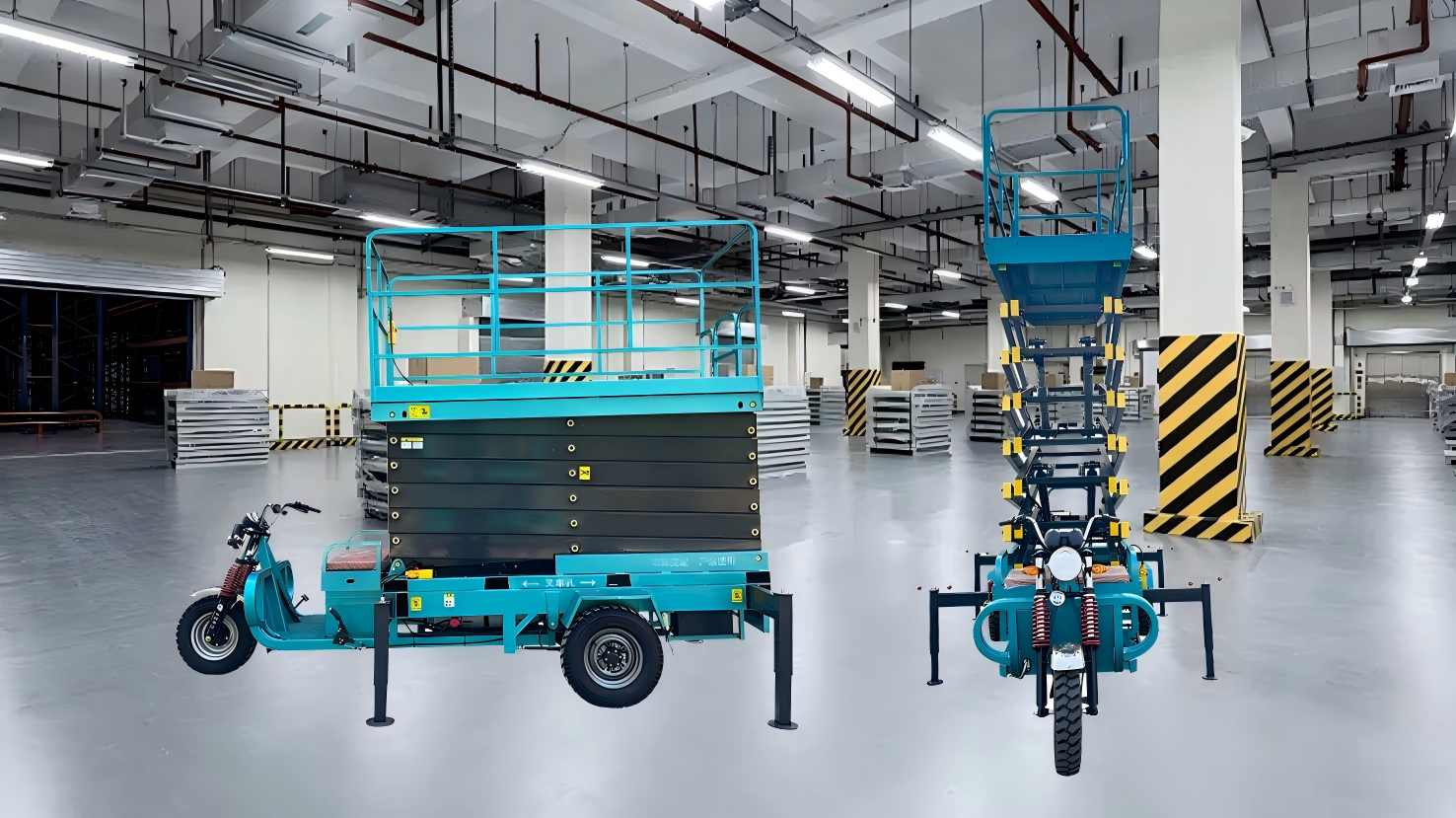
Scissor lifts use a folding lifting mechanism to move the platform primarily in a vertical direction. They are particularly useful when workers need a large platform and vertical access to ceilings, walls, lighting systems, warehouses, and construction areas.
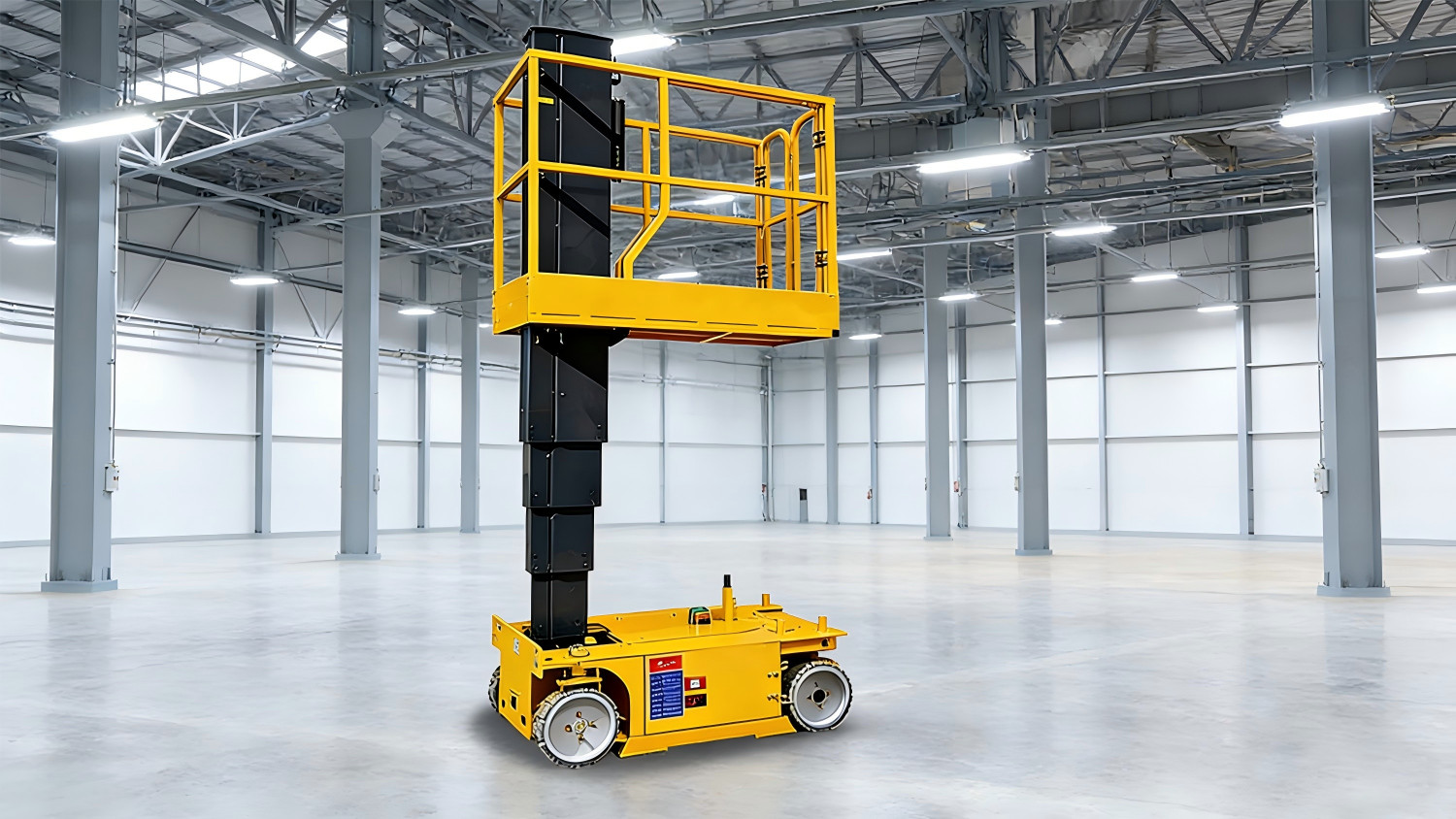
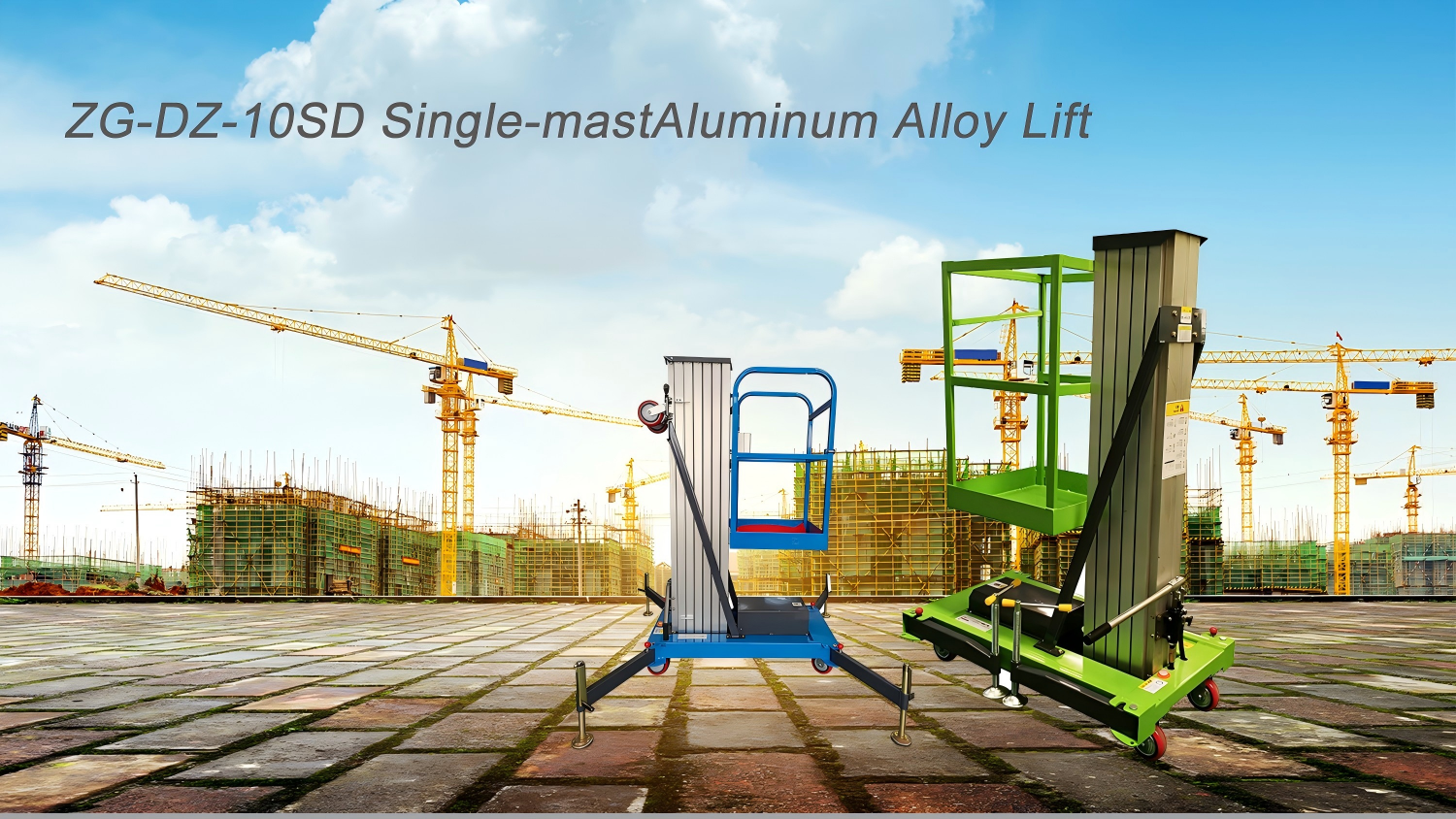
Vertical mast lifts are compact machines designed for relatively low to medium-height work. Their small dimensions make them suitable for indoor maintenance, warehouses, shopping centers, and industrial facilities.
Articulating boom lifts use multiple boom sections with joints, allowing the platform to move up and over obstacles. This makes them useful when the work area is not directly above the machine.
Telescopic boom lifts use a telescoping boom to provide long horizontal outreach and significant working height. They are commonly used on construction sites and other outdoor projects where workers need to reach high or distant locations.
There are also self-propelled and mobile versions designed for different working environments. The correct machine depends not only on height but also on the terrain, access requirements, capacity, and required outreach.
3. Understanding Aerial Work Platform Height Ratings
One of the most common mistakes when comparing aerial work platforms is assuming that platform height and working height are the same thing.
Platform Height
Platform height is the vertical distance from the ground to the platform floor when the machine is in a specified configuration.
Working Height
Working height generally represents the approximate maximum height a worker can reach while standing on the platform. Because a person can reach above the platform floor, working height is normally greater than platform height.
For example, an aerial work platform might have:
Platform height: 14 m
Approximate working height: 16 m
The exact calculation varies by manufacturer, so buyers should always check the official specifications.
Horizontal Outreach
Boom lifts also have another important specification: horizontal outreach. This indicates how far the platform can reach horizontally from the machine.
A machine might be capable of reaching a high point directly above itself but have a different maximum height when the boom is extended outward. Similarly, maximum horizontal outreach may not be available at maximum platform height.
Platform Capacity
Platform capacity refers to the maximum allowable combined weight of workers, tools, and permitted materials. Capacity can vary depending on machine configuration and boom position.
Therefore, height, outreach, and capacity must always be considered together.
4. How High Can Different Aerial Work Platforms Reach?
Different types of aerial work platforms are designed for different working heights.
|
AWP Type |
Typical Working Height |
Main Application |
|
Vertical mast lift |
Approx. 5–14 m |
Indoor maintenance |
|
Small scissor lift |
Approx. 6–12 m |
Warehouses and buildings |
|
Large scissor lift |
Approx. 12–20 m+ |
Construction and industrial work |
|
Articulating boom lift |
Approx. 12–40 m+ |
Construction and maintenance |
|
Telescopic boom lift |
Approx. 15–50 m+ |
High-level outdoor work |
These ranges are general examples rather than universal limits. Actual working height varies by model.
For example, a compact electric scissor lift may be designed primarily for indoor work at relatively low heights, while a large diesel-powered boom lift can provide much greater height and outreach.
Aerial platforms designed for very high work typically require more sophisticated stability systems and careful consideration of ground conditions, wind, and load.
The important point is that higher does not automatically mean better. If a project requires 12 meters of working height, purchasing a much larger 30-meter machine may increase transportation, operating, and maintenance costs without providing a practical advantage.
5. What Determines the Safe Maximum Working Height?
The maximum safe operating height is determined by more than the machine's maximum specification.
Manufacturer's Rated Limits
The manufacturer's operating manual is the primary reference for the machine's permitted operating conditions. Operators should not exceed rated height, outreach, capacity, slope, or wind limits.
Platform Load
The combined weight of workers, tools, and permitted materials must remain within the rated platform capacity.
Machine Configuration
Outriggers, stabilizers, boom position, tires, platform configuration, and other equipment options can affect the machine's operating envelope.
Ground Conditions
The machine must be positioned on ground capable of supporting its weight and the forces generated during operation.
Wind
Wind can significantly affect elevated platforms, particularly large boom lifts. Operators must follow the manufacturer's specified maximum wind speed.
Slope
Each machine has a specified maximum allowable slope or leveling condition. Working outside these limits can create serious stability risks.
Outreach
When a boom extends outward, the load moment changes. The machine may therefore have different capacity and operating limits at different boom positions.
6. The Relationship Between Height, Outreach, and Stability
Height and horizontal outreach are closely related to machine stability.
Imagine a boom lift positioned close to a building. The machine may reach the required height while keeping the boom relatively close to its base. If the boom must extend a significant distance horizontally, the forces acting on the machine can change considerably.
For this reason, manufacturers define a specific working envelope for each machine.
Maximum height may only be achievable under certain configurations. Maximum outreach may be achieved at a lower elevation, depending on the design.
Operators should never assume that a machine can simultaneously achieve its maximum height, maximum outreach, and maximum platform load.
The correct approach is to check the manufacturer's load chart, operating diagram, or machine specifications and ensure the planned work falls within the permitted operating envelope.
7. Ground Conditions and Leveling Requirements
Ground conditions are particularly important when operating an aerial work platform at height.
A machine should be positioned on a stable and suitable surface. Soft soil, loose gravel, underground voids, trenches, unstable pavement, or other unsuitable surfaces can affect machine stability.
For machines equipped with outriggers or stabilizers, the operator must deploy them according to the manufacturer's instructions. The ground beneath each outrigger must be capable of supporting the applied load.
Slope is another important consideration. A platform designed for level-ground operation should not simply be driven onto a steep slope because the working area is difficult to access.
Before operation, the work area should be inspected for:
Uneven ground
Soft soil
Holes and depressions
Trenches
Slopes
Overhead obstacles
Underground hazards
Vehicle traffic
Other site-specific risks
A proper site assessment helps determine whether the selected aerial platform is appropriate for the job.
8. Wind, Weather, and Environmental Conditions
Wind is one of the most important environmental factors when working at height.
As the platform rises, the machine and its elevated components can be exposed to stronger wind conditions. A large platform or boom can also present a significant surface area to the wind.
Every aerial work platform has a manufacturer's maximum permitted wind speed. This limit must be followed.
Outdoor work should also consider:
Heavy rain
Snow and ice
Lightning
Poor visibility
Strong gusts
Extreme temperatures
Dust or other environmental conditions
Indoor machines may have different operating specifications because they are protected from outdoor wind conditions. However, indoor environments still require attention to floor strength, ceiling height, obstacles, ventilation, and surrounding equipment.
Operators should always check the machine's operating instructions before working in changing weather conditions.
9. Platform Load Capacity at Height
Platform capacity is another critical part of safe operation.
The rated capacity normally includes the combined weight of:
Operators
Hand tools
Materials
Equipment carried onto the platform
For example, if the platform is rated for 230 kg, the total load should not exceed the manufacturer's permitted capacity.
It is important not to assume that adding more workers is acceptable simply because there appears to be enough physical space on the platform.
For boom lifts, allowable capacity can also depend on boom position and outreach. As the working position changes, the machine's operating limits may change as well.
Materials should be distributed appropriately within the platform rather than concentrated heavily on one side.
10. Safe Operation at Maximum Height
Before using an aerial work platform, operators should perform the inspections and checks required by the manufacturer and applicable regulations.
Important practices include:
Conducting a pre-operation inspection.
Checking tires, wheels, hydraulic components, controls, and structural components.
Testing emergency and safety systems.
Checking the work area for hazards.
Confirming that the ground is suitable.
Checking weather and wind conditions.
Staying within the rated platform capacity.
Following the machine's operating envelope.
Maintaining appropriate clearance from obstacles and electrical hazards.
Using required fall-protection equipment according to the machine and applicable regulations.
Operators should never climb onto guardrails or use ladders, boxes, or other improvised devices to gain additional height.
If the required work area is beyond the machine's rated working envelope, the correct solution is to select a machine with greater capability rather than attempting to extend the platform's reach through unauthorized methods.
11. Common Mistakes When Operating at Height
Several mistakes can increase risk when using aerial work platforms.
Mistake 1: Assuming Maximum Height Is Always Safe
A machine's advertised maximum working height represents a rated capability under specified conditions. It does not mean the machine can safely operate at that height under every site condition.
Mistake 2: Exceeding Platform Capacity
Adding excessive tools or materials can exceed the rated load.
Mistake 3: Ignoring Wind
Outdoor operators should follow the manufacturer's wind-speed limit and monitor changing conditions.
Mistake 4: Working on Unsuitable Ground
Soft or unstable ground can create serious problems, particularly when using large machines or outriggers.
Mistake 5: Ignoring Outreach
Maximum height and maximum horizontal outreach are not necessarily available simultaneously.
Mistake 6: Using Improvised Height Extensions
Workers should never use ladders, boxes, scaffolding sections, or other unauthorized methods to increase platform height.
Mistake 7: Moving Without Checking the Surroundings
Overhead structures, electrical hazards, vehicles, other equipment, and pedestrians should be considered before and during machine movement.
12. Choosing the Right Aerial Work Platform for the Required Height
The first step in choosing an AWP is to determine the actual working height required.
For example, if maintenance needs to be performed at the upper part of a 12-meter building, the required working height may be greater than 12 meters depending on where the worker needs to stand and reach.
Next, determine whether the machine needs horizontal outreach.
If the work is directly above the machine, a scissor lift may be suitable. If the work is above an obstacle or around a structure, an articulating boom lift may be more appropriate.
For long-distance horizontal access at height, a telescopic boom lift may be preferable.
Other selection factors include:
Required working height
Required horizontal outreach
Platform capacity
Indoor or outdoor operation
Ground conditions
Machine width
Turning radius
Power source
Transportation requirements
Frequency of use
Maintenance requirements
The best machine is therefore not necessarily the one with the highest lifting height. It is the machine whose working envelope matches the actual job requirements.
13. Aerial Work Platform Safety Standards and Training
Safe operation requires properly trained operators and compliance with applicable regulations.
Depending on the country and application, different standards and regulatory requirements may apply. In North America, aerial work platform requirements are commonly associated with ANSI/SAIA standards and applicable workplace regulations. In Europe, manufacturers and users may need to consider CE-related machinery requirements and relevant European standards.
However, certification alone does not replace proper operator training.
Operators should understand:
Machine controls
Rated capacity
Operating envelope
Emergency lowering systems
Ground conditions
Wind limitations
Fall-protection requirements
Pre-use inspections
Site-specific hazards
Employers and equipment owners should also establish appropriate inspection, maintenance, and training procedures.
14. Practical Examples: Selecting a Safe Working Height
Warehouse Maintenance
For indoor lighting, electrical, or HVAC maintenance, a compact electric scissor lift or vertical mast lift may be appropriate. Low noise and zero local exhaust emissions can be important in enclosed environments.
Building Maintenance
For façade work, an articulating boom lift may be preferable because it can reach upward and over obstacles.
Construction
Construction sites often require machines with greater ground clearance, traction, working height, and outreach. Diesel-powered boom lifts or large scissor lifts may be suitable depending on the project.
Street Lighting
A boom lift can provide both vertical height and horizontal outreach, allowing workers to reach lighting equipment positioned away from the machine.
Landscaping
Tree maintenance may require significant outreach as well as height. An articulating boom can provide access around branches and other obstacles, subject to the machine's permitted use and configuration.
Industrial Maintenance
Factories may require compact machines for indoor access or large boom lifts for high structures. Machine dimensions and floor loading should be considered carefully.
15. Aerial Work Platform Height Comparison Table
|
Machine Type |
Typical Working Height |
Outreach |
Main Advantage |
Typical Application |
|
Vertical mast lift |
5–14 m |
Limited |
Compact and maneuverable |
Indoor maintenance |
|
Scissor lift |
6–20 m+ |
Mainly vertical |
Large platform |
Construction, warehouses |
|
Articulating boom lift |
12–40 m+ |
High |
Flexible positioning |
Building maintenance |
|
Telescopic boom lift |
15–50 m+ |
Very high |
Long reach |
Construction |
|
Large specialized AWP |
40 m+ |
Model-dependent |
Very high access |
Specialized projects |
These figures are general ranges. The actual safe working height depends on the specific model and its manufacturer's rated specifications.
16. Frequently Asked Questions
What is the maximum height an aerial work platform can reach?
It depends on the machine type and model. Smaller platforms may have working heights below 10 meters, while large boom lifts can exceed 40 meters. Specialized equipment can reach even higher.
Is working height the same as platform height?
No. Working height normally represents the approximate maximum height a worker can reach from the platform, while platform height refers to the height of the platform itself.
Can an aerial platform reach maximum height with a full load?
Not necessarily. Some machines have different capacity limitations depending on boom position, outreach, or configuration. Always follow the manufacturer's specifications.
How does wind affect maximum operating height?
Strong wind can affect machine stability and elevated components. The manufacturer's maximum permitted wind speed must always be respected.
Can an AWP operate on a slope?
Only within the limits specified by the manufacturer. Some machines are designed for certain slopes, while others require level ground or have strict slope limitations.
Which aerial platform is best for high-rise construction?
For high-rise or tall-building work, telescopic or articulating boom lifts are commonly considered when significant height and outreach are required. The final selection depends on the specific work envelope and site conditions.
How high can a scissor lift safely reach?
Scissor lifts vary widely. Compact models may provide around 6–12 meters of working height, while larger models can reach 20 meters or more. The exact limit depends on the model.
How high can a boom lift safely reach?
Boom lifts range from relatively compact machines to large models capable of working at more than 40 meters. Safe operation depends on the manufacturer's rated working height, outreach, load capacity, wind limits, and site conditions.
17. Conclusion
The safe height of an aerial work platform is determined by much more than its maximum advertised working height. Platform height, working height, horizontal outreach, platform capacity, ground conditions, wind, slope, and machine configuration all influence the safe operating envelope.
When selecting an aerial work platform, users should first determine the actual height and outreach required for the job. They should then choose a machine whose rated operating envelope comfortably covers those requirements.
Most importantly, operators should never exceed the manufacturer's specified limits or attempt to gain additional height through unauthorized methods. Proper training, pre-operation inspection, site assessment, weather monitoring, and compliance with applicable safety requirements are essential for safe elevated work.
Whether the application requires a compact electric scissor lift for warehouse maintenance or a large boom lift for high-level construction, the safest aerial work platform is the one correctly matched to the working environment and operated within its rated limits.
Post time:Sep.03.2026
