
How High Can a Walkie Stacker Lift a Pallet?
1. Introduction
A walkie stacker is a compact material-handling machine designed to lift and move pallets without requiring the operator to sit inside a traditional forklift. Because of its small size, easy maneuverability, and electric operation, it is widely used in warehouses, distribution centers, workshops, retail facilities, and other indoor environments. One of the most important specifications to consider when purchasing a walkie stacker is its maximum lifting height.
So, how high can a walkie stacker lift a pallet? The answer depends on the machine's mast configuration, rated lifting capacity, pallet weight, load center, and overall design. Many standard walkie stackers can lift pallets to approximately 1.6–3.0 meters, while high-lift models can reach around 3.5–4.0 meters or more. However, maximum lift height should never be considered separately from the machine's rated capacity and stability.
For warehouse operators, choosing the correct lift height is important because a machine that cannot reach the required rack position will limit storage capacity and productivity. On the other hand, selecting a machine with much greater lifting capability than necessary may increase the purchase price without providing meaningful benefits. This guide explains typical walkie stacker lifting heights, mast types, load capacity, pallet dimensions, safety considerations, and how to select the right model for your application.
2. Typical Lifting Height of a Walkie Stacker
Walkie stackers are available with different lifting heights to meet various warehouse requirements. Compact models designed for low-level stacking may offer a lifting height of around 1.6–2.0 meters. These machines are useful for simple pallet handling and low storage areas.
General-purpose electric walkie stackers commonly provide approximately 2.5–3.0 meters of lifting height. This range is suitable for many warehouses where pallets are stored on medium-height racks.
High-lift walkie stackers can reach approximately 3.5–4.0 meters or more, depending on the mast design. These machines are better suited to warehouses that use taller pallet racking and need to maximize vertical storage space.
It is important to distinguish between lifting height, fork height, and overall machine height. The lifting height normally refers to the maximum height that the forks can reach, while the overall height of the machine changes depending on whether the mast is lowered or raised.
3. What Determines How High a Walkie Stacker Can Lift?
Several factors determine the maximum lifting height of a walkie stacker.
The first is the mast configuration. A machine with a simple mast generally provides a lower lifting height, while duplex and triplex masts allow the forks to reach significantly higher positions.
The second factor is rated lifting capacity. A walkie stacker may be rated to lift a certain weight at a specified load center, but its allowable capacity can decrease at greater lifting heights. Operators should always follow the manufacturer's rated capacity and load chart.
The third factor is the load center. A pallet with its load positioned farther away from the mast creates a greater overturning force. Therefore, a heavy load with a long load center may have a lower safe lifting capacity than a compact load of the same weight.
Warehouse conditions also matter. Ceiling height, rack design, aisle width, floor condition, and overhead obstacles can all influence which walkie stacker configuration is appropriate.
4. Walkie Stacker Lift Height by Mast Type
Simplex Mast
A simplex mast is a relatively simple mast configuration and is often used when moderate lifting heights are sufficient. It can be a practical choice for low-level pallet stacking and applications where overhead clearance is limited.
Duplex Mast
A duplex mast uses a two-stage lifting structure and can provide greater lifting height while maintaining a relatively compact lowered height. This makes it popular for warehouses with medium-height storage racks.
Triplex Mast
A triplex mast uses three stages and is designed for higher lifting applications. It can provide a greater maximum fork height while keeping the machine's lowered overall height relatively manageable.
When choosing between these configurations, the highest possible lift is not necessarily the best choice. The mast should be selected according to the required rack height, building clearance, pallet weight, and operating environment.
5. How High Can a Walkie Stacker Lift Different Pallet Loads?
Lifting height and pallet weight are closely related. A walkie stacker might have a rated capacity of 1,000 kg or 1,500 kg, but that does not automatically mean it can lift that maximum weight to every possible height.
As the forks rise, the machine's center of gravity and stability characteristics change. A heavy pallet positioned high above the ground requires careful handling, and the manufacturer may specify reduced capacity at certain lifting heights.
For example, a machine could have a rated capacity of 1,500 kg under a specified load-center condition, while its allowable capacity at maximum lift may be lower. The exact figures depend on the specific machine design.
Therefore, buyers should check the capacity at the required lifting height, rather than looking only at the headline rated capacity.
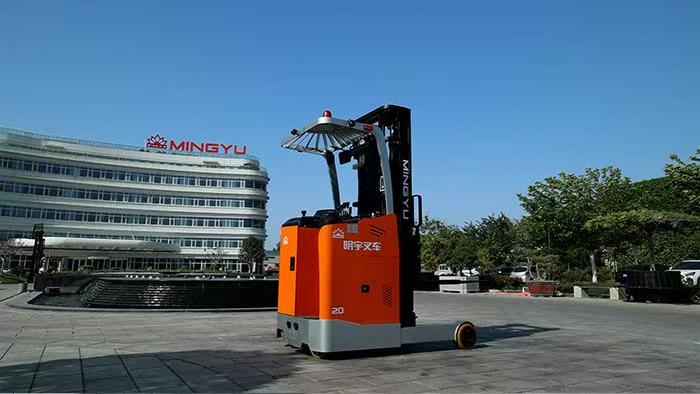
6. Common Walkie Stacker Lift Heights for Different Applications
Different workplaces require different lifting heights.
For small warehouses and workshops, a 1.6–2.0 meter lifting height may be enough for moving pallets and placing them on low storage positions.
For general warehouse operations, a 2.5–3.0 meter model provides a useful balance between lifting capability, machine size, and cost.
For high-density storage systems, a 3.5–4.0 meter or higher model may be more appropriate. These machines allow operators to use higher rack levels and make better use of vertical warehouse space.
The best approach is to measure the actual storage height before purchasing equipment. This prevents choosing a machine that is either too small for the application or unnecessarily large.
7. Can a Walkie Stacker Reach the Top Rack?
A walkie stacker can reach high pallet racks if its maximum fork height is sufficient for the required storage position. However, the rack beam height alone should not be used to determine the required lifting height.
The pallet itself has a certain height, and additional clearance may be required to position the pallet safely above the rack beam. Operators also need enough clearance between the top of the load and the ceiling, lighting, sprinkler systems, or other overhead equipment.
For example, if a pallet needs to be placed on a high rack position, the walkie stacker should have sufficient fork height to lift the pallet above the rack level rather than merely reaching the beam height.
Always consider the complete working height of the pallet and load.
8. Walkie Stacker vs. Counterbalance Forklift Lift Height
A walkie stacker and a counterbalance forklift can both handle pallets, but they are designed for different applications.
Walkie stackers are generally more compact and easier to maneuver in narrow warehouse spaces. They are particularly useful for indoor pallet handling and stacking.
Counterbalance forklifts are larger and typically offer greater lifting capacities and more powerful performance. They can also be better suited to demanding outdoor applications.
For light- and medium-duty warehouse operations, a walkie stacker can provide an efficient solution. When loads are very heavy, lifting heights are extreme, or outdoor terrain is involved, a conventional forklift may be more appropriate.
The decision should therefore be based on the complete application rather than lifting height alone.
9. Electric Walkie Stackers and Lifting Performance
Most modern walkie stackers are electrically powered. The electric motor drives the hydraulic lifting system, allowing the forks to raise and lower pallets smoothly.
Battery selection can affect working time and overall productivity. Lead-acid batteries are a traditional choice, while lithium-ion batteries offer advantages such as opportunity charging, lower routine maintenance, and convenient energy management.
Hydraulic system performance is also important. A properly designed hydraulic system provides stable lifting and lowering performance and allows the operator to position pallets accurately.
For indoor warehouses, electric walkie stackers are especially attractive because they produce no direct exhaust emissions during operation and generally operate more quietly than internal-combustion forklifts.
10. Safety Considerations When Lifting Pallets High
Safety becomes increasingly important as a pallet is lifted higher. Operators should never exceed the manufacturer's rated capacity or attempt to lift loads that are unstable or improperly positioned.
The pallet should be properly inserted onto both forks, with the load distributed as evenly as possible. Loads should be kept stable during lifting and transportation.
When traveling, operators should follow the manufacturer's instructions regarding fork height. Excessively elevated loads can affect visibility and machine stability.
Sudden acceleration, braking, or turning should be avoided when carrying a raised pallet. Operators should also pay attention to overhead obstacles, rack structures, doors, lighting, and ceiling equipment.
Proper operator training and compliance with workplace safety procedures are essential regardless of the walkie stacker's lifting height.
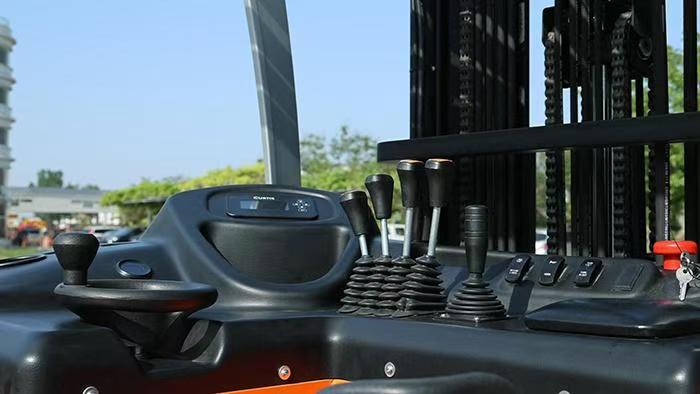
11. How Pallet Size and Load Center Affect Lift Capacity
Pallet dimensions have a direct effect on the load center. A standard pallet with a compact, evenly distributed load is generally easier to handle than an oversized or irregular load.
The load center is the horizontal distance from the fork face or specified reference point to the center of gravity of the load. As this distance increases, the effective lifting demand on the machine increases.
For example, two pallets may each weigh 1,000 kg, but if one load is significantly deeper and its center of gravity is farther from the mast, it can place greater stress on the machine.
Therefore, when selecting a walkie stacker, buyers should provide the manufacturer with the actual pallet dimensions, load weight, and load center.
12. How to Choose the Right Lift Height
The first step is to identify the highest location where pallets will be stored. Measure the rack beam height and determine the actual fork height required to place and retrieve the pallet.
Next, consider the pallet dimensions and maximum load weight. A machine that reaches the required height but cannot safely handle the required pallet weight is not suitable.
Ceiling clearance should also be checked. The mast may extend significantly above the machine when the forks are raised, so the building must provide sufficient overhead clearance.
Finally, consider future requirements. If the warehouse may introduce taller racks later, selecting a slightly more capable model could provide greater flexibility.
13. Typical Walkie Stacker Specifications to Compare
When comparing different walkie stackers, buyers should look beyond maximum lifting height.
Important specifications include:
Rated lifting capacity
Maximum lifting height
Load center
Mast type
Overall height with mast lowered
Overall height with mast raised
Fork dimensions
Fork spread
Turning radius
Travel speed
Lifting speed
Battery voltage and capacity
Charger specifications
Ground clearance
Comparing these specifications helps buyers determine whether a machine can actually perform the required warehouse tasks.
14. Cost and Maintenance Considerations
A walkie stacker's lifting height can influence its purchase price. Models with taller duplex or triplex masts generally require more sophisticated mast structures and hydraulic components.
However, purchasing the highest-lift model available is not always economical. If a warehouse only requires 2.5 meters of lifting height, buying a significantly higher-lift machine may add unnecessary cost.
Maintenance should also be considered. Regular inspection of the mast, chains, rollers, hydraulic system, forks, battery, wheels, and electrical components can help maintain reliable operation.
The total cost of ownership includes not only the initial purchase price but also battery charging, maintenance, spare parts, and expected service life.
15. Practical Buying Checklist
Before purchasing a walkie stacker, buyers should confirm the following:
Maximum pallet weight – What is the heaviest pallet the machine must handle?
Required lifting height – What is the highest rack or storage position?
Load center – How far is the load's center of gravity from the mast?
Pallet dimensions – Are the pallets standard size or oversized?
Aisle width – Can the machine maneuver comfortably in the available space?
Ceiling clearance – Is there enough room for the selected mast?
Working environment – Is the machine being used indoors, outdoors, or both?
Battery type – Is lead-acid or lithium-ion power more suitable?
Operating hours – How many hours will the machine work each day?
Safety requirements – Does the machine meet the required workplace and market standards?
This checklist can help prevent purchasing a machine based solely on its advertised maximum lifting height.
16. Conclusion
So, how high can a walkie stacker lift a pallet? Depending on the model and mast configuration, walkie stackers commonly offer lifting heights from around 1.6 meters to 4 meters or more. Simplex models are suitable for lower storage applications, while duplex and triplex configurations can provide greater lifting heights for higher warehouse racks.
However, maximum lift height is only one part of the selection process. Rated capacity, load center, pallet dimensions, mast height, ceiling clearance, aisle width, and operating conditions must all be considered together.
For most warehouse applications, the best walkie stacker is not necessarily the one with the highest lifting height. It is the machine that can safely lift the required pallet to the required rack position while providing the right combination of capacity, maneuverability, reliability, and operating cost.
Post time:Sep.07.2026
