
The question of whether a formal government-issued license is required to operate a skid steer loader is one of the most common inquiries from new operators and businesses alike. In the United States and Canada, there is no universal, federally mandated "driver's license" specifically for skid steers issued by a government Department of Motor Vehicles (DMV) or equivalent. Unlike operating a commercial truck on public roads, you do not need a special class of vehicle license from the state simply to operate the machine on private property or a controlled worksite. This fundamental distinction between public roadway licensing and equipment operation is crucial. However, this absence of a universal license does not mean an absence of all regulation or requirement. The operational landscape is governed by a complex interplay of federal safety regulations, industry standards, stringent employer policies, and often, local municipal ordinances. The Occupational Safety and Health Administration (OSHA) in the U.S. sets the primary legal framework, but its focus is on employer responsibility to ensure a safe workplace and competent operators, not on issuing individual licenses. Therefore, while you won't get a "skid steer license" from the DMV, you are almost universally required by law and practical necessity to have documented proof of formal training and competency before you can legally and safely operate one on any professional job site. This creates a system where certification from an accredited training body effectively functions as the industry's de facto license.
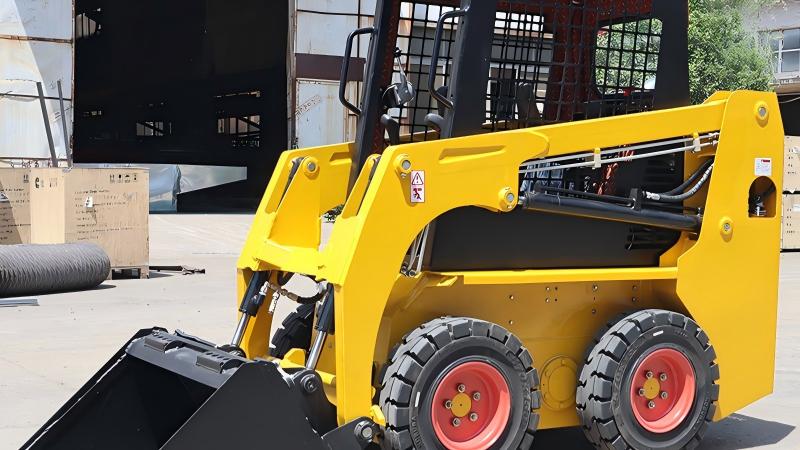
The cornerstone of legal skid steer operation in the workplace is the OSHA regulation 29 CFR 1926.602(a), which states that "All equipment left unattended at night, adjacent to a highway in normal use, or in a location where moving construction equipment may pose a hazard to passing traffic, shall have appropriate lights or reflectors, or barricades equipped with appropriate lights or reflectors." More broadly, under the OSHA General Duty Clause and specific powered industrial truck standards (which skid steers often fall under by analogy), employers have a fundamental legal obligation to ensure that operators are "trained and competent" to operate the machinery safely. This is where the concept of certification becomes paramount. Reputable, recognized training programs—such as those offered by the National Commission for the Certification of Crane Operators (NCCCO) for certain types, or more commonly, through equipment manufacturers like Bobcat, Caterpillar, or John Deere, or through third-party safety organizations—provide the structured training and evaluation that fulfills this OSHA mandate. Successful completion results in a "Certificate of Completion" or "Operator Certification." This document, often including a wallet card, is your professional credential. It proves to employers and site supervisors that you have received instruction on critical topics: machine controls and functions, load charts and stability, inspection procedures, worksite hazards, and safe operating practices for tasks like digging, loading, and lifting.
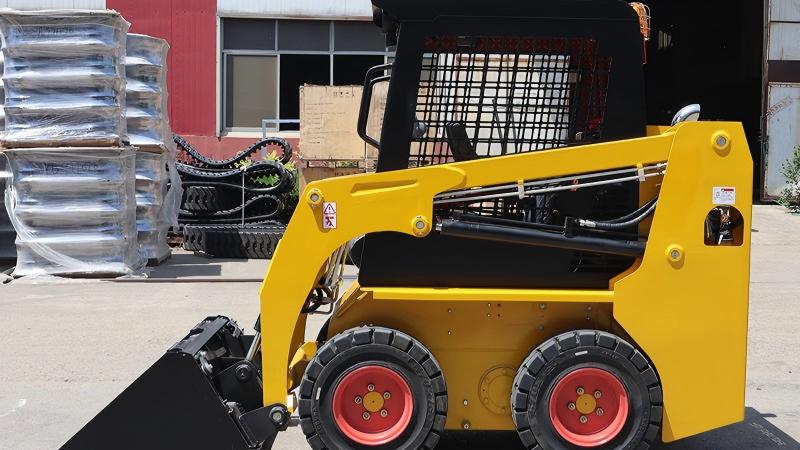
Beyond federal OSHA, numerous other factors dictate the need for formal, verifiable training that acts as a license-equivalent. First, most responsible employers and construction companies have strict internal policies mandating that any operator must present valid, company-approved certification before being allowed to use equipment. This is a matter of liability insurance. Insurance providers frequently require evidence of trained operators as a condition for coverage, and premiums can be significantly lower for companies that enforce robust training programs. Second, specific industries or job sites may have additional requirements. For instance, operating on a refinery, chemical plant, or large-scale federal project may require site-specific orientation and additional credentials beyond a basic operator certificate. Third, while not a "license," some states or cities might have their own training requirements for public works projects. Furthermore, the type of work performed with the skid steer influences the needed qualifications. A standard wheeled skid steer for landscaping might have a baseline requirement, but operating a compact track loader (CTL) on sensitive terrain, or using a skid steer for lifting tasks with a hydraulic hook attachment (which approaches crane-like duty), often demands more advanced, task-specific training. This layered approach to credentialing ensures that an operator's "license" (their certification) is matched to the machine's configuration and the job's specific hazards.
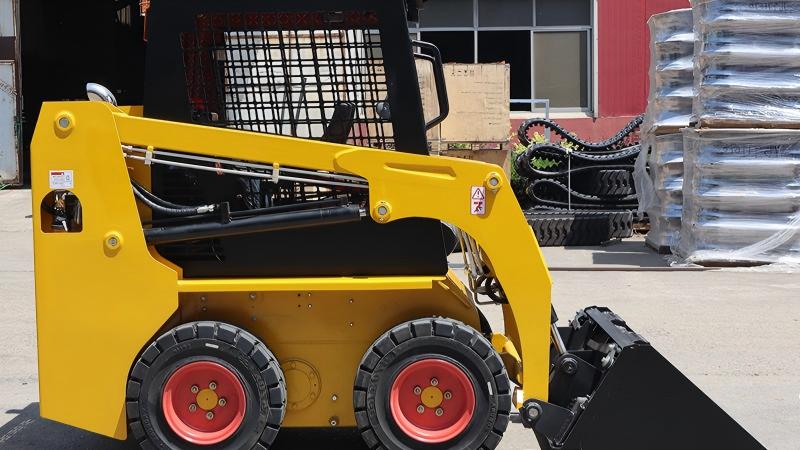
In conclusion, while you will not obtain a government-issued skid steer operator's license from a DMV, the functional requirement for a professional credential is absolute. The industry-standard answer is that you must have formal, documented training and certification to operate a skid steer in any commercial or industrial setting. This certification serves as your professional license, protecting you, your coworkers, your employer, and the public. For private individuals operating their own machine on their own property, legal mandates are less clear, but the safety imperative remains unchanged. The risks associated with skid steer operation—including rollovers, entrapment, crushing incidents, and collisions—are severe. Therefore, seeking out comprehensive training from a qualified provider is not merely a box to check for employment; it is an essential investment in safety and professional competence. The path to becoming a legitimate skid steer operator lies not at the DMV, but through accredited training programs that equip you with the knowledge and skills to handle this powerful and potentially dangerous piece of equipment responsibly.
Post time:Feb.05.2026
