
Backhoe Loader vs. Mini Excavator: Which One Is Better for My Project?
Part 1. Introduction
Choosing the right construction equipment is one of the most important decisions for contractors, builders, farmers, and equipment rental companies. The correct machine can significantly improve work efficiency, reduce operating costs, and complete projects faster. However, with many types of compact construction equipment available on the market, selecting the best option is not always easy.
Two of the most popular machines used in small and medium-sized construction projects are backhoe loaders and mini excavators. Both machines are designed for digging, earthmoving, trenching, and material handling, but they have different structures, working methods, and advantages. Many customers often ask: “Should I buy a backhoe loader or a mini excavator for my project?”
The answer depends on the type of work, job site conditions, required digging performance, transportation needs, and budget. A backhoe loader is known as a versatile machine that combines a front loader and a rear excavator into one unit. It can dig, load, transport materials, level ground, and perform various tasks with different attachments. A mini excavator, on the other hand, focuses mainly on excavation work and is especially effective in narrow spaces where larger machines cannot operate.
For example, a construction company working on road maintenance, agricultural projects, or general site preparation may benefit more from a backhoe loader because of its multifunction capability. Meanwhile, a contractor installing underground pipes, landscaping gardens, or working in urban areas with limited space may find a mini excavator more suitable.
This article will provide a detailed comparison between backhoe loaders and mini excavators, including their structure, performance, applications, operating costs, attachments, and advantages. By understanding the differences between these two machines, you can choose the equipment that best matches your project requirements.
Part 2. What Is a Backhoe Loader?
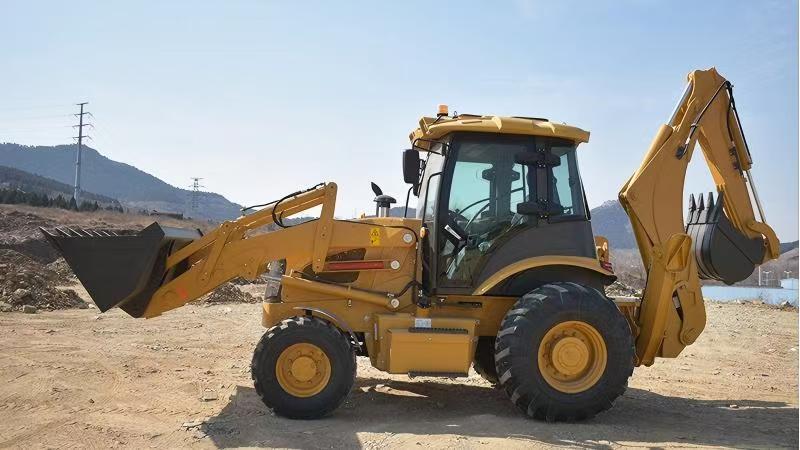
A backhoe loader is a multifunctional construction machine that combines the functions of a wheel loader and an excavator. It is one of the most popular compact machines used in construction, agriculture, municipal projects, and infrastructure development.
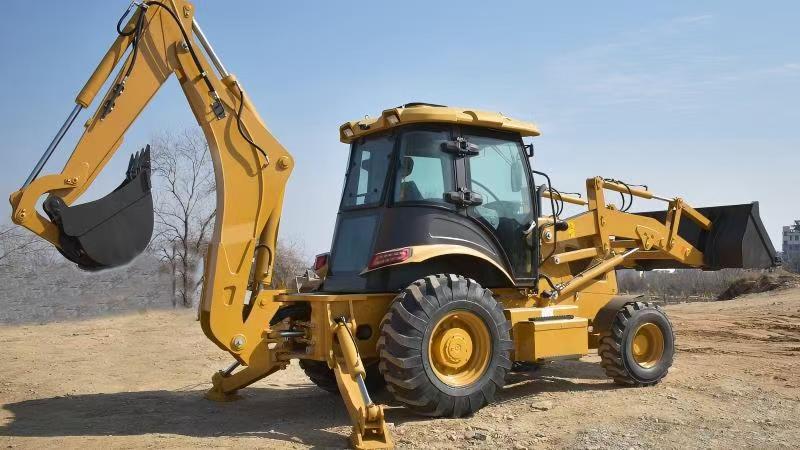
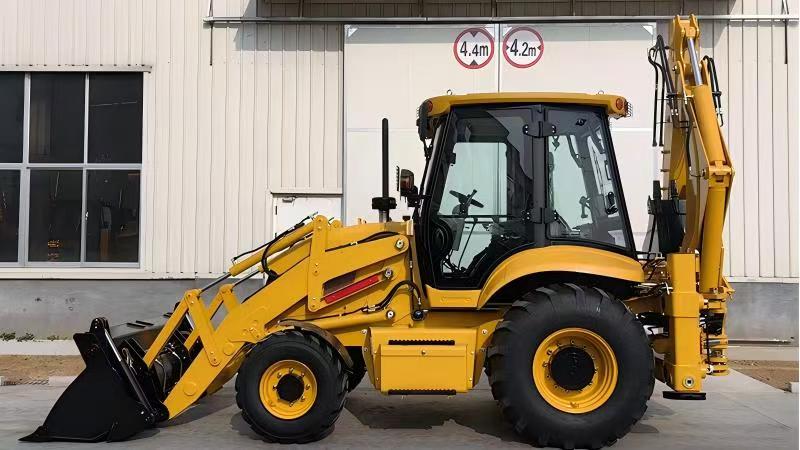
The basic design of a backhoe loader includes three main working sections: the front loader bucket, the rear excavator arm, and the central tractor-like body. The front bucket is mainly used for loading materials such as soil, gravel, sand, and construction waste. The rear excavator attachment is designed for digging trenches, foundations, drainage systems, and underground utility lines.
The hydraulic system is the core of a backhoe loader. It provides the power needed to operate the boom, bucket, and loader arms. Modern backhoe loaders use advanced hydraulic systems that improve digging force, lifting capacity, and overall efficiency.
One of the biggest advantages of a backhoe loader is its versatility. Instead of purchasing separate machines for loading and digging operations, contractors can complete many different tasks with one machine. Common applications include:
Excavating soil and foundations
Loading and transporting construction materials
Digging trenches for water and electrical pipelines
Road repair and maintenance
Landscaping and agricultural work
Snow removal with suitable attachments
Site preparation and leveling
Another advantage is mobility. Most backhoe loaders are equipped with wheels, allowing them to travel quickly between different job sites without requiring special transportation equipment. This makes them highly practical for contractors who need to move frequently between projects.
However, backhoe loaders also have some limitations. Their larger size and longer wheelbase make them less suitable for extremely narrow working areas. Compared with mini excavators, they may have lower digging precision in confined spaces.
Part 3. What Is a Mini Excavator?
A mini excavator is a compact hydraulic excavator designed for excavation tasks in smaller construction areas. Usually weighing between 1 and 8 tons, mini excavators provide excellent digging performance while maintaining a compact size.
Unlike backhoe loaders, mini excavators are built primarily for digging. Their upper structure can rotate 360 degrees, allowing operators to work efficiently without frequently repositioning the entire machine. This design provides excellent flexibility, especially in areas with limited space.
The main components of a mini excavator include:
Hydraulic boom
Excavator arm
Bucket
Rotating upper structure
Operator cab
Rubber or steel tracks
Many mini excavators use crawler tracks instead of wheels. This design provides better stability and lower ground pressure, allowing them to work on soft soil, muddy areas, and uneven terrain without damaging the surface.
Mini excavators are widely used in:
Residential construction
Small foundation excavation
Pipeline installation
Landscaping projects
Garden renovation
Road maintenance
Demolition work
Underground utility construction
One of the biggest advantages of mini excavators is their ability to operate in tight spaces. They can enter narrow areas between buildings, work in small yards, and complete excavation tasks where larger equipment cannot access.
Mini excavators also provide excellent digging accuracy. The operator can precisely control the boom and bucket, making them ideal for projects requiring careful excavation, such as installing underground cables, water pipes, or drainage systems.
However, mini excavators are not designed for heavy loading tasks. Compared with backhoe loaders, they have limited capability when it comes to moving large amounts of material over long distances.
Part 4. Backhoe Loader vs. Mini Excavator: Performance Comparison
When comparing performance, both machines have their own strengths. The better choice depends on the specific requirements of the project.
Digging Performance
Mini excavators are generally superior for pure excavation tasks. Their 360-degree rotation system allows operators to dig continuously without repositioning the machine. Their compact design also provides better control when working around buildings, pipelines, and other obstacles.
Backhoe loaders also provide strong digging performance, especially for medium-sized excavation projects. However, because the rear excavator attachment is mounted on a wheeled chassis, it may not provide the same level of stability and precision as a tracked mini excavator.
Loading Capability
This is where backhoe loaders have a clear advantage. The front loader bucket allows them to scoop, lift, and transport materials quickly. They can load trucks, move soil, handle gravel, and clean construction areas.
Most mini excavators do not have a front loading bucket, meaning additional equipment may be needed for material handling.
Working Flexibility
Backhoe loaders offer greater versatility because they combine two machines into one. They can switch between digging and loading operations quickly.
Mini excavators focus more on excavation efficiency. Their compact structure makes them more flexible in restricted environments but less suitable for multifunction tasks.
Stability
Mini excavators with crawler tracks usually provide excellent stability during digging because the machine weight is distributed over a larger ground area.
Backhoe loaders rely on stabilizer legs during excavation operations. When properly positioned, they offer strong stability, but setup time may be required before digging.
Part 5. Size, Mobility, and Working Environment Comparison
The working environment is one of the most important factors when choosing between a backhoe loader and a mini excavator.
Backhoe loaders are larger machines with higher travel speeds. Their wheels allow them to move quickly on roads and between different job sites. For contractors working across multiple locations, this reduces transportation costs and improves efficiency.
Mini excavators are more compact and easier to operate in restricted areas. Their small dimensions allow them to enter narrow construction zones, residential areas, gardens, and urban projects where larger equipment cannot work.
For example:
Road construction: Backhoe loaders are often better because they can travel quickly and handle multiple tasks.
Urban renovation: Mini excavators usually perform better because of limited space.
Farm projects: Backhoe loaders provide more versatility.
Landscaping: Mini excavators are preferred for precision work.
Ground conditions also matter. Mini excavators with tracks create lower ground pressure, making them suitable for soft or muddy terrain. Wheeled backhoe loaders are faster on hard surfaces such as asphalt and concrete.
Part 6. Application Comparison: Which Machine Fits Your Project?
The best machine depends largely on the type of project.
For general construction projects, backhoe loaders are often the preferred choice because they can perform multiple tasks with one machine. A contractor can use the rear excavator for digging, then switch to the front loader for moving materials.
For underground utility installation, mini excavators usually provide better performance. Their compact size and precise control make them ideal for digging narrow trenches for water pipes, electrical cables, and drainage systems.
In agriculture, backhoe loaders are extremely popular because they can handle various tasks such as digging irrigation channels, moving soil, loading materials, and maintaining farm roads.
For landscaping projects, mini excavators often have an advantage. They can carefully remove soil, prepare gardens, and work around existing structures without causing excessive damage.
For demolition and renovation work, both machines can be effective depending on the project scale. Mini excavators are better for small buildings and limited spaces, while larger backhoe loaders are more suitable for bigger renovation projects.
Part 7. Cost Comparison: Purchase Price and Operating Expenses
The purchase cost is an important consideration, but businesses should also evaluate long-term operating expenses.
Backhoe loaders generally have a higher purchase price because they combine multiple functions. However, their versatility can reduce the need to purchase additional machines.
Mini excavators usually have a lower initial investment for compact models. They also consume less fuel and may have lower maintenance costs due to their smaller size.
Fuel consumption depends on the machine size, engine power, and working conditions. Smaller mini excavators typically use less fuel, while larger backhoe loaders consume more because of their higher power output.
Maintenance costs include:
Engine servicing
Hydraulic system maintenance
Tire or track replacement
Spare parts
Regular inspections
Backhoe loaders with tires may have lower mobility costs on roads, while mini excavators may require track maintenance depending on working conditions.
The most economical choice depends on how often and where the machine will be used.
Part 8. Attachments and Versatility
Attachments can significantly improve the capability of both machines.
Common backhoe loader attachments include:
Standard front bucket
Fork attachments
Hydraulic breaker
Auger
Grapple
Snow blade
These attachments allow backhoe loaders to perform loading, lifting, drilling, demolition, and material handling tasks.
Mini excavator attachments include:
Different sizes of digging buckets
Hydraulic breaker
Auger
Ripper
Grapple
Tilt bucket
Mini excavators are particularly effective with excavation-focused attachments because of their precise hydraulic control.
For companies needing one machine for many different tasks, backhoe loaders usually provide greater versatility. For companies specializing in excavation work, mini excavators may provide better efficiency.
Part 9. Operator Requirements and Ease of Use
Both machines require trained operators, but their operating characteristics are different.
Backhoe loaders require operators to understand both loader and excavator functions. Skilled operators can quickly switch between different tasks, making the machine highly productive.
Mini excavators are generally easier to operate for specialized digging work. Their controls are designed for precise excavation, making them popular among rental companies and small contractors.
Operator comfort is also important. Modern machines feature enclosed cabins, ergonomic seats, digital displays, and improved visibility to reduce fatigue during long working hours.
Maintenance accessibility is another consideration. Machines with easy access to engines, hydraulic components, and filters can reduce service time and improve productivity.
Part 10. Pros and Cons Summary
Backhoe Loader Advantages:
Multi-purpose construction machine
Excellent loading capability
Faster travel speed
Suitable for mixed construction tasks
Strong performance in agriculture and road projects
Backhoe Loader Disadvantages:
Larger size
Less effective in very narrow spaces
Higher fuel consumption
Lower excavation precision compared with mini excavators
Mini Excavator Advantages:
Compact design
Excellent maneuverability
Ideal for confined areas
High digging accuracy
Lower ground pressure
Mini Excavator Disadvantages:
Limited loading capability
Slower transportation speed
Less suitable for large-scale material handling
Part 11. How to Choose the Right Machine for Your Project
Choosing between a backhoe loader and a mini excavator requires evaluating several key factors.
First, consider the main tasks. If your project involves both digging and loading, a backhoe loader may be the better option. If excavation is the primary activity, a mini excavator may provide better results.
Second, evaluate the working environment. Narrow urban areas and residential projects usually favor mini excavators, while open construction sites and agricultural projects often benefit from backhoe loaders.
Third, consider transportation requirements. Contractors who frequently move equipment between sites may prefer wheeled backhoe loaders because they can travel faster.
Finally, calculate the total cost of ownership, including purchase price, fuel, maintenance, attachments, and expected working hours.
Part 12. Conclusion
Both backhoe loaders and mini excavators are valuable construction machines, but they serve different purposes.
Backhoe loaders are ideal for contractors who need a versatile machine capable of performing multiple tasks, including digging, loading, transportation, and material handling. Their flexibility makes them popular in construction, agriculture, road maintenance, and infrastructure projects.
Mini excavators are the better choice for projects that require precise excavation, compact dimensions, and excellent maneuverability. They perform especially well in urban construction, landscaping, utility installation, and confined working areas.
There is no single machine that is better for every project. The right choice depends on your job requirements, working environment, budget, and future needs.
By carefully comparing performance, applications, operating costs, and machine capabilities, businesses can select the equipment that improves productivity, reduces expenses, and delivers the best return on investment.
Post time:Jul.21.2026
