
How to Choose the Right Size and Bucket Capacity for a Wheel Loader?
1. Introduction
Choosing the right wheel loader is one of the most important decisions for construction contractors, farmers, landscaping companies, mining operators, and industrial businesses. A wheel loader that is too small may struggle to meet production targets, while an oversized machine can increase fuel consumption, operating costs, transportation expenses, and maintenance requirements without providing additional value. Selecting the proper machine size and bucket capacity is therefore essential for maximizing productivity, reducing costs, and ensuring safe operation.
Many first-time buyers assume that a larger wheel loader with the biggest available bucket will always complete jobs faster. In reality, bucket size is only one part of the equation. Material density, operating weight, hydraulic performance, breakout force, dump height, and job site conditions all determine how efficiently a wheel loader performs. Installing an oversized bucket on a machine with insufficient lifting capacity may actually reduce productivity, overload the hydraulic system, and shorten the equipment's service life.
Different industries require different wheel loader configurations. A compact loader used for landscaping has very different requirements from a heavy-duty loader working in a quarry. Likewise, a municipality clearing snow requires a different bucket than a recycling company handling scrap materials. Understanding how machine size, bucket capacity, and attachments work together allows buyers to invest in equipment that matches their daily workload rather than simply choosing the biggest machine available.
This guide explains how to select the correct wheel loader size and bucket capacity based on material type, application, job site conditions, machine specifications, operating costs, and long-term return on investment. Whether you are purchasing your first wheel loader or expanding an existing fleet, these recommendations will help you make an informed decision.
2. Understanding Wheel Loader Sizes
2.1 What Defines the Size of a Wheel Loader?
Wheel loaders are generally classified according to several key specifications rather than a single measurement.
The first is operating weight, which represents the total weight of the machine with standard equipment. Larger operating weight usually means higher stability, stronger lifting capacity, and increased durability.
The second is rated operating load, which indicates the maximum safe payload the loader can carry without compromising stability.
Another important factor is engine horsepower. Higher horsepower enables the loader to move heavy materials more efficiently, especially when working on slopes or in demanding environments.
Overall machine dimensions, including wheelbase, height, width, and turning radius, also influence where the loader can operate. Compact machines can work inside warehouses or narrow construction sites, while larger loaders require more operating space.
Hydraulic performance is equally important because the hydraulic system controls lifting speed, bucket movement, and attachment efficiency.
Considering all these specifications together provides a much better understanding of machine size than looking only at engine power or bucket capacity.
2.2 Common Wheel Loader Size Categories
Wheel loaders are commonly divided into five categories.
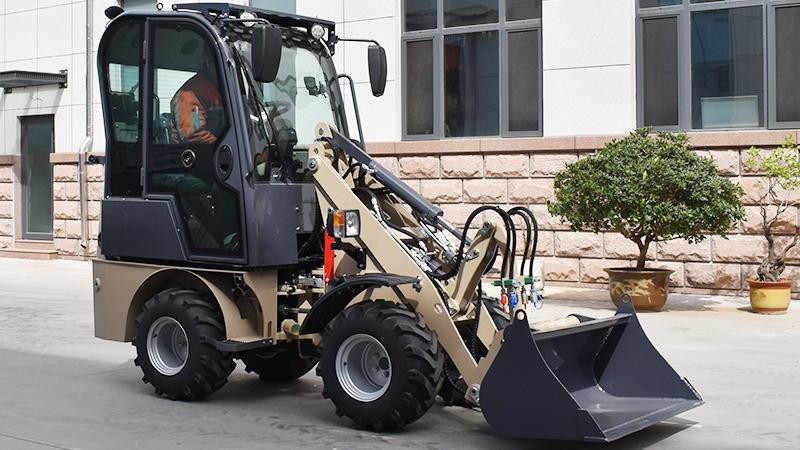
Mini Wheel Loaders
Mini wheel loaders usually weigh less than 5 tons and feature bucket capacities between 0.3 and 1.0 cubic meters.
These machines are ideal for residential construction, landscaping, small farms, greenhouses, and municipal maintenance where maneuverability is more important than lifting capacity.
Their compact size allows them to work in confined spaces that larger equipment cannot access.
Compact Wheel Loaders
Compact wheel loaders generally weigh between 5 and 9 tons with bucket capacities ranging from approximately 1.0 to 2.0 cubic meters.
They are widely used by construction contractors, agricultural businesses, rental companies, and industrial facilities.
Compact loaders offer an excellent balance between productivity, fuel efficiency, and operating costs.
Medium Wheel Loaders
Medium-sized loaders typically weigh between 10 and 18 tons and provide bucket capacities from 2.0 to 4.5 cubic meters.
These machines are commonly found on road construction projects, commercial building sites, aggregate yards, and large agricultural operations.
They offer higher lifting capacities while maintaining relatively good maneuverability.
Large Wheel Loaders
Large wheel loaders normally weigh between 18 and 35 tons with bucket capacities from 4.5 to 7 cubic meters.
They are designed for continuous heavy-duty production in quarries, ports, mining operations, and large earthmoving projects.
These loaders deliver excellent loading efficiency for dump trucks and material handling operations.
Heavy-Duty Mining Wheel Loaders
Mining loaders often exceed 35 tons in operating weight and may carry buckets larger than 8 cubic meters.
These machines are specifically engineered for extremely demanding applications involving large volumes of rock, ore, coal, and other dense materials.
Their purchase price is significantly higher, but they provide exceptional productivity in large-scale mining environments.
2.3 Typical Applications for Each Size
Choosing the right machine size depends largely on the type of work being performed.
Mini loaders excel at landscaping, property maintenance, livestock farms, and light construction where space is limited.
Compact loaders are ideal for municipal services, warehouse operations, small construction companies, material yards, and agricultural applications.
Medium loaders perform well in infrastructure projects, highway construction, commercial developments, and medium-sized quarries.
Large loaders are best suited for continuous production environments where high loading efficiency is essential.
Mining loaders are designed exclusively for high-volume extraction industries where maximum productivity outweighs equipment cost.
Rather than purchasing the largest machine available, buyers should evaluate their average daily workload, available workspace, transportation requirements, and expected production targets.
A properly sized wheel loader often delivers better fuel economy, lower maintenance costs, and greater long-term profitability than an oversized machine used below its full capacity.
3. What Is Bucket Capacity?
3.1 Definition of Bucket Capacity
Bucket capacity refers to the amount of material a wheel loader bucket can carry in a single loading cycle. It is usually measured in cubic meters (m³) or cubic yards (yd³). While bucket capacity may appear to be a simple specification, understanding how it is measured is essential for selecting the right loader.
Manufacturers typically provide two capacity ratings:
Struck Capacity measures the bucket volume when the material is level with the bucket's top edge. This represents the bucket's actual internal volume without any material piled above the rim.
Heaped Capacity measures the volume when material is piled above the bucket edge according to industry standards. Since most loading operations use a heaped bucket, this value is generally more useful when estimating productivity.
Although a larger bucket can carry more material per cycle, it is important to remember that the machine's lifting capacity, hydraulic power, and stability determine whether it can safely handle that load.
3.2 Standard Bucket Capacity Range
Different wheel loader sizes are designed to accommodate different bucket capacities.
Mini wheel loaders generally use buckets ranging from 0.3 to 1.0 m³, making them suitable for landscaping, farms, and light-duty material handling.
Compact wheel loaders commonly use buckets between 1.0 and 2.0 m³, providing an excellent balance between versatility and productivity for construction, agriculture, and municipal work.
Medium wheel loaders typically carry buckets from 2.0 to 4.5 m³, allowing them to load trucks efficiently while handling larger quantities of aggregate, sand, or soil.
Large production loaders often use buckets between 4.5 and 7.0 m³, while mining loaders may exceed 8.0 m³ depending on the application.
Choosing the correct bucket size should always consider the loader's rated operating load rather than selecting the largest bucket available.
3.3 How Bucket Capacity Affects Productivity
Bucket capacity has a direct impact on job site efficiency.
A larger bucket can reduce the number of loading cycles required to move a specific volume of material. Fewer cycles mean shorter loading times, lower fuel consumption, and reduced operator fatigue.
For example, if one bucket holds 3 cubic meters while another holds only 2 cubic meters, the larger bucket can theoretically complete the same loading task using one-third fewer cycles.
However, productivity is not determined by bucket size alone.
If the bucket is too large for the machine, the loader may:
Lose lifting performance.
Experience slower hydraulic movements.
Consume more fuel.
Increase tire wear.
Place additional stress on the boom and hydraulic cylinders.
Reduce machine stability.
The most productive loader is not necessarily the one with the biggest bucket—it is the one whose bucket size matches both the machine's capabilities and the material being handled.
4. Match the Wheel Loader to the Material Being Handled
Selecting the proper bucket capacity requires understanding the weight of the material being moved. Two materials may occupy the same volume but have completely different weights.
This is why professional buyers pay close attention to material density rather than bucket volume alone.
4.1 High-Density Materials
Heavy materials require smaller buckets to avoid exceeding the loader's lifting capacity.
Examples include:
Crushed stone
Gravel
Wet sand
Clay
Iron ore
Granite
Concrete debris
These materials are extremely heavy.
Although a larger bucket could physically hold more material, the total weight might exceed the machine's rated operating load, creating safety risks and accelerating wear on the loader.
For dense materials, choosing a smaller reinforced bucket usually provides the best balance between productivity and machine protection.
4.2 Medium-Density Materials
Many construction materials fall into the medium-density category.
Typical examples include:
Topsoil
Dry sand
Compost
Asphalt
Mixed construction materials
Mulch with moderate moisture
These materials allow operators to use standard bucket sizes without placing excessive stress on the loader.
General-purpose buckets are usually the preferred option for these applications.
4.3 Low-Density Materials
Light materials can be transported using much larger buckets because their weight remains relatively low.
Examples include:
Wood chips
Snow
Grain
Sawdust
Fertilizer
Coal
Plastic recycling materials
In these situations, increasing bucket volume significantly improves productivity because the machine reaches its bucket volume limit long before reaching its lifting capacity.
Many manufacturers offer specially designed light-material buckets with larger capacities to maximize efficiency.
4.4 Why Material Density Matters More Than Bucket Volume
Many new buyers mistakenly assume that installing the largest possible bucket automatically increases productivity.
In reality, the relationship between bucket size and material density is far more important.
Consider two examples:
A 3 m³ bucket filled with snow may weigh only a few hundred kilograms, allowing the loader to operate safely and efficiently.
The same 3 m³ bucket filled with wet gravel could weigh several tons, potentially exceeding the loader's safe lifting capacity.
This not only reduces productivity but also increases the risk of tipping, damages hydraulic components, accelerates tire wear, and shortens the machine's service life.
Professional fleet managers therefore calculate both bucket volume and material weight before selecting equipment.
The best wheel loader is not the one with the largest bucket, but the one that safely handles the intended material while maintaining high productivity, fuel efficiency, and long-term reliability.
5. Choosing the Right Loader for Different Job Sites
The ideal wheel loader depends not only on the material being handled but also on the working environment. Space limitations, terrain conditions, loading frequency, transportation requirements, and production targets all influence which machine size and bucket capacity will deliver the best performance.
5.1 Construction Sites
Construction projects require versatile machines capable of handling multiple tasks throughout the day.
Typical applications include:
Loading trucks
Moving soil
Transporting sand and gravel
Site cleanup
Material stockpiling
Compact and medium wheel loaders are usually the most popular choices because they offer a good balance between lifting capacity, maneuverability, and fuel efficiency.
For most general construction projects, bucket capacities between 1.5 and 3.0 cubic meters provide excellent productivity without making the machine unnecessarily large.
On larger commercial developments, medium loaders equipped with high-performance hydraulic systems can significantly reduce loading times.
5.2 Farms and Agricultural Operations
Agricultural businesses often require a wheel loader that can perform a wide variety of daily tasks.
Common applications include:
Loading feed
Handling hay
Cleaning livestock barns
Moving grain
Transporting fertilizer
Loading manure
Handling silage
Unlike quarry operations, agricultural materials are often lightweight.
Many farms benefit from larger light-material buckets that increase productivity without exceeding the loader's lifting capacity.
Compact loaders remain the preferred choice because they can easily enter livestock buildings, storage facilities, and narrow farm roads.
Quick couplers also allow operators to switch between buckets, pallet forks, bale grabs, and other agricultural attachments within minutes.
5.3 Landscaping Projects
Landscaping contractors frequently work in residential neighborhoods, parks, golf courses, and urban developments.
Their wheel loaders must operate in confined spaces while minimizing damage to finished surfaces.
Mini and compact loaders are usually the best solution.
Typical tasks include:
Loading topsoil
Transporting mulch
Moving decorative stone
Grading land
Loading plants and trees
Smaller buckets provide better precision, while compact machine dimensions improve maneuverability around buildings and existing landscaping.
5.4 Warehouses and Industrial Facilities
Indoor material handling requires machines with compact dimensions and excellent visibility.
Electric or compact diesel wheel loaders are often selected for:
Bulk material handling
Pallet transportation
Waste removal
Loading recyclable materials
Manufacturing support
Bucket capacity is usually less important than maneuverability inside narrow aisles and loading areas.
Many industrial facilities prioritize low emissions, reduced noise levels, and precise hydraulic controls.
5.5 Road Construction
Road construction projects demand continuous loading and transportation of aggregate, asphalt, crushed stone, and base materials.
Medium wheel loaders are commonly selected because they provide sufficient lifting capacity while maintaining good mobility between different work areas.
Operators often require:
Fast hydraulic cycle times
High breakout force
Excellent visibility
Reliable transmission systems
Proper bucket selection helps maintain a steady supply of material to pavers and dump trucks, improving overall project efficiency.
5.6 Quarry and Mining Operations
Quarries and mines place the highest demands on wheel loaders.
Machines must work continuously under extremely harsh conditions while handling dense materials such as:
Granite
Limestone
Iron ore
Coal
Crushed rock
Large production loaders with reinforced rock buckets are the industry standard.
These machines feature:
High engine horsepower
Heavy-duty axles
Reinforced frames
Powerful hydraulic systems
Exceptional breakout force
Although their purchase price is high, they deliver maximum productivity in high-volume operations.
5.7 Waste Recycling and Scrap Yards
Recycling facilities handle materials with widely varying densities.
Wheel loaders are commonly used for:
Loading scrap metal
Handling recyclable plastics
Transporting paper
Moving construction waste
Loading biomass
Depending on the material, operators may use general-purpose buckets, grapple buckets, or specialized recycling attachments.
Compact and medium wheel loaders are often preferred because they provide flexibility while operating safely in confined recycling yards.
6. Important Machine Specifications to Consider
Selecting the correct wheel loader involves much more than comparing engine horsepower or bucket capacity. Several technical specifications determine how efficiently and safely the machine will perform.
6.1 Rated Operating Load
Rated operating load represents the maximum recommended weight that the loader can safely lift during normal operation.
This specification should always exceed the expected weight of a fully loaded bucket.
Operating beyond this limit increases the risk of tipping, component failure, and premature wear.
6.2 Tipping Load
The tipping load indicates the point at which the rear wheels begin to lift off the ground.
Manufacturers use this value to calculate the rated operating load.
Machines with higher tipping loads generally offer greater stability when carrying heavy materials.
6.3 Breakout Force
Breakout force measures the loader's ability to penetrate compacted material using the bucket.
Higher breakout force is especially important when handling:
Hard clay
Compacted soil
Gravel
Crushed rock
Frozen materials
Machines with insufficient breakout force may require multiple attempts to fill the bucket, reducing productivity and increasing fuel consumption.
6.4 Dump Height
Dump height refers to the maximum height at which the bucket can discharge material.
This specification is critical when loading trucks.
The loader must provide sufficient clearance to dump material safely into the truck body without spilling.
Always match dump height to the size of the trucks being loaded.
6.5 Reach at Full Lift
Reach measures how far the bucket extends forward when fully raised.
Greater reach allows operators to load trucks more efficiently and minimizes material spillage.
This specification becomes increasingly important when working with high-sided dump trucks or hoppers.
6.6 Wheelbase and Turning Radius
Wheelbase directly affects machine stability.
Longer wheelbases generally improve lifting stability but increase turning radius.
Shorter machines offer better maneuverability in confined spaces but may have lower lifting capacity.
The best choice depends on the available working space.
6.7 Hydraulic System Performance
A powerful hydraulic system improves nearly every aspect of wheel loader performance.
Important hydraulic characteristics include:
Lift speed
Bucket rollback force
Hydraulic flow rate
Cycle time
Attachment compatibility
Fast hydraulic cycle times allow operators to complete more loading cycles per hour, increasing productivity.
6.8 Engine Power and Torque
Horsepower is important, but engine torque often has a greater influence on real-world performance.
High torque allows the loader to:
Climb steep grades
Push into dense material
Accelerate smoothly under heavy loads
Maintain productivity in difficult conditions
Modern diesel engines also offer improved fuel efficiency while meeting increasingly strict emissions regulations.
When comparing wheel loaders, buyers should evaluate the entire machine rather than focusing on a single specification. The best-performing loader is one with balanced engine power, hydraulic efficiency, lifting capacity, stability, and bucket size that matches the intended application.
7. Bucket Types and Attachments
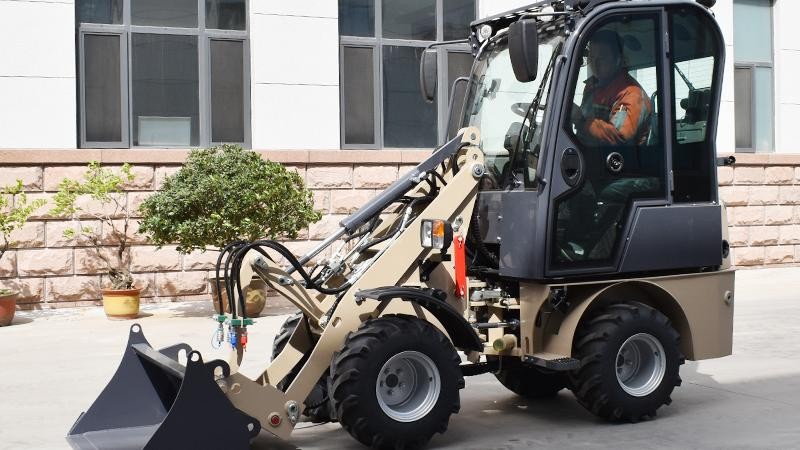
Choosing the correct bucket is just as important as selecting the right wheel loader. Different bucket designs are engineered for specific materials and applications. Using the appropriate bucket improves productivity, reduces fuel consumption, minimizes material loss, and extends the service life of the machine.
7.1 General-Purpose Buckets
General-purpose buckets are the most common option for wheel loaders.
They are designed to handle a wide variety of materials, including:
Sand
Soil
Gravel
Clay
Construction debris
Aggregate
These buckets offer an excellent balance between capacity, durability, and versatility, making them suitable for contractors, municipalities, farms, and rental fleets.
For companies performing different types of work every day, a general-purpose bucket is often the most practical choice.
7.2 Rock Buckets
Rock buckets are specifically designed for handling highly abrasive and heavy materials.
Typical applications include:
Quarries
Mining
Demolition
Aggregate plants
Compared with standard buckets, rock buckets feature:
Reinforced cutting edges
Heavy-duty wear plates
Stronger side walls
Additional structural reinforcement
These features increase durability when handling crushed stone, granite, limestone, and other hard materials.
Although rock buckets are generally heavier, they provide a much longer service life under demanding working conditions.
7.3 Light Material Buckets
Light material buckets have a much larger capacity than standard buckets but are intended for low-density materials.
Typical applications include:
Snow removal
Wood chips
Grain
Coal
Sawdust
Fertilizer
Biomass
Because these materials are lightweight, operators can use a larger bucket without exceeding the loader's lifting capacity.
This significantly increases productivity by reducing the number of loading cycles.
7.4 High Dump Buckets
High dump buckets use a hydraulic mechanism to discharge materials at a greater dumping height.
They are commonly used for:
Loading high-sided trucks
Feeding hoppers
Waste transfer stations
Recycling facilities
These buckets eliminate the need for larger loaders in many applications, allowing compact and medium-sized machines to load taller vehicles efficiently.
7.5 Side Dump Buckets
Unlike conventional buckets that unload forward, side dump buckets discharge material to either side.
They are especially useful when working in confined areas where there is limited room to maneuver.
Common applications include:
Road maintenance
Trenching
Utility construction
Railway maintenance
Side dumping improves loading accuracy while reducing repositioning time.
7.6 Grapple Buckets
Grapple buckets combine a standard bucket with hydraulic clamps.
They are widely used for handling irregular materials such as:
Logs
Tree branches
Demolition waste
Scrap metal
Recycling materials
The hydraulic grapple securely holds loose materials, reducing spillage and improving operator safety.
7.7 Quick Couplers and Attachment Compatibility
Modern wheel loaders are often equipped with quick coupler systems.
Quick couplers allow operators to change attachments within minutes without requiring extensive manual work.
Common compatible attachments include:
Pallet forks
Snow blades
Bale grabs
Log grapples
Sweepers
Mixing buckets
Augers
Snow blowers
This versatility allows a single wheel loader to perform multiple tasks throughout the year, maximizing equipment utilization and return on investment.
8. Cost Considerations and Return on Investment
While purchase price is an important factor, the total cost of ownership is a much better indicator of long-term value.
A wheel loader with a lower purchase price may ultimately cost more if it consumes excessive fuel or requires frequent repairs.
8.1 Purchase Price vs. Operating Cost
Larger wheel loaders generally have higher purchase prices.
However, they also involve:
Higher fuel consumption
More expensive tires
Increased maintenance costs
Higher transportation expenses
Smaller machines may cost less initially but could require more loading cycles if they are undersized for the application.
The goal is to find the loader that provides the lowest cost per ton of material moved.
8.2 Fuel Efficiency
Fuel represents one of the largest operating expenses over a loader's lifetime.
Modern engines feature technologies such as:
Electronic fuel injection
Variable-speed cooling fans
Load-sensing hydraulic systems
Automatic idle control
These features help reduce fuel consumption without sacrificing productivity.
8.3 Maintenance Costs
Routine maintenance includes:
Engine oil changes
Hydraulic oil replacement
Filter replacement
Greasing pivot points
Brake inspection
Tire maintenance
Machines with easy service access typically reduce downtime and labor costs.
Choosing a reputable manufacturer with readily available spare parts also lowers long-term maintenance expenses.
8.4 Tire Wear
Tires are a significant operating cost for wheel loaders.
Factors affecting tire life include:
Machine weight
Material type
Travel distance
Operator habits
Surface conditions
Using an oversized loader for light-duty applications often increases tire wear unnecessarily.
Proper machine sizing helps extend tire life and reduce replacement costs.
8.5 Transportation Costs
Larger machines require:
Heavy-duty trailers
Oversized transport permits
Larger towing vehicles
If the loader is frequently moved between job sites, transportation costs should be included in the purchasing decision.
Compact wheel loaders are much easier and less expensive to transport.
8.6 Productivity vs. Equipment Size
Higher productivity does not always mean purchasing the largest machine.
A properly sized loader often achieves better fuel efficiency, lower maintenance costs, and faster return on investment.
Equipment utilization is more important than machine size.
A loader operating efficiently every day generates more value than an oversized machine that spends much of its time underutilized.
8.7 Buying New vs. Used
Both new and used wheel l
Post time:Jul.14.2026
