
Backhoe Loader vs. Mini Excavator: Which One Is Better for My Project?
Part 1: Introduction
Choosing the right construction equipment is one of the most important decisions for contractors, builders, farmers, and rental companies. The correct machine can significantly improve productivity, reduce operating costs, and complete projects faster. Among the most popular compact construction machines available today, backhoe loaders and mini excavators are two options that are often compared because both are capable of digging, lifting, and handling various types of materials.
However, although they may appear similar at first glance, backhoe loaders and mini excavators are designed for different working environments and project requirements. A backhoe loader combines the functions of a front loader and a rear excavator, allowing it to perform multiple tasks such as digging trenches, loading materials, moving soil, and transporting materials around job sites. A mini excavator, on the other hand, is designed mainly for excavation work, offering excellent digging performance, compact dimensions, and outstanding maneuverability in areas where larger machines cannot operate.
For contractors deciding between these two machines, the question is not simply which equipment is more powerful. The better choice depends on the type of project, working conditions, required attachments, transportation needs, budget, and expected workload.
For example, a construction company working on road maintenance, utility installation, agriculture projects, or general earthmoving may benefit more from a backhoe loader because it can complete multiple tasks with one machine. In contrast, a landscaping company or contractor working in residential areas with limited space may find a mini excavator more practical due to its compact size and precise digging ability.
This article will provide a detailed comparison between backhoe loaders and mini excavators, including their structure, performance, versatility, operating costs, maintenance requirements, and suitability for different applications. By understanding the advantages and limitations of each machine, buyers can make a more informed decision and select the equipment that best matches their project needs.
Part 2: What Is a Backhoe Loader?
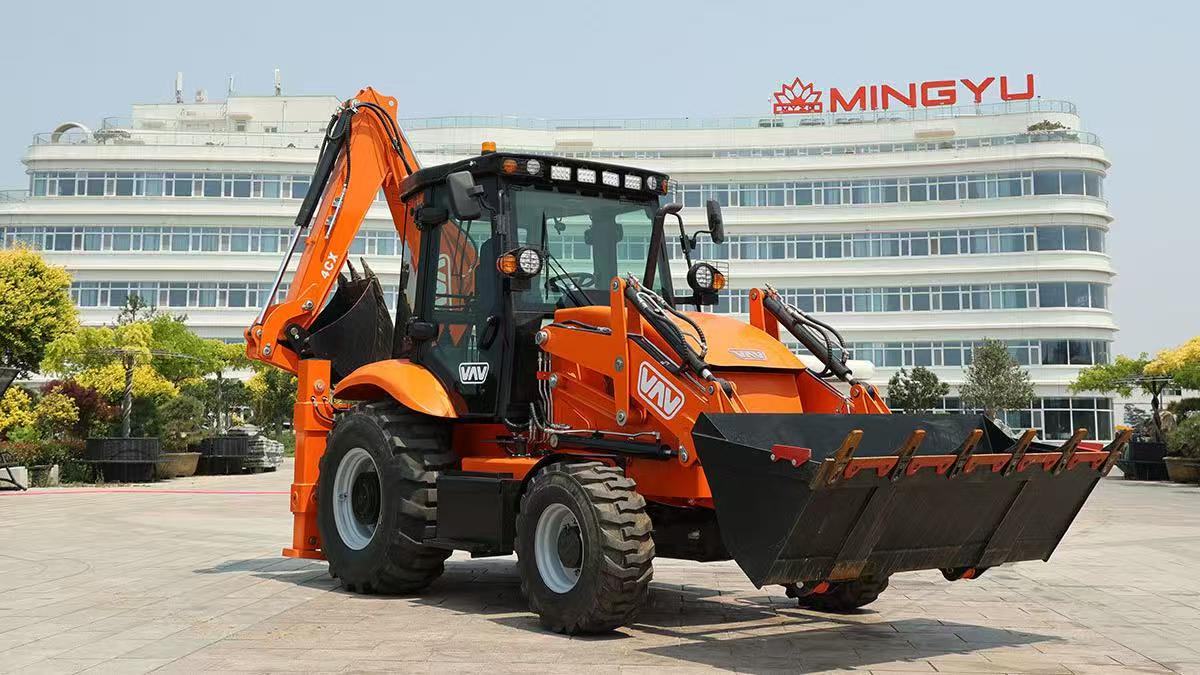
A backhoe loader is a versatile construction machine that combines two major functions into one piece of equipment: a front loader and a rear excavator. It is one of the most widely used machines in construction, agriculture, municipal projects, and general earthmoving applications because it can perform several different tasks without requiring multiple machines.
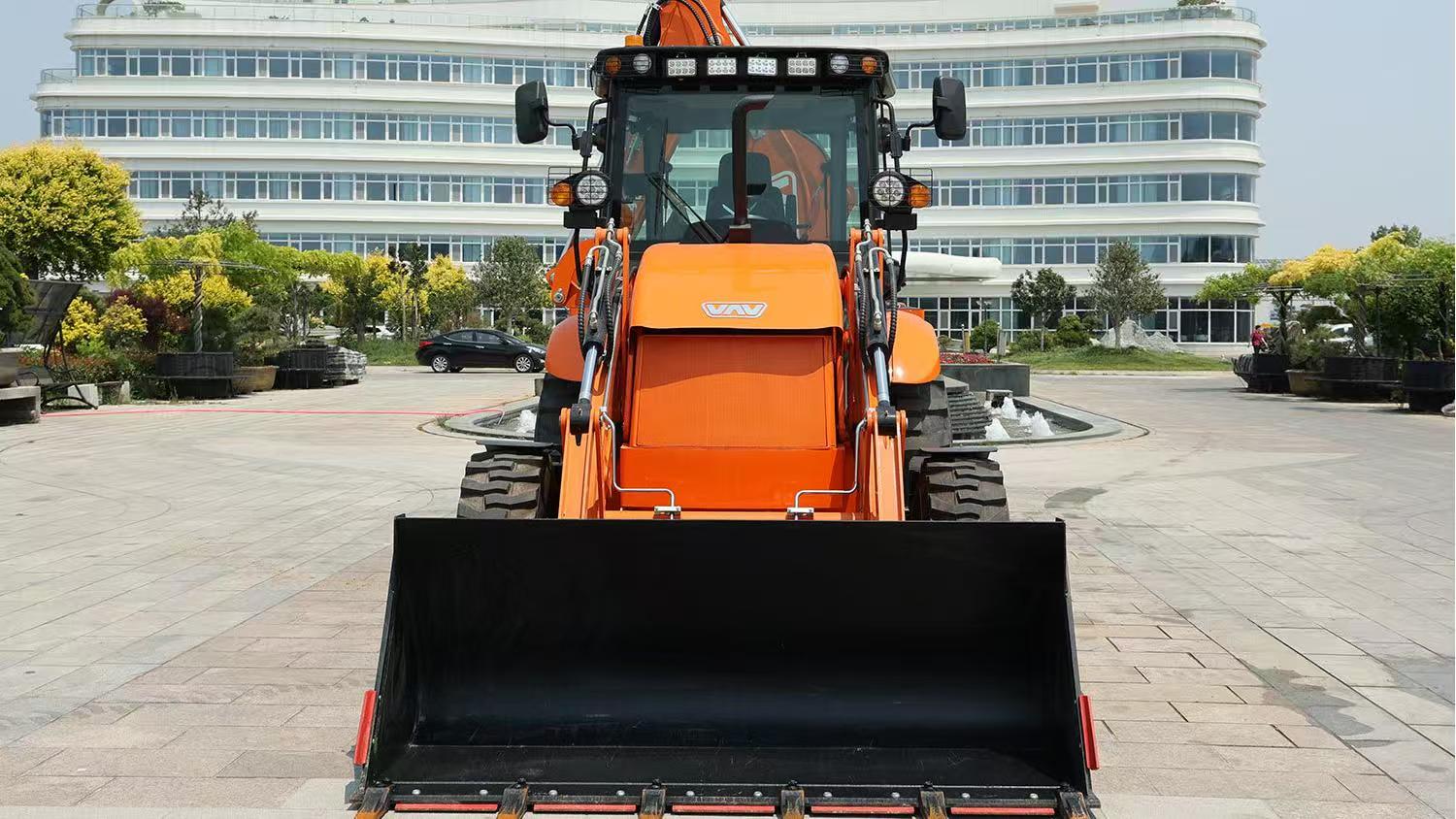
The front section of a backhoe loader is equipped with a loader bucket, which is mainly used for loading, carrying, leveling, and moving materials such as soil, gravel, sand, and construction debris. The rear section features an excavator arm with a boom, dipper, and digging bucket, allowing the machine to perform excavation operations such as trenching, foundation digging, and drainage work.
One of the biggest advantages of a backhoe loader is its versatility. Instead of purchasing separate machines for loading and excavation, contractors can use one machine to complete multiple operations. This makes backhoe loaders especially attractive for small and medium-sized construction companies that need flexibility while controlling equipment costs.
Typical applications of backhoe loaders include:
Road construction and repair
Pipeline and utility installation
Agricultural work
Landscaping projects
Building foundation preparation
Material loading and transportation
Drainage and trench excavation
Backhoe loaders are usually equipped with powerful diesel engines, hydraulic systems, and four-wheel drive capability, allowing them to work effectively on various terrains. Compared with tracked excavators, wheeled backhoe loaders can travel faster between job sites without requiring transportation trailers, making them highly efficient for projects spread across large areas.
Another important feature is their ability to use different attachments. Depending on the project requirements, backhoe loaders can be equipped with hydraulic breakers, augers, forks, grapples, and specialized buckets. This further increases their working range and allows operators to handle different tasks with one machine.
However, backhoe loaders also have some limitations. Because they are designed as multi-purpose machines, they may not match the digging precision and compact working ability of a mini excavator in extremely confined areas. Their larger size can make operation difficult in narrow residential spaces or urban environments with limited access.
Part 3: What Is a Mini Excavator?
A mini excavator is a compact excavating machine designed primarily for digging, trenching, demolition, landscaping, and other precision excavation tasks. Compared with full-size excavators, mini excavators have a smaller operating weight, compact dimensions, and excellent maneuverability, making them ideal for projects where space is limited.
A typical mini excavator consists of several main components, including a boom, arm, digging bucket, hydraulic system, cab, and undercarriage. Most mini excavators use rubber tracks, which provide excellent stability while reducing damage to finished surfaces such as concrete, asphalt, and landscaping areas.
The main strength of a mini excavator is its ability to operate in tight spaces. Residential construction sites, urban renovation projects, gardens, and small commercial developments often have limited working areas where larger machines cannot easily access. Mini excavators can move through narrow passages, work close to buildings, and perform precise excavation tasks with minimal disturbance to surrounding areas.
Common applications of mini excavators include:
Residential foundation digging
Landscaping and gardening projects
Small trenching operations
Underground utility installation
Pipeline work
Small-scale demolition
Road maintenance
Tree removal preparation
Mini excavators are also highly flexible because they can use many different attachments. Hydraulic breakers allow them to break concrete and rocks, augers enable drilling operations, grapples help with material handling, and grading buckets improve leveling work.
Another advantage of mini excavators is their low ground pressure. The tracked design distributes the machine's weight over a larger area, allowing it to work on soft ground, muddy areas, and sensitive surfaces with less damage.
However, mini excavators also have limitations. Unlike backhoe loaders, they usually do not have a front loading bucket, meaning they are not designed for efficiently moving large amounts of loose material. They also generally have lower travel speeds and may require transportation equipment when moving between distant job sites.
For projects focused mainly on excavation, precision, and operation in confined spaces, a mini excavator is often the more suitable choice.
Part 4: Backhoe Loader vs. Mini Excavator: Performance Comparison
When comparing backhoe loaders and mini excavators, performance is one of the most important factors to consider. Although both machines are designed for digging and material handling, their performance characteristics are different because they are built for different purposes.
Digging Capability
Mini excavators are generally designed specifically for excavation tasks, and their hydraulic systems are optimized for digging performance. They provide excellent digging precision, especially when working in narrow areas, around buildings, underground pipes, or landscaping projects. The independent movement of the boom, arm, and bucket allows operators to perform detailed excavation work with high accuracy.
Backhoe loaders also provide strong digging capability, especially for medium and general construction projects. Their rear excavator attachment can handle tasks such as trenching, foundation digging, and drainage installation. However, because a backhoe loader is designed as a multi-purpose machine, its digging performance may not always match a dedicated mini excavator of similar size.
For deep excavation projects, both machines can perform well, but the final choice depends on the working environment. A mini excavator often performs better when precision is required, while a backhoe loader provides greater flexibility when excavation is only one part of the job.
Loading and Material Handling
This is one of the biggest differences between the two machines. A backhoe loader has a front loader bucket, allowing it to scoop, carry, and load materials such as soil, gravel, sand, and construction waste. This makes it extremely useful for projects where operators need to switch between digging and loading operations.
A mini excavator does not usually have a front loading bucket. Although it can dig and move small amounts of material using its excavator bucket, it is not designed for transporting large quantities of loose materials. If a project requires frequent loading operations, additional equipment such as a wheel loader may be needed.
For contractors who need one machine to perform multiple tasks, the backhoe loader has a clear advantage.
Working Speed and Productivity
Backhoe loaders usually have higher travel speeds because many models use wheels instead of tracks. They can quickly move around large construction sites or travel between nearby job locations without requiring a transport trailer.
Mini excavators generally move slower because they use tracked undercarriages. However, their slower movement is compensated by better stability and precision, especially when operating on uneven or soft ground.
In terms of productivity, the best machine depends on the project. For large areas requiring transportation, loading, and excavation, a backhoe loader may complete more tasks efficiently. For detailed excavation work in limited spaces, a mini excavator can often achieve better results.
Part 5: Size, Mobility, and Job Site Flexibility
Machine size and mobility have a major impact on equipment selection. Different job sites require different levels of maneuverability, transportation ability, and working space.
Mini excavators are known for their compact dimensions. Many models can pass through narrow gates, operate between buildings, and work in residential areas where larger equipment cannot enter. Their small turning radius allows operators to perform excavation tasks in confined spaces with minimal repositioning.
This makes mini excavators particularly popular in urban construction, landscaping, plumbing installation, and residential renovation projects. For example, when installing underground cables or repairing water pipes in a small backyard, a mini excavator can complete the work without damaging surrounding structures.
Backhoe loaders are larger and require more working space, but they offer excellent mobility on roads and large job sites. Wheeled backhoe loaders can travel much faster than tracked machines and can often move directly between nearby locations without special transportation.
The choice between wheels and tracks also affects performance. Mini excavators usually use rubber or steel tracks, which provide excellent stability and lower ground pressure. They can operate effectively on mud, sand, and uneven terrain.
Backhoe loaders usually use tires, which provide faster movement and better efficiency on hard surfaces such as roads and concrete. However, tires may have more difficulty compared with tracks when working on extremely soft or muddy ground.
Transportation is another important consideration. Mini excavators are lightweight and can often be transported using smaller trailers. Larger backhoe loaders may require heavier transport equipment, especially when moving over long distances.
Part 6: Attachments and Versatility Comparison
The ability to use different attachments greatly expands the applications of construction equipment. Both backhoe loaders and mini excavators can be equipped with various attachments, but their strengths are different.
Backhoe Loader Attachments
Backhoe loaders can use a wide range of front and rear attachments, including:
Standard digging buckets
Hydraulic breakers
Augers
Grapples
Fork attachments
Specialized trenching buckets
Material handling buckets
The front loader bucket is one of the biggest advantages of a backhoe loader. It allows operators to load trucks, move materials, level surfaces, and clean job sites.
For example, during road construction, a backhoe loader can dig soil with the rear excavator arm and then use the front bucket to move gravel or construction materials. This ability reduces the need for multiple machines.
Mini Excavator Attachments
Mini excavators also support many attachments, including:
Different sizes of digging buckets
Hydraulic breakers
Hydraulic augers
Grapples
Rippers
Compaction wheels
Tilt buckets
Because mini excavators offer excellent hydraulic control, they are very effective when using precision attachments. Hydraulic breakers are commonly used for concrete demolition, while augers are useful for drilling holes for fences, signs, and landscaping projects.
Which Machine Has Better Attachment Flexibility?
Both machines are highly versatile, but they serve different purposes. Backhoe loaders provide broader overall functionality because they combine excavation and loading capabilities. Mini excavators offer better precision and attachment control for specialized excavation tasks.
For contractors who need one machine capable of handling many general tasks, a backhoe loader may provide better value. For companies focusing on excavation, landscaping, and specialized projects, a mini excavator may be the better choice.
Part 7: Operating Costs and Maintenance Comparison
When selecting construction equipment, the purchase price is only one part of the decision. Long-term operating costs, fuel consumption, maintenance requirements, spare parts availability, and resale value all affect the total cost of ownership. Both backhoe loaders and mini excavators have their own advantages depending on the type of project and working conditions.
Purchase Price
In general, mini excavators usually have a lower purchase price compared with full-size backhoe loaders, especially when comparing compact models. Their smaller engines, simpler structure, and lower operating weight make them more affordable for small contractors and rental companies.
Backhoe loaders are usually more expensive because they combine two machines into one. They include both a front loader system and a rear excavator system, requiring a more complex structure and hydraulic design. However, the higher initial investment can be justified because one backhoe loader can replace multiple machines for many general construction tasks.
For businesses that need a machine capable of performing different jobs, the versatility of a backhoe loader may provide better long-term value.
Fuel Consumption
Fuel efficiency is another important factor. Since mini excavators are generally smaller and use lower-power engines, their fuel consumption is usually lower than larger construction equipment. This makes them attractive for small projects where fuel costs need to be minimized.
Backhoe loaders typically have more powerful diesel engines because they need to operate both the front loader and rear excavator functions. As a result, fuel consumption may be higher, especially when performing heavy loading operations or working continuously under high loads.
However, fuel consumption should not be considered separately from productivity. A backhoe loader may consume more fuel per hour but complete multiple tasks without requiring additional machines, which can reduce the overall project cost.
Maintenance Requirements
Both machines require regular maintenance to ensure reliability and performance. Common maintenance tasks include:
Engine oil replacement
Hydraulic oil inspection
Filter replacement
Hydraulic system checks
Lubrication of moving parts
Inspection of pins and bushings
Mini excavators generally have fewer components compared with backhoe loaders, which can make maintenance simpler. Their tracked undercarriage requires regular inspection, especially when working on rocky or abrasive surfaces.
Backhoe loaders have more complex systems because they combine loader and excavator functions. The front bucket, rear digging arm, hydraulic cylinders, tires, and transmission all require proper maintenance. However, many manufacturers design backhoe loaders for heavy-duty operation, providing excellent durability when maintained correctly.
Tires vs. Tracks
The choice between wheels and tracks also affects operating costs.
Mini excavators with rubber tracks provide excellent stability and low ground pressure, but tracks can become expensive to replace after extended use, especially in harsh environments.
Backhoe loaders use tires, which are usually easier and faster to replace. However, frequent operation on rough terrain may increase tire wear and replacement costs.
Resale Value
Both machines generally maintain good resale value because they are widely used in construction and agriculture. Backhoe loaders often have strong resale demand because of their versatility, while mini excavators are popular due to increasing demand for compact equipment in urban projects.
A well-maintained machine with complete service records, low operating hours, and reliable brand support will usually retain a higher resale value regardless of type.
Part 8: Which Machine Is Better for Different Projects?
The best choice between a backhoe loader and a mini excavator depends mainly on the specific application. Different projects require different levels of digging power, mobility, and versatility.
Construction and Road Work
For general construction and road projects, backhoe loaders are often the preferred choice. They can perform excavation, material loading, leveling, and transportation tasks with one machine.
During road construction, a backhoe loader can dig drainage channels, move construction materials, prepare surfaces, and clean work areas. Its ability to travel quickly between different sections of a project makes it highly efficient.
Mini excavators can also be used in road projects, especially for smaller repair jobs, trenching, and underground utility installation. However, they may require additional equipment for loading and material movement.
Landscaping Projects
For landscaping, mini excavators are usually the better option. Their compact size allows them to work in gardens, residential yards, parks, and areas with limited access.
They are ideal for tasks such as:
Digging ponds
Installing drainage systems
Removing trees and roots
Preparing garden areas
Creating small foundations
Their precise hydraulic controls allow operators to complete delicate work while minimizing damage to existing landscapes.
Utility and Pipeline Installation
Both machines are commonly used for utility projects, but the choice depends on the site conditions.
Mini excavators are excellent for installing water pipes, electrical cables, and communication lines in narrow areas. Their ability to work close to buildings and underground structures makes them extremely useful.
Backhoe loaders are better suited for larger utility projects where excavation is combined with loading, backfilling, and material handling.
Agriculture and Farm Work
Backhoe loaders are very popular in agricultural applications because they can perform multiple tasks throughout the year. Farmers can use them for:
Digging irrigation channels
Moving soil and fertilizer
Loading agricultural materials
Preparing land
Maintaining farm roads
Mini excavators are also useful on farms, especially for smaller excavation tasks and drainage work.
Demolition Projects
For small demolition projects, mini excavators often have an advantage because they can operate in confined spaces and use hydraulic breakers effectively.
They are commonly used for breaking concrete floors, removing small structures, and preparing areas for renovation.
For larger demolition and material handling operations, a backhoe loader may provide better overall productivity because of its loading capability.
Part 9: How to Choose Between a Backhoe Loader and Mini Excavator?
Choosing between a backhoe loader and a mini excavator requires a careful evaluation of the actual project requirements. There is no single machine that is perfect for every application. The best choice depends on factors such as job type, working environment, transportation needs, budget, and expected workload.
Evaluate the Type of Work
The first question to ask is: what tasks will the machine perform most often?
If the main purpose is excavation, trenching, landscaping, or precision digging, a mini excavator may be the better option. Its compact size, excellent hydraulic control, and ability to work in narrow spaces make it ideal for specialized digging projects.
If the machine needs to perform multiple tasks such as digging, loading, transporting materials, leveling, and general construction work, a backhoe loader is usually the better choice. It provides greater versatility because it combines two functions in one machine.
Consider the Working Environment
The job site conditions play a major role in equipment selection.
For urban construction, residential projects, and areas with limited access, mini excavators usually provide better performance. Their compact dimensions allow them to enter small spaces and operate close to buildings or other structures.
For large construction sites, farms, road projects, and industrial areas, backhoe loaders often have an advantage because they can travel faster and handle a wider range of tasks.
Analyze Required Digging Depth and Power
The required digging depth and excavation capacity should also be considered. Both machines are capable of handling many excavation jobs, but their performance depends on the specific model.
Mini excavators are excellent for precise excavation, especially when working around existing structures or underground utilities. Backhoe loaders are suitable for general excavation and larger material handling operations.
Before purchasing, contractors should compare:
Maximum digging depth
Bucket capacity
Hydraulic power
Lifting ability
Working radius
Selecting a machine with the right specifications prevents unnecessary fuel consumption and improves productivity.
Consider Transportation Requirements
Transportation is another important factor. Mini excavators are lighter and easier to transport between job sites. Many compact models can be moved using smaller trailers, reducing transportation costs.
Backhoe loaders are heavier but have the advantage of road mobility. Wheeled models can often drive directly between nearby work locations, saving time when multiple job sites are located close together.
Check Attachment Requirements
Attachments can significantly increase machine versatility. Companies should consider what additional tools they may need in the future.
If the business requires hydraulic breakers, augers, grapples, or specialized excavation attachments, both machines can provide good options. However, if loading and material handling are important, the front bucket of a backhoe loader provides a major advantage.
Calculate Total Cost of Ownership
The cheapest machine is not always the most economical choice. Buyers should consider the total cost of ownership, including:
Purchase price
Fuel consumption
Maintenance costs
Spare parts availability
Operator training
Resale value
A machine that costs more initially may provide better long-term value if it completes more tasks and improves productivity.
Part 10: Frequently Asked Questions (FAQ)
Is a backhoe loader better than a mini excavator?
It depends on the project. A backhoe loader is better for multi-purpose construction work because it can dig, load, and transport materials. A mini excavator is better for precise excavation, landscaping, and projects in limited spaces.
Can a mini excavator replace a backhoe loader?
In some applications, yes. Mini excavators can replace backhoe loaders for digging, trenching, and small construction projects. However, they cannot fully replace the loading capability of a backhoe loader because they usually do not have a front bucket.
Which machine digs deeper, a backhoe loader or a mini excavator?
The digging depth depends on the specific model. Many backhoe loaders offer excellent digging depth, while larger mini excavators can also achieve impressive excavation performance. Buyers should compare the specifications of individual models rather than relying only on machine type.
Which machine is cheaper to operate?
Mini excavators usually have lower fuel consumption because they are smaller and lighter. However, a backhoe loader may reduce total project costs because it can perform multiple jobs without requiring additional equipment.
Which machine is better for small construction projects?
For small residential construction, landscaping, and projects with limited space, a mini excavator is often the better choice. It provides excellent maneuverability and precise operation.
Can both machines use hydraulic attachments?
Yes. Both backhoe loaders and mini excavators can use various hydraulic attachments, including breakers, augers, grapples, and specialized buckets. The available attachments depend on the hydraulic system and machine specifications.
Which machine has better resale value?
Both types usually maintain good resale value. Backhoe loaders are attractive because of their versatility, while mini excavators benefit from strong demand in urban construction and landscaping markets.
Part 11: Conclusion
Both backhoe loaders and mini excavators are highly valuable machines, but they are designed for different types of work. Choosing the better option depends on understanding the specific requirements of the project rather than simply comparing power or price.
A backhoe loader is an excellent choice for contractors who need a versatile machine capable of handling multiple tasks. Its combination of a front loader bucket and rear excavator arm allows it to perform digging, loading, material handling, and general construction work with one machine. It is especially suitable for road construction, agriculture, utility projects, and large job sites where flexibility and mobility are important.
A mini excavator is the ideal choice for projects that require precision, compact size, and excellent maneuverability. It performs extremely well in residential construction, landscaping, urban projects, and confined work areas where larger machines cannot operate effectively.
When selecting between the two, contractors should consider the type of work, job site conditions, required attachments, transportation needs, and long-term operating costs. A company that frequently performs different types of construction tasks may benefit more from investing in a backhoe loader. A business focused mainly on excavation and compact projects may find a mini excavator to be the more efficient solution.
Ultimately, the best machine is not necessarily the largest or most powerful one. The right equipment is the machine that matches the project requirements, improves productivity, reduces operating costs, and provides reliable performance for many years. By carefully comparing the advantages of backhoe loaders and mini excavators, buyers can make a smarter investment decision and achieve better results on every job site.
Post time:Jul.17.2026
