
Backhoe Loader vs. Excavator: Which One Is Better for Small Projects?
1. Introduction
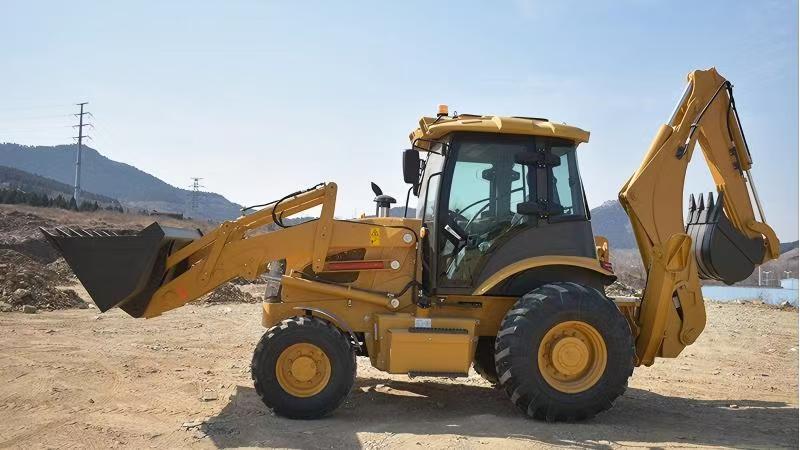
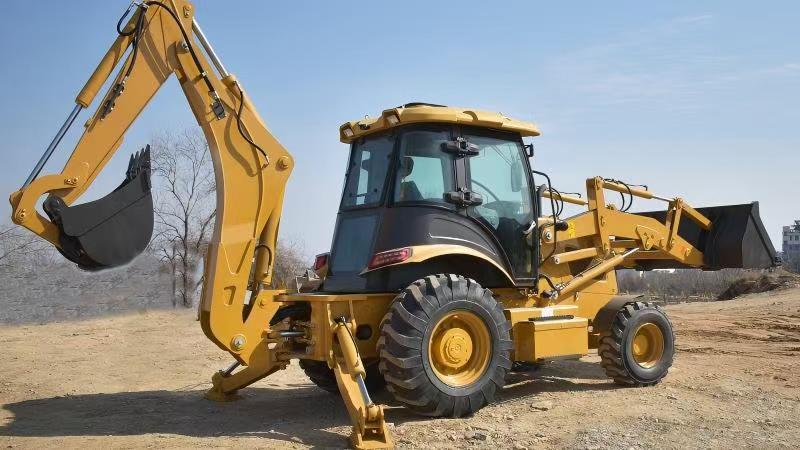
When choosing construction equipment for a small project, buying or renting the right machine can have a major impact on productivity, operating costs, and project efficiency. Two of the most common options are the backhoe loader and the excavator. Both machines are designed for excavation and earthmoving, but they have very different designs and strengths. A backhoe loader combines a front loader with a rear-mounted backhoe, while an excavator is primarily designed for digging, lifting, and material handling with a rotating upper structure.
For small construction projects, the choice is particularly important because contractors often have limited budgets, restricted jobsites, and fewer machines available. A single versatile machine can sometimes perform several tasks that would otherwise require multiple pieces of equipment. At the same time, a specialized machine such as a compact excavator can provide better digging performance and maneuverability in certain environments.
Backhoe loaders are commonly used for landscaping, road maintenance, drainage, utility installation, agricultural work, and residential construction. Their ability to dig with the rear attachment and load or move materials with the front bucket makes them highly versatile. Excavators, especially mini and compact excavators, are widely used for trenching, foundation work, demolition, digging, and other applications where precise excavation is important.
So, which one is better for small projects? There is no single answer. The best choice depends on the type of work, available space, digging requirements, transportation needs, budget, and the number of different tasks the machine needs to perform. This article compares backhoe loaders and excavators in detail and explains which machine may be the better choice for different types of small projects.
2. What Is a Backhoe Loader?
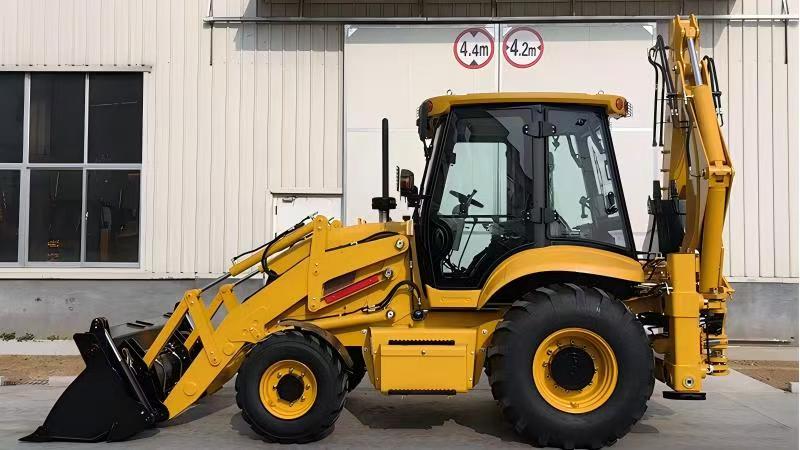
A backhoe loader is a versatile construction machine that combines two major functions in one vehicle. It has a front-mounted loader bucket and a rear-mounted backhoe attachment. The front loader is mainly used for loading, moving, leveling, and handling materials, while the rear backhoe is used for excavation.
This combination makes a backhoe loader particularly useful for small contractors who need one machine to perform several jobs. For example, a contractor working on a drainage project can use the rear backhoe to dig a trench, then use the front bucket to move excavated soil and place backfill material.
Most backhoe loaders are wheeled machines, allowing them to travel relatively easily between jobsites. Some models can also be driven on public roads when they meet applicable regulations and requirements.
Typical applications include digging trenches, excavating foundations, loading soil, moving gravel, cleaning ditches, landscaping, road maintenance, agricultural work, and general material handling.
The biggest advantage of a backhoe loader is versatility. Instead of purchasing an excavator and a separate wheel loader for relatively small jobs, a contractor can use one machine for many tasks.
3. What Is an Excavator?
An excavator is a construction machine primarily designed for digging and excavation. It normally consists of an undercarriage, a rotating upper structure, an operator cabin, a boom, an arm, and a bucket.
One of the most important characteristics of an excavator is its ability to rotate the upper structure, commonly up to 360 degrees. This allows the operator to dig, swing, and place materials without repositioning the entire machine.
Excavators are available in many sizes. Mini and compact excavators are particularly suitable for small construction projects because their compact dimensions allow them to work in areas where larger machines cannot operate.
Depending on the model and attachment, excavators can be used for trenching, foundation excavation, landscaping, demolition, drainage work, material handling, stump removal, and many other applications.
Compared with a backhoe loader, an excavator is generally more specialized for excavation. Its tracked undercarriage can also provide excellent stability on many uneven or soft jobsite surfaces.
4. Backhoe Loader vs. Excavator: Key Differences
4.1 Versatility
Versatility is one of the strongest advantages of a backhoe loader. It combines a loader and excavator into one machine. The front bucket can handle materials, while the rear attachment performs excavation.
An excavator is more specialized. Although it can use many attachments, it does not normally provide the same front-loader functionality as a backhoe loader.
Therefore, if a small project involves digging, loading, grading, and moving materials, a backhoe loader may provide better overall versatility.
4.2 Digging Performance
Excavators are generally designed specifically for excavation, giving them strong digging capability and excellent control.
The boom and arm configuration allows an excavator to dig at different depths and distances. The rotating upper structure also makes it convenient to excavate and then swing the bucket toward a truck or stockpile.
Backhoe loaders can also provide strong digging performance, particularly for utility trenches, drainage work, and general construction. However, when excavation is the dominant task, a dedicated excavator may offer greater productivity.
4.3 Loading and Material Handling
This is where the backhoe loader has a clear advantage.
Its front bucket can be used to load trucks, move soil, transport gravel around a jobsite, spread materials, and clean up the working area. An excavator can move materials with its bucket, but it is not normally as efficient for general loading and pushing work.
For a project requiring both excavation and frequent material handling, the backhoe loader can reduce the need for another machine.
4.4 Mobility
Backhoe loaders are usually wheeled and can travel relatively quickly around a jobsite. This makes them useful for contractors who frequently move between nearby work areas.
Tracked excavators generally move more slowly and may need to be transported by trailer when traveling longer distances.
However, tracked excavators can provide better traction and stability on many uneven or soft surfaces. The choice therefore depends on the type of terrain and how frequently the machine needs to travel.
4.5 Maneuverability and Working Space
Compact excavators can be extremely useful in confined areas. Their narrow dimensions and zero- or reduced-tail-swing designs can allow them to work close to buildings, walls, fences, and other obstacles.
Backhoe loaders generally require more space, particularly when the rear stabilizers are deployed. Their larger overall footprint can make them less suitable for very tight residential sites.
For a small backyard with a narrow access gate, a mini excavator may therefore be more practical than a full-size backhoe loader.
5. Size and Access Considerations for Small Projects
Jobsite access should be considered before selecting any machine. A machine may have excellent specifications but still be unsuitable if it cannot enter the working area.
Measure the width and height of entrances, gates, driveways, and other access points. Also consider overhead obstacles such as tree branches, cables, and building structures.
Mini excavators are often advantageous for residential landscaping and backyard projects because of their compact dimensions. Some models can fit through relatively narrow access points.
Backhoe loaders are more suitable when the site has enough space for the machine to maneuver and when the project requires both excavation and loading functions.
Ground conditions also matter. Wheeled machines can be convenient on firm surfaces, while tracked excavators can offer improved flotation and traction on many soft or uneven surfaces.
6. Comparing Operating Costs
The purchase price is only one part of the total cost of owning construction equipment.
Fuel consumption, routine maintenance, tires or tracks, hydraulic components, filters, lubricants, transportation, and operator costs can all affect the total operating cost.
A backhoe loader may provide economic benefits because one machine can perform several different jobs. A contractor may not need to purchase or rent separate equipment for loading and excavation.
An excavator can be more economical when excavation is the main activity because its design is optimized for digging. However, if additional equipment is needed for loading or grading, the overall project cost can increase.
For small contractors, utilization is particularly important. The best machine is often the one that can be used productively across the greatest number of jobs.
7. Which Machine Is Better for Different Small Projects?
7.1 Landscaping
Landscaping projects often involve digging, moving soil, preparing planting areas, grading, and transporting materials.
A mini excavator is excellent for precise digging and working around existing structures. A backhoe loader can be more useful when the project also requires frequent loading and movement of soil.
For larger landscaping projects with multiple tasks, the versatility of a backhoe loader can be valuable.
7.2 Utility and Drainage Work
Utility projects often involve digging trenches for water pipes, electrical cables, drainage systems, or other infrastructure.
An excavator can provide excellent trenching performance and precise control. Its ability to rotate while remaining in position is particularly useful when digging and placing materials alongside a trench.
A backhoe loader is also highly capable of trenching and has the additional advantage of being able to move soil and aggregate with its front loader.
7.3 Residential Construction
Residential construction may involve foundation excavation, site preparation, landscaping, material handling, and cleanup.
If the project involves several different tasks, a backhoe loader can be an efficient all-round machine.
If the work area is very small or difficult to access, however, a compact excavator may be the better choice.
7.4 Farm and Agricultural Work
Farm projects often require ditch cleaning, drainage work, soil handling, material movement, and general maintenance.
A backhoe loader is particularly useful in this environment because its front loader can move materials while its rear attachment can perform excavation.
For farms with a wide range of maintenance tasks, versatility can be more valuable than specialized excavation performance.
7.5 Road and Driveway Projects
Small road and driveway projects often require excavation, material loading, grading, and cleanup.
A backhoe loader can be useful because its front bucket can move gravel and soil while the rear attachment handles excavation.
For projects focused primarily on excavation, an excavator may provide better digging performance, while additional equipment can be used for material spreading and grading.
8. Attachment Options
Attachments can significantly increase the versatility of both machines.
Backhoe loaders can use different buckets, hydraulic breakers, augers, forks, grapples, and other attachments depending on the model and hydraulic configuration.
Excavators can also accommodate a wide variety of attachments, including digging buckets, hydraulic breakers, augers, grapples, tilt buckets, trenching buckets, and specialized demolition tools.
Before choosing a machine, contractors should consider not only which attachments are available but also hydraulic flow, attachment weight, connection type, and lifting capacity.
The right attachment can sometimes have as much impact on productivity as the machine itself.
9. Operator Experience and Ease of Use
Operator experience is another important consideration.
A backhoe loader requires the operator to work with both front and rear equipment. Switching between different functions requires familiarity with the controls and jobsite conditions.
Excavators are generally more focused on excavation, making their controls and operating procedures highly optimized for digging and swinging.
Modern machines increasingly feature ergonomic cabins, joystick controls, improved visibility, and simplified hydraulic systems. Nevertheless, proper operator training remains important for productivity and safe operation.
A skilled operator can often achieve much better results than an inexperienced operator, regardless of which machine is selected.
10. Transportation and Jobsite Logistics
Transportation should be considered before purchasing or renting equipment.
Important factors include operating weight, machine dimensions, trailer capacity, loading height, and transportation regulations.
A wheeled backhoe loader may have an advantage when it needs to travel short distances between nearby jobsites. An excavator, particularly a tracked model, may require a suitable trailer for transportation.
For contractors who move equipment frequently, transportation costs can become a significant part of total project expenses.
11. Advantages and Disadvantages at a Glance
Backhoe Loader Advantages
Combines digging and loading functions
Highly versatile
Good mobility
Suitable for mixed construction tasks
Useful for agriculture and road maintenance
Can reduce the need for multiple machines
Backhoe Loader Disadvantages
Larger than many mini excavators
Requires space for stabilizers
May be less suitable for very confined areas
Excavation performance may be lower than a specialized excavator in some applications
Excavator Advantages
Excellent digging performance
Precise excavation
360-degree upper-structure rotation
Good performance in confined excavation areas
Wide attachment selection
Compact models are highly suitable for small sites
Excavator Disadvantages
Does not provide the same front-loader capability
Tracked models may require transportation
Additional equipment may be needed for loading and grading
Specialized design may be less efficient for mixed tasks
12. Backhoe Loader or Excavator: Which Should You Choose?
Choose a backhoe loader if your project requires several different functions. If you need to dig trenches, move soil, load materials, level the site, and travel between work areas, its versatility can make it an excellent choice.
Choose an excavator if excavation is the primary task. When digging depth, precision, reach, and maneuverability are more important than front-loading capability, an excavator may deliver better productivity.
For particularly small residential or landscaping projects, a mini excavator can be an especially practical option. Its compact dimensions allow it to access areas where a larger backhoe loader cannot easily operate.
The key is to select the machine according to the actual work rather than simply choosing the machine with the highest specifications.
13. Practical Decision-Making Checklist
Before purchasing or renting a machine, consider the following questions:
What type of project are you doing?
How deep and wide do you need to excavate?
How much material needs to be moved?
Does the machine need to perform loading or grading work?
How much space is available on the jobsite?
Can the machine pass through the available entrance?
What are the ground conditions?
How often will the machine need to move between jobsites?
What attachments will be required?
What is your purchase, rental, fuel, and maintenance budget?
How experienced is the operator?
Will one machine be able to complete most of the project, or will additional equipment be needed?
Answering these questions can make the selection process much easier.
14. Conclusion
Both backhoe loaders and excavators can be excellent choices for small construction projects, but they serve different purposes.
A backhoe loader is generally the better all-round machine when a project requires digging, loading, material handling, grading, and mobility. Its combination of front and rear attachments allows one machine to handle a wide range of jobs.
An excavator is generally the better choice when excavation is the main priority. It offers strong digging performance, precise control, excellent reach, and 360-degree operation. Mini and compact excavators are particularly valuable for projects with limited access or restricted working space.
Ultimately, there is no universal winner between a backhoe loader and an excavator. The right choice depends on the project, site conditions, required attachments, transportation requirements, and budget. For contractors handling a wide variety of small jobs, the versatility of a backhoe loader can be a major advantage. For contractors specializing in excavation and working in confined areas, a compact excavator may provide greater productivity.
The best approach is to evaluate the complete project workflow—not just the machine's digging capacity. A machine that can efficiently perform all the required tasks can save time, reduce equipment costs, and improve overall project efficiency.
Post time:Sep.02.2026
