
The question of the maximum speed for a forklift is deceptively simple, yet the answer is nuanced and crucial for workplace safety. Unlike passenger vehicles on public roads with clearly posted speed limits, forklifts, also known as powered industrial trucks, operate in controlled environments where no single universal "maximum speed" applies. The common benchmark often cited is a travel speed of approximately 6 to 7 miles per hour (roughly 10 to 11 kilometers per hour) when unloaded. However, this is merely a typical operational range, not a mandated ceiling. The true governing principle is that speed must always be adjusted to the specific conditions of the workplace to ensure safe operation. Key factors that immediately override any consideration of top speed include pedestrian traffic density, the presence of cross or blind corners, floor surface conditions, the type and stability of the load being carried, and the overall layout of the facility. Ultimately, the forklift operator is entrusted with the responsibility to be the final judge of a safe speed, which may often be significantly lower than the machine's mechanical capability. This foundational understanding shifts the focus from a technical specification to a core component of safety culture, where the goal is not to achieve maximum velocity but to guarantee controlled, predictable, and hazard-free movement of materials.
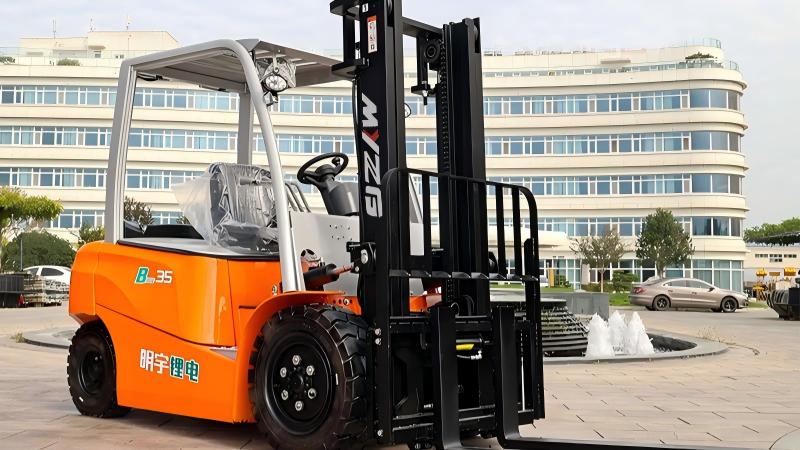
The primary legal and regulatory framework governing forklift operation in the United States is established by the Occupational Safety and Health Administration (OSHA). While OSHA standard 1910.178 does not prescribe a specific numerical speed limit, it sets forth powerful, overarching rules that effectively dictate safe speed. The regulation mandates that "the speed shall be reduced to a safe level" when navigating through congested areas, encountering slippery surfaces, or taking corners. More broadly, it states that "the truck shall be operated at a speed that will permit it to be stopped in a safe manner." This performance-based rule places the onus on employers and operators to conduct thorough hazard assessments of their specific work environments. Consequently, employers are required to establish and enforce site-specific speed limits as part of their written safety programs. These internal limits are often set far below the forklift's potential, such as 3 to 5 mph in general areas and walking speed (3 mph or less) in high-traffic zones. Furthermore, OSHA requires that all forklift operators be trained and certified to handle the equipment safely, with a significant portion of training dedicated to understanding how speed interacts with load stability, stopping distances, and the creation of dangerous kinetic energy.
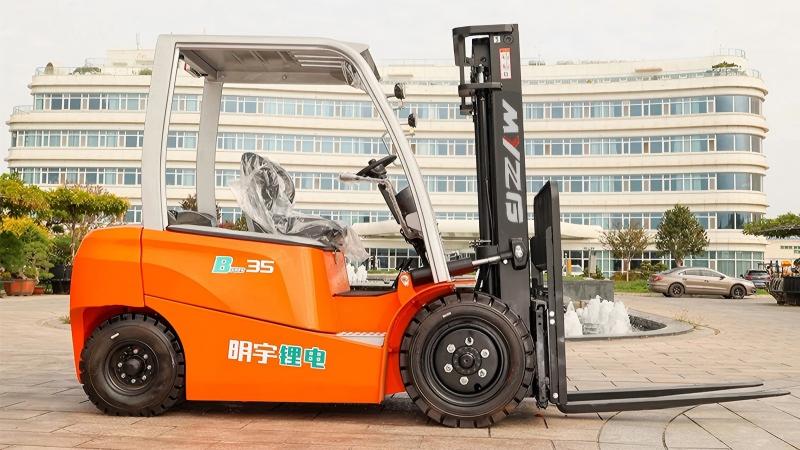
Beyond regulatory compliance, the physics of forklift operation present stark reasons for stringent speed control. A forklift is fundamentally different from a car; it is a heavy, counterbalanced vehicle with a high center of gravity that shifts dramatically based on the load's weight, height, and placement. Excessive speed drastically increases the risk of tip-overs, which are a leading cause of fatal forklift accidents. When turning, centrifugal force acts on the elevated center of gravity, making a turn taken too quickly a perfect recipe for a lateral tip-over. Similarly, sudden stops can cause the load to slide off the forks or the rear wheels to lift off the ground. The stopping distance of a forklift increases disproportionately with speed, especially on smooth warehouse floors. At just 7 mph, a loaded forklift requires a considerable distance to come to a complete stop, a distance that may easily exceed the operator's sight lines in a cluttered aisle. Moreover, higher speeds amplify the consequences of collisions with racking, infrastructure, or, most catastrophically, pedestrians. The warehouse environment is a shared space, and the limited visibility (especially when carrying a large load) combined with high-speed travel creates an unacceptable risk profile, making speed management the most critical lever for preventing property damage, serious injury, and loss of life.
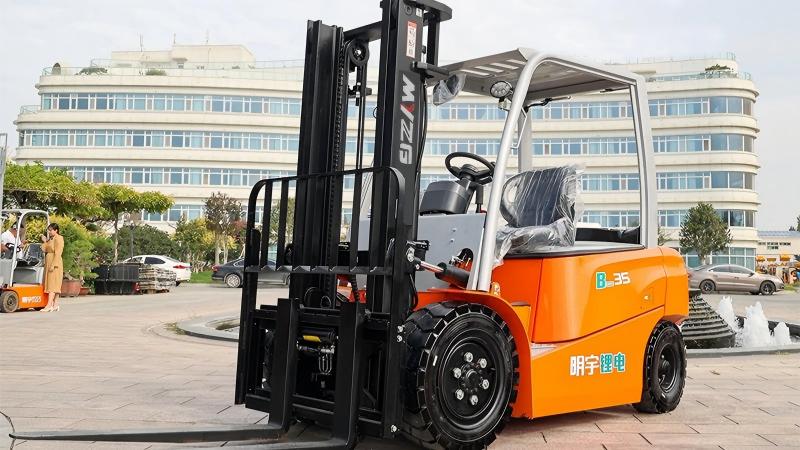
Implementing effective speed management requires a multi-faceted approach combining engineering controls, administrative policies, and continuous cultural reinforcement. Technologically, many companies are now utilizing forklift speed governance systems. These can range from simple programmable limiters that cap maximum speed to more advanced telematics solutions that use geo-fencing to automatically restrict speed in predefined zones (e.g., near docks, in narrow aisles, or around office entrances). Administratively, clear signage indicating zone-specific speed limits, coupled with stringent training and consistent enforcement of rules, forms the policy backbone. However, the most critical element is fostering a safety culture where operators are empowered and expected to prioritize safety over haste. This includes encouraging them to slow down for wet floors, reduce speed when carrying elevated loads, and come to a complete stop at intersections. Management must lead by example, never pressuring operators for speed at the expense of safety. Regular refresher training, near-miss reporting, and open discussions about speed-related incidents help keep this issue at the forefront. In conclusion, the maximum safe speed for a forklift is not a number found on a specification sheet but a dynamic condition determined by environment, load, and the operator's vigilant judgment, all within a framework of a proactive, safety-first organizational culture.
Post time:Jan.15.2026
