
Operating a rough terrain forklift, commonly a telehandler or a robust straight-mast forklift, on slopes presents one of the most significant challenges in material handling, demanding a profound respect for the machine's physics and a strict adherence to specialized protocols. Unlike their indoor counterparts, these machines are engineered with large, deeply treaded pneumatic tires, higher ground clearance, and often four-wheel drive to navigate outdoor construction sites, agricultural yards, and lumber piles. However, this capability breeds complacency, and a slope is the great equalizer. The foundational rule, ingrained in every reputable operator training program, is to always travel with the load pointed uphill. This means driving forward when ascending and in reverse when descending, ensuring the load—which can be immensely heavy—is always on the uphill side of the machine. This practice counteracts the natural tendency of the load to pull the machine downhill, maintaining the center of gravity within the stability triangle formed by the wheels. Before even approaching a slope, the operator must conduct a thorough site assessment, checking for ground conditions such as loose gravel, mud, soft soil, or hidden debris that could collapse or cause a tire to slip. The machine's capacity, prominently displayed on the load chart, is dramatically reduced on any incline; a load that is safe on level ground can become a lethal liability on a grade. Understanding that stability is paramount, not speed or convenience, is the first and most crucial mental shift for safe slope operation.
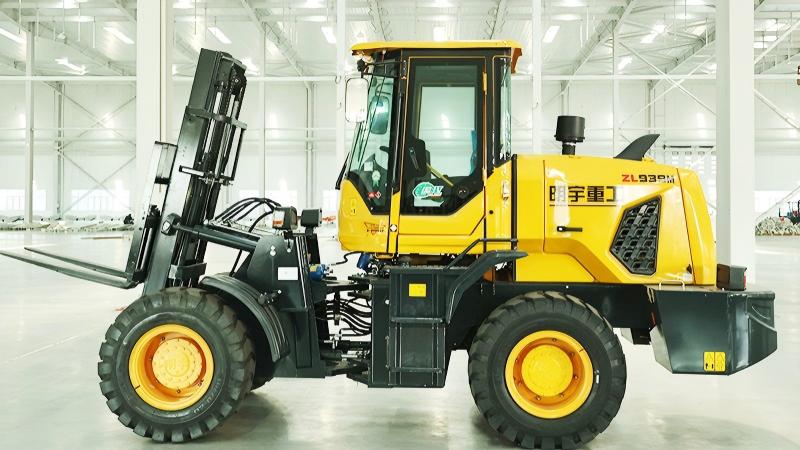
The specific techniques for navigating slopes extend far beyond simple direction of travel and require meticulous control of all machine functions. When ascending a slope, one should proceed slowly and steadily in a forward direction, avoiding any sudden acceleration that could cause rear wheel slippage or lift, especially in two-wheel drive modes. The forks, or the attachment, must be pointed directly uphill, kept low to the ground—typically 6 to 10 inches—to keep the machine's center of gravity as low as possible. When descending, the operator must shift into reverse, using the engine brake and transmission to control the descent speed rather than relying solely on the service brakes, which can overheat and fade or cause skidding on loose surfaces. The mast should be tilted slightly back (if equipped and conditions allow) to secure the load, but the primary focus is on slow, controlled movement. Critically, turning on a slope must be avoided at all costs; the change in dynamics can instantly shift the center of gravity outside the stability triangle. If a turn is absolutely necessary, it should be executed on as level a patch of ground as can be found. Furthermore, operators must be acutely aware of the machine's load chart for dynamic conditions, which often details how capacity is reduced as the gradient increases and as the load center is shifted. For telehandlers with extended booms, the rules become even more stringent; the boom should be kept low and retracted as much as possible when on any incline, as extension significantly reduces capacity and raises the center of gravity, making the machine exponentially more unstable.
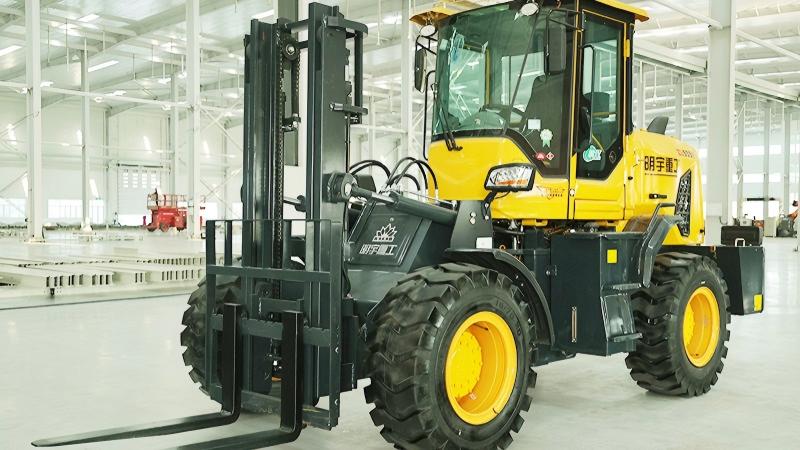
Environmental factors and load management intertwine to create the complex scenarios where most slope-related incidents occur. Weather is a dominant force; rain, snow, and ice transform a manageable slope into a high-risk zone by reducing traction. In such conditions, slope operation should be minimized or suspended unless absolutely necessary, and then only with extreme caution and potentially with tire chains. Wind poses a separate, often overlooked hazard, particularly for telehandlers with lifted loads or empty forks, acting as a sail that can side-load the machine and contribute to a tip-over. The nature of the load itself is equally critical. A bulky, porous load like hay bales or lumber is susceptible to wind. A loose or shifting load is a recipe for disaster, as movement can instantly unbalance the machine. Therefore, ensuring the load is securely attached, stable on the pallet or forks, and positioned as close to the heel of the forks as possible is non-negotiable. The operator must also maintain constant vigilance for changes in the terrain during the journey, such as sudden drop-offs, trenches, or recently disturbed ground. Communication with spotters on the ground is invaluable in these situations, as they can provide a wider field of view and warn of unseen hazards. The use of a seatbelt, or more appropriately in these machines, a Roll-Over Protective Structure (ROPS) equipped cab and seatbelt, is the final critical defense. In the event of a tip-over, the operator's instinct to jump out is almost always fatal; being restrained within the ROPS cage offers the highest chance of survival.
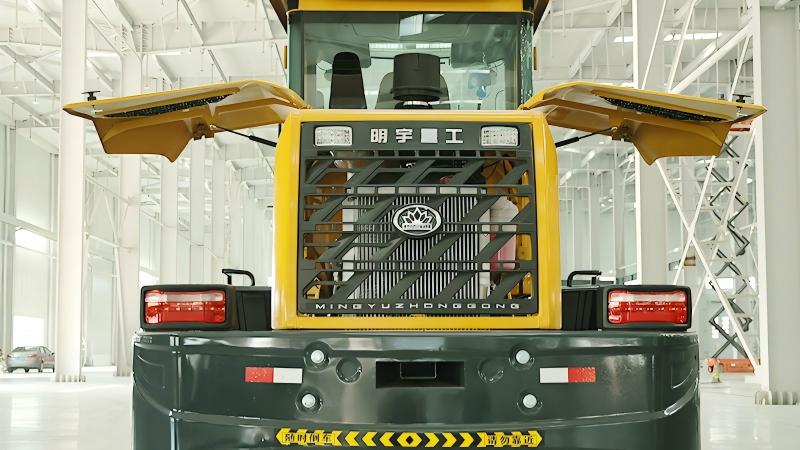
Ultimately, safe operation on slopes is a synthesis of rigorous training, disciplined pre-operation checks, and an unwavering safety mindset. Formal certification from an accredited program that includes hands-on slope training is not just a regulatory requirement in most jurisdictions but a fundamental necessity. Before each shift, the operator must verify the forklift's mechanical integrity, paying special attention to tire pressure (uneven pressure can cause dangerous lean), brake function, steering responsiveness, and fluid levels. The operating manual for the specific model is the ultimate authority on its limitations and procedures. Technology aids, such as inclinometers, stability systems, and cameras, are valuable tools but must not replace core skills and judgment. Management has a profound responsibility to enforce safe practices, halt operations when conditions deteriorate, and foster a culture where safety is prioritized over speed. Remember, a rough terrain forklift is a powerful tool, but gravity is an immutable law. There is no load so important, no schedule so urgent, that it justifies bypassing the protocols for safe slope operation. By internalizing these principles—assessing the terrain, managing the load and machine configuration meticulously, respecting environmental forces, and relying on thorough training—operators can harness the capability of these formidable machines while mitigating the inherent risks of working on inclined and uneven ground.
Post time:Jan.23.2026
