
Boom Lift vs. Scissor Lift: Which One Is Right for My Job Site?
1. Introduction
Choosing the right aerial work platform is one of the most important decisions for any construction, maintenance, warehouse, or industrial project. Whether you're installing electrical systems, painting high walls, maintaining building facades, or performing warehouse maintenance, the equipment you select directly affects productivity, worker safety, and overall project costs. Among the most popular aerial work platforms available today are boom lifts and scissor lifts. Although both are designed to elevate workers safely, they are built for different tasks and environments.
Many buyers assume that the tallest or most expensive machine is always the best option. In reality, selecting the wrong lift can slow down operations, increase rental or ownership costs, and even create unnecessary safety hazards. For example, a scissor lift may be perfect for indoor warehouse maintenance but unsuitable for reaching over obstacles, while a boom lift excels in outdoor construction but may be excessive for simple vertical access.
Understanding the differences between these two machines allows contractors, facility managers, rental companies, and business owners to invest wisely. Factors such as working height, horizontal reach, platform capacity, terrain conditions, and operating costs all influence which lift delivers the best value.
In this guide, we'll compare boom lifts and scissor lifts in detail, explain their strengths and limitations, examine their ideal applications, discuss safety considerations, compare ownership costs, and help you determine which machine is the right choice for your specific job site.
2. What Is a Scissor Lift?
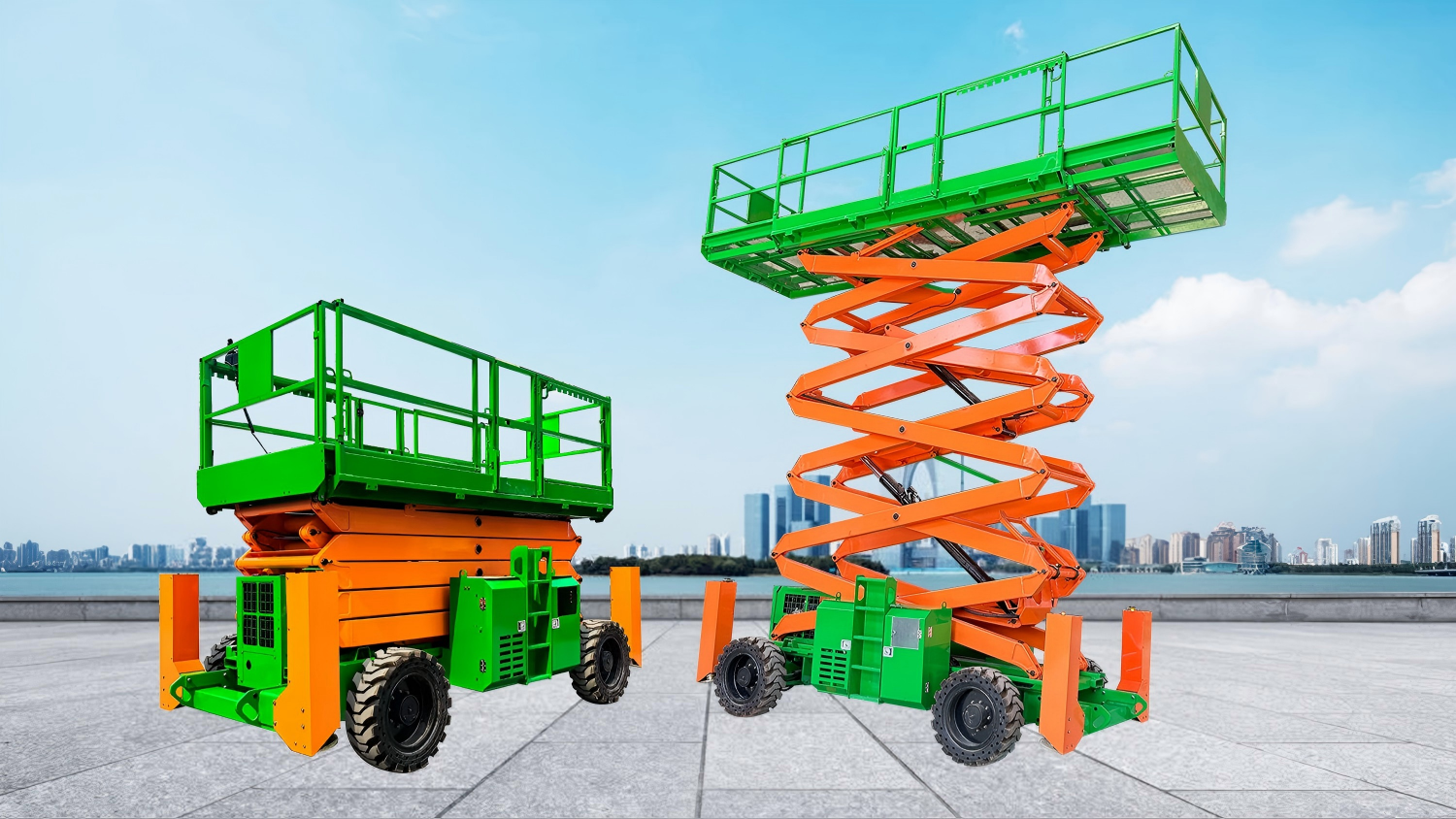
A scissor lift is an aerial work platform designed primarily for vertical lifting. Its name comes from the crisscrossing metal supports beneath the platform, which expand and contract like a pair of scissors to raise or lower the work platform. Unlike boom lifts, scissor lifts do not provide significant horizontal outreach, making them ideal for jobs where workers need direct vertical access.
Most scissor lifts operate using hydraulic cylinders powered by electric motors or diesel engines. Electric models are especially popular indoors because they produce zero emissions, operate quietly, and leave no tire marks on finished floors. Diesel-powered rough-terrain models offer greater power and are equipped with four-wheel drive, larger tires, and enhanced stability for outdoor applications.
One of the greatest advantages of a scissor lift is its spacious platform. Many models comfortably accommodate two to four workers along with their tools and materials. Platform capacities commonly range from 230 kg (500 lbs) to over 900 kg (2,000 lbs), allowing crews to complete tasks more efficiently without repeated trips.
Scissor lifts are available in several configurations. Compact electric models are commonly used in warehouses, factories, retail stores, airports, hospitals, and schools. Rough-terrain scissor lifts feature reinforced frames, stabilizers, and oversized tires that enable safe operation on construction sites with uneven ground.
Common applications include installing lighting systems, HVAC maintenance, warehouse inventory management, painting, drywall installation, ceiling repairs, and indoor facility maintenance. Since the platform rises straight up, operators benefit from excellent stability and a large working area, making scissor lifts one of the safest and most productive choices for vertical work.
Although they lack horizontal reach, scissor lifts remain one of the most cost-effective aerial work platforms for jobs requiring repeated vertical access over a broad work area.
3. What Is a Boom Lift?
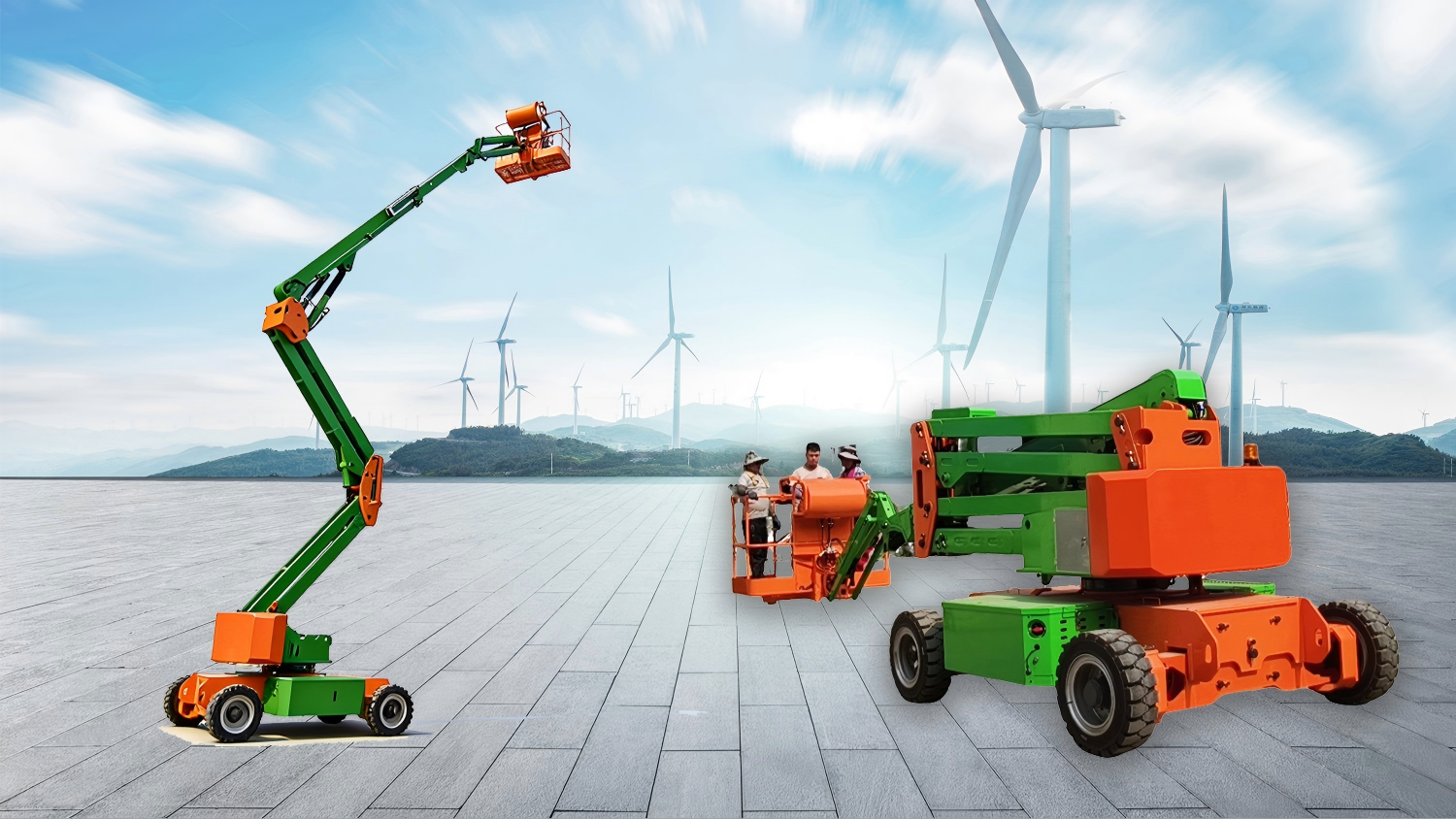
A boom lift is an aerial work platform equipped with an extendable arm that allows workers to reach elevated locations both vertically and horizontally. Unlike scissor lifts, boom lifts are specifically designed to access difficult areas by extending over obstacles such as machinery, rooftops, fences, pipelines, or building structures.
The boom consists of multiple sections that either telescope outward or articulate through hydraulic joints. This flexibility enables operators to position the work platform precisely where it is needed.
There are three primary types of boom lifts:
Telescopic Boom Lifts feature a straight extending arm that provides maximum horizontal outreach and working height. These machines are commonly used on large construction projects, bridges, and industrial plants.
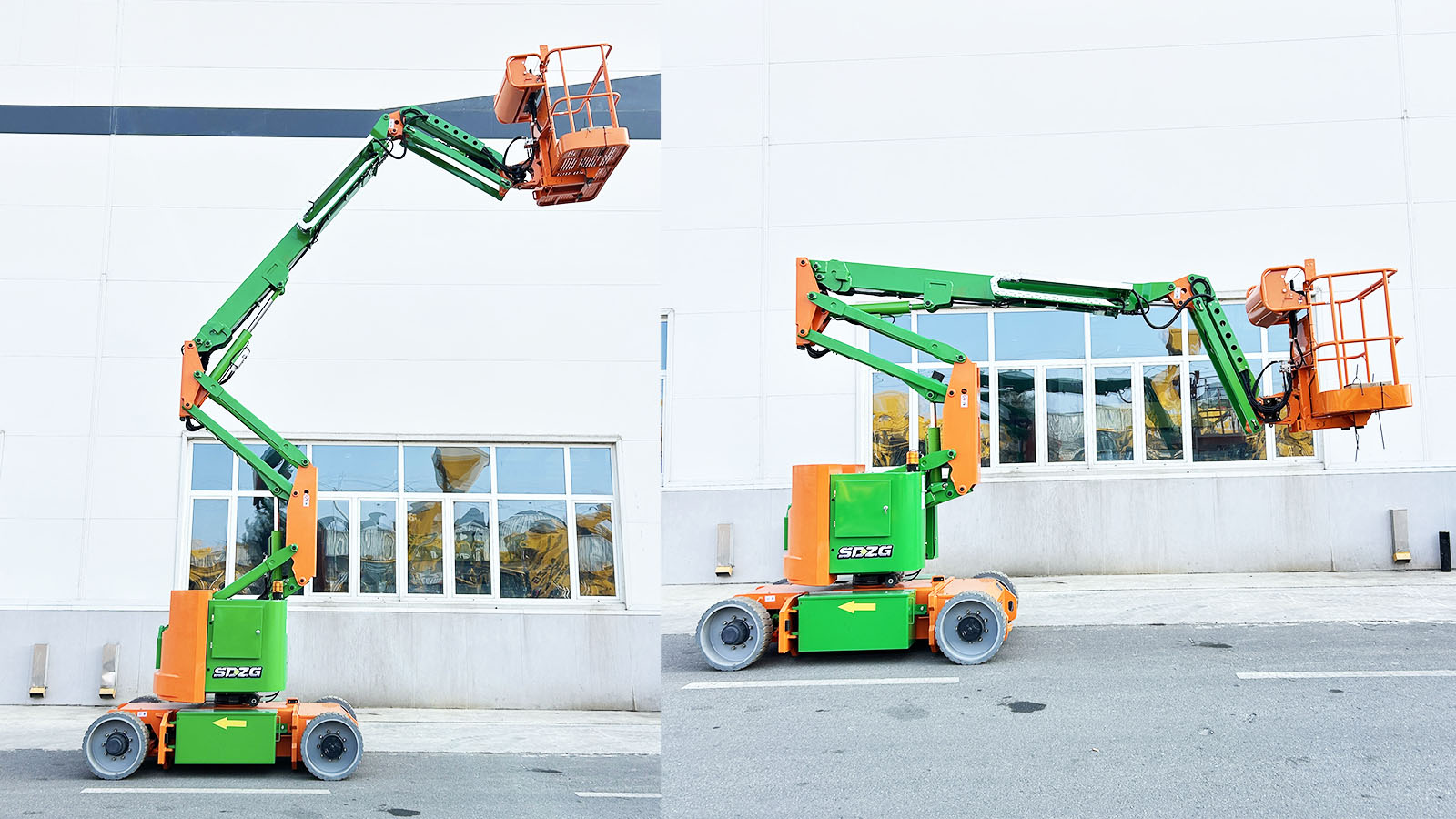
Articulating Boom Lifts contain multiple hinged sections, allowing the boom to bend around obstacles. They are ideal for maintenance work in crowded industrial facilities, stadiums, shopping centers, and manufacturing plants.
Towable Boom Lifts are lightweight machines that can be transported behind vehicles. They are frequently used by contractors, tree care professionals, and maintenance companies needing occasional aerial access.
Boom lifts typically offer working heights ranging from 10 meters to over 58 meters (190 feet), with horizontal outreach exceeding 24 meters on larger models. This exceptional flexibility makes them indispensable for projects where direct vertical access is impossible.
Industries that commonly rely on boom lifts include commercial construction, telecommunications, electrical utility maintenance, bridge inspection, wind turbine servicing, stadium maintenance, exterior building cleaning, and tree trimming.
Although boom lifts generally have smaller platforms and lower load capacities than scissor lifts, their ability to reach difficult work areas significantly improves efficiency for complex elevated tasks.
4. Boom Lift vs. Scissor Lift: Key Differences
Although both machines elevate workers safely, their designs serve different purposes.
Working Height
Boom lifts generally provide much greater maximum working heights. Large telescopic models can exceed 58 meters, while most scissor lifts range from 6 to 18 meters. If your project involves high-rise construction or bridge maintenance, a boom lift is usually the better choice.
Horizontal Reach
This is the biggest difference between the two machines. Scissor lifts move only vertically, while boom lifts extend both upward and outward. If obstacles prevent direct access beneath the work area, a boom lift becomes essential.
Platform Capacity
Scissor lifts typically carry much heavier loads. Large platforms often support multiple workers plus heavy equipment, making them excellent for installation work requiring substantial tools and materials.
Boom lifts usually support fewer workers and lighter loads due to the stresses placed on the extended boom.
Maneuverability
Electric scissor lifts are compact and easy to maneuver through narrow warehouse aisles and finished indoor floors. Boom lifts require more operating space, especially telescopic models.
Articulating boom lifts offer improved maneuverability compared to straight boom lifts because they can navigate around obstacles more easily.
Indoor vs. Outdoor Performance
Electric scissor lifts dominate indoor applications thanks to their quiet operation and zero emissions.
Diesel boom lifts excel outdoors where greater reach, rough terrain capability, and unrestricted movement are needed.
Terrain Capability
Rough-terrain boom lifts and diesel scissor lifts feature four-wheel drive, oscillating axles, and large tires for construction sites.
Standard electric scissor lifts are intended for smooth, level surfaces.
Cost
Scissor lifts generally have lower purchase prices, lower rental rates, lower maintenance costs, and lower operating expenses.
Boom lifts are more expensive due to their sophisticated hydraulic systems, longer booms, and increased engineering complexity.
Operator Training
Both machines require proper operator training, but boom lifts demand additional skill because operators must control multiple boom movements while maintaining stability and avoiding obstacles.
5. Which Lift Is Better for Different Job Sites?
The ideal lift depends entirely on the work environment.
For indoor warehouses, electric scissor lifts are usually the preferred solution. They allow workers to stock inventory, repair lighting, inspect sprinkler systems, and perform maintenance without producing exhaust emissions.
On construction sites, boom lifts often outperform scissor lifts because workers frequently need to reach over unfinished structures, scaffolding, or equipment.
For building maintenance, the answer depends on the task. Ceiling repairs inside buildings favor scissor lifts, while exterior facade cleaning usually requires boom lifts.
Electrical contractors installing overhead power lines or street lighting generally choose boom lifts because they provide excellent positioning flexibility.
Steel erection projects benefit from boom lifts since workers often need access to complex structural connections.
Warehouse inventory management is best handled by scissor lifts due to their stable platforms and high load capacities.
Tree trimming and landscaping almost always require articulating boom lifts capable of reaching around branches.
Facility maintenance teams often own both machines because each serves different operational needs.
6. Factors to Consider Before Choosing
Before purchasing or renting an aerial lift, carefully evaluate your project requirements.
First, determine the maximum working height. Always select a machine that provides adequate height without requiring workers to overreach.
Next, consider whether you need horizontal outreach. If obstacles prevent positioning directly beneath the work area, only a boom lift can provide the necessary access.
Examine the ground conditions. Smooth warehouse floors favor electric scissor lifts, while muddy construction sites require rough-terrain equipment.
Consider platform capacity. If multiple workers must carry heavy materials, a scissor lift usually offers better capacity.
Think about the number of workers using the equipment simultaneously. Larger crews benefit from the wider platforms available on scissor lifts.
Evaluate the power source. Electric machines reduce operating costs indoors, while diesel models deliver higher performance outdoors.
Assess the available workspace. Tight indoor environments often limit the use of larger boom lifts.
Finally, consider transportation requirements. Compact scissor lifts are generally easier and less expensive to transport between job sites.
7. Safety Considerations for Both Lift Types
Safety should always remain the highest priority when operating aerial work platforms.
Operators should receive certified training before using either machine. Understanding load limits, emergency controls, and safe operating procedures significantly reduces accident risks.
Daily inspections should include hydraulic hoses, tires, guardrails, control systems, batteries, safety alarms, and emergency lowering functions.
Workers should wear appropriate personal protective equipment (PPE). For boom lifts, many employers require a full-body harness with a lanyard attached to the designated anchor point. Requirements for scissor lifts vary by local regulations and employer policies.
Ground stability is critical. Always operate on firm, level surfaces unless the equipment is specifically designed for rough terrain.
Weather also affects safety. Strong winds can destabilize elevated platforms, particularly boom lifts operating at maximum extension.
Never exceed the platform's rated capacity or use ladders and other objects to gain additional height while on the platform.
Proper planning, routine maintenance, and operator awareness are essential for preventing accidents and ensuring safe, efficient work.
8. Cost Comparison and Return on Investment
From a financial perspective, scissor lifts generally cost less to purchase and rent than boom lifts. Their simpler design results in lower maintenance expenses and fewer complex hydraulic components.
Boom lifts require higher initial investments but provide capabilities that can dramatically improve productivity on challenging job sites. When workers can reach difficult areas without erecting scaffolding, projects are often completed faster, reducing labor costs.
Electric models offer additional savings through lower energy consumption and minimal routine maintenance compared to diesel-powered equipment.
Rental costs should also be considered. Businesses that only occasionally require horizontal outreach may find renting a boom lift more economical than purchasing one.
The best return on investment comes from selecting equipment that matches the majority of your projects. Buying a machine with capabilities you rarely use increases ownership costs without improving productivity.
9. Conclusion
Boom lifts and scissor lifts are both valuable aerial work platforms, but they are designed for different purposes. A scissor lift is the ideal choice for projects requiring stable vertical access, higher platform capacities, and efficient indoor operation. Its spacious platform, lower operating costs, and ease of use make it a favorite for warehouses, factories, retail facilities, and routine maintenance.
A boom lift, on the other hand, is unmatched when jobs require exceptional height, horizontal outreach, or the ability to work around obstacles. From high-rise construction and bridge inspections to utility maintenance and tree care, boom lifts provide the flexibility needed to access challenging work areas safely and efficiently.
Before making a purchase or rental decision, carefully evaluate your job site's height requirements, ground conditions, available space, worker capacity needs, and budget. Matching the right machine to the task will improve productivity, enhance workplace safety, reduce operating costs, and maximize your return on investment.
Whether you choose a boom lift or a scissor lift, investing in quality equipment, proper operator training, and regular maintenance will help ensure reliable performance and long-term value for every project.
Post time:Jul.14.2026
