
How Do You Operate a Backhoe? Complete Beginner’s Guide to Safe and Efficient Operation
1. Introduction
A backhoe is one of the most versatile and widely used pieces of heavy equipment in construction, agriculture, landscaping, and utility work. It combines the functions of a front loader and a rear excavator arm, making it suitable for digging, lifting, loading, and transporting materials.
Learning how to operate a backhoe properly is essential not only for productivity but also for safety. Because this machine is powerful and operates in complex environments, incorrect handling can lead to accidents, equipment damage, or inefficient work.
In this guide, we will explain what a backhoe is, its main components, safety precautions, basic controls, step-by-step operating procedures, common applications, and practical tips to help beginners become confident operators.
2. What Is a Backhoe?
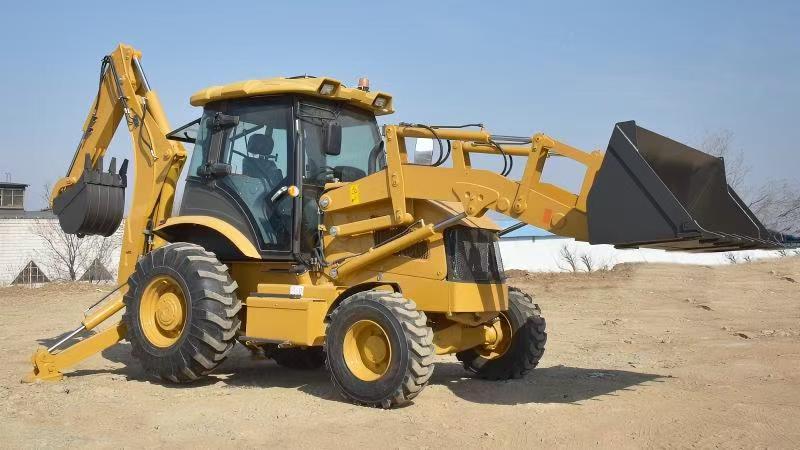
A backhoe, also known as a backhoe loader, is a heavy construction machine equipped with two main working parts:
A front loader bucket used for pushing, lifting, and moving materials
A rear digging arm (backhoe) used for excavation work
This dual-function design makes it highly efficient for a wide range of tasks.
Unlike a single-purpose excavator, a backhoe can both dig and transport materials without needing additional machines. Compared to skid steers, it offers deeper digging capabilities and stronger lifting power.
Because of this flexibility, backhoes are commonly used in construction sites, roadworks, farming, and municipal projects.
3. Main Components of a Backhoe
Understanding the machine structure is the first step to safe operation.
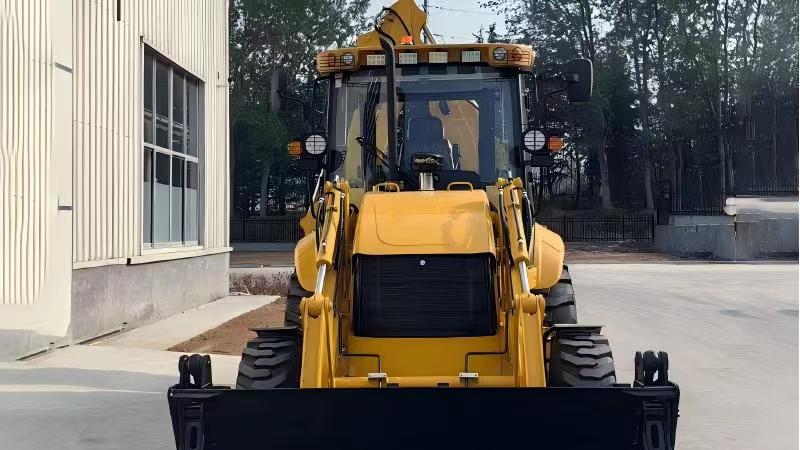
1. Front Loader Bucket
Used for loading soil, sand, gravel, and debris. It operates like a shovel and is controlled from the front of the machine.
2. Rear Excavator Arm
Consists of:
Boom (main arm)
Stick (secondary arm)
Bucket (digging tool)
This system is used for digging trenches, foundations, and holes.
3. Hydraulic System
The heart of the machine. It powers all movement including lifting, digging, and steering.
4. Operator Cab
The control center where the operator sits. It includes joysticks, pedals, switches, and safety systems.
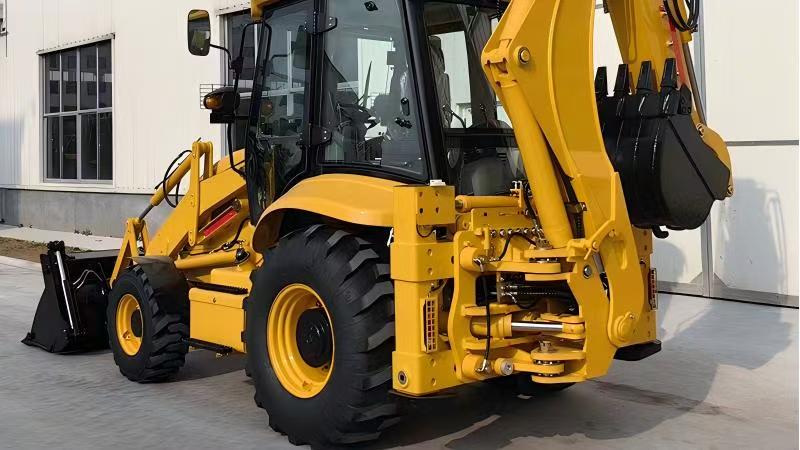
5. Stabilizer Legs (Outriggers)
Used to stabilize the machine during digging operations.
6. Engine and Transmission
Provide power and control movement across job sites.
4. Safety Precautions Before Operating
Safety is the most important part of backhoe operation.
Before starting the machine:
Wear proper PPE (helmet, gloves, safety boots, reflective vest)
Inspect the machine thoroughly
Check hydraulic oil, engine oil, and fuel levels
Look for leaks, cracks, or damaged parts
Ensure tires are properly inflated
Confirm the work area is clear of people and obstacles
At the job site:
Always maintain safe distance from workers
Avoid operating near underground utilities without checking maps
Use warning signals when moving the machine
Never allow unauthorized personnel in the cab
A proper pre-operation check reduces the risk of breakdowns and accidents.
5. Basic Controls and Functions
Before operating a backhoe, it is important to understand the control system.
Driving Controls
Steering wheel or joystick steering
Accelerator and brake pedals
Gear selection for forward and reverse movement
Front Loader Controls
Raise and lower the bucket
Tilt forward and backward
Used for loading and transporting materials
Rear Backhoe Controls
Left joystick: controls swing and boom movement
Right joystick: controls stick and bucket movement
Stabilizer Controls
Used to raise and lower outriggers
Provides balance during digging operations
Understanding these controls is essential before attempting real operation.
6. Step-by-Step: How to Operate a Backhoe
Operating a backhoe follows a structured process.
Step 1: Starting the Machine
Enter the cab safely using handholds
Fasten the seatbelt
Check all controls are in neutral
Start the engine and allow it to warm up
Step 2: Positioning the Machine
Drive to the working area slowly
Ensure the machine is on stable, level ground
Align the backhoe in the correct digging direction
Step 3: Deploying Stabilizers
Lower the stabilizer legs to lift the rear wheels slightly
Ensure the machine is firmly balanced before digging
Step 4: Operating the Backhoe Arm
Extend the boom to reach the digging area
Lower the bucket into the soil
Pull the stick toward the machine to dig
Curl the bucket to collect material
Lift and swing the arm to dump material
Repeat this cycle for continuous excavation work.
Step 5: Using the Front Loader
Lower the bucket to ground level
Drive forward into the material pile
Lift the bucket filled with material
Transport to the dumping location
Tilt forward to unload
Step 6: Moving the Machine
Raise stabilizers fully
Lock backhoe arm in travel position
Drive carefully to the next location
7. Common Backhoe Operations
Backhoes are used in many industries due to their flexibility:
Excavation Work
Digging trenches, foundations, and holes for construction.
Loading Trucks
Transferring soil, sand, or gravel into dump trucks.
Material Handling
Moving heavy construction materials around sites.
Landscaping
Shaping terrain, digging ponds, and removing debris.
Utility Installation
Used in laying pipes, cables, and drainage systems.
Road Construction
Excavating roadbeds and preparing surfaces.
8. Tips for Efficient Operation
To improve productivity and reduce fuel consumption:
Use smooth joystick movements instead of sudden actions
Avoid overfilling the bucket
Dig at optimal angles for faster loading
Keep the machine stable during heavy lifting
Plan each digging cycle in advance
Adjust speed based on soil conditions
Efficient operation not only saves time but also reduces machine wear.
9. Maintenance After Operation
Proper maintenance ensures long machine life.
After each work shift:
Clean dirt and debris from the machine
Inspect hydraulic hoses and joints
Check for oil or fuel leaks
Grease moving parts regularly
Park on flat ground with attachments secured
Shut down engine properly
Regular maintenance prevents costly repairs and downtime.
10. Common Mistakes to Avoid
Beginners often make avoidable errors such as:
Operating without checking safety conditions
Overloading the bucket beyond capacity
Using stabilizers incorrectly
Digging too close to the machine body
Making abrupt joystick movements
Ignoring warning signals or alarms
Avoiding these mistakes improves safety and efficiency significantly.
11. Conclusion
Operating a backhoe requires understanding its structure, controls, and safe working procedures. This powerful machine combines digging and loading functions, making it essential for construction, agriculture, and infrastructure projects.
For beginners, mastering smooth control movements, proper safety checks, and correct digging techniques is key to becoming a skilled operator. With practice and attention to safety, a backhoe can become one of the most efficient tools on any job site.
Post time:Apr.23.2026
