
Does a Diesel Wheel Loader Have More Breakout Force Than an Electric One?
1. Introduction
When choosing a wheel loader, buyers often assume that a diesel-powered machine will have greater digging and breakout force than an electric model. Diesel wheel loaders have traditionally dominated construction, quarrying, agriculture, mining, and material-handling applications, so their strong performance has become closely associated with diesel engines. However, the power source alone does not determine how much force a wheel loader can apply to a bucket.
Breakout force is one of the most important performance specifications for a wheel loader because it determines how effectively the machine can penetrate a pile, loosen compacted material, and fill the bucket. It is particularly important when working with gravel, clay, rocks, compacted soil, and other dense materials. An electric wheel loader can also be engineered with a powerful hydraulic system, strong cylinders, suitable linkage geometry, and sufficient operating weight to deliver substantial breakout force.
The real question, therefore, is not simply whether diesel is stronger than electric. Instead, buyers should compare the hydraulic pressure, cylinder dimensions, bucket linkage, operating weight, traction, motor or engine output, and overall machine design. This article explains how breakout force is generated, compares diesel and electric wheel loaders, and examines which factors actually determine digging performance.
2. What Is Breakout Force?
Breakout force is the maximum force a wheel loader can apply through its bucket or attachment when penetrating, digging, or lifting material. It is normally generated by the hydraulic cylinders that operate the bucket and lift arms.
During a typical digging operation, the operator drives the loader toward a pile while lowering the bucket. Once the bucket contacts the material, the hydraulic system applies force through the bucket linkage. This allows the bucket to penetrate the pile and curl material into the bucket.
Breakout force should not be confused with rated operating capacity or lifting capacity. A machine may have a high lifting capacity but relatively modest breakout performance, or vice versa. These are separate characteristics that depend on different aspects of machine design.
For applications involving hard or compacted material, strong breakout force can make a major difference. A loader with insufficient breakout force may struggle to penetrate a pile, causing more wheel spin, slower bucket filling, and reduced productivity.
3. How Is Breakout Force Generated in a Wheel Loader?
The powertrain and hydraulic system work together to produce breakout force. In a diesel wheel loader, the diesel engine drives the hydraulic pump through the mechanical powertrain. In an electric wheel loader, an electric motor provides power to the hydraulic system, either directly or through an appropriate transmission and pump arrangement.
The hydraulic pump pressurizes hydraulic oil and sends it to the lift and bucket cylinders. When hydraulic pressure acts on the piston area inside a cylinder, the cylinder produces linear force. The linkage then transfers this force to the bucket.
This means several components influence the final breakout force:
Hydraulic system pressure
Hydraulic cylinder diameter
Hydraulic pump capacity
Bucket cylinder design
Bucket geometry
Loader-arm and linkage design
Operating weight
Tire traction
Powertrain output
The power source is only one part of this system. A diesel engine with high horsepower does not automatically result in greater breakout force if the hydraulic system and linkage are not designed accordingly.
4. Diesel Wheel Loader Breakout Force
Diesel wheel loaders have been widely used for demanding applications because diesel engines can provide substantial continuous power for heavy-duty work. Their engines are typically paired with hydraulic systems designed for construction and industrial applications.
One advantage of diesel equipment is its ability to operate for long periods with relatively quick refueling. This makes diesel wheel loaders particularly suitable for remote construction sites, quarries, mines, and other locations where machines may need to work continuously.
Diesel wheel loaders can also be designed with large hydraulic pumps, high-pressure hydraulic systems, large cylinders, and heavy-duty bucket linkages. Combined with substantial machine weight and four-wheel drive, these features can provide excellent breakout performance.
However, it is important not to assume that the diesel engine itself creates the entire breakout force. The engine provides power, but the hydraulic system and mechanical structure determine how that power is ultimately converted into bucket force.
5. Electric Wheel Loader Breakout Force
Electric wheel loaders use electric motors instead of diesel engines, but the basic concept of hydraulic operation can remain similar. An electric motor supplies energy to the hydraulic system, which then powers the lift and bucket cylinders.
One major characteristic of electric motors is their ability to produce high torque from low operating speeds. This can be beneficial in wheel-loader applications where the machine frequently starts, stops, pushes into material, and performs short repetitive movements.
Electric machines can also be designed with powerful hydraulic systems. If an electric wheel loader uses similar hydraulic pressure, cylinder dimensions, linkage geometry, and operating weight to a diesel model, there is no fundamental reason why it must have lower breakout force simply because it is electric.
Battery capacity and charging requirements are important considerations for electric machines, but they do not necessarily determine the maximum instantaneous breakout force. Instead, the machine's motor, hydraulic system, control system, and mechanical design determine its working force.
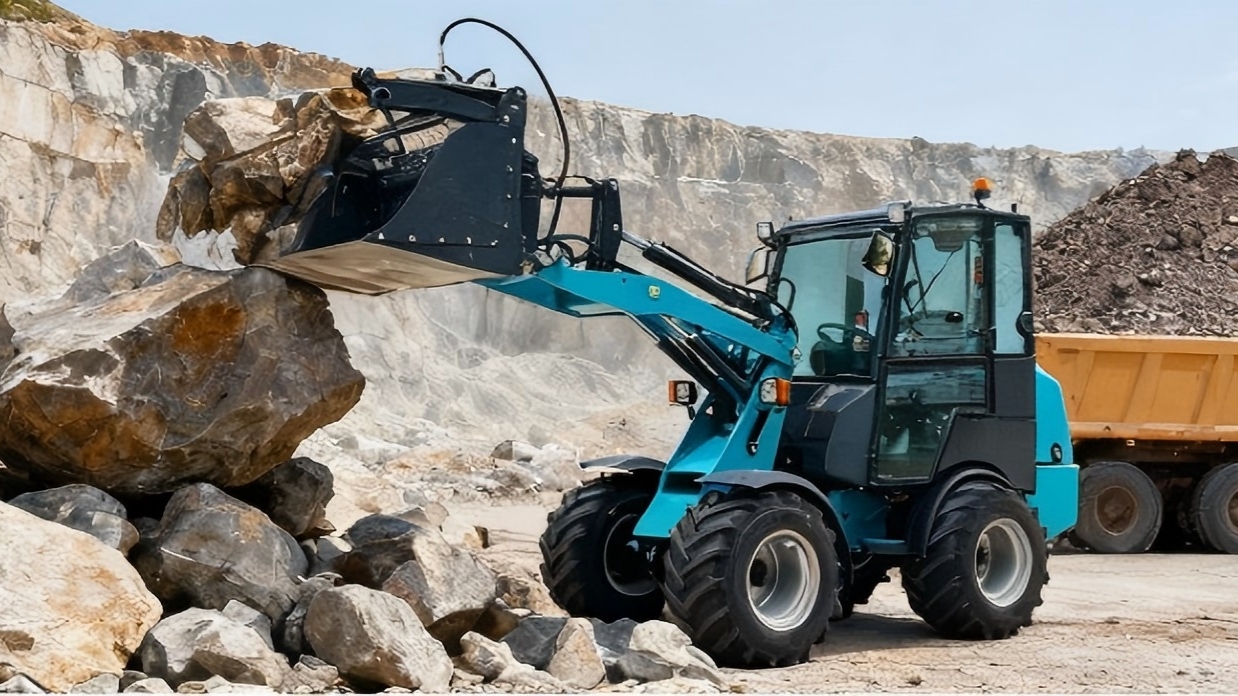
6. Diesel vs. Electric: Which Has Greater Breakout Force?
There is no universal answer that diesel wheel loaders always have greater breakout force than electric wheel loaders.
For example, imagine two wheel loaders with similar operating weights and bucket capacities. If both machines use hydraulic systems with similar pressure and cylinders with similar dimensions, their theoretical hydraulic forces can be comparable even though one uses diesel power and the other uses electricity.
The following specifications are much more useful for comparison:
|
Factor |
Diesel Wheel Loader |
Electric Wheel Loader |
|
Power source |
Diesel engine |
Electric motor |
|
Hydraulic system |
Hydraulic pump |
Hydraulic pump |
|
Breakout force |
Depends on design |
Depends on design |
|
Low-speed torque |
Strong |
Typically very strong |
|
Continuous operation |
Excellent with refueling |
Depends on battery capacity/charging |
|
Emissions during operation |
Produces exhaust emissions |
No tailpipe emissions |
|
Noise |
Higher |
Generally lower |
|
Maintenance |
More engine-related components |
Generally fewer drivetrain components |
Therefore, buyers should compare the manufacturer's actual breakout-force rating instead of assuming that diesel is stronger.
7. Key Factors That Determine Actual Breakout Performance
7.1 Hydraulic Pressure
Hydraulic pressure is one of the most important factors affecting cylinder force. A higher working pressure can allow the hydraulic cylinders to generate greater force when the cylinder dimensions are appropriate.
However, maximum pressure alone does not tell the entire story. Pump flow, cylinder size, valve configuration, hydraulic efficiency, and temperature management also influence machine performance.
7.2 Hydraulic Cylinder Size
Cylinder diameter has a direct influence on the force that can be produced by hydraulic pressure. Larger cylinders can generate greater force at the same hydraulic pressure.
Manufacturers therefore carefully select cylinder dimensions according to the machine's size, bucket capacity, rated load, and intended application.
7.3 Bucket and Linkage Design
The geometry between the hydraulic cylinder, loader arm, linkage, and bucket is extremely important.
A well-designed linkage can provide favorable mechanical leverage during the digging cycle. The position of the bucket cylinder and linkage changes as the bucket moves, so breakout force may also vary according to bucket position.
This is why simply comparing hydraulic pressure between two machines is not enough. Two loaders with similar hydraulic pressure can have different practical breakout performance because their linkage designs are different.
7.4 Operating Weight and Traction
A wheel loader needs sufficient traction to transfer its available power into the pile. If the tires lose traction and spin, the machine may not be able to use its full theoretical digging capability.
Operating weight also contributes to stability and pushing performance. A heavier machine can often maintain better contact with the ground when pushing into a material pile, although excessive weight can increase transportation and operating costs.
7.5 Motor or Engine Power
Engine or motor power still matters because the hydraulic system needs sufficient energy to maintain performance.
However, maximum horsepower should not be used as the only indicator of breakout force. A machine with a smaller motor can potentially deliver excellent hydraulic performance if its hydraulic system and mechanical design are optimized effectively.
8. Practical Comparison in Different Working Conditions
The difference between diesel and electric wheel loaders becomes more interesting when considering real working environments.
When digging compacted soil, both types can perform well if they have adequate hydraulic pressure, bucket cylinder force, traction, and machine weight.
When loading gravel or sand, bucket filling efficiency becomes important. Strong breakout force can help the operator penetrate the pile quickly and fill the bucket effectively.
For rock and other highly resistant materials, machine structure, bucket configuration, hydraulic force, and traction become especially important. In these applications, buyers should examine the manufacturer's breakout-force specification rather than focusing only on the power source.
For indoor applications, electric wheel loaders can offer advantages because they do not produce tailpipe exhaust emissions during operation and generally produce less operating noise. This can make them attractive for warehouses, enclosed facilities, recycling operations, and certain industrial sites.
For remote construction sites or applications requiring long continuous shifts, diesel loaders may still be more convenient because refueling can be faster and does not depend on charging infrastructure.
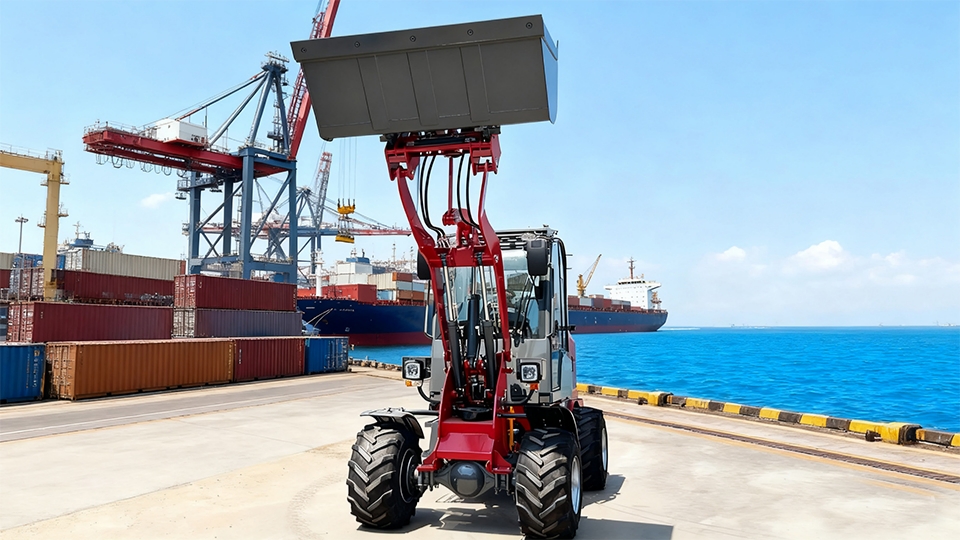
9. Does Electric Mean Weaker?
Electric does not automatically mean weaker.
Modern electric motors can provide substantial torque at low speeds, which is useful for equipment that frequently performs pushing and digging operations. Electric powertrains can also offer precise electronic control, which can help manufacturers optimize power delivery.
The key issue is whether the complete machine has been designed to deliver the required hydraulic and mechanical performance.
For buyers, it is better to ask:
What is the maximum breakout force?
rather than:
Is this machine diesel or electric?
The following specifications should be checked before making a comparison:
Maximum breakout force
Hydraulic system pressure
Hydraulic flow rate
Bucket cylinder dimensions
Bucket capacity
Operating weight
Rated operating capacity
Tipping load
Motor or engine power
Tire size and configuration
Drive system
These specifications provide a much more accurate picture of actual machine capability.
10. Diesel vs. Electric: Other Performance Differences
Breakout force is only one factor when selecting a wheel loader.
Diesel machines generally have an advantage when long working hours and fast refueling are priorities. They are also well established in heavy construction and off-road applications.
Electric machines can offer advantages in operating cost, noise, local emissions, and maintenance. Electric motors have fewer moving parts than conventional internal-combustion engines, potentially reducing some engine-related maintenance requirements.
Battery capacity is one of the major considerations. An electric loader needs enough stored energy for the planned work cycle. Heavy digging and continuous operation can consume significant energy, so buyers should consider battery capacity, charging speed, charging infrastructure, and daily operating hours.
Cold-weather performance should also be considered. Battery systems and charging performance can be affected by low temperatures, making thermal management and battery heating systems important in colder environments.
11. How to Choose the Right Wheel Loader
The best choice depends on the application rather than simply the power source.
A diesel wheel loader may be a better choice when:
The machine must work for long continuous shifts
The jobsite is remote
Fast refueling is important
Heavy-duty operation is required
Charging infrastructure is unavailable
The machine frequently works in demanding outdoor environments
An electric wheel loader may be a better choice when:
Low operating emissions are important
The machine operates indoors or near populated areas
Noise reduction is valuable
Electricity is readily available
Lower energy and maintenance costs are important
The daily duty cycle fits the available battery capacity
In both cases, buyers should select a machine based on the actual work requirements, including bucket capacity, breakout force, lifting capacity, operating weight, and expected working hours.
12. How to Compare Manufacturer Specifications
When comparing diesel and electric wheel loaders, buyers should make sure they are comparing equivalent specifications.
First, check the stated breakout force and confirm how the manufacturer measures it. Different manufacturers may use different testing conditions or configurations.
Next, compare hydraulic pressure and flow. A machine with a strong hydraulic system may have better digging performance even if its engine or motor power rating appears lower.
Bucket size and configuration should also be considered. A larger bucket can increase productivity, but it may require greater breakout force when working with dense materials.
Operating weight is another important specification. Two machines with the same bucket capacity may behave differently if their weights, tire configurations, or chassis designs differ.
Finally, consider the entire duty cycle. A machine that has excellent peak performance but insufficient energy capacity for the daily workload may not be the most productive choice.
13. Conclusion
A diesel wheel loader does not automatically have more breakout force than an electric wheel loader. Breakout force is determined primarily by the hydraulic system, cylinder dimensions, bucket linkage geometry, machine weight, tire traction, and overall machine design.
Diesel wheel loaders remain an excellent choice for heavy-duty and long-duration applications, particularly where fast refueling and established infrastructure are important. Electric wheel loaders, meanwhile, can provide strong digging performance and may offer advantages in efficiency, noise, emissions, and maintenance.
The most reliable way to compare the two is to look beyond the engine or motor type. Buyers should compare maximum breakout force, hydraulic pressure, hydraulic flow, bucket capacity, operating weight, rated capacity, and actual working conditions.
In short, diesel versus electric is not the deciding factor for breakout force—the complete machine design is.
Post time:Aug.14.2026
