
Are Skid Steers Difficult to Operate? A Comprehensive Look at the Learning CurveThe question of whether skid steers are difficult to operate is a common one for construction novices, farmers looking to expand their equipment arsenal, or DIY enthusiasts tackling large projects. The short answer is that while the basic concepts of operating a skid steer can be grasped relatively quickly, achieving true proficiency, efficiency, and, most importantly, safety requires dedicated practice, proper training, and a respect for the machine's inherent power and peculiarities. At first glance, the controls seem straightforward: two hand levers or joysticks that control the movement of the tracks or wheels on each side, along with foot pedals or additional hand controls for the lift arm and attachment functions. This articulation, known as skid-steering, is what gives the machine its name and allows for incredibly tight, zero-radius turns, a hallmark of its versatility on congested job sites.
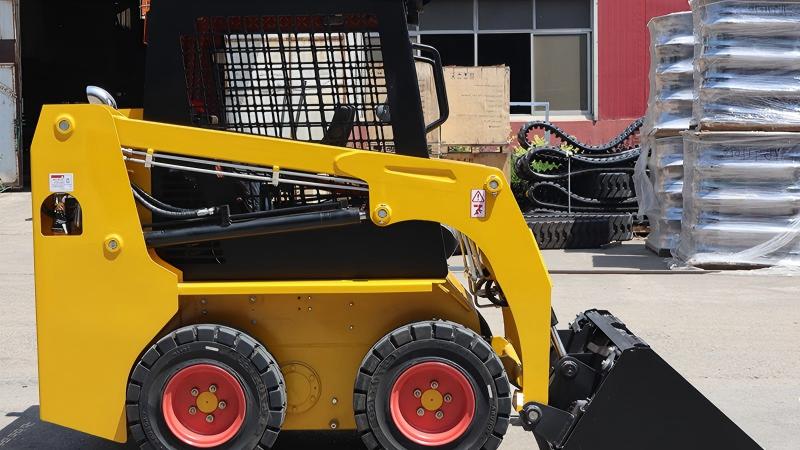
However, this very steering mechanism is the source of the initial difficulty for most new operators. Unlike a car or even a traditional tractor, pushing the left and right controls in opposite directions causes the machine to spin in place, which can be disorienting. Coordinating the two levers smoothly to drive in a perfectly straight line—a fundamental skill—is often the first hurdle. Jerky movements are common at the outset, leading to uneven travel and spilled loads. Furthermore, the operator must simultaneously manage the lift arm's height and tilt while maneuvering, which adds a layer of complexity akin to patting your head and rubbing your stomach. The environment adds another layer of challenge; operating on soft, uneven, or sloped terrain demands constant micro-adjustments and a keen awareness of the machine's stability limits. Thus, the initial phase of operation is characterized by a steep learning curve where the machine seems to have a mind of its own, but with focused practice on open, flat ground, the fundamental coordination typically becomes intuitive within a few hours.
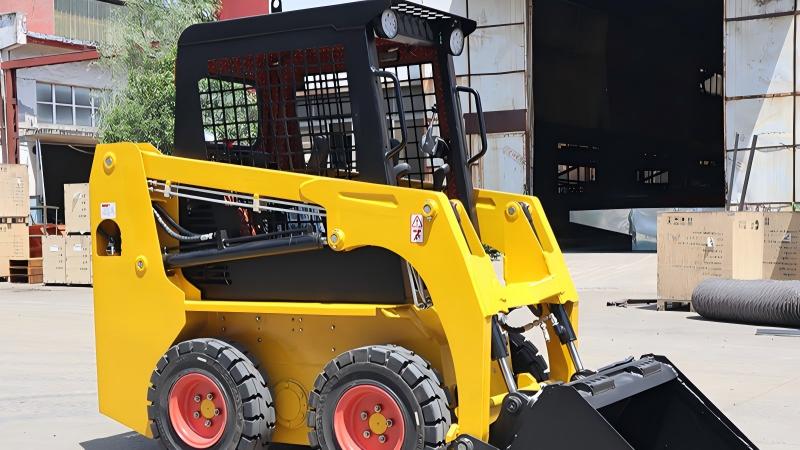
Beyond the basic mechanics, the modern skid steer presents a range of control systems that can influence the perceived difficulty. Traditional two-lever mechanical controls offer direct feedback but require more physical effort. The more common ISO (International Organization for Standardization) pattern joysticks, often found in "hand-and-foot" configurations or as dual joysticks with all functions integrated, reduce fatigue but demand precise thumb and finger movements. Some advanced models even feature selectable control patterns, further complicating the transition for operators moving between different machines. The sheer variety of attachments—from buckets and augers to hydraulic breakers and trenchers—also changes the operational dynamic. Each attachment has its own weight distribution, center of gravity, and hydraulic requirements, effectively making the skid steer a different machine with each tool change. An operator proficient with a pallet fork may need to reacquaint themselves with the machine when switching to a tiller. Therefore, while the core driving skills are transferable, true mastery involves understanding how the machine's behavior and stability are altered by each task and attachment, a knowledge base that expands over years.
Ultimately, the question of difficulty is intrinsically tied to safety and formal training. A skid steer is not a toy; it is a powerful piece of heavy equipment with significant blind spots, a risk of tip-overs, and the potential for crushing or striking incidents. The most "difficult" aspect of operation is not necessarily making it move, but doing so safely, consistently, and productively under varying site conditions. This is where professional training becomes non-negotiable. Comprehensive instruction covers not only control familiarization but also critical pre-operation inspections, load capacity calculations, load chart comprehension, proper entry and exit procedures to prevent falls, and crucially, stability triangle awareness to prevent catastrophic rollovers. An untrained operator is a profound hazard to themselves and everyone on site. With formal training, the initial awkwardness transforms into controlled competence. The difficulty then evolves from "how do I make it go?" to "how can I perform this task with maximum efficiency and minimal wear?" In this light, operating a skid steer is a skilled trade. It is accessible to learn but demanding to master, and its safe execution is a responsibility that underscores the entire learning journey.
Post time:Jan.20.2026
