
What Size Wheel Loader Do I Need for Farm and Landscaping Work?
1. Introduction
Selecting the right wheel loader is one of the most important equipment decisions for farmers, landscapers, property maintenance contractors, and agricultural businesses. While many buyers focus primarily on purchase price, choosing the wrong machine size can reduce productivity, increase operating costs, and shorten equipment life. A loader that is too small may struggle with heavy materials and require multiple trips, while an oversized machine can consume more fuel, damage sensitive ground surfaces, and become difficult to maneuver in confined spaces.
Farm and landscaping operations require equipment that can perform a wide range of tasks throughout the year. A wheel loader may be used to transport hay bales in the morning, load gravel in the afternoon, clear snow during winter, and move mulch during spring landscaping projects. Because of this versatility, selecting the correct loader size is more complicated than simply comparing lifting capacities.
Several factors determine the ideal wheel loader size. These include the weight and type of materials being handled, the available working space, lift height requirements, transport needs, attachment compatibility, and daily operating hours. Understanding how these factors affect machine performance helps buyers avoid unnecessary expenses while maximizing productivity.
Modern wheel loaders are available in a wide range of sizes, from compact models weighing less than 3 tons to large construction machines exceeding 20 tons. For most farm and landscaping applications, compact and mid-sized wheel loaders provide the best balance of lifting power, maneuverability, fuel efficiency, and operating cost.
This guide explains how wheel loader sizes are classified, compares different models for common agricultural and landscaping tasks, discusses important specifications such as bucket capacity and rated load, and provides practical recommendations to help buyers choose the most suitable machine for their business.
2. Understanding Wheel Loader Size Classifications
Wheel loaders are generally divided into four size categories based on their operating weight, lifting capacity, and intended applications. Understanding these classifications is the first step toward selecting the right machine.
Mini Wheel Loaders
Mini wheel loaders typically weigh between 2,000 and 4,000 kilograms and offer rated loads ranging from approximately 500 to 1,000 kilograms. Their bucket capacities usually fall between 0.3 and 0.6 cubic meters.
These compact machines excel in locations with limited working space. Small farms, horse stables, greenhouses, nurseries, and residential landscaping companies often prefer mini loaders because they can pass through narrow gates, operate inside barns, and minimize ground damage. Their lower operating costs and excellent maneuverability make them ideal for light-duty material handling.
However, mini loaders are less suitable for continuous heavy loading operations or handling large volumes of dense materials such as crushed stone or wet soil.
Compact Wheel Loaders
Compact wheel loaders represent the most popular choice for agricultural and landscaping work. They generally weigh between 4 and 8 tons and provide rated loads from approximately 1,200 to 2,500 kilograms.
Bucket capacities usually range from 0.6 to 1.5 cubic meters, depending on the model. Engine outputs commonly vary between 50 and 100 horsepower, providing enough power for demanding daily operations while maintaining reasonable fuel consumption.
Compact loaders offer an excellent balance between lifting performance and maneuverability. They can efficiently handle hay bales, feed, manure, soil, mulch, gravel, fertilizer, pallets, and various attachments such as pallet forks, grapples, snow blades, and sweepers.
For many mixed farms and commercial landscaping businesses, this size category provides the highest return on investment because one machine can perform multiple tasks throughout the year.
Medium Wheel Loaders
Medium wheel loaders generally weigh between 8 and 15 tons and offer lifting capacities from 2,500 to over 5,000 kilograms. Bucket capacities often range from 1.5 to 3 cubic meters.
These machines are commonly used by large farms, feedlots, compost facilities, aggregate yards, and commercial material suppliers that regularly move heavy loads over long working hours.
Although they deliver higher productivity, they also require more operating space, consume more fuel, and cost significantly more to purchase and maintain than compact models.
Large Wheel Loaders
Large wheel loaders exceed 15 tons and are designed primarily for mining, quarrying, ports, and major infrastructure projects. Bucket capacities may exceed 5 cubic meters, while rated loads can reach several tons.
For most farming and landscaping operations, these machines are oversized and economically impractical. Their high purchase price, transportation requirements, and operating costs generally outweigh any productivity benefits unless extremely large volumes of material must be handled continuously.
Comparing the Different Sizes
Each loader size offers distinct advantages depending on the application. Mini loaders prioritize maneuverability and low operating costs, making them suitable for confined workspaces. Compact loaders provide the versatility needed for most farms and landscaping companies. Medium loaders focus on high-volume productivity, while large loaders are reserved for heavy industrial applications.
Before choosing a machine, buyers should evaluate not only lifting capacity but also operating environment, attachment requirements, transportation logistics, and expected annual workload. Selecting the appropriate size ensures higher productivity, improved safety, and lower long-term ownership costs.
3. Choosing the Right Loader for Farm Work
Agricultural operations vary greatly in size and workload, making it essential to match the wheel loader to the farm's daily requirements. Unlike construction sites where machines often perform repetitive tasks, farms demand versatility. A single loader may transport feed in the morning, clean livestock facilities during the day, stack hay in the afternoon, and load grain or fertilizer before sunset. Choosing a machine that balances power, efficiency, and maneuverability is therefore more important than simply purchasing the largest model available.
Small Family Farms
Small farms that raise livestock or grow crops on limited acreage typically do not require a large wheel loader. Machines with a rated load of 800–1,200 kg and bucket capacities of 0.4–0.8 cubic meters are usually sufficient for everyday work.
Typical tasks include:
Loading animal feed
Cleaning barns
Transporting manure
Moving hay bales
Handling soil and compost
Carrying palletized supplies
Compact dimensions allow these loaders to enter livestock buildings and maneuver through narrow farm roads without damaging fences or buildings. Their lower fuel consumption also keeps operating costs under control.
Dairy Farms
Dairy farms generally require more powerful machines because they move large quantities of silage, feed, manure, and bedding materials every day.
A loader with a rated load of 1,500–2,000 kg and a bucket capacity of approximately 1 cubic meter is often the best choice. These machines provide enough lifting power for handling wrapped silage bales, loading feed mixers, and transporting heavy materials while remaining agile enough to work inside feed storage areas.
Features that are especially valuable for dairy farms include:
Quick hydraulic attachment systems
Comfortable enclosed cabins
Excellent visibility
High breakout force
Reliable hydraulic performance
Livestock Operations
Beef cattle, sheep, goat, and poultry farms require loaders capable of handling hay, straw, feed, manure, and water tanks. Depending on herd size, a rated load between 1,200 and 2,500 kg generally offers the best balance of performance and cost.
Attachments significantly increase machine versatility. Popular farm attachments include:
Pallet forks for feed pallets
Bale clamps for hay handling
Grapple buckets for manure
Silage forks
Snow blades for winter maintenance
By changing attachments within minutes, one wheel loader can replace several specialized machines.
Grain Farms
Crop farms primarily use wheel loaders during planting and harvest seasons. Common tasks include loading grain, fertilizer, seed, and transporting bulk materials.
Machines with bucket capacities between 1 and 1.5 cubic meters provide excellent productivity while avoiding excessive fuel consumption. Farmers handling large grain storage facilities may benefit from loaders with higher lift heights for loading trucks efficiently.
Orchard and Vineyard Applications
Fruit orchards and vineyards often have narrow rows and delicate ground conditions. Large construction loaders can easily damage crops or compact soil.
Compact loaders with articulated steering are particularly suitable because they:
Turn in tight spaces
Produce lower ground pressure
Cause less damage to roots
Easily transport harvested produce
Operate safely on uneven terrain
Many orchard operators also use pallet forks instead of buckets during harvest seasons.
Horse Farms and Equestrian Centers
Horse facilities frequently use wheel loaders to transport bedding materials, remove manure, maintain riding arenas, and unload feed deliveries.
Because these facilities often have indoor riding arenas and narrow stable entrances, compact loaders weighing under 5 tons are generally preferred. Their smaller turning radius improves safety around horses while reducing surface damage.
Large Commercial Farms
Large agricultural enterprises operating hundreds or thousands of acres often require machines with rated loads exceeding 2,500 kg and bucket capacities above 1.5 cubic meters.
These larger loaders improve productivity when:
Loading grain trucks
Filling fertilizer spreaders
Moving silage in bulk
Handling large feed inventories
Transporting heavy equipment
Although purchase costs are higher, the increased productivity often justifies the investment for operations with heavy daily workloads.
Seasonal Farm Requirements
One advantage of owning a properly sized wheel loader is year-round utilization.
Spring tasks include:
Transporting fertilizer
Preparing fields
Moving seed pallets
Summer operations involve:
Loading harvested crops
Transporting irrigation equipment
Handling hay bales
Autumn requires:
Grain loading
Compost movement
Storage preparation
Winter duties include:
Snow removal
Feed distribution
Livestock facility maintenance
Selecting a loader capable of performing all seasonal tasks reduces equipment ownership costs and increases annual machine utilization.
Recommended Loader Sizes for Farms
As a general guideline:
Small farms (5–30 hectares): 800–1,200 kg rated load
Medium farms (30–150 hectares): 1,200–2,000 kg rated load
Large commercial farms: 2,000–3,000+ kg rated load
Rather than focusing solely on lifting capacity, buyers should also consider hydraulic performance, attachment compatibility, operator comfort, and long-term maintenance costs. A well-matched compact or mid-sized wheel loader often delivers better overall efficiency than an oversized machine that is underutilized.
The ideal farm loader is not necessarily the biggest—it is the one that can perform the widest range of daily tasks safely, efficiently, and economically.
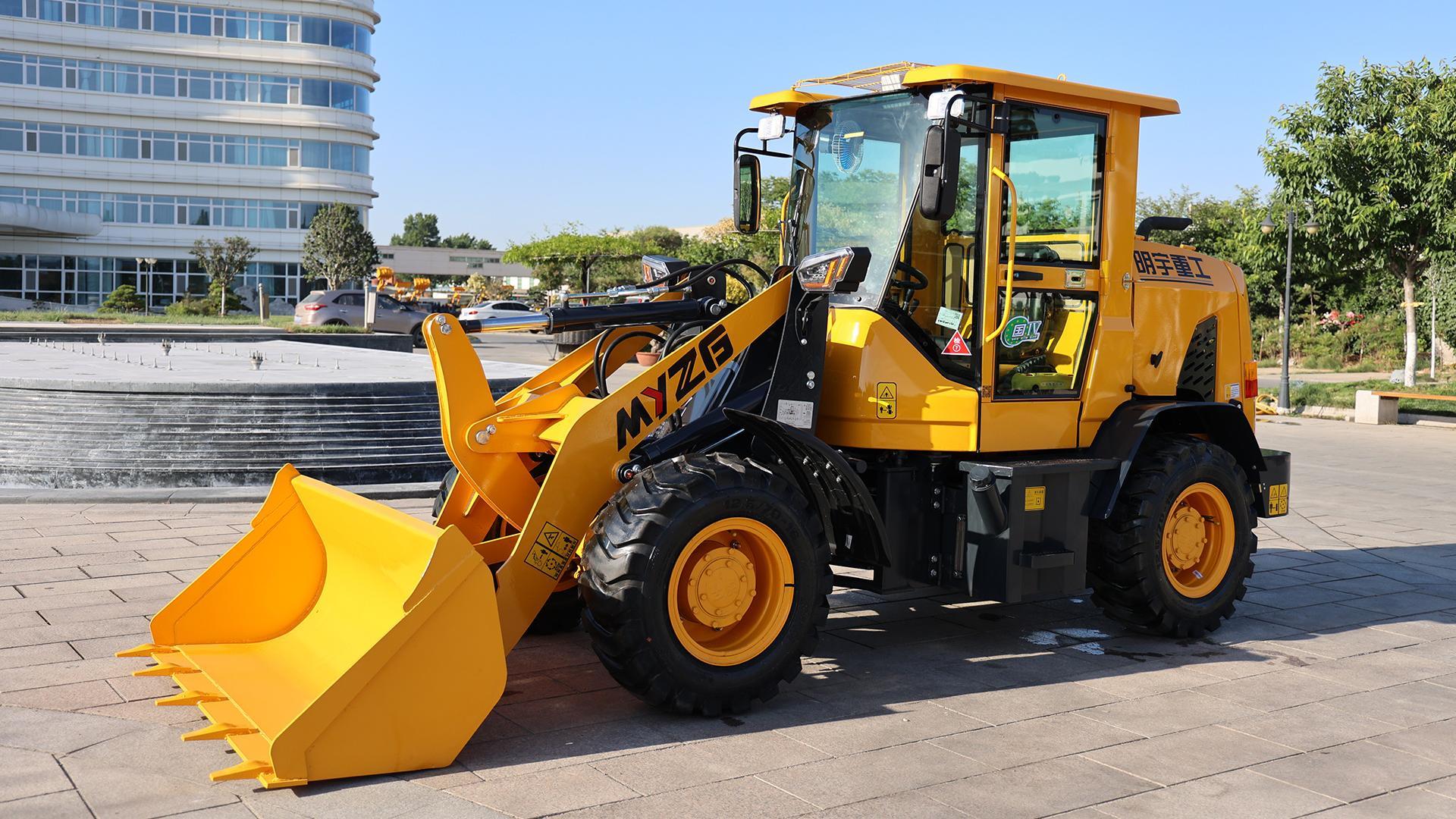
4. Selecting the Best Loader Size for Landscaping Projects
Landscaping contractors perform a wide variety of tasks, from residential garden renovations to large commercial developments. Unlike construction sites, landscaping projects often require operators to work in confined spaces, around finished surfaces, trees, irrigation systems, and buildings. Therefore, maneuverability is often just as important as lifting capacity.
Choosing the correct wheel loader size helps improve productivity while minimizing damage to lawns, sidewalks, and decorative landscaping features.
Residential Landscaping
Residential landscaping projects typically involve:
Moving topsoil
Loading mulch
Transporting decorative stone
Planting trees and shrubs
Installing patios
Cleaning construction debris
Compact wheel loaders with rated loads between 800 and 1,500 kg are usually ideal because they can easily access driveways, gardens, and narrow gates while maintaining sufficient lifting power for everyday materials.
Their articulated steering allows operators to work efficiently in tight backyards where larger equipment cannot operate safely.
Commercial Landscaping
Commercial landscaping projects such as parks, shopping centers, schools, golf courses, and office complexes generally require handling larger quantities of materials.
Loaders with 1,500–2,500 kg rated capacity and 0.8–1.5 m³ buckets provide an excellent balance between productivity and flexibility. These machines can efficiently load dump trucks, transport pallets of paving stones, move large trees, and handle bulk soil without sacrificing maneuverability.
Municipal Maintenance
Many municipalities use compact wheel loaders for year-round maintenance, including:
Snow removal
Leaf collection
Street sweeping
Park maintenance
Playground construction
Material handling
Quick attachment systems allow operators to switch from buckets to snow blades, sweepers, pallet forks, or augers within minutes, maximizing equipment utilization throughout the year.
Ground Protection
Landscaping often involves working on finished lawns and soft soil. Oversized loaders can compact soil, damage turf, and leave deep tire marks.
Compact wheel loaders distribute their weight more evenly and exert lower ground pressure, reducing the risk of surface damage. Wide tires and articulated steering further improve traction while minimizing disturbances to landscaping projects.
Transportation Between Job Sites
Landscaping contractors frequently move equipment from one location to another. Machines weighing under 6 tons can often be transported using medium-duty trailers and standard commercial trucks, reducing transportation costs and improving scheduling flexibility.
Larger loaders may require specialized trailers, permits, and higher transportation expenses.
Recommended Loader Sizes for Landscapers
For most landscaping businesses:
Residential landscaping: 800–1,200 kg
Mixed residential and commercial work: 1,200–1,800 kg
Large commercial landscaping: 1,800–2,500 kg
Choosing a loader that is slightly larger than current requirements can accommodate future business growth, but excessive machine size may reduce efficiency on smaller projects.
5. Factors That Influence the Correct Wheel Loader Size
Selecting the proper wheel loader involves more than comparing rated loads. Several operational factors should be evaluated before making a purchasing decision.
Material Type
Different materials have dramatically different densities.
Examples include:
Mulch: very light
Dry soil: medium density
Wet clay: heavy
Gravel: heavy
Sand: very heavy
Crushed stone: extremely heavy
A bucket that is perfectly suitable for mulch may become overloaded when filled with wet gravel. Buyers should consider the heaviest material they expect to handle regularly.
Bucket Capacity
Larger buckets improve productivity when handling lightweight materials but may overload the machine when transporting dense materials.
Many operators choose multiple bucket sizes for different applications, allowing the loader to remain productive across various jobs.
Lift Height
If trucks, feed mixers, or high-sided trailers require loading, sufficient dump clearance becomes essential.
Higher lift heights improve loading efficiency but may increase purchase costs. Buyers should ensure the loader's maximum dump height exceeds the loading height of their tallest equipment.
Hydraulic Performance
Modern attachments depend heavily on hydraulic flow.
Applications requiring:
Grapples
Sweepers
Snow blowers
Augers
Hydraulic forks
should prioritize machines with high hydraulic flow rates and auxiliary hydraulic circuits.
Working Space
Farm buildings, barns, orchards, and residential properties often restrict machine size.
Important measurements include:
Overall width
Overall height
Turning radius
Wheelbase
Articulation angle
Even a slightly wider loader may be unable to enter existing buildings.
Terrain Conditions
Soft soil, muddy fields, slopes, and uneven terrain require:
Four-wheel drive
Differential locks
High ground clearance
Large tires
Strong traction
Selecting a loader designed for local ground conditions improves safety and reduces downtime.
Operating Hours
A machine used occasionally has different requirements than one operating ten hours every day.
High-utilization businesses should prioritize:
Fuel efficiency
Comfortable cabins
Easy maintenance
Durable components
Reliable cooling systems
These features reduce long-term ownership costs.
Future Expansion
Businesses expecting growth should consider purchasing a loader with slightly greater capacity than current needs. This approach avoids premature equipment replacement while maintaining flexibility for larger projects.
6. Comparing Popular Wheel Loader Sizes
The following comparison illustrates which loader sizes best suit various agricultural and landscaping applications.
|
Rated Load |
Bucket Capacity |
Engine Power |
Best Applications |
Advantages |
Limitations |
|
800–1,000 kg |
0.4–0.6 m³ |
25–40 HP |
Small farms, gardens, stables |
Excellent maneuverability, low fuel consumption |
Limited lifting capacity |
|
1,200–1,500 kg |
0.6–0.8 m³ |
45–60 HP |
Mixed farming, residential landscaping |
Versatile, economical, compact |
May struggle with heavy commercial work |
|
1,800–2,000 kg |
0.8–1.2 m³ |
70–90 HP |
Dairy farms, contractors, municipalities |
High productivity, wide attachment compatibility |
Higher purchase price |
|
2,500 kg+ |
1.5–2.5 m³ |
100–150 HP |
Commercial agriculture, aggregate yards |
Excellent lifting performance and truck loading |
Larger size, higher operating costs |
Which Size Offers the Best Value?
For most buyers, the 1,500–2,000 kg class provides the best balance of:
Purchase price
Fuel efficiency
Versatility
Attachment compatibility
Productivity
Transportation convenience
These machines can comfortably perform both agricultural and landscaping duties without becoming oversized.
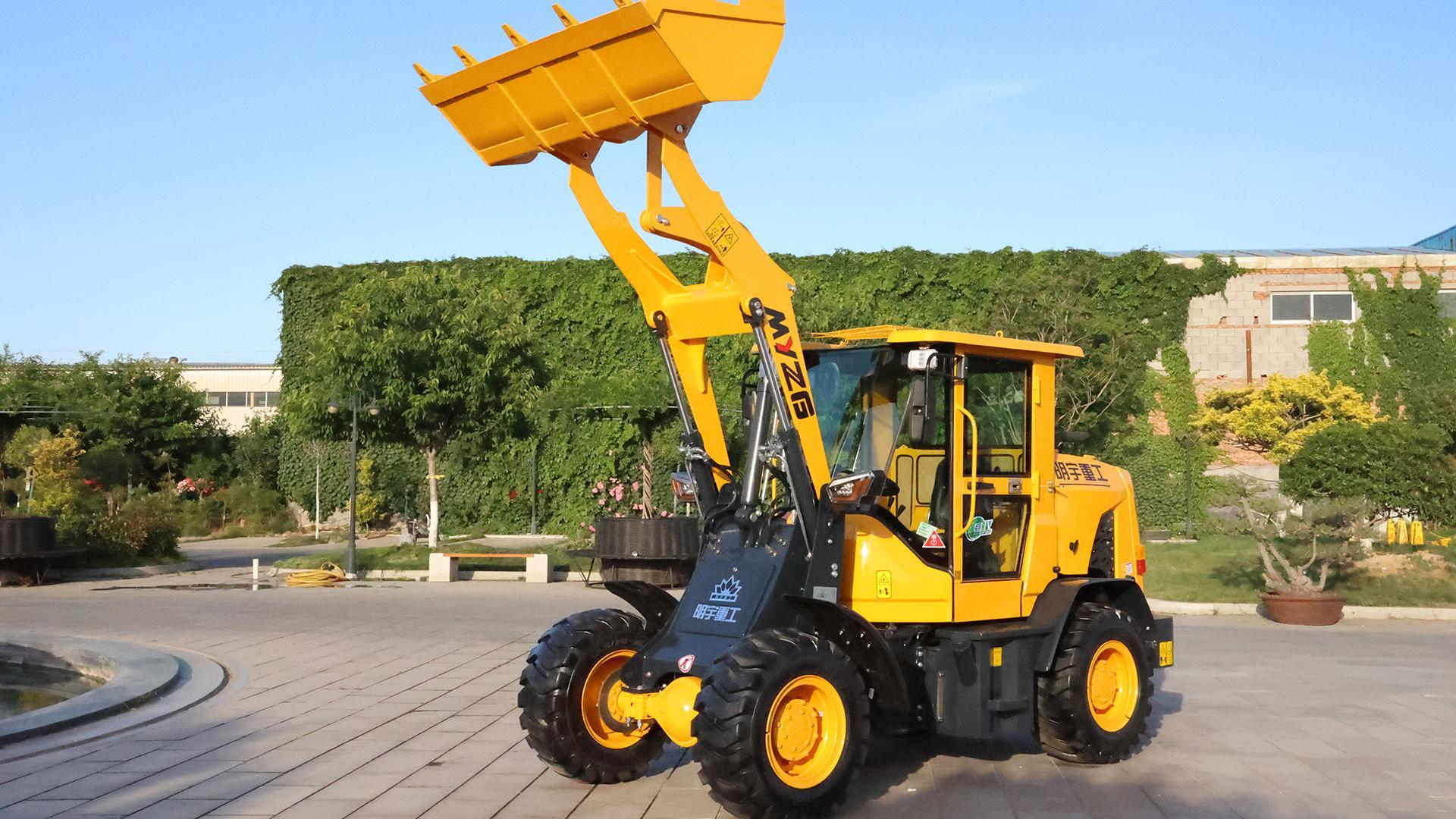
7. Essential Attachments for Farm and Landscaping Operations
One of the greatest advantages of a wheel loader is its ability to perform multiple tasks using interchangeable attachments.
Standard Bucket
The standard bucket is suitable for:
Soil
Sand
Gravel
Mulch
Compost
Snow
It remains the most frequently used attachment.
High-Tip Bucket
High-tip buckets provide additional dumping height for loading trucks, feed mixers, and large containers.
Pallet Forks
Pallet forks allow loaders to transport:
Fertilizer bags
Seed pallets
Building materials
Feed supplies
Landscape blocks
They effectively transform the wheel loader into a forklift.
Bale Clamp
Farmers handling round or square hay bales benefit from specialized bale clamps that securely grip bales without damaging wrapping materials.
Grapple Bucket
Grapple buckets are ideal for:
Brush
Tree branches
Manure
Demolition debris
Green waste
They significantly improve efficiency when handling irregular materials.
Snow Equipment
In winter, wheel loaders can use:
Snow blades
Snow buckets
Snow blowers
This enables year-round utilization even outside the primary farming or landscaping season.
Augers
Hydraulic augers simplify drilling holes for:
Fence posts
Tree planting
Sign installation
Foundations
Sweepers
Rotary sweepers help clean:
Roads
Parking lots
Warehouses
Barns
Sidewalks
Quick Hitch Systems
Modern quick couplers allow attachment changes within minutes, reducing downtime and increasing daily productivity.
8. Cost Considerations and Long-Term Ownership
Purchase price is only one component of wheel loader ownership.
Initial Investment
Generally:
Mini loaders cost the least.
Compact loaders offer the best value.
Medium loaders require significantly higher investment.
Large loaders are suitable only for specialized heavy-duty operations.
Fuel Consumption
Fuel usage increases with machine size. Choosing an oversized loader often leads to unnecessary fuel expenses over thousands of operating hours.
Maintenance Costs
Routine maintenance includes:
Engine oil
Hydraulic oil
Filters
Tires
Brake systems
Pins and bushings
Smaller machines generally have lower maintenance expenses, although heavy commercial use may justify larger equipment due to increased productivity.
Tire Replacement
Large industrial tires are considerably more expensive than compact loader tires. Tire selection should match operating conditions to maximize service life.
Productivity
A loader that completes work in fewer cycles reduces labor costs, fuel consumption, and machine wear.
Higher productivity often offsets increased purchase prices for businesses with heavy daily workloads.
Resale Value
Well-maintained compact wheel loaders typically retain strong resale value because demand remains high across agriculture, landscaping, construction, and municipal sectors.
Total Cost of Ownership
The most economical loader is rarely the cheapest one. Buyers should evaluate:
Purchase price
Fuel costs
Maintenance
Downtime
Productivity
Service life
Resale value
Considering total ownership costs leads to better long-term investment decisions.
9. Conclusion
Choosing the right wheel loader size for farm and landscaping work is about finding the best balance between power, versatility, efficiency, and operating costs. While larger machines offer greater lifting capacity and productivity, they also require higher investment, consume more fuel, and may be less practical in confined work environments. Smaller loaders, on the other hand, excel in maneuverability and cost efficiency but may struggle with heavy-duty applications.
For most farms and landscaping businesses, compact wheel loaders with a rated load of 1,200–2,000 kg provide the ideal combination of lifting performance, attachment versatility, and ease of transportation. They are capable of handling a wide range of daily tasks, from moving soil and gravel to transporting hay, pallets, mulch, and construction materials, making them valuable year-round assets.
Before purchasing, buyers should carefully evaluate the materials they handle, required lift height, available working space, terrain conditions, transportation needs, and future business growth. Selecting a machine that matches real-world operating requirements rather than simply choosing the largest available model will maximize productivity and reduce long-term ownership costs.
Ultimately, the best wheel loader is one that delivers reliable performance across multiple applications, adapts easily with the right attachments, and provides years of dependable service while supporting the growth and efficiency of your farming or landscaping business.
Post time:Jul.03.2026
