
Is a Used Electric Stacker Cheaper to Run Than a New Manual Model Long-Term?
1. Introduction
When businesses need equipment for lifting and stacking pallets, one of the most common questions is whether to invest in a used electric stacker or purchase a brand-new manual stacker. At first glance, the answer seems simple. A new manual stacker usually has a lower purchase price, comes with a warranty, and requires very little maintenance. A used electric stacker, on the other hand, may appear riskier because it has already been in service and may require repairs or battery replacement. However, the purchase price tells only part of the story.
The real comparison should focus on the total cost of ownership (TCO), which includes acquisition costs, maintenance, electricity, labor, productivity, downtime, repairs, and equipment lifespan. In many warehouse environments, labor costs far exceed equipment costs over several years. An electric stacker that enables one operator to move more pallets in less time may ultimately save thousands of dollars despite its higher maintenance requirements.
The choice also depends on workload. A warehouse moving hundreds of pallets every day has very different needs than a small retail store that lifts only a few pallets each week. Battery condition, maintenance history, spare parts availability, and operator training also influence long-term expenses.
This article compares used electric stackers and new manual stackers from every practical angle. We'll analyze purchase prices, operating expenses, maintenance requirements, productivity, safety, reliability, and long-term return on investment to help buyers determine which option delivers the lowest overall operating cost.
2. Understanding the Two Types of Stackers
2.1 What Is a Manual Stacker?
A manual stacker is one of the simplest types of warehouse lifting equipment. It uses a hydraulic pump operated by hand or foot to raise loads while the operator manually pushes and steers the machine. Since there are no batteries, electric motors, or electronic controllers, manual stackers are inexpensive and easy to maintain.
Typical specifications include:
Load capacity from 500 kg to 2,000 kg
Lift height between 1.6 and 3.5 meters
Hydraulic lifting mechanism
Manual travel
Low maintenance costs
Manual stackers are commonly used in retail stores, workshops, pharmacies, supermarkets, and small warehouses where pallet movement is relatively infrequent.
Their biggest advantage is simplicity. With fewer moving parts, breakdowns are rare, and repairs are usually inexpensive.
However, they require considerable physical effort, particularly when moving heavy pallets or working over long distances.
2.2 What Is an Electric Stacker?
Electric stackers use electric motors for lifting and, in full-electric models, for driving as well. They are powered by rechargeable batteries, either lead-acid or lithium-ion.
Electric stackers generally fall into two categories:
Semi-electric stackers
Electric lifting
Manual pushing
Full-electric stackers
Electric lifting
Electric driving
Powered steering (on some models)
Typical capacities include:
1,000–2,000 kg load capacity
Lift heights up to 6 meters
AC drive motors
Electronic safety systems
Battery management systems
Electric stackers dramatically reduce operator fatigue and significantly improve handling efficiency, especially in larger warehouses.
2.3 Why Compare Used Electric with New Manual?
Many businesses face budget limitations.
A brand-new electric stacker often costs two to four times more than a manual model. However, the used equipment market offers electric stackers at prices close to those of new manual machines.
This creates an interesting comparison:
Option A:
Brand-new manual stacker
Manufacturer warranty
No battery concerns
Lower purchase price
Option B:
Used electric stacker
Higher productivity
Possible battery wear
Potential repair costs
The decision depends on whether future labor savings can outweigh the risks associated with buying used equipment.
3. Initial Purchase Cost Comparison
3.1 Cost of a New Manual Stacker
Manual stackers remain among the most affordable pallet-handling machines available.
Typical global price ranges are:
Basic 500 kg models: USD 500–800
Standard 1-ton models: USD 700–1,200
Heavy-duty 2-ton models: USD 1,200–2,000
Optional features such as wider forks, stainless steel construction, galvanized finishes, or explosion-proof designs increase costs.
Since the equipment is new, buyers receive:
Factory warranty
New hydraulic seals
New wheels
New bearings
Full service life
Unexpected repair costs during the first several years are usually minimal.
3.2 Cost of a Used Electric Stacker
Used electric stackers vary greatly depending on:
Brand
Age
Battery condition
Service history
Operating hours
Typical market prices include:
Older models (8–10 years): USD 2,000–4,000
Mid-life models (4–7 years): USD 4,000–7,000
Nearly new models: USD 7,000–10,000
Premium brands often retain higher resale values due to their reliability and the availability of spare parts.
A used electric stacker priced at USD 3,500 may originally have cost over USD 12,000 when new, making it attractive for buyers seeking electric performance on a limited budget.
3.3 Hidden Costs at Purchase
Purchase price alone does not represent the full investment.
Additional expenses may include:
Transportation
Electric stackers are heavier due to their batteries, increasing freight costs.
Battery Inspection
Battery health should always be tested before purchase. A battery nearing the end of its life can significantly increase ownership costs.
Repairs
Used equipment may require:
Hydraulic hose replacement
Brake adjustment
Wheel replacement
Fork repairs
Charger servicing
Certification
Some businesses require safety inspections before equipment can enter service.
A thorough inspection before purchase helps prevent costly surprises later.
In many cases, a used electric stacker costs two to three times more upfront than a new manual stacker. However, purchase price is only the beginning. The most significant differences emerge in daily operation, maintenance, labor efficiency, and productivity over the following years.
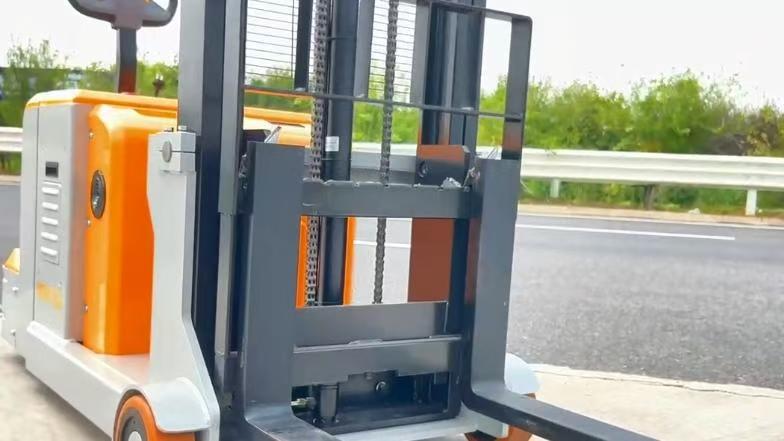
4. Operating Costs Over Five Years
The purchase price is only one component of equipment ownership. Over five years, businesses spend money on electricity, maintenance, replacement parts, labor, repairs, and downtime. In many warehouses, these ongoing expenses exceed the initial purchase cost. This is why calculating the total cost of ownership (TCO) provides a much more accurate comparison than simply looking at the price tag.
For companies with frequent pallet handling, operating costs often become the deciding factor. A used electric stacker may require higher maintenance, but its ability to improve productivity can generate significant savings over time.
4.1 Electricity vs. Human Labor
One of the biggest advantages of an electric stacker is that electricity is inexpensive compared with labor.
Charging a typical electric stacker battery usually consumes only a few kilowatt-hours of electricity per shift, making daily energy costs relatively low in most countries. Even if electricity prices rise, charging costs generally remain far below the wages paid for additional manual labor.
A manual stacker requires no electricity, but every pallet moved depends entirely on the operator's physical effort. As workloads increase, employees tire more quickly, resulting in slower handling speeds and reduced productivity.
For example, one operator using a full-electric stacker may move twice or even three times as many pallets per hour as someone using a manual stacker. If a warehouse processes hundreds of pallets every day, these productivity gains translate directly into labor savings.
Over five years, lower labor costs often outweigh the electricity consumed by an electric stacker.
4.2 Maintenance Requirements
Maintenance costs differ significantly between the two types of equipment.
A manual stacker has a simple hydraulic structure with relatively few components. Regular maintenance generally includes:
Lubricating wheels and bearings
Checking hydraulic oil
Inspecting chains
Replacing worn seals
Tightening bolts and fasteners
Most of these tasks are inexpensive and can often be completed without specialized technicians.
A used electric stacker contains many additional components, including:
Electric drive motor
Lift motor
Electronic controller
Battery
Charger
Wiring harness
Sensors
Emergency switches
Routine maintenance typically involves:
Battery watering (for lead-acid batteries)
Cleaning battery terminals
Inspecting electrical connections
Software diagnostics (on modern models)
Brake inspections
Hydraulic servicing
Tire replacement
Although maintenance costs are higher, proper servicing greatly extends the equipment's lifespan and reduces unexpected downtime.
4.3 Battery Replacement Costs
Battery replacement is often the largest expense associated with used electric stackers.
Lead-Acid Batteries
Lead-acid batteries are less expensive initially but require regular maintenance.
Typical lifespan:
1,200–1,500 charging cycles
Approximately 3–5 years under normal use
Replacement costs vary depending on capacity but can represent a substantial portion of the stacker's value.
Lithium-Ion Batteries
Lithium batteries have become increasingly popular because they offer:
Longer service life
Faster charging
Maintenance-free operation
Higher charging efficiency
Opportunity charging during work breaks
Typical lifespan:
3,000–4,000 charging cycles
Often 8–10 years with proper use
Although lithium batteries cost more upfront, their longer lifespan often reduces total ownership costs.
When purchasing a used electric stacker, buyers should always request:
Battery age
Charging history
Remaining capacity
Service records
A healthy battery significantly improves long-term value.
4.4 Parts Availability
Replacement parts are another important consideration.
For manual stackers, commonly replaced components include:
Hydraulic seals
Pump assemblies
Wheels
Bearings
Chains
Rollers
These parts are inexpensive and widely available.
Electric stackers require additional components such as:
Motor controllers
Contactors
Chargers
Drive motors
Lift motors
Battery connectors
Electronic displays
Availability depends largely on the manufacturer.
Well-known brands usually maintain excellent spare parts support for many years, while older or discontinued models may have limited availability. Before buying a used electric stacker, it is wise to confirm that replacement parts are still readily available in your region.
5. Productivity and Labor Efficiency
Productivity is where electric stackers often justify their higher purchase and maintenance costs. Faster material handling allows warehouses to process more orders with fewer employees, reducing labor expenses while improving customer service.
5.1 Loading and Unloading Speed
Electric stackers complete lifting and transporting tasks much faster than manual models.
With powered travel and lifting functions, operators spend less time positioning loads and less energy moving between storage locations.
Typical advantages include:
Faster pallet pickup
Quicker lifting cycles
Smoother travel
More precise positioning
As daily pallet volume increases, these small time savings accumulate into several hours of additional productive work each week.
5.2 Warehouse Throughput
Warehouse throughput refers to the amount of material that can be handled within a given period.
Electric stackers improve throughput by allowing operators to:
Handle more pallets each hour
Reduce travel time
Maintain consistent working speed
Minimize operator fatigue
For businesses experiencing seasonal demand or rapid growth, improved throughput can postpone the need to hire additional staff or purchase extra equipment.
5.3 Labor Savings
Labor is often the largest operating expense in warehouse operations.
Manual stackers require considerable physical effort, especially when:
Moving heavy loads
Traveling long distances
Operating on slight slopes
Working multiple shifts
Operator fatigue can reduce productivity and increase the likelihood of injuries.
Electric stackers reduce physical strain by automating lifting and, in full-electric models, driving as well. This allows operators to maintain a steady pace throughout the workday.
In many warehouses, one electric stacker enables a single employee to perform work that previously required two workers using manual equipment.
These labor savings often exceed maintenance costs over several years.
5.4 Safety Improvements
Safety has both financial and operational value.
Manual handling increases the risk of:
Muscle strain
Back injuries
Shoulder fatigue
Accidents caused by operator exhaustion
Electric stackers provide:
Smooth controlled lifting
Stable load handling
Emergency stop systems
Automatic braking
Better visibility during operation
Fewer workplace injuries reduce medical costs, insurance claims, and lost working days.
Improved safety also contributes to higher employee satisfaction and lower staff turnover.
6. Reliability and Risk Analysis
Reliability determines whether the equipment delivers consistent performance throughout its service life. While manual stackers are mechanically simple, used electric stackers require more careful evaluation before purchase.
6.1 Risks of Buying Used Equipment
Buying used equipment always involves some uncertainty.
Potential risks include:
Unknown operating history
Improper maintenance
Hidden accident damage
Battery degradation
Worn hydraulic systems
Electrical faults
Some problems may not become apparent until weeks or months after purchase.
For this reason, buyers should never evaluate a used electric stacker based solely on appearance.
6.2 How to Evaluate a Used Electric Stacker
A thorough inspection significantly reduces purchasing risk.
Key inspection points include:
Battery
Remaining capacity
Charging performance
Physical condition
Age
Number of charging cycles
Hydraulic System
Check for:
Oil leaks
Smooth lifting
Stable mast movement
Cylinder condition
Mast and Forks
Inspect:
Chain wear
Roller condition
Weld integrity
Fork straightness
Lift stability
Electrical Components
Test:
Display panel
Controller
Emergency stop
Travel controls
Lift controls
Charger
Service Records
A complete maintenance history provides valuable insight into how well the machine has been cared for throughout its life.
6.3 Reliability of a New Manual Stacker
A new manual stacker offers several reliability advantages.
Since every component is new, buyers benefit from:
Manufacturer warranty
Full hydraulic life
New wheels
Minimal wear
Low repair risk
Its simple mechanical design means there are very few components that can fail.
Even if repairs become necessary, replacement parts are inexpensive and repairs are usually completed quickly.
For businesses with light workloads, this simplicity makes manual stackers an attractive long-term investment.
However, for warehouses with demanding daily operations, reliability alone may not compensate for the lower productivity compared with electric equipment.
At this stage, we've compared purchase costs, operating expenses, maintenance requirements, productivity, and reliability. The final decision depends largely on the operating environment and workload.
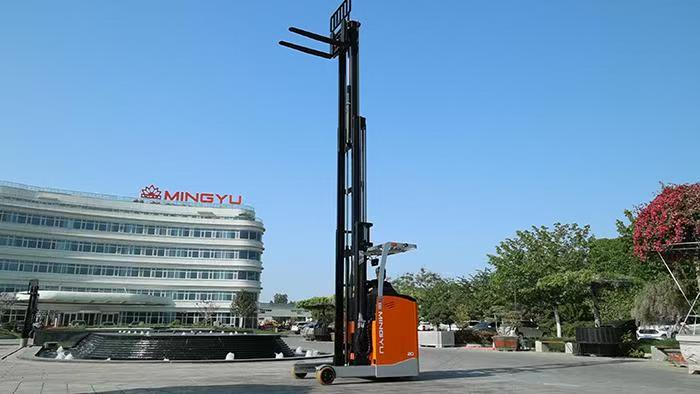
7. Long-Term Cost Comparison in Different Business Scenarios
The best choice between a used electric stacker and a new manual stacker depends largely on how the equipment will be used. A solution that saves money in one warehouse may become an expensive mistake in another. Daily operating hours, travel distance, pallet weight, labor costs, and warehouse layout all influence the overall return on investment.
Understanding different application scenarios helps businesses choose equipment that minimizes long-term operating costs while maximizing efficiency.
7.1 Small Retail Stores
Retail stores, pharmacies, hardware shops, and small wholesalers usually move only a limited number of pallets each day. In many cases, pallets are unloaded once or twice a week and stored for later use.
For these businesses, the advantages of a manual stacker include:
Low purchase price
Minimal maintenance
No charging equipment required
Easy operation
Low repair costs
Since equipment usage is relatively light, labor savings from an electric stacker may not justify its higher purchase and maintenance costs.
A new manual stacker often provides the lowest total ownership cost for businesses handling fewer than 20 pallets per day.
7.2 Medium-Sized Warehouses
Medium-sized warehouses typically receive and ship products every day. Operators may handle between 30 and 100 pallets during a normal shift.
In these environments, electric stackers begin to demonstrate clear economic advantages.
Benefits include:
Faster loading and unloading
Reduced operator fatigue
Increased daily productivity
Lower labor costs
Improved workflow efficiency
Although maintenance costs are higher than those of manual stackers, increased productivity usually offsets these expenses within a few years.
For businesses experiencing growth, a used electric stacker often delivers excellent value because it combines relatively low purchase costs with significant operational efficiency.
7.3 Manufacturing Plants
Factories often require continuous movement of raw materials, work-in-progress inventory, and finished products throughout the day.
Material handling may occur across multiple production lines and several work shifts.
In these conditions, manual stackers become inefficient because operators spend considerable time pushing heavy loads.
Electric stackers offer several advantages:
Continuous operation
Faster transport between workstations
Reduced employee fatigue
Higher production efficiency
Better utilization of labor
For manufacturing facilities operating eight hours or more each day, the labor savings generated by electric stackers usually exceed their maintenance and battery replacement costs.
7.4 Cold Storage Facilities
Cold storage warehouses present unique operating challenges.
Low temperatures affect both equipment performance and operator comfort.
Manual stackers remain mechanically reliable in cold environments but require operators to exert considerable physical effort while wearing heavy protective clothing.
Electric stackers equipped with batteries designed for refrigerated environments offer several advantages:
Less physical strain
Faster operation
Better productivity
Improved workplace safety
However, buyers should ensure that the battery is suitable for low-temperature applications, as standard batteries may experience reduced capacity in freezing conditions.
7.5 Third-Party Logistics (3PL) Operations
Third-party logistics companies often operate around the clock with demanding delivery schedules.
High equipment utilization means every minute of downtime reduces productivity.
In these environments, electric stackers provide the greatest financial benefit because:
More pallets are moved per shift.
Operators remain productive for longer periods.
Faster loading improves truck turnaround time.
Warehouse throughput increases significantly.
Labor costs per pallet decrease.
Even a used electric stacker can generate an excellent return on investment when properly maintained.
For busy logistics operations, choosing a manual stacker simply to save money upfront often results in higher long-term operating costs.
8. When Each Option Makes the Most Sense
There is no universal answer to whether a used electric stacker is cheaper to run than a new manual model. The right decision depends on balancing purchase price, maintenance costs, labor efficiency, and expected workload.
Understanding when each option performs best helps businesses maximize value.
When a Used Electric Stacker Is the Better Investment
A used electric stacker is generally the better choice when:
Daily pallet handling exceeds 30–50 pallets.
Labor costs are relatively high.
Operators work multiple shifts.
Warehouse travel distances are long.
Productivity is a business priority.
Spare parts and service support are readily available.
The battery has been professionally tested and remains in good condition.
In these situations, higher productivity and lower labor expenses usually outweigh maintenance and battery replacement costs.
When a New Manual Stacker Is the Better Choice
A new manual stacker is often the smarter investment when:
Daily usage is light.
Budget is extremely limited.
Warehouse space is small.
Loads are moved only occasionally.
There is no charging infrastructure.
Simplicity and reliability are more important than speed.
Because manual stackers have fewer components, they are also easier to maintain in remote locations where technical support may be limited.
Practical Buying Checklist
Before making a purchasing decision, buyers should evaluate the following:
How many pallets are moved each day?
How many hours will the equipment operate?
What is the average load weight?
Is labor expensive in your region?
What is the remaining battery life of the used electric stacker?
Are replacement parts available locally?
Is technical service easily accessible?
What warranty or inspection report is provided?
How long do you expect to keep the equipment?
What is the estimated five-year total ownership cost?
Answering these questions provides a much clearer picture than comparing purchase prices alone.
9. Conclusion
A used electric stacker is not automatically cheaper to own than a new manual stacker, but in many commercial environments it becomes the more economical option over the long term.
While a new manual stacker offers a lower purchase price, simple maintenance, and excellent reliability, its lower productivity and greater reliance on manual labor can significantly increase operating costs in busy warehouses. As labor expenses continue to rise worldwide, the ability of an electric stacker to move more pallets with less physical effort creates measurable financial benefits.
A well-maintained used electric stacker with a healthy battery can provide years of reliable service at a fraction of the cost of a new electric model. For medium-sized warehouses, manufacturing plants, and third-party logistics companies, the savings generated through improved efficiency often exceed maintenance and battery replacement expenses, resulting in a lower total cost of ownership.
On the other hand, businesses with light workloads, limited budgets, or occasional pallet handling may find that a new manual stacker remains the most practical and cost-effective solution. Its mechanical simplicity, low maintenance requirements, and dependable performance make it an excellent choice where productivity demands are relatively low.
Ultimately, the smartest purchasing decision comes from evaluating the complete cost of ownership rather than focusing solely on the initial purchase price. By considering workload, labor costs, maintenance requirements, battery condition, and future operational needs, businesses can select the stacker that delivers the greatest long-term value, reliability, and return on investment.
Post time:Jul.02.2026
