
The question of whether a special licence or certification is required to operate a telescopic handler, commonly known as a telehandler, in the UK and the European Union is of paramount importance for both employers and operators, with the answer being a definitive yes, but with a nuanced landscape governing its acquisition and recognition. Unlike driving a car on public roads, there is no single, universally government-issued "licence" for telehandlers in the traditional sense. Instead, the system is built upon industry-recognised competence certifications, which serve as proof that an individual has undergone formal training and assessment to safely operate specific types of machinery. In the UK, this framework is largely driven by the Construction Plant Competence Scheme (CPCS) and the National Plant Operators Registration Scheme (NPORS), which provide the most widely accepted cards evidencing this competence. Similarly, across the EU, while harmonised under the Machinery Directive 2006/42/EC, which sets essential health and safety requirements for machinery, the specific certification bodies and schemes can vary by member state, often administered by national health and safety authorities or private accredited organisations. The fundamental driver behind this stringent requirement is health and safety legislation, such as the UK's Health and Safety at Work etc. Act 1974 and the Provision and Use of Work Equipment Regulations 1998 (PUWER), which place a absolute duty on employers to ensure that any person using work equipment, including complex machinery like telehandlers, has received adequate training "for purposes of health and safety." This legal backdrop makes certification not merely a formality but a crucial component of legal compliance and risk management on any construction, agricultural, or industrial site.
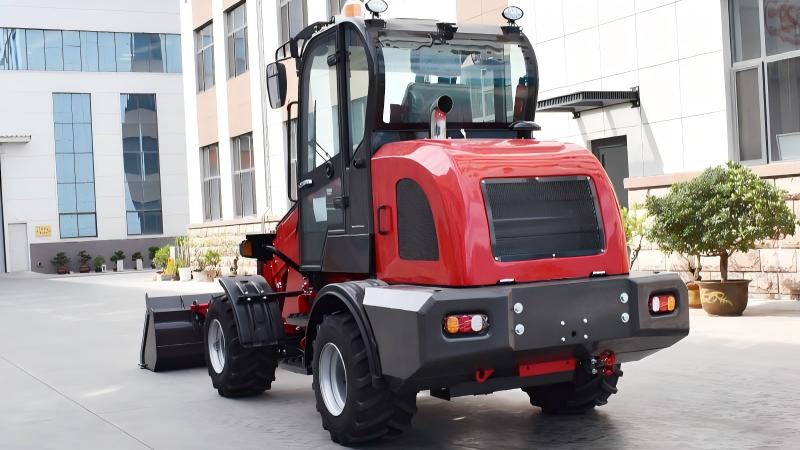
Delving into the specific certification schemes, the UK's CPCS and NPORS frameworks represent the gold standard for demonstrating telehandler operator competence. The CPCS, often considered the industry benchmark, involves a structured process beginning with a theory test covering essential knowledge of health, safety, and industry operations, followed by a practical assessment conducted by an accredited tester on a telehandler. Success in these evaluations leads to the issuance of a CPCS Trained Operator card (typically red), which is valid for two years. During this period, the cardholder is expected to gain substantial on-site experience and work towards achieving a Level 2 NVQ Diploma in Plant Operations, which then allows them to upgrade to a CPCS Competent Operator card (blue), valid for five years. NPORS offers a more flexible alternative, with two main pathways: a traditional course with NPORS assessment leading to a standard NPORS card, or an employer-led route where the employer affirms the operator's competence, resulting in an NPORS Traditional Card. Both CPCS and NPORS certifications are meticulously categorized, meaning an operator's card will specify the exact type of telehandler they are qualified to operate, such as a 360° slew model or a non-slew model, and potentially the lift capacity, ensuring that skills are matched precisely to the machinery in use. These schemes are not static; they require ongoing professional development and renewal, ensuring that operators' knowledge remains current with evolving best practices and technological advancements in telehandler design and safety systems.
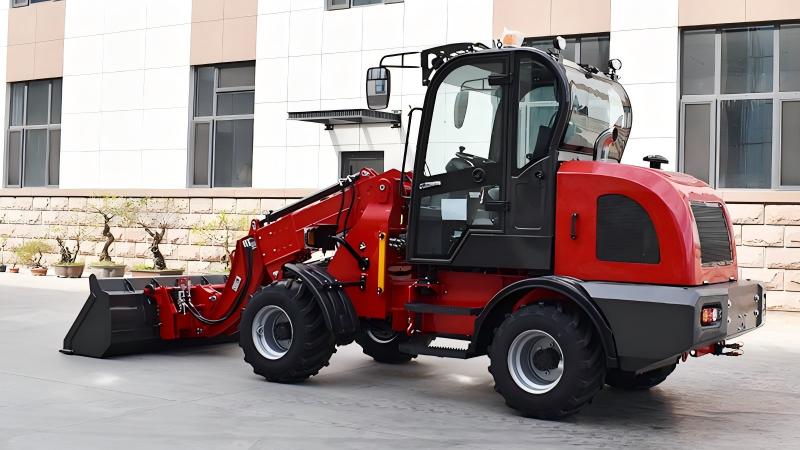
The situation within the European Union, while sharing the common foundation of the Machinery Directive, presents a more fragmented picture where national regulations and certification bodies take precedence. The Machinery Directive itself mandates that machinery must be designed and constructed to be safe, and it implies the need for trained operators, but it does not prescribe a specific EU-wide operator licence. Consequently, member states have developed their own systems. In Ireland, for example, the Solas Construction Skills Certification Scheme (CSCS) operates similarly to the UK's CPCS, with a strong emphasis on formal training and assessment for telehandler operators. In Germany, the Berufsgenossenschaft (BG BAU – the statutory accident insurance for the construction industry) plays a central role in establishing rules for the operation of industrial trucks, including telehandlers, and their certification is highly respected. The underlying principle across all EU nations, reinforced by the Framework Directive 89/391/EEC on safety and health at work, is the employer's responsibility to ensure worker competence. This often translates to a requirement for operators to possess a certificate of training from a recognised body. For a UK operator looking to work on an EU site, or vice-versa, the key lies in mutual recognition. While there is no automatic equivalence, many NPORS cards and certain other schemes can be endorsed with the CSCS logo for work in Ireland, and some European certifications may be recognised by UK employers, though this is assessed on a case-by-case basis, particularly post-Brexit, necessitating careful verification by the employing company.
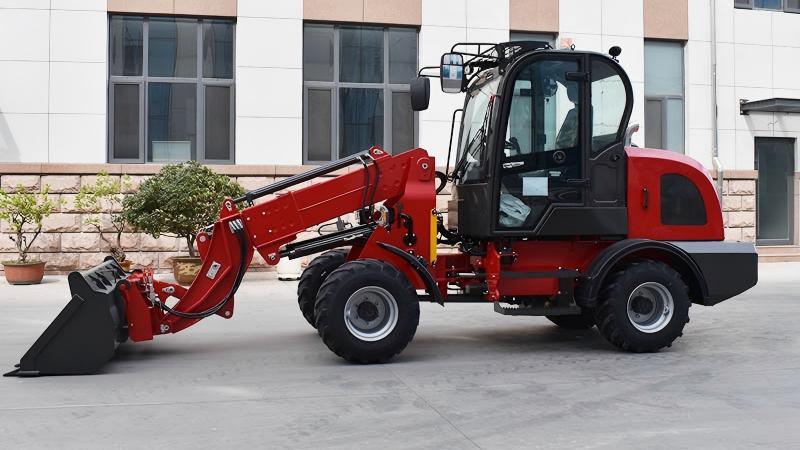
Beyond the initial acquisition of a card, the ecosystem of telehandler operation encompasses several critical, interconnected elements that define a truly competent and safe operator. The type of training received is comprehensive, covering pre-use inspections, stability principles, load charts, attachment use, and the specific hazards associated with telehandlers, such as their vastly different centre of gravity compared to traditional forklifts. Furthermore, the concept of "authorisation" is distinct from "certification." While an operator may hold a valid CPCS or NPORS card, it is ultimately the employer's legal responsibility to formally authorise that individual to operate a specific piece of plant on their site, often following a site-specific induction and a check of the operator's skills. The insurance implications are also significant; operating a telehandler without the requisite certification is a severe breach of health and safety protocols and would almost certainly invalidate any insurance in the event of an accident, leaving the employer and potentially the operator personally liable for substantial costs and legal repercussions. Therefore, the journey to becoming a certified telehandler operator is not merely about passing a test; it is a continuous commitment to safety, proficiency, and understanding the immense responsibility that comes with controlling a powerful and potentially dangerous piece of equipment, ensuring that all operations are conducted to the highest standards of professional competence.
Post time:Nov.28.2025
